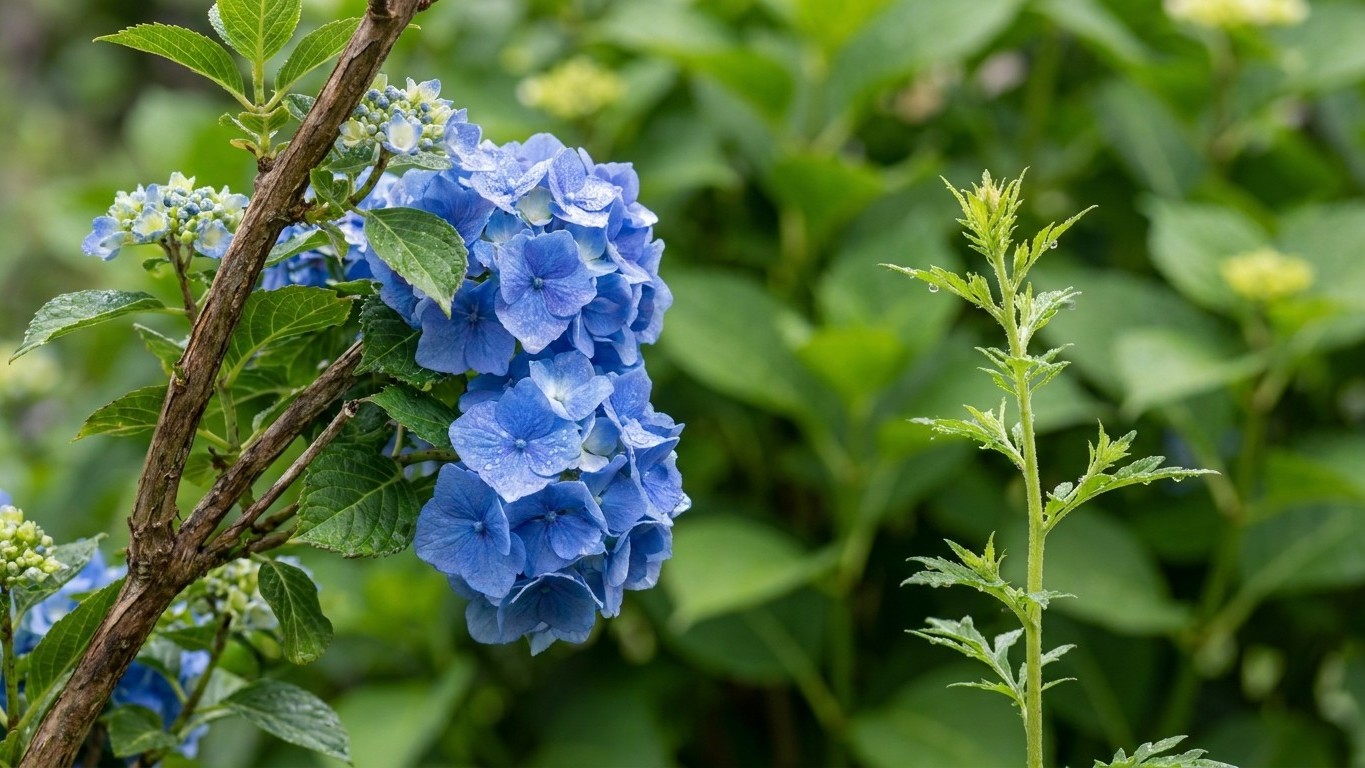

Plant container-grown hydrangeas in Tennessee after the spring frost window closes, or in early fall while the soil is still warm. At the Nashville reference station, the last spring frost falls between March 31 and April 12, and the first fall frost between October 28 and November 8. Choose a species that matches your winters, give it morning sun and afternoon shade, and keep the soil evenly moist. Color, pruning time and winter protection all follow from which type you buy.
When to plant Hydrangeas in Tennessee

The Nashville dates come from the NOAA NCEI 1991-2020 Climate Normals for the Nashville station. They mark the band in which a 32°F freeze is still a real possibility. Spring planting is safest in the weeks after April 12. A dormant, leafless shrub can go in earlier, but a plant that has already leafed out in a greenhouse will lose its tender new growth to a single bad night.
Northern and higher-elevation parts of the state run later than Nashville. East Tennessee and the Cumberland Plateau are cooler in spring, so shift your planting date back and trust the ten-day forecast over the calendar. If the forecast shows a freeze after you have planted, an upturned bucket or an old bedsheet over the shrub for the night is enough.
Should you start hydrangeas from seed indoors?
Almost nobody does. Seedlings take years to flower and rarely match the parent plant, so the named varieties sold at nurseries are propagated from cuttings. Home gardeners can do the same. Take 4- to 6-inch softwood cuttings from a healthy shoot in early summer, strip the lower leaves, and stick them in moist potting mix under a clear cover in bright shade. Roots form in a few weeks. Work backward from the planting date: a cutting taken in June is ready for the garden the following spring, after the April 12 end of the Nashville frost window, or in the fall after it has spent the summer in a larger pot.
How do you harden off a nursery hydrangea?
Plants bought in early spring from a greenhouse or a big-box store have been grown in sheltered air, and the leaves scorch quickly in direct sun and wind. Set the pot in full shade outdoors for the first few days, then move it into morning sun for a few hours, adding time each day. After seven to ten days it can stay out all day. Bring it inside or cover it if a freeze is forecast. Transplant on a cloudy day, or in the late afternoon, so the shrub gets a night to settle before it faces midday heat.
Is fall a good time to plant hydrangeas in Tennessee?
It is often better than spring. Warm soil and cool air let the roots grow while the top stays quiet, and the shrub meets its first summer already established. Finish planting before the first fall frost window opens on October 28 at Nashville, earlier on the plateau and in the east. Water weekly through dry autumn weather and mulch after planting.
Soil and site preparation
Morning sun and afternoon shade suits most hydrangeas in Tennessee’s hot, humid summers. Bigleaf and oakleaf types scorch and wilt when they take afternoon sun in July and August. Panicle hydrangeas handle far more sun, and smooth hydrangeas fall in between. An east-facing wall or the east side of a tree line is close to ideal. Avoid the spot under a shallow-rooted maple, where the tree will win every fight for water.
Texture and drainage matter more than fertility. Hydrangeas want soil that holds moisture but never stays soggy. Clay is common across much of the state, and it will hold water around the roots for days after rain. Test the spot before you plant: dig a hole about a foot deep, fill it with water, and let it drain. If water still stands the next morning, raise the bed with a few inches of added soil or pick another location.
Start the work weeks ahead. Strip the sod, loosen the soil across an area two to three times wider than the root ball, and blend in a few inches of compost or aged pine bark. Do not fill only the planting hole with rich soil in the middle of heavy clay, because the roots tend to circle inside it like a flowerpot. If you want to change bloom color on a bigleaf type, send a soil sample to your county extension office first. Sulfur and lime take months to shift pH, so the soil test belongs in late winter for a spring planting, or in summer for fall planting.
Spacing follows mature size, and the plant tag is the best guide. As a working rule, most bigleaf and smooth hydrangeas want 3 to 5 feet between plants, while panicle and oakleaf types want 6 to 8 feet. Set the top of the root ball an inch above the surrounding soil in clay, loosen any circling roots with your fingers, and water in slowly. Finish with 2 to 3 inches of mulch kept a hand’s width away from the stems.
Varieties that suit Tennessee
The trait that matters most here is whether a hydrangea flowers on old wood (last year’s stems) or new wood (this year’s growth). Tennessee winters are mild until a hard freeze arrives, and spring warmth can push buds open before a late frost. A bigleaf hydrangea that sets flower buds the summer before can lose its entire bloom season that way. Types that flower on new wood simply regrow and bloom on schedule. The second trait is heat tolerance, since July afternoons here stress shade-loving species. The third is resistance to leaf spot and powdery mildew, which thrive in humidity. For the full picture of species and cultivars across the country, see How to Grow Hydrangeas: The Complete Guide.
| Type | Widely available examples | Blooms on | Good for |
|---|---|---|---|
| Smooth (H. arborescens) | Annabelle, Incrediball | New wood | Reliable white blooms after hard winters; part shade |
| Panicle (H. paniculata) | Limelight, Little Lime | New wood | Heat, more sun, late-summer color that ages to pink |
| Bigleaf (H. macrophylla) | Endless Summer series | Old and new wood | Blue or pink color control, rebloom after cold damage |
| Oakleaf (H. quercifolia) | Snow Queen | Old wood | Dry shade, burgundy fall leaf color, peeling bark |
Reblooming bigleaf cultivars such as the Endless Summer series flower on both old and new growth, which gives you a second chance after a freeze takes the early buds. Gardeners who want a no-fuss shrub with big white heads often start with Annabelle or its sturdier-stemmed relative Incrediball. Panicle types like Limelight tolerate full sun in the cooler parts of the state, and a compact one such as Little Lime fits a foundation bed without constant pruning. Oakleaf hydrangeas look best in woodland-style plantings, and Snow Queen carries its cone-shaped flowers upright rather than drooping.
White-flowered varieties do not change color with soil chemistry. Blue and pink shifts only happen in bigleaf types and a few others, so buy accordingly if color matters to you.
What to plant alongside
The best neighbors share the hydrangea’s taste for part shade and even moisture. Hostas, ferns, astilbe, heuchera, lungwort and Japanese forest grass all fill the ground beneath the shrubs and shade the soil, which cuts evaporation and weed pressure. Their different leaf shapes also make the bed look better when the hydrangea is between bloom cycles. Azaleas, rhododendrons and camellias have similar soil needs and make a sensible evergreen backdrop through winter.
Spring bulbs such as daffodils and snowdrops come up and finish before hydrangea foliage fills in, so the bed works in three seasons. Daffodils also have a practical bonus: deer and rabbits tend to leave them alone, which helps if animals are nibbling the neighboring plants.
Competition is the real concern. Hydrangeas have fine, shallow roots, and they lose out to large surface-rooting trees like maples and to turf grass pressed against the stems. Keep a mulched ring around the shrub rather than letting lawn grow up to it. Black walnut roots release a compound called juglone that harms many garden plants, so keep a hydrangea well clear of one.
Some claimed pairings have little evidence behind them. Planting marigolds or garlic to repel hydrangea pests is popular advice, but there is no solid support for it with these shrubs. Coffee grounds and rusty nails buried at the roots do not reliably turn flowers blue either, since color depends on soil pH and aluminum availability. Treat those as folklore and spend the effort on a soil test and a layer of mulch.
Watering, feeding and support
Hydrangeas drink heavily, and the name itself comes from the Greek for “water vessel.” A new shrub needs a deep soak during its first summer, enough to wet the root zone well down. Established plants do well on regular water from rain or the hose. Water the soil at the base rather than overhead, which keeps leaves dry and lowers the odds of leaf spot. Mulch makes a large difference in Tennessee heat. Two to three inches of shredded bark or pine straw holds moisture and keeps roots cooler.
Wilting at midday is normal in a heat wave, and the leaves should perk up by evening. If they are still limp the next morning, dig down a few inches and check the soil. Dry means water, and soggy means a drainage problem.
How often should you feed hydrangeas?
Once in spring is enough for most plants, using a slow-release balanced fertilizer as new growth begins. A second light application in early summer helps container plants and sandy soils. Stop by midsummer, because late feeding pushes soft growth that frost will damage. Heavy nitrogen produces big green leaves and few flowers, so more is not better.
Do hydrangeas need staking?
Smooth and panicle types with heavy flower heads often flop after a summer storm. A peony ring set over the crown in early spring lets the stems grow up through it and hold themselves. Cutting a smooth hydrangea back in late winter also produces thicker stems. A sturdier cultivar like Incrediball needs less help than the older Annabelle.
When do you prune hydrangeas?
Timing depends on the bloom wood. Bigleaf and oakleaf hydrangeas set buds in late summer, so prune them right after flowering and remove only dead stems in spring. Smooth and panicle types bloom on new wood and take a hard cut in late winter. Smooth types spread by shoots from the base. You can dig and move those in early spring or fall to start new plants.
Common problems

Most failures begin with a symptom that looks worse than it is. Brown crispy leaf edges in July mean heat scorch, usually from too much afternoon sun or dry soil. The cure is shade cloth for the worst weeks, deeper watering, and fresh mulch. Do not cut the damaged leaves away, since the plant still uses them.
No flowers is the complaint gardeners raise most. If a bigleaf or oakleaf hydrangea leafs out but never blooms, a late freeze may have killed the buds, or pruning removed them. Too much shade and too much nitrogen cause the same result. Check which type you own before you decide what went wrong. If a panicle or smooth type fails to bloom, shade is usually the reason.
Round tan or purple-edged spots on lower leaves are leaf spot, a fungal disease that spreads in humid weather. It looks bad but seldom harms the shrub. Water at the soil line, thin crowded stems for airflow, and rake up fallen leaves in autumn. A white powdery film on leaves points to powdery mildew, which favors crowded, shady spots with poor air movement. Spacing, pruning for airflow and morning watering handle most cases.
Leaves that turn yellow while the veins stay green indicate iron chlorosis, common in alkaline soils where iron is locked up. A soil test will confirm it, and sulfur or an iron supplement applied by label directions can help over time. Yellow leaves with a wet, sour smell at the roots suggest root rot from poor drainage. Lift the plant, check for brown, mushy roots, and replant on a mound or in a raised bed if the site stays wet.
Flowers that brown at the edges and fade early are often reacting to heat and dry spells. Blooms that turn green with age are normal in many panicle and smooth types and are not a disease. Insect damage looks different from these problems, and the next section covers what to look for.
Pests that actually show up in Tennessee
University of Tennessee Extension’s publication You Can Control Garden Insects (PB 595, revised 2020) sorts home-garden pests by season. Soil insects come first at planting, then early-season feeders such as cutworms, thrips, flea beetles and aphids, then foliage pests later in summer. Many of these insects produce three to seven generations per season, so a problem in May can return in August. Only a few of the pests it lists also feed on hydrangeas. Flea beetles leave tiny shot-holes in leaves and are mostly cosmetic on an established shrub. Three others do real damage.
Aphids
You see curled, distorted new leaves and shoot tips, often with a sticky shine on the leaf below. Clusters of small soft-bodied insects sit on the underside. They appear in spring and early summer on tender growth. A strong jet of water from the hose knocks them off, and repeating it every few days breaks the cycle.
Cutworms
Young, newly planted hydrangeas are at risk, especially small rooted cuttings and plants set into freshly worked beds. The first sign is a stem chewed through at soil level or leaves missing overnight, with no insect in sight during the day. They are active from planting through the early season. The one control that works is a collar of cardboard or a cut plastic cup pushed an inch into the soil around the stem, backed up with a flashlight search at night.
Spotted cucumber beetles
Look for small yellow-green beetles with black spots chewing on petals and leaves during summer. They flock to blooms and can ruin the look of an open flower head. Shake or pick them into a jar of soapy water in the morning, when they are slow. For identification of anything you cannot name, take a sample to your county extension office.
Cutting flowers and end of season care
Hydrangeas are grown for their flowers. For fresh bouquets, cut stems in the early morning once most of the florets on the head are fully open, then plunge them in cool water right away. Smooth hydrangea heads wilt quickly after cutting, so some gardeners dip the stem ends in boiling water, then place them in cool water.
For drying, wait until late summer or early fall, when the sepals feel papery and have shifted to soft antique shades of green, mauve and burgundy. Cut stems long, strip the leaves, and hang them upside down in a dry, dim spot, or stand them in an inch of water and let it evaporate. Panicle heads dry especially well. Stored away from direct sun in a dry room, they keep well.
As fall approaches, stop feeding and keep watering through dry spells. Nashville’s first fall frost falls between October 28 and November 8, and cooler locations in the east and on the Cumberland Plateau can see frost sooner. Once the leaves drop, spread another layer of mulch over the roots. Bigleaf hydrangeas that bloom on old wood benefit from a loose wire cage filled with dry leaves in areas with harsh winters. Do not prune old-wood types in fall, since you would be cutting off next year’s buds. Rake up diseased leaves so leaf spot does not overwinter beside the plant. Gardeners comparing very different climates can also read the guides for Growing Hydrangeas in Nevada: Types, Colour and Winter and Growing Hydrangeas in Manitoba: Types, Colour and Winter.
Local help
County conditions vary a good deal across Tennessee, from the Mississippi River bottoms to the Cumberland Plateau and the Smokies foothills. Your local University of Tennessee Extension office can run a soil test, identify a mystery insect or leaf problem from a sample, and tell you the planting dates that suit your county. More local advice sits in our Tennessee guides.
Common questions
What is the best month to plant hydrangeas in Tennessee?
Early fall and mid-spring both work. In Nashville, plant in spring after April 12 or in early fall before the October 28 frost window opens. Cooler, higher parts of the state run later in spring and may see frost sooner in fall, so adjust your dates.
Can hydrangeas take full sun in Tennessee?
Panicle types like Limelight can, if the soil stays moist. Bigleaf, oakleaf and smooth hydrangeas do better with morning sun and afternoon shade, since Tennessee summer heat scorches their leaves and makes them wilt every afternoon.
How do you change the color of a hydrangea?
Only certain bigleaf cultivars change color. Acidic soil with available aluminum gives blue, and near-neutral or alkaline soil gives pink. Get a soil test from your county extension office, then apply sulfur or lime in small doses over several months. White varieties stay white.
Why won’t my hydrangea bloom?
The usual causes are a late freeze that killed old-wood buds, pruning at the wrong time, too much shade, or heavy nitrogen feeding. Identify your type first. Bigleaf and oakleaf types set buds the summer before, while smooth and panicle types bloom on new growth.
Should I cut hydrangeas back in the fall?
Leave bigleaf and oakleaf hydrangeas alone, because their flower buds are already formed on the stems. Smooth and panicle types can be cut back in late winter, before new growth starts, and fall cleanup should be limited to removing dead stems and fallen diseased leaves.