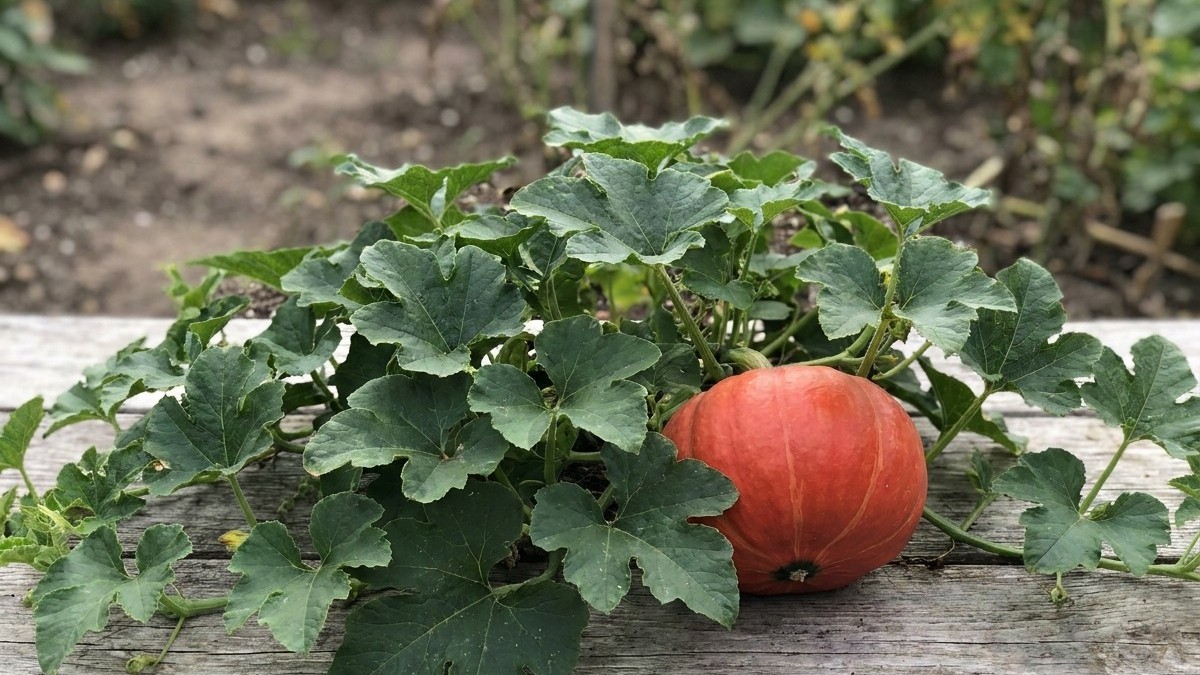

Cut a pumpkin when the rind is hard, the stem has dried to a woody brown, and the color has deepened all over the fruit. Where winters bring a freeze, as in north Florida, that happens in the fall, and the fruit has to be in before the first frost. A whole pumpkin can then keep for months, but only in the right spot. Central and south Florida run on a different calendar, covered below.
When pumpkins are ready in Florida
A pumpkin is ready when the rind is hard enough that a fingernail won’t dent it and the stem has dried and turned woody. The number to write down is 45-55 days after flowering, the maturity time Utah State University Extension gives for pumpkins. Harvest with the stem attached, and do it before frost.
The count starts when the blossom opens, which comes weeks after sowing. Sowing itself waits for the soil to reach 65 F. That is a different event from the last spring frost, because soil lags the air by weeks. In north Florida the last spring freeze falls between February 16 and March 7, and a bed can still be too cool for seed after that date has passed. A soil thermometer pushed a few inches into the bed settles it.
How do you count back from the first fall frost in north Florida?
Use Jacksonville as the reference. NOAA’s National Centers for Environmental Information publishes climate normals with the odds of a 32 F freeze, and the middle band of those odds puts the first fall freeze between November 26 and December 13 (station data here). The airport sits inland, and in three of thirty falls it saw no freeze at all, so a coastal or southern yard may get more time. Treat those dates as the middle of the odds, since any given year can land on either side.
Now work backward. A flower that opens late in the season may not have its 45 to 55 days before frost. A flower that opens late in the season only makes it if frost holds off long enough. Blossoms that open after that produce fruit that will still be green when the cold arrives. If your vines are setting fruit late, Will Pumpkins Ripen Before Frost in Florida? walks through what to do with fruit that is behind schedule.
What about central and south Florida?
The window above belongs to north Florida. Central and south Florida are effectively frost-free, so the growing calendar inverts. The main season runs through the cooler winter months, and summer becomes the hard part, with heat, humidity and heavy insect pressure on the vines. Pumpkins there are planted so that the 45 to 55 days after flowering fall in the mild months, and a frost date has nothing to do with it. Your county extension office can give you the planting weeks that fit your area. For the insects that chew vines and rinds in the warm months, see What Eats Pumpkin in Florida, and When. The broader planting picture is in Growing Pumpkins in Florida.
Keeping them, and for how long
The University of Illinois Extension says a whole pumpkin keeps for three to six months in a cool, dark location between 45-50 F. That is a ceiling for ideal conditions, and a pumpkin kept warmer, bruised, or harvested from stressed vines will not reach it. Utah State University Extension adds the floor: keep harvested pumpkins where they will not freeze. In north Florida a hard freeze can arrive while pumpkins are still sitting on a porch, and a frozen pumpkin is finished.
Condition at harvest sets the starting point for everything after. A pumpkin with a hard rind, full color and an intact stem begins storage in the best shape. One with a gouge, a soft spot or a snapped stem begins with an open door for rot. Set the damaged ones aside and use them first, in the kitchen or the compost pile, and give the sound ones the cool spot.
Why can’t pumpkins sit next to apples?
The University of Illinois Extension also says to store pumpkins away from ripening fruit and vegetables such as apples, potatoes and tomatoes. Ripening produce gives off a gas that ages the pumpkin faster. It is the second rule, and the one most people miss. The porch beside a crate of apples is the worst place a pumpkin can sit, and so is a pantry shelf next to a bin of potatoes. Put them in a different room, or at least a different corner with some distance between them.
Does the 45-50 F range apply to a carved pumpkin?
No. That range is for a whole pumpkin. Once the rind is cut, the flesh is exposed to air and moisture, and the three-to-six-month timeline no longer applies. A carved pumpkin is a short-term decoration or ingredient. Plan to use it quickly and keep it out of the storage plan for the whole ones.
Check stored pumpkins regularly for signs of decay. A soft spot, a weeping patch or mold on the rind means that one should come out and be used before it spreads trouble to its neighbors. Chewed or scarred rinds from insects shorten storage too, which is one more reason to keep vine pests in check earlier in the season.
Where in the house that actually is
Few rooms in a Florida house sit at 45-50 F, so the practical job is finding the one that comes closest. A domestic refrigerator runs colder than that band. Living space is too warm for a whole pumpkin. A garage swings with the weather, baking on a warm October afternoon and dropping hard during a winter cold snap in north Florida.
The best candidate is usually the coolest interior room: a spare bedroom kept closed with the vent shut, an interior closet, or an unheated pantry away from the kitchen’s heat. Interior rooms change temperature more slowly than a garage or porch, and they stay dark. In the cooler months in north Florida, a garage that stays above freezing may come near the range too, but it needs watching.
Guessing is the weak point. Put a thermometer where the pumpkins will sit and read its low and high over a few days before you move them in. A min-max model makes this easy. If the spot stays in the 45-50 F band, you are in good shape. If it runs warmer, expect a shorter life than the three to six months, and plan to use those pumpkins sooner. If it ever drops to freezing, move them. Skipping the check can cost you a whole stack of pumpkins that goes soft in the closet while you assume it is fine.
Set each pumpkin so it doesn’t touch the next one, on a shelf or a few sheets of cardboard, and keep the whole group well away from the fruit bowl. A cardboard box over the top handles the dark.
Common questions
Can I cut a pumpkin early if frost is coming?
Yes. Cut it with the stem attached and keep it where it will not freeze. A fruit with a hard rind and good color is worth saving. One that is still mostly green with a soft rind is unfinished, so use it first. The ripening page linked above covers those late fruit in more detail.
When should I plant so the pumpkins are ready before frost in north Florida?
Sow when the soil reaches 65 F, which comes weeks after the last spring freeze (February 16 to March 7 at the Jacksonville reference). Then check that flowers will open at least 45 to 55 days before the first fall freeze window of November 26 to December 13. Details on timing and care are in Growing Pumpkins in Florida.
How long will a pumpkin last on the porch?
Much less than three to six months. That figure belongs to a cool, dark location between 45-50 F. A porch is brighter and usually warmer, and in north Florida it may see a freeze. Treat a porch pumpkin as a decoration and inspect it often.
Does the stem really matter?
Yes. Harvest with the stem attached. A pumpkin that loses its stem has an open wound at the top, which is where rot tends to start. Handle the fruit by the body, and support it from underneath when you carry it.