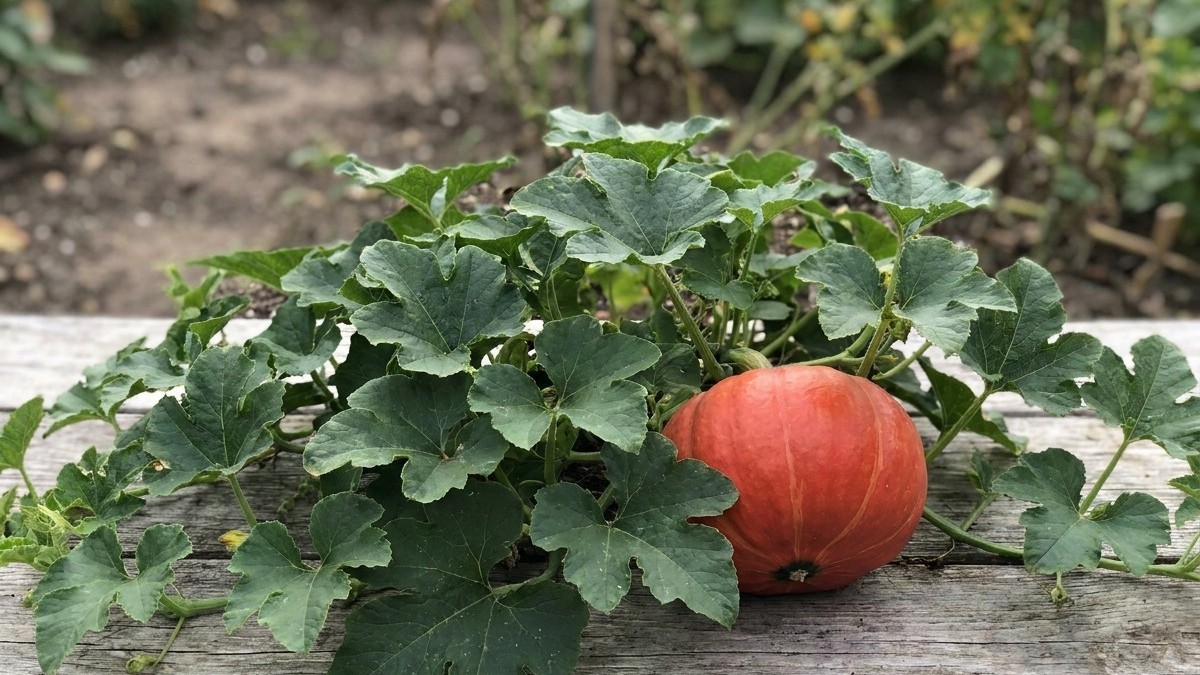

Cut a pumpkin when the rind is hard, the color is solid and the stem has dried and hardened, and always before a hard frost. Stored whole in a cool, dark spot between 45 and 50 F, it can keep three to six months, and that is a ceiling most homes fall short of. In Illinois the frost deadline falls in late October or early November, so the job is lining the plant’s own clock up against that date.
When pumpkins are ready in Illinois
A pumpkin is ready when it has its full color all over and the rind resists a thumbnail pressed hard against it. In Illinois that usually happens between September and the first fall frost, which the Chicago-area reference airport station puts between October 24 and November 3.
Those dates come from the NOAA National Centers for Environmental Information climate normals, and they describe one airport, not every field in the state. Suburban and rural gardens typically see the first fall frost one to two weeks earlier, and higher ground earlier still. Your county extension office can tell you what your own ground does.
The plant’s own timetable comes from Utah State University Extension: pumpkins mature in 45 to 55 days after flowering. The count starts when the flower opens. It does not start at seeding or transplanting, and that difference decides whether a late fruit finishes. Seed packets count days from sowing, so the number printed on a packet runs much longer than the fruit’s own clock.
What do the frost dates mean for a late flower?
Lay the 45 to 55 days against the frost window. A flower that opens by late August has the full 55 days before October 24, the early edge of the reference window. One that opens in mid-September has barely 45 days even if frost holds off until November 3, and a garden that frosts a week or two early will not give it that long. Fruit set that late tends to stay green and soft-shelled. For what to do with fruit caught in that position, see Will Pumpkins Ripen Before Frost in Illinois?
Pests can shorten the timetable too. A vine weakened by squash bugs or cucumber beetles may stop feeding its fruit early, and the damage and its timing are covered in What Eats Pumpkin in Illinois, and When.
Does 65 F soil mean the frost is over?
No. Utah State University Extension has growers sow pumpkins when the soil reaches 65 F, and that is a soil reading. The mean last spring frost at the reference station falls between April 11 and April 22, but soil warms weeks behind the air. A soil thermometer a couple of inches down tells you more than the calendar does. The full planting sequence is in Growing Pumpkins in Illinois.
When the pumpkin is ready, cut it with the stem attached, ahead of frost. A stem left on gives rot a smaller opening, and a pumpkin pulled off bare is the first one to go soft in storage.
Keeping them, and for how long
Utah State University Extension asks for two things at harvest: leave the stem on, and bring the fruit in before frost to a place where it will not freeze. University of Illinois Extension, in its guide to choosing a pumpkin, supplies the temperature and the time.
How long does a whole pumpkin keep?
University of Illinois Extension says a whole pumpkin keeps three to six months in a cool, dark location between 45-50 F. Read that as a maximum under good conditions. A pumpkin that was bruised, cut early, handled by its stem or kept warm will give up sooner, and nothing in that range guarantees the full six months.
Put dates on it. A pumpkin cut in early October reaches the end of the ceiling in early April, while the three-month end of the range runs out around the new year. A pumpkin meant for pie in February is a reasonable plan. One meant to last until spring is a hope. Check storing pumpkins every week or so for soft spots, and cook the ones that show them first.
What should a stored pumpkin stay away from?
The same University of Illinois Extension guide says to keep pumpkins away from ripening fruit and vegetables such as apples, potatoes and tomatoes. Ripening produce gives off a gas that ages the pumpkin, so it softens and spoils sooner than the temperature alone would predict.
That rules out a few spots people often pick. A porch beside the apple crate is the worst of them. A cellar shelf above the potato bin does no better, and neither does a windowsill with tomatoes finishing on it. If the cool room is also your produce room, move the pumpkins to a different corner or a different room altogether.
Does the 45-50 F range apply to a carved pumpkin?
It applies to whole fruit only. Carving opens the flesh to air and moisture, and a cut pumpkin is a decoration for days, not months. If you want a pumpkin that lasts into the winter holidays, carve it late and keep the rest of the crop whole.
Where in the house that actually is
A temperature range on paper does not tell you which room in an Illinois house comes close. Three common spots fall short in three different ways.
A refrigerator is colder than 45-50 F, and a pumpkin will not fit in one anyway. A heated room, such as a kitchen corner or a living room shelf, runs warmer than the range and speeds aging. A garage tracks the weather. It may hover near the right range in October, then drop below freezing in a December cold snap, and Utah State University Extension says to store pumpkins where they will not freeze. A pumpkin that freezes goes soft and watery as soon as it thaws.
Which room is closest to 45-50 F?
In most Illinois houses the best candidate is an unheated basement or cellar room, as far as possible from the furnace and water heater. A cool back bedroom or a mudroom on an interior wall can come close, as can an enclosed porch until the hard freezes start. Pick a place that stays dark, and set the pumpkins on a shelf or a few boards so air moves under them instead of resting them on bare concrete. Keep apples, potatoes and tomatoes in another room, since many basements double as the produce cellar.
Leave a thermometer in the spot for several days before the pumpkins move in, and read it in the morning and again in the evening. A shelf that sits in range on a mild afternoon can drop to freezing on a clear night, or sit well above the range beside a heating duct. Skipping the check can cost you the months you were counting on.
Common questions
Can I cut a pumpkin before it turns fully orange?
A pumpkin that is still partly green is better left on the vine as long as frost allows. Cut it only when the frost forecast forces it, with the stem attached. The rind and color you check for are the same ones that tell you it has finished maturing.
How long will a whole pumpkin last in my basement?
Three to six months is the most University of Illinois Extension gives a whole pumpkin, and only in a cool, dark place between 45-50 F. A basement that runs warmer, or one that shares space with apples or potatoes, will shorten that.
Is it safe to store pumpkins next to apples?
No. Ripening fruit gives off a gas that ages the pumpkin. Apples, potatoes and tomatoes are the ones University of Illinois Extension names, so store pumpkins well away from them.
How do I find my own first frost date?
The October 24 to November 3 window belongs to the Chicago-area reference station. Your county extension office knows what your own area does, and gardens outside the city often frost one to two weeks sooner, so use the local date to count back from your pumpkin’s flowering.