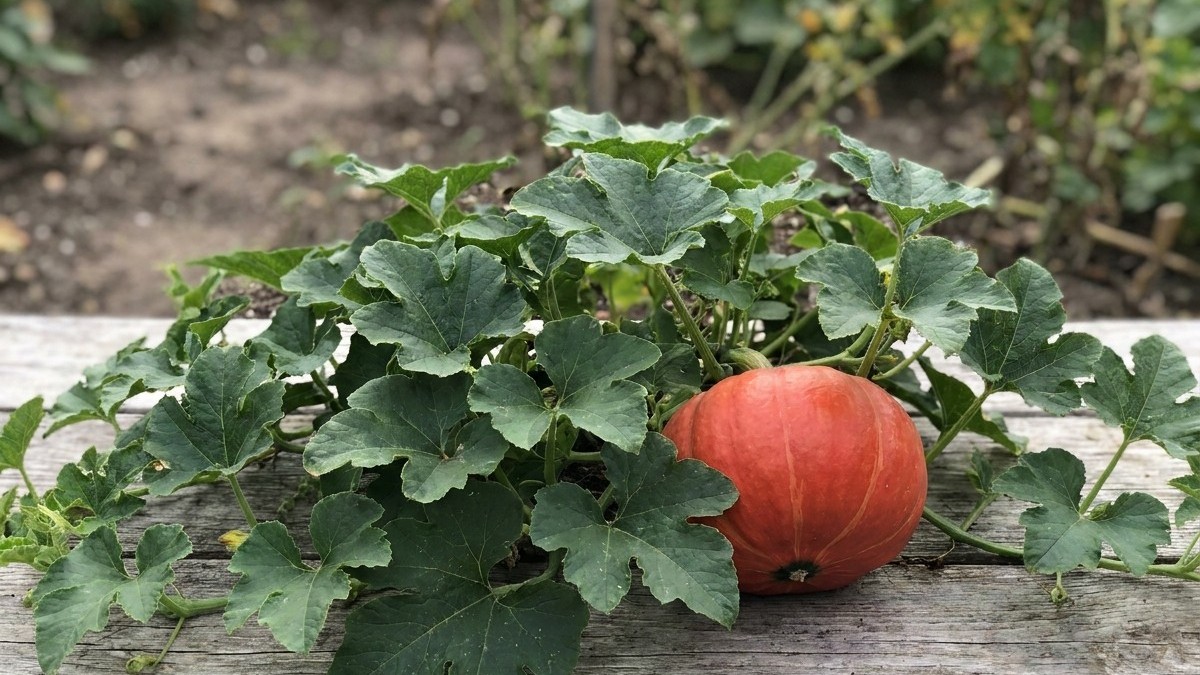

A pumpkin is ready to cut when the rind has gone hard and fully colored and the stem has dried and turned corky. In Montana that usually means late September or the first days of October, just ahead of a first fall freeze that falls between October 1 and October 14 in the Billings area. Cut it with the stem attached, and a whole pumpkin can keep three to six months in a cool, dark place, as long as it never freezes and stays away from ripening fruit.
When pumpkins are ready in Montana
Press a thumbnail against the rind. If it resists and the color is deep and even all over, the fruit has finished growing. Across Montana that test usually passes before the first 32 F freeze arrives. The plant’s own signals matter more than a calendar square, and they travel to any garden in the state.
The clock that produces those signals is easy to get wrong. Utah State University Extension says pumpkins take 45-55 days to mature after flowering. That count does not start at seeding or transplanting. Seed goes in when the soil reaches 65 F, and the soil lags the air by weeks, so 65 F soil does not arrive on the last spring frost date. Billings normally sees its last 32 F freeze between April 29 and May 10, and soil warm enough for pumpkin seed tends to come later than that. The vine then needs more time to grow before the first flower opens.
How do you count back from the first fall frost?
NOAA’s NCEI climate normals put the first fall freeze at Billings between October 1 and October 14, the stretch when the odds of a 32 F freeze run between 30 and 70 percent. Count back 45 to 55 days from those dates. A flower that opens in the first half of August may not have time to finish before an October 1 freeze. One that opens in the last days of August finishes only if frost holds off toward mid-October. Anything that opens later will give a green fruit that will not color up on the vine, however warm September turns out.
Billings is one of the milder valleys. Mountain valleys elsewhere in Montana can frost in any month, so a garden at higher elevation should shift the whole count earlier and watch the forecast closely from late August on. Your county extension office can tell you how far your own valley runs from the Billings dates.
How do you know when to cut?
Three signs line up when a pumpkin is done: the rind resists a thumbnail, the color is even, and the stem is dry and corky where it meets the vine. A vine that has started to die back is another signal, though a vine stressed by insects can die back early on fruit that is still immature. What Eats Pumpkin in Montana, and When covers squash bugs and cucumber beetles and what they do to a vine in late summer.
Cut with pruners and leave the stem on the fruit. Utah State University Extension advises harvesting with the stem attached and before frost. If a freeze is forecast and some fruit is still pale, cut everything that has begun to color and bring it in. Will Pumpkins Ripen Before Frost in Montana? goes through what to do with the stragglers. For the full season from seed to harvest, see Growing Pumpkins in Montana.
Keeping them, and for how long
University of Illinois Extension says a whole pumpkin keeps for three to six months in a cool, dark location at 45-50 F. Treat six months as the ceiling under ideal conditions. A pumpkin with a broken stem, a bruise or a soft spot will fail well before then, and a spot that runs warmer will shorten the clock too. Plan on using the best-looking fruit last and the blemished ones first.
The same Extension guidance gives a second instruction that few people follow: store pumpkins away from any ripening fruit or vegetables, such as apples, potatoes or tomatoes. Ripening produce gives off a gas that ages the pumpkin. That makes the porch beside the apple crate the worst place to keep one, and a basement shelf next to a flat of ripening tomatoes is not much better.
Why does a freeze ruin a stored pumpkin?
Utah State University Extension keeps its storage advice short: put pumpkins where they will not freeze. Ice damages the flesh, and a pumpkin that has frozen turns soft and starts to rot from the inside once it thaws. Because 32 F is the freezing line, a spot that falls to 45 F on a calm night but dips below freezing in a cold snap is not a storage spot.
Do those numbers apply to a carved pumpkin?
The 45-50 F range and the three-to-six-month span are for whole pumpkins. Once the rind is cut, the flesh is exposed and the pumpkin breaks down far faster. Carve close to the day you plan to display it, and keep uncarved fruit in storage until then. If you want a jack-o’-lantern for the end of October and the rest for pies in winter, carve the first and leave the others whole.
Dry conditions help too. Condensation on the rind invites mold, so a damp corner is a poor choice even when the temperature is right. Set pumpkins in a single layer on a shelf or a pallet rather than on bare concrete, with space for air to move between them.
Where in the house that actually is
The storage range looks simple until you try to find it in a real house. A domestic refrigerator runs colder than a pumpkin wants and has no room for it anyway. Any heated living space is too warm, and a pumpkin kept on a kitchen counter or in a warm closet will age faster than one in a cool room. An unheated garage swings with the weather, and in Montana fall that means mild afternoons and nights that can drop below 32 F.
Which room comes closest to 45-50 F?
For most Montana homes, the best candidate is a basement corner against an exterior wall, or an interior room or closet where the heat is turned down or the vent closed. An unheated spare room can work too, if it stays above freezing through the coldest nights. An attached garage sometimes holds a steadier temperature than a detached one because it shares a wall with the house, but it still needs checking. Keep the pumpkins away from the furnace, the water heater and any shelf where apples or potatoes are ripening.
Guessing a temperature by feel is where people go wrong, because a room that feels cool to a person in a sweater can sit well above 50 F. Set a thermometer where the pumpkins will sit and read it for several days, including one cold night, before you commit the whole crop to that spot. A minimum and maximum thermometer is better still, since it records the overnight low you would otherwise miss. A garage that looked fine on a sunny afternoon can hit freezing on the first hard night and ruin a crop that was otherwise ready for months of storage.
Check the pumpkins every couple of weeks as well. Remove any that show a soft spot before it spreads, and use those first. If the thermometer shows a spot running a little warm, move the pumpkins to the coolest corner and plan to use them sooner rather than later.
Common questions
Can I leave pumpkins on the vine until the first frost?
You can, but it is risky. A freeze that kills the vine can also damage the fruit, and the first fall freeze in Billings falls between October 1 and October 14, with mountain valleys often earlier. Once the rind is hard and the color is even, cut the fruit with its stem and move it indoors rather than waiting for a forecast low.
Does the 45-55 day count start at planting?
No. Utah State University Extension counts those days from flowering. Seed goes in once the soil reaches 65 F, and the vine needs weeks of growth before it flowers. Note the date the first fruit-bearing flowers open and count from there.
Can I store pumpkins next to apples or potatoes?
Keep them apart. University of Illinois Extension says to store pumpkins away from ripening fruit or vegetables such as apples, potatoes or tomatoes, because the gas they give off ages the pumpkin. Give pumpkins their own shelf, ideally in a different room.
How long does a carved pumpkin last?
Much less time than a whole one. The three-to-six-month span applies to uncut pumpkins held at 45-50 F. A carved pumpkin has exposed flesh and breaks down quickly, so carve it close to the day you want to show it off and keep the rest whole.