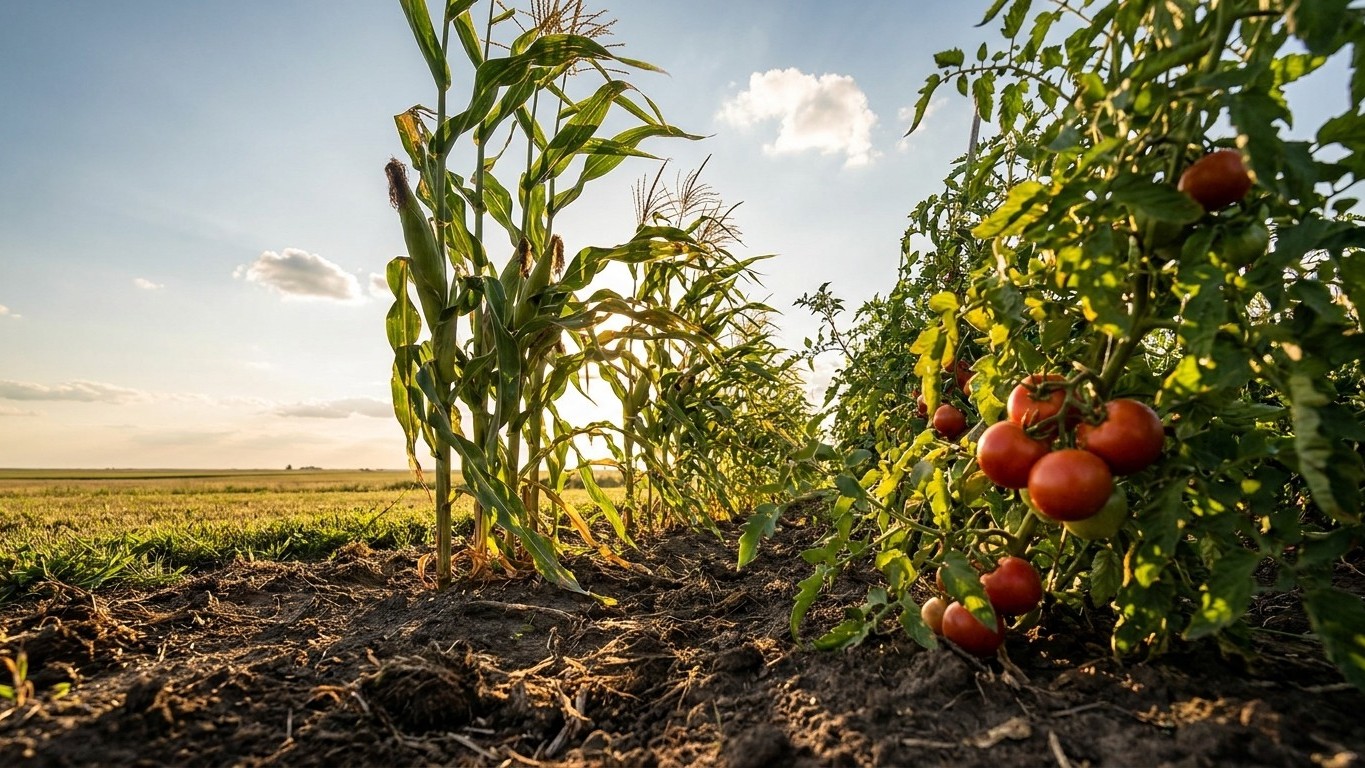

Sweet corn in a Montana garden gets eaten in three stages: seed and seedlings in cool spring soil, leaves through the growing season, and ears from the moment silks appear until picking. Which insect or animal is behind each stage changes from county to county, and Montana State University Extension is the service that sorts that out. The timing is easier to read yourself. It follows how long the soil has been warm and how many days remain before the first fall frost.
Which pests attack corn in Montana
Montana State University Extension documents garden pests across the state, and its county offices hold the species list for your area. Those are the names to trust. Corn is a grass with no wood and no fruit to host a tree borer or an orchard pest, so anything on an extension list that lives on trees or shrubs has no business in a corn patch. Seeing one nearby does not make it a threat to your rows.
What you can sort out yourself is the group. Each one works on a different part of the plant at a different time.
Which groups of pests go after sweet corn?
- Seed and seedling feeders, working at or below the soil line in the first weeks.
- Leaf chewers, active while the plants are growing toward tassel.
- Ear feeders, which arrive when silks emerge and work the tip of the ear.
- Birds and mammals, which go after nearly ripe ears and can strip a patch in a night or two.
Insects and animals do not wait for you to name them. A caterpillar in the ear tip and a raccoon with a torn husk both cost you the crop, but they call for different answers. Identify the part of the plant that is damaged before you identify the culprit, because that is the clue an extension agent will ask for first.
When each one shows up, and what it does first
Dates mislead here because the whole season shifts with elevation. At the Billings reference station, the mean last spring frost falls between April 29 and May 10, and the mean first fall frost between October 1 and October 14. Billings is one of the milder valleys, and mountain valleys elsewhere in Montana can frost in any month. Soil at 60 F comes well after the last frost, so the corn calendar starts at the soil, not at the frost date.
When does damage start after planting?
The first thing a gardener sees is a gap in the row. Seedlings fail to appear, or a plant that was standing yesterday is cut off at the soil line. The soil temperature matters twice here. Ordinary sweet corn should not go in before the soil at the 4-inch depth is at least 50 F, and extra-sweet types wait for 65 F. Seed sitting in cold ground is slow to sprout and stays exposed longer to anything feeding below the surface. The timing is covered in When to Sow Sweet Corn in Montana.
Leaf chewing comes next, once plants are up and growing. The first sign is ragged edges or holes in the whorl, the tight center of young leaves, which show up unrolled as rows of holes. It tends to be tolerable on a vigorous plant, which is why the leaf stage matters less than the ear stage.
What shows up once silks appear?
Silk emergence starts a second clock. From the first silks, watch the ears closely, and that is when ear feeders arrive. The first sign is brown, chewed silk, or fine droppings at the ear tip. Birds and mammals follow in the last stretch, when kernels fill, and what you see first is a loosened husk or a flattened stalk.
Telling the damage apart from everything else
Many corn problems that look like insect feeding come from weather, water or planting layout. Montana adds one: at the Billings reference station, 28.3 days a year reach 90 F or more, enough heat to curl leaves and stress plants that are short of water. The table gives the sign that separates each look-alike. For a firm identification, take a sample to your county extension office.
| What you see | Possible causes | What separates them |
|---|---|---|
| Seedlings missing or patchy | Seed feeders, or seed rotted in cold soil | Dig up a seed. Mushy and discolored points to cold soil (extra-sweet seed sown at 50 F rots rather than sprouts). A hollowed or chewed seed points to feeding. |
| Leaves rolled or gray-green in the afternoon | Heat and water shortage | Leaves that open again by morning after watering are stressed by water. Feeding damage does not recover. |
| Torn, shredded leaves across the patch | Wind or hail | Tears run the same direction after a storm. Chewing leaves holes or ragged edges, with droppings. |
| Bare patches in the kernels | Poor pollination (rows too few or too short) | Gaps scattered over the ear with no chewing or droppings. Sweet corn needs blocks of three or more rows to pollinate well. |
| Starchy, bland kernels | Types that tassel together | Not damage at all. Sweetness is lost when su, se and sh2 types tassel at the same time. |
| Flattened stalks | Wind, or animals | Wind leans stalks one way with roots pulled. Animals leave torn husks and chewed ears. |
One diagnosis gets missed often. A gardener sees chewed silk and a poor ear and blames an insect, when the real trouble is that the rows were too short for good pollination. Check the layout of the planting before you check the ear.
What actually works here, and what is a waste of time
A short season rewards timing over products. Sow when the soil at the 4-inch depth reaches the right temperature for your type, then make sure the crop fits. Corn needs 60 to 90 days from planting, and those days must end before the first fall frost, which falls October 1 to October 14 at Billings. In colder valleys the window is shorter, so check whether a late type fits at all. Will Sweet Corn Ripen in Montana? works through that question.
A physical barrier set before the pest arrives beats any treatment applied after the damage. A light row cover over young seedlings keeps leaf chewers off, as long as it comes off before tassels form so pollination can happen. Fencing or netting around the patch is the answer for birds and mammals, and it has to be up before the ears fill, because animals learn the patch quickly. Picking on time also protects the crop. Dry brown silks, husks still moist and green, and milky juice from a punctured kernel together say the ear is ready, and an ear left on the stalk past that point is an invitation to raiders.
Several common habits waste effort. Planting late to dodge insects runs into the first frost. Heavy fertilizer does not make a plant resistant to feeding. Home mixes sprayed on the silks have no state testing behind them. Spraying on a schedule without knowing the cause treats a problem that may be water or wind.
Montana State University Extension knows which products are registered in the state and for which crop, and its county offices can tell you whether treatment is worth it at all.
Where to check this for your own county
Montana State University Extension has an office in each county, and that office is where a damaged plant gets a name. Pests are not spread evenly over the state. A species common in one valley may be absent in the next, and elevation changes both the frost dates and the insects that survive the winter. Billings is one of the milder valleys, so its dates run earlier than most mountain valleys, where frost can come in any month. State-level information tells you what has been documented in Montana, but it does not say what is in your garden.
The basics of the crop are in Growing Sweet Corn in Montana. For a pest question, bring what the county agent can use: the damaged part of the plant in a sealed bag, a photo of the whole plant and the row, the planting date and the date the first silks appeared. Take the sample in before you spray anything, because treatment can destroy the evidence the office needs.
Common questions
When can I plant sweet corn so the seed doesn’t rot in cold soil?
Ordinary sweet corn goes in when the soil at the 4-inch depth is at least 50 F. Extra-sweet types wait until the soil reaches 65 F. These thresholds are different, and a calendar date will not tell you either one.
How long after silks appear is sweet corn ready?
Ears take time from silk emergence to reach picking stage. To pick the right day, check for dry brown silks, husks still moist and green, and milky juice from a punctured kernel, all three together.
Can I plant different types of sweet corn side by side?
The trouble comes when su, se and sh2 types tassel at the same time, which costs sweetness. Separate the plantings so they do not shed pollen together, and plant in blocks of three or more rows.
How long does picked sweet corn keep its sweetness?
Clemson Cooperative Extension says: “Sweet corn loses sugar from the kernel rapidly at high temperatures… Sweet corn can be stored under optimal conditions for about five days, but will lose sweetness with each day of storage.” The su type loses sugar fastest, se holds it longer and sh2 longest.