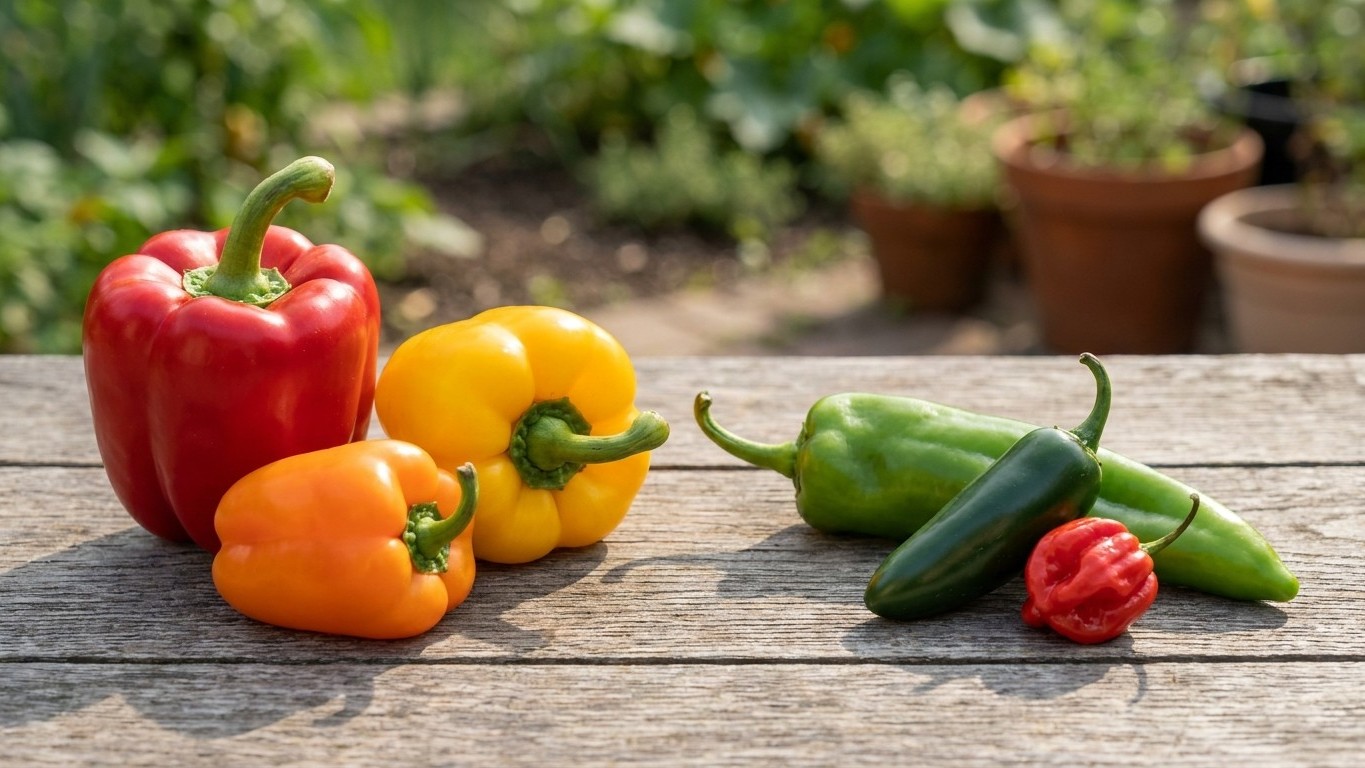

In Montana, pick peppers once they reach full size and feel firm. Clemson Extension puts that at about 70 to 85 days after transplanting. Then keep them out of the refrigerator. Peppers store best at 45 to 50 °F with 80 to 90 percent relative humidity, and a home fridge runs colder than that. Cold damages the skin before the fruit gets a chance to keep. Getting a harvest in the first place depends on two temperature limits. This guide covers both, then the timing. For the full crop picture, start with Growing Peppers in Montana.
The short answer
Billings, the reference station for this site, averages 28.3 days a year at or above 90 F, according to NOAA NCEI climate normals. That is a little over four weeks of heat, scattered across a summer. It matters because Utah State University Extension is blunt about it: pepper fruit set fails at both ends, with days above 90 F or nights below 55 F. Flowers that open in the wrong weather drop instead of becoming peppers.
The hot end
An average hides the spread. Some summers deliver far fewer than 28.3 hot days, and others pile them into one ugly stretch in July. A single scorching afternoon rarely ruins a plant, but the blossoms that open during a hot spell are the ones you lose, and the gap shows up weeks later as a plant with leaves and no fruit. If your plants flowered heavily and set almost nothing, Why Peppers Fail to Set Fruit in Montana walks through the diagnosis.
The cool end
Nights under 55 F do the same damage from the opposite direction. You have to watch your own. A min/max thermometer set in the bed (not on the porch wall, where concrete holds heat) and a quick note each morning will tell you more than any regional forecast. Garden spots a few hundred feet apart can differ by several degrees overnight, especially where cold air drains downhill and pools.
When to pick, and where to keep them
Clemson’s 70 to 85 days after transplanting is a baseline from a different climate, so treat it as a planning range and not a promise. The fruit tells you more than the calendar. Pick when it has reached full size, the walls feel firm, and the skin is glossy. Green peppers can come off at that point. Peppers you want red, yellow, or orange need extra weeks on the plant. Cut them with pruners and leave a short stub of stem, because pulling snaps branches.
Then comes the mistake nearly everyone makes. The fridge is too cold for peppers. The range Clemson gives, 45 to 50 °F, is warmer than a domestic refrigerator, and below about 45 °F peppers develop pitting and go soft. That is chilling injury, and it can show up after the peppers come back to room temperature. A cool basement, root cellar, or unheated mudroom that holds that range works better. Clemson’s “two to three weeks” is the best case under ideal conditions, not a guarantee. If you have no spot that cool, use the peppers quickly, or slice and freeze them.
When to start seed here
Pepper timing runs backward from the day the plants go outside. Utah State University Extension says transplants need 8 to 10 weeks indoors, and that they go out when the soil reaches 60 F, after frost has passed. Work through it in this order, and you can redo the math for any county.
- Find your last spring frost. For Billings, NOAA NCEI shows a band from April 29 to May 10 (the 30 to 70 percent probability range for a 32 F freeze). Billings is one of the milder valleys, though. Mountain valleys elsewhere in Montana can frost in any month, so a local date from your own records or a neighbor who has gardened there for years beats a statewide guess.
- Wait for the soil, not the calendar. A frost-free date is only the first gate. Peppers go out when the soil reaches 60 F, and that usually comes later than the last frost. Push a soil thermometer a few inches down in the morning and watch it for several days running. Your transplant date is whichever comes last, the frost or the 60 F reading.
- Subtract 8 to 10 weeks. Say, purely as an example, that your soil hits 60 F on May 20. Ten weeks is 70 days, which lands on March 11. Eight weeks is 56 days, which lands on March 25. Sowing anywhere from March 11 to March 25 gives you transplants of the right age. Swap in your own transplant date and the same subtraction works.
- Add the harvest window. Take that May 20 transplant date and add Clemson’s 70 to 85 days. You get roughly July 29 to August 13 for first full-size fruit. Peppers that need to color up take longer, so a late transplant date squeezes the back end of the season.
- Check the fall side yourself.
Seedlings started too early get leggy and root-bound, and seedlings started too late reach the garden small, which pushes the first flowers into the heat. Aim for the middle of your 8 to 10 week window, and give the plants a few days of gradual outdoor exposure before they go in the ground.
What goes wrong here
Montana’s mix of strong sun, big temperature swings, and patchy watering produces a short list of repeat failures. Each one has a fix you can start on this week.
- Blossom drop in a hot spell or a cool night. Flowers fall off and no fruit forms, because days above 90 F or nights below 55 F break fruit set. Against a heat load of 28.3 days a year at the reference station, some of those days will land in flowering. On hot afternoons, 30 percent shade cloth over the bed takes the edge off. On cool nights, a row cover draped at dusk and removed in the morning holds a little warmth. Keep your min/max thermometer running so you know which problem you have. The plant will usually flower again once the weather moderates, so do not rip it out.
- Sunscald. Pale, papery, sunken patches show up on the side of the fruit facing the sun, and they often turn gray or moldy later. It happens when the leaf canopy is thin and strong sun hits fruit directly. Skip heavy leaf pruning, stake or cage plants so branches do not splay open, and use shade cloth during the harshest weeks. Scalded fruit is still edible if you cut away the damaged spot, but it will not store well.
- Blossom-end rot. A dark, leathery patch forms on the bottom of the fruit. The usual cause is uneven watering, which keeps the plant from moving calcium into the fruit even when the soil has plenty. Water deeply on a steady schedule, mulch to hold moisture, and avoid heavy nitrogen feeding that pushes leaf growth over fruit. A soil test tells you whether calcium is actually low before you add anything. Pick off affected fruit so the plant puts energy into healthy ones.
Chewed holes, scarred skin, or fruit hollowed from the inside point to a different culprit entirely. What Eats Pepper in Montana, and When covers those cases.
Common questions
Can I pick peppers while they are still green?
Yes. Once a pepper reaches full size and the walls feel firm, it is ready to eat green. Leaving it on the plant lets it change color, but that takes extra weeks and holds up the next round of fruit, which matters in a short season.
How long will picked peppers keep?
Clemson Extension says two to three weeks at 45 to 50 °F and 80 to 90 percent relative humidity. That is a maximum under ideal conditions, and fruit with sunscald or other blemishes will go sooner. Check them every few days and use the soft ones first.
What if frost is forecast before my peppers ripen?
Peppers do not tolerate frost, so rely on your local forecast. Pick everything that has reached full size and firmness before the cold arrives. Small fruit will not size up afterward, but it is still usable in cooking.
Does the Billings frost date apply to the rest of Montana?
No. April 29 to May 10 comes from the Billings station, one of the milder valleys. Mountain valleys elsewhere in the state can frost in any month, so use the Billings range as a reference point and adjust with your own records and a soil thermometer.