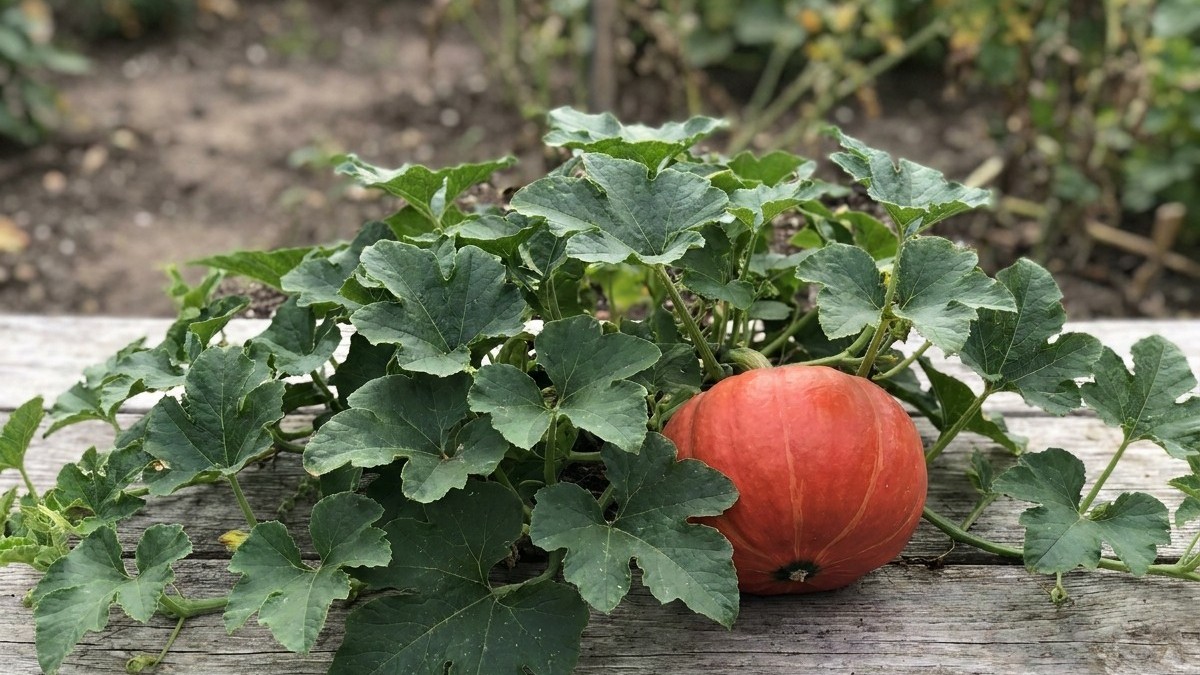

Cut a pumpkin when the rind is hard, the color is deep and even, and the stem has dried. Do it before a freeze, and leave the stem attached. A whole pumpkin can then keep for months, but only in a cool, dark spot away from ripening fruit. On the Gulf Coast the cold is rarely the problem. Finding a cool enough corner of the house is. For the full season, start with Growing Pumpkins in Louisiana.
When pumpkins are ready in Louisiana
A pumpkin is ready when a thumbnail pressed into the rind leaves no dent, the color has gone deep and even, and the stem has turned dry and woody. The calendar follows the plant’s own clock: pumpkins take 45-55 days to mature after flowering, so count from the day a flower opened. The day the seed went in tells you very little. Utah State University Extension adds the rule that matters at the cutting board: harvest with the stem attached, and do it before frost.
What does the frost window look like in south Louisiana?
NOAA NCEI climate normals put the first fall 32 F freeze, in the band where the odds run 30 to 70 percent, between December 17 and January 8. The window straddles the New Year. The last spring freeze falls between January 18 and February 8 in that same band. A 32 F freeze shows up in only 86.8 percent of years at the south Louisiana reference station, which means roughly one year in seven has no freeze at all. North Louisiana freezes far more reliably, so a gardener there should expect the cold to arrive with less doubt.
Work backward from the south Louisiana window and the flower deadline comes into view. A flower needs to open somewhere between the last week of October and late November, depending on when the freeze actually comes, to finish a full-size fruit ahead of it. A flower that opens later gives a green fruit. Late blooms are worth pinching off if you want the plant’s energy in the pumpkins that can still finish.
Why does summer heat matter more than frost here?
Frost is not what limits the crop in the Deep South. Heat is. The vines grow through a long, hot, humid season, and the squash bugs and cucumber beetles that work them over are covered in What Eats Pumpkin in Louisiana, and When. A ripe pumpkin left sitting on the vine through weeks of that weather gains nothing, so cut it once it passes the thumbnail test instead of waiting on a freeze that may never come.
Spring needs the same care. Seed goes in when the soil reaches 65 F, and soil lags the air by weeks, so the January 18 to February 8 frost window is not a planting signal. A cheap soil thermometer pushed a few inches down settles it. If you are counting days on fruit already set, Will Pumpkins Ripen Before Frost in Louisiana? runs the same math from the flower date.
Keeping them, and for how long
University of Illinois Extension states that a whole pumpkin keeps for three to six months in a cool, dark location between 45-50 F. Read that as a ceiling. It describes a sound, whole pumpkin held in the right place for the whole stretch, and a fruit that starts storage warm, bruised or cut with a weak stem will give out sooner. Utah State University Extension keeps its advice simpler: store pumpkins where they will not freeze. A frozen pumpkin goes soft and watery once it thaws, so the cold end of any storage spot matters as much as the warm end.
Why keep pumpkins away from apples and tomatoes?
The Illinois source also says to store pumpkins away from any ripening fruit or vegetables, and it names apples, potatoes and tomatoes. Ripening fruit gives off a gas that ages the pumpkin. That makes the porch beside the apple crate, or the kitchen counter next to a bowl of tomatoes, the worst place in the house for it, however good the temperature looks.
Most people never think about the gas. They think about the cold. A pumpkin parked next to a bin of ripening fruit loses time even in a room at 45-50 F.
Does the storage range apply to a carved pumpkin?
No. The 45-50 F range and the three-to-six-month ceiling belong to a whole pumpkin with the rind intact. Carving opens the flesh, and the keeping time drops to a short stretch that depends on the weather and the room. Carve close to the day you plan to display it, and treat anything with a soft spot, mold or a sour smell as finished.
Timing matters for whole pumpkins too. In a warm fall on the Gulf Coast, a pumpkin cut in October starts storage in a house far warmer than 45-50 F. The range is a target you work toward, and the sooner the pumpkin gets there, the more of the ceiling it keeps. Check stored pumpkins every week or so and use the first one that shows a soft spot.
Where in the house that actually is
Few houses in the Deep South hold 45-50 F for months, so the practical question is which spot comes closest. Each common choice misses in a different direction:
- The refrigerator runs colder than a pumpkin tolerates, and a whole one rarely fits anyway.
- A heated living space is too warm, and a pumpkin on the counter ages quickly.
- A garage or shed swings with the weather: warm on a sunny November afternoon, and in north Louisiana cold enough to freeze on a clear January night.
- A porch has the same swings, plus direct sun and often a fruit crate beside it.
Which room comes closest in a Louisiana house?
An unheated interior room usually does best: a closet on an inside wall, a seldom-used spare room with the vent closed, or a pantry away from the oven and the fruit bowl. Inside walls stay steadier than outside walls, and a dark room cuts the light the pumpkin does not need. Where the garage stays shaded and cool through winter, it can work too, as long as it does not drop to freezing. Put the pumpkin on a shelf or a piece of cardboard instead of bare concrete.
How do you check a spot with a thermometer?
Leave a thermometer where the pumpkin will sit for several days, and read it in the morning and the late afternoon before you move the pumpkin in. A thermometer that records the daily high and low is better still. Skip this step and you are guessing, and a pumpkin sitting in a room that is too warm quietly loses weeks of its keeping time before you see a single soft spot.
If the readings land at 45-50 F, you have a good spot. If they run higher, expect a shorter keeping time than the top of the range promises, and cook or carve those pumpkins first. If readings dip to freezing, move the pumpkin before the next cold night.
Common questions
Four questions come up most often once the pumpkins are cut.
How many days after flowering can I cut a pumpkin?
Pumpkins take 45-55 days to mature after flowering, according to Utah State University Extension. Mark the date a flower opens, count forward, and confirm with the rind and stem. Cut with the stem attached and before frost.
Is the last spring frost the right time to plant pumpkins?
No. Seed goes in when the soil reaches 65 F, and the soil lags the air by weeks. The last spring frost window of January 18 to February 8 only tells you when freezing air becomes unlikely, so check the soil with a thermometer before sowing.
Can whole pumpkins sit on the porch until Thanksgiving?
They can last a while, but a porch swings with the weather and will not hold 45-50 F. Keep the pumpkins away from apples, potatoes and tomatoes, and check them weekly. Do not count on the three-to-six-month ceiling, which assumes a cool, dark spot all the way through.
Does a carved pumpkin keep as long as a whole one?
No. The three-to-six-month figure is for a whole pumpkin. A carved one has exposed flesh and a much shorter life, so carve close to when you want to display it. For timing advice in your own part of the state, where north Louisiana freezes more reliably than the coast, ask your local extension office.