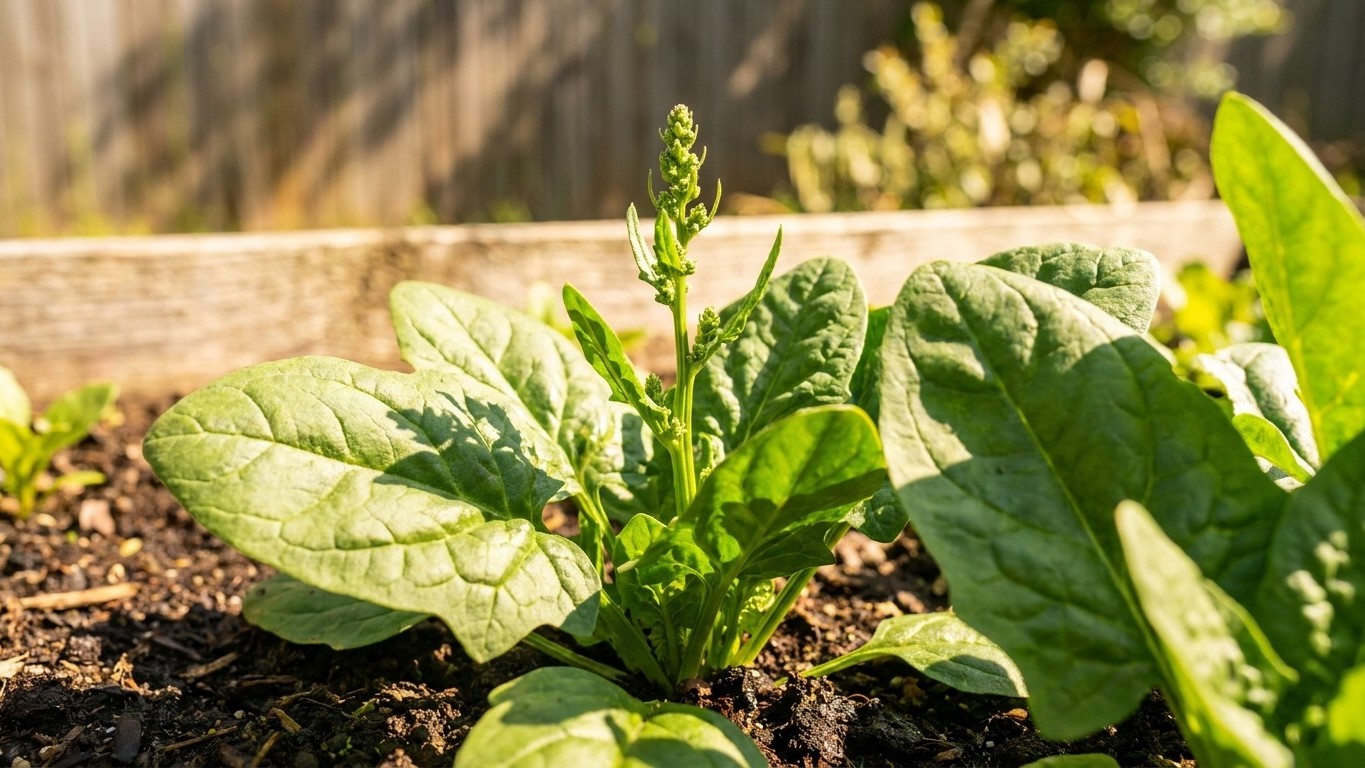

Four groups of feeders go after spinach in a Pennsylvania garden: chewing insects, leaf-mining larvae, sap-feeders and slugs. Deer and rabbits come along as the large visitors. Which one you meet first depends on weather and sowing date more than on the month. Spinach only grows well below 75 F, so its season is short and the pests that fit inside it are few. The signs show up in a predictable order.
Which pests attack spinach in Pennsylvania
Penn State Extension is the service Pennsylvania gardeners are pointed to for pest identification, and its county offices handle samples from home vegetable plots every season. For spinach, the damage sorts into four feeding styles. Chewers leave holes with clean or ragged edges. Leaf miners live between the two skins of the leaf and leave pale tunnels or blotches. Sap-feeders sit on the underside and leave curled, sticky or stunted leaves. Slugs and snails rasp holes at night and leave a dried slime trail.
Large animals belong on the list too. Rabbits clip young plants off near the ground, and deer browse whole rows down to stubs. Neither is an insect, but a bare row at dawn gets blamed on insects all the time.
Some pests that dominate state alerts have nothing to do with a spinach row. Tree borers and pests of orchards and forests feed on wood, bark or fruit, so they never touch a leaf crop. The same goes for pests of grain and field corn. Pests that attack flowers and seed heads also drop out, because spinach is picked as a leaf long before it sets seed.
The practical rule is simple. Name what you see on the leaf before you do anything about it, because a hole, a tunnel and a curl each point to a different feeder and a different fix. The sections below show how to tell them apart. For the wider picture of growing the crop, start with Growing Spinach in Pennsylvania.
When each one shows up, and what it does first
Spinach pests follow the plant’s own calendar. Spring spinach goes in as soon as the soil can be worked. At the Philadelphia reference station, the last spring frost falls between March 29 and April 6, and the northern tier and the Alleghenies run two to four weeks later. The first fall frost there falls between November 5 and November 16. Spinach has to fit between heat and cold, and the pests arrive in the gaps.
When does spinach get hit in spring?
The first thing most growers see is a seedling that has vanished or been clipped flat. That points to rabbits or a similar visitor, and it can happen within days of emergence. Next come small, ragged holes in the first true leaves. Chewing insects and slugs both cause these, and the leaf looks the same until you check for slime or look after dark.
Pale winding tracks or tan blotches inside a leaf come later, a few weeks after the seedlings are up and the weather has warmed. Those are leaf-mining larvae working between the leaf skins, and the leaf will not look chewed. Curled, sticky or distorted new growth usually means sap-feeders on the underside.
Warmth also brings the crop’s other problem. Spinach bolts on long days as well as heat. The longest day at the reference city has 14 h 50 of daylight, so a cool spell does not stop flowering once the days are long. A bolting plant turns bitter and loses leaf quality, and a stressed plant is an easier target. The details are in Will Spinach Bolt Early in Pennsylvania?
When does fall spinach get hit?
Fall spinach starts in a different season. The rule for the fall crop is to plant so the plants size up before the days shorten and the soil cools. Count back from the harvest you want, and remember that the reference station reaches 90 F or more on about 24.0 days a year, with much of that heat falling right at the sowing window. Soil above 80 F reduces germination, so seed sown too early comes up thin and weak.
Thin, weak seedlings are what slugs and chewers go after first. Damp late-summer nights favor slugs, and the first sign is again holes in the youngest leaves and silver trails on the soil. Sowing timing is covered in When to Sow Autumn Spinach in Pennsylvania.
Telling the damage apart from everything else
Half the spinach problems brought to extension offices are not insect problems. Yellow leaves, wilted leaves and spotted leaves can all be mistaken for pest damage, and treating the wrong cause wastes a season. The table lists what to look for. It describes signs, not diagnoses, since only someone looking at your leaf can say what is eating it.
| What you see | Possible causes | What separates them |
|---|---|---|
| Holes with dried slime trails | Slug or snail feeding | Silvery trails on leaves and soil; check with a flashlight after dark |
| Pale tunnels or tan blotches inside the leaf | Leaf-mining larvae | Hold the leaf up to the light; the tunnel sits between two intact leaf skins |
| Curled, sticky, stunted new leaves | Sap-feeding insects | Look at the underside of the youngest leaves for small insects |
| Older leaves yellowing evenly | Nutrient shortage | No tissue missing, no insects, and the whole plant fades from the bottom up |
| Wilting at midday, crisp edges | Dry soil or heat stress | Plants recover by evening; soil is dry a couple of inches down |
| Spots, rings or fuzzy growth | A leaf disease | Look for a pattern on the leaf surface and underside, and for no insect at all |
| Torn, shredded edges | Wind, hail or foot traffic | Damage lines up with a storm or a path, and new leaves come in clean |
| Tall central stalk, narrow leaves | Bolting | The plant is flowering, so the damage is the crop’s own timing |
The most useful single test is simple: hold the leaf up to the light. A chewed hole lets light straight through, while a miner’s tunnel glows because the leaf skin is still there. That one check separates two causes that look alike from a few feet away.
Nutrient and water problems tend to affect the whole planting evenly, while insects pick favorites. If every plant in a row shows the same pattern, think soil or water first. If one plant is shredded and its neighbor is clean, think feeder. When a photo and a leaf in a bag still leave you unsure, the Penn State Extension office for your county is the place to settle it.
What actually works here, and what is a waste of time
On a short season, timing and barriers beat any treatment. The best defense is a floating row cover laid on the day you sow, with the edges buried or weighted so nothing crawls under. It keeps out rabbits and flying insects before they ever find the planting, and it costs little compared to replanting a lost row. In spring it also protects against cold nights. Take it off or vent it when temperatures push toward 75 F, since spinach stops growing well above that line and a cover traps heat.
Slugs respond to garden housekeeping. Clear boards, flat stones and piles of old leaves near the bed, water in the morning so the surface dries before night, and pick off what you find after dark with a flashlight. Low fencing keeps rabbits out, and deer need something taller. Hand-picking works on small plantings, and it only takes a few evenings to see whether it is enough.
What wastes time is spraying before you know the cause. A miner inside the leaf is out of reach of most surface treatments, and spraying a nutrient problem does nothing at all. Broad treatments can also kill the beetles and other predators that were helping you. As for what products are registered for use on spinach in Pennsylvania, that is a question for Penn State Extension, which tracks current state rules.
Where to check this for your own county
Penn State Extension runs a county office across the state, and that office is the right first call for a spinach pest question. Staff there know what is active locally and can look at a sample. Pests vary inside the state more than gardeners expect. Philadelphia is the mildest corner, while the northern tier and the Alleghenies run two to four weeks later in spring, so pests arrive on a different schedule. A statewide list says what has been documented somewhere in Pennsylvania. It does not say what is on the leaves in your yard this week.
Before you call, gather three things. Take a few clear photos of the damage, including the underside of the leaves. Note when you sowed and when the damage first appeared. Then bring a damaged leaf in a sealed bag, not just a description, because a leaf shows details a phone call cannot. Keep it cool until you can get it to the office.
Common questions
What is eating holes in my spinach overnight?
Slugs and snails leave silvery trails on the leaves and soil, and chewing insects usually leave none. Rabbits clip whole seedlings near the ground and leave a bare stub. Check after dark with a flashlight, and take a damaged leaf to your county Penn State Extension office if the cause is still unclear.
Will a cool summer keep spinach from bolting?
Not by itself. Bolting is triggered by long days as well as warmth, and the longest day at the Philadelphia reference city has 14 h 50 of daylight. Cool weather helps flavor and growth, since spinach does best below 75 F, but it does not cancel the effect of day length.
Can I time my planting to avoid pests?
Timing reduces trouble without removing it. Sow spring spinach as soon as the soil can be worked, and for fall, wait until soil drops below 80 F. Strong, quick seedlings take less damage than slow ones.
Should I spray spinach for pests?
Identify the cause first, since many yellow or spotted leaves are not insect damage at all. A row cover and hand-picking handle a lot of problems. For anything that needs a treatment, ask Penn State Extension what is currently registered for spinach in the state.