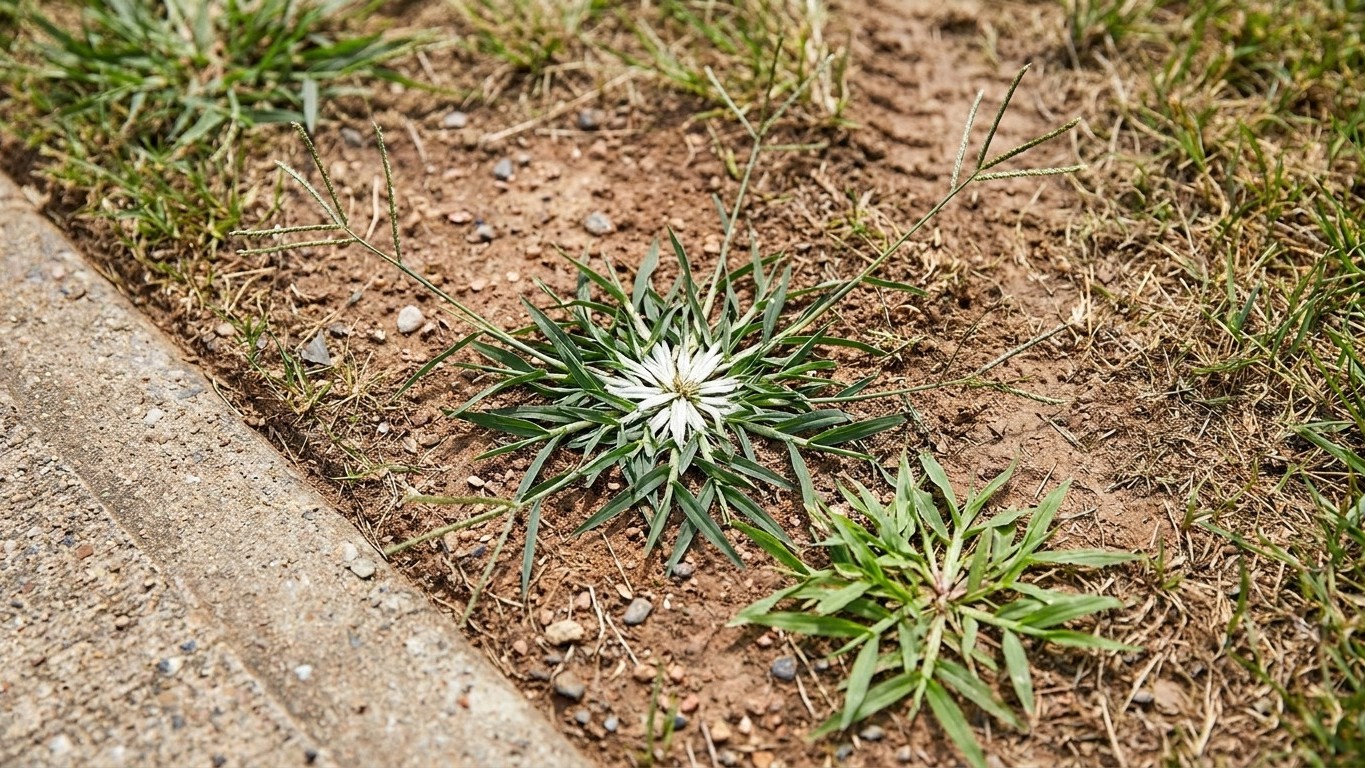

Mississippi lawns are warm-season grass, and the right mowing height depends entirely on which grass you have. Bahiagrass wants 3 to 4 inches, St. Augustinegrass 2.5 to 4 inches, and centipedegrass 1.5 to 2 inches. Bermudagrass, zoysiagrass, seashore paspalum and carpetgrass sit at 1 to 2 inches. Mow one at another’s height and you can lose the lawn within a season.
The mowing height for Mississippi lawns
The heights are far apart because the grasses are built differently. Bahiagrass and St. Augustinegrass have wide, coarse blades and need plenty of leaf to feed their roots. Bermudagrass, zoysiagrass and seashore paspalum spread by creeping stems and form a dense, fine mat, and they thicken when cut short. Cut a low-growing type tall and the mat gets leggy and thatchy. Cut a tall type low and you strip the leaf area it lives on.
What height suits each grass?
| Grass | Mowing height |
|---|---|
| Bahiagrass | 3 to 4 inches |
| St. Augustinegrass | 2.5 to 4 inches |
| Centipedegrass | 1.5 to 2 inches |
| Bermudagrass | 1 to 2 inches |
| Zoysiagrass | 1 to 2 inches |
| Seashore Paspalum | 1 to 2 inches |
| Carpetgrass | 1 to 2 inches |
Those ranges come from extension guidance for these species. Where you land inside a range matters. A rotary mower set at its lowest notch often can’t deliver a clean 1 inch cut on bermudagrass or zoysiagrass, and a ragged, scalped lawn is the usual result. If your mower bottoms out around 1.5 inches, run at 2 inches, the top of the range, instead of forcing it. A reel mower is the tool built for the lowest heights.
Why don’t cool-season grasses work in Mississippi?
Tall fescue, Kentucky bluegrass and ryegrass are built for cooler summers. They slow down or stall when heat and humidity pile up, thin out, and are prone to disease in warm, wet weather. In the Deep South they struggle through the long summer and don’t recover reliably. That is why every grass in the table above is a warm-season species, and why advice written for northern lawns doesn’t carry over. Neighbors in How High to Mow a Lawn in South Carolina work with much the same species list. In How High to Mow a Lawn in Virginia, cool-season and warm-season grasses overlap, so the advice there reads differently.
Not sure what you have? Bahiagrass sends up tall, Y-shaped seed stalks. St. Augustinegrass has broad, flat blades and thick creeping stems. Centipedegrass is a light, yellowish green and grows low and slow. Your county Mississippi State University Extension office can identify a sample if you bring a handful of turf with roots attached.
Raising the deck when the heat comes
Summer is when mowing height does the most work. Taller grass shades its own soil, which keeps roots cooler and slows evaporation. In the heat of July and August, set the mower toward the upper end of your grass’s range. A bermudagrass lawn that looks good at 1 inch in spring can go to 2 inches. St. Augustinegrass drifts toward 4 inches, especially where trees cast shade. Centipedegrass stays at 2 inches, the top of its range.
How much does summer rain help a lawn?
Mississippi summers are wet on paper. The 1991-2020 NOAA NCEI climate normals for the reference station show about 14.1 inches of rain across June, July and August, out of 57.4 inches for the whole year. June is the driest of the three at 4.43 inches, then July at 5.02 and August at 4.69.
That rain does not always reach the roots. Sandy soil passes an inch of rain through within the day, so a sandy lawn can show drought stress in the middle of a wet month. Clay holds the same inch for a week or more. Heat adds another layer. Days at or above 90°F drive evaporation hard, and rain that comes as one summer thunderstorm mostly runs off instead of soaking in. A short, stressed lawn on sand in July is the one most likely to thin and open to weeds.
A cheap rain gauge on your own lawn settles the question better than any normal. If the grass shows signs of thirst, the grass tells you the rest. Blades fold or turn a dull blue-gray, and footprints stay pressed into the turf instead of springing back. At that point, raise the deck, mow only when the grass needs it, and water deeply instead of lightly every day.
The one-third rule, and why it is not arbitrary
Never remove more than one-third of the blade height in a single mowing. The leaf is the grass’s food factory. Cut off half or more at once and the plant has far less leaf to make sugars, so it pulls from reserves and its roots stop growing for a while. The roots can shrink back to match the smaller top. A lawn that gets scalped regularly has shallower roots, and shallow roots are what fail first in a hot, dry spell.
How tall should the grass get before you mow?
Work it backward from your target height. If you mow bermudagrass at 2 inches, cut it when it reaches 3 inches. Bahiagrass held at 3 inches can wait until it’s 4.5 inches. St. Augustinegrass at 4 inches should be cut around 6. Warm-season grass in peak growth can add height quickly, so the schedule follows the grass instead of the calendar. In June, mow often enough to keep the grass at its height. In late September, mow less often as growth slows.
A missed week or a rainy stretch leaves you with tall grass and a problem. Don’t chop it straight down to the target height. Take off one-third, wait a few days for the grass to recover, and cut again. It takes two mowings, but the lawn doesn’t go brown and stubbly in between. The details of technique, blade sharpness and clippings are in Mowing a Lawn.
The first and last cut of the year
Warm-season grass spends winter dormant and tan. It greens up in spring when the soil warms, and the first mowing is timed to that, not to a date on the calendar. For the reference station, NOAA NCEI 1991-2020 normals put the last spring frost between March 6 and March 22. That is a single-city figure, not a guarantee for the state. Suburban and rural lawns typically see the last spring frost one to two weeks later, and more at elevation. Your county extension office can tell you what is normal where you live.
When should you make the first cut in spring?
Wait until the grass is actually growing, with fresh green showing at the base of the tan blades. For a first mowing, remove the dead tan leaf, which lets sun reach the new growth. Bermudagrass and zoysiagrass tolerate a slightly lower cut at this point. Centipedegrass and St. Augustinegrass do not, and a hard scalp can set them back. After the first cut, go back to your normal height and the one-third rule.
When should you make the last cut in fall?
The reference station’s first fall frost falls between November 7 and November 22, and suburban and rural lawns often see it one to two weeks earlier. Frost slows warm-season grass, then stops it, and the blades turn tan. Keep mowing as long as the grass grows. Don’t drop the deck for the final cuts, because a lawn heading into winter benefits from its normal height, and a lower cut doesn’t prevent spring mowing. Once growth stops and blades have browned, you can put the mower away. Pick up fallen leaves too, since a thick layer of wet leaves smothers dormant grass over winter.
Common questions
What is the best mowing height for a Mississippi lawn?
It depends on the grass. Bahiagrass takes 3 to 4 inches and St. Augustinegrass 2.5 to 4 inches. Centipedegrass takes 1.5 to 2 inches. Bermudagrass, zoysiagrass, seashore paspalum and carpetgrass take 1 to 2 inches.
Should I mow shorter or taller in summer?
Taller. Move to the upper end of your grass’s range once hot weather arrives. The extra leaf shades the soil and slows moisture loss, and the lawn holds up better between rains.
Can I fix a lawn I scalped?
Often yes, if the grass is warm-season and actively growing. Let it regrow before mowing again, then go back to the normal height in small steps and keep to the one-third rule. If the lawn is brown and not recovering after a few weeks, ask your county extension office whether it needs patching or resodding.
Is it worth overseeding with a cool-season grass for winter color?
It adds winter green, but cool-season grass won’t survive Mississippi summers, so it fades out when the heat arrives and competes with the warm-season turf while it’s still waking up. If you try it, expect to reseed every year and mow the two grasses on a different schedule in spring.