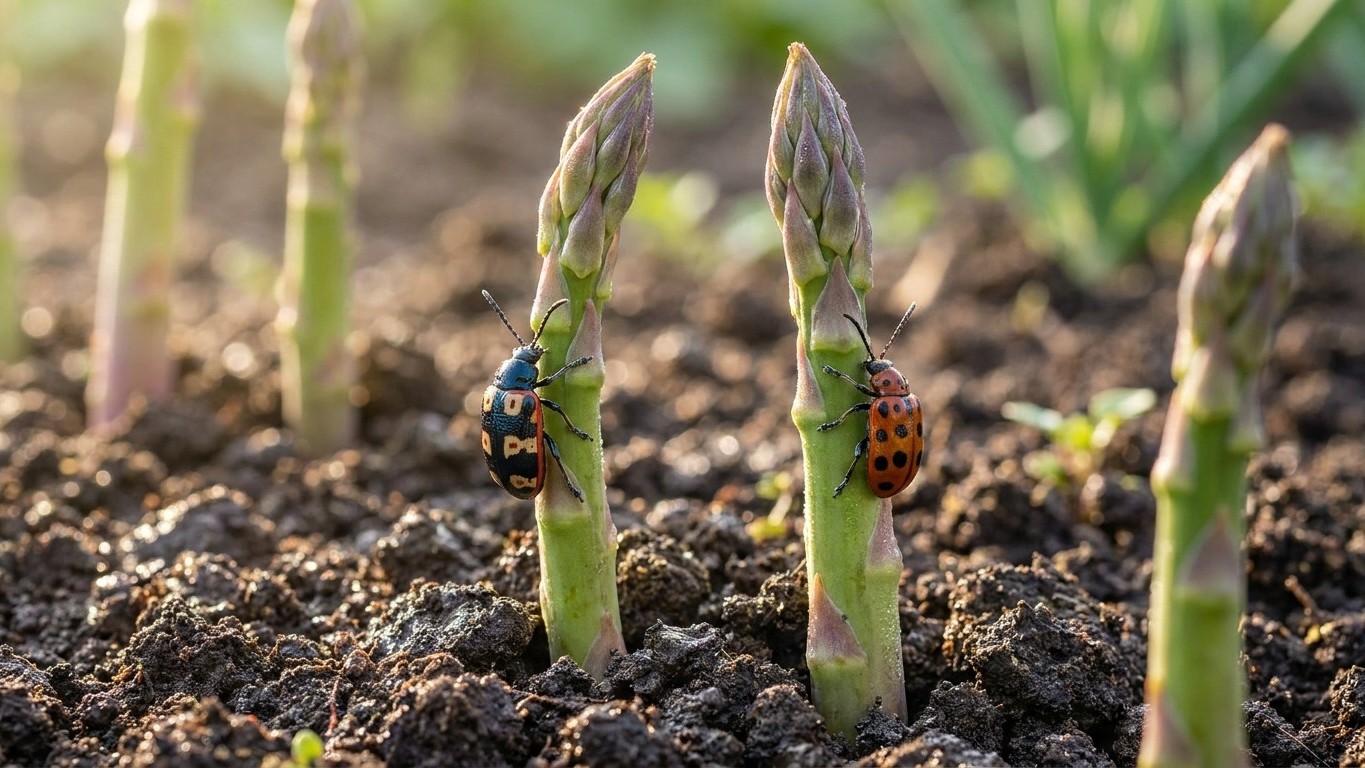

Spears get chewed in spring, and ferns get chewed through summer. That pattern runs through most island asparagus beds, and it tells you more than any insect name. Spring damage costs you harvest. Summer damage costs the crown next year’s spears, which matters in a bed meant to produce for 10-15 years. Which insects are behind it differs from garden to garden, so reading the damage and the calendar comes first.
Which pests attack asparagus in Prince Edward Island
The provincial agriculture department is the service that tracks which insects are active on island crops, and its regional offices are where a species name gets confirmed. Before you get that far, the feeders that go after asparagus sort into three groups by how they eat:
- Chewing beetles and their grubs, which scar spears in spring and strip ferns in summer.
- Soil-level caterpillars, which feed at night and leave spears cut or notched at ground height.
- Small sap-feeding insects, which cluster on fern tips and leave them curled, stunted and sticky.
The same chewed spear can come from different insects, and the right response differs. Wait until you have seen the insect on the plant, or its droppings beside the damage, before you treat anything. A guess made from a yellow fern wastes a season and can harm the beneficial insects already doing the job.
The island’s ground raises the stakes a little. The dominant soil is a sandy Podzol, with 66 percent sand, 7 percent clay and 27 percent silt in the median surface layer, and it is imperfectly drained. Sand sheds water quickly, so ferns on a dry stretch in July (the driest summer month, at 80 mm or 3.15 inches of rain) are under stress already, and a stressed fern tolerates chewing worse than a well-watered one. That is the soil’s tendency, though, and your own plot may differ, which is why the guide on Will Prince Edward Island Soil Hold an Asparagus Bed for Fifteen Years? sends you to a soil test for your own numbers.
Young crowns are the most exposed. Asparagus goes in as crowns in 8-inch furrows in early spring and is not harvested until year 3, so for two seasons the ferns are the only thing the plant has to feed itself. Heavy chewing on a first-year crown does more harm than the same chewing on a bed in its fifth year. For the broader picture of the crop here, see Growing Asparagus in Prince Edward Island.
When each one shows up, and what it does first
Pest timing follows the frost-free window, and that window shifts from garden to garden. At the Charlottetown A reference station, the last spring frost falls on average on May 16, according to Environment and Climate Change Canada’s climate normals. That is a midpoint. In one year out of two the last frost comes later, and northern or upland districts run weeks behind the station. Count your own weeks from your own last frost.
Spears come up as the soil warms after that window, and the first visitors arrive with them. Chewing beetles show up as ragged scars and brown streaks on the sides of spears, with tips that bend or crook. Small dark specks stuck to a spear are a sign that eggs have been laid. Grubs follow on the ferns, and by midsummer you may see patches of bare, stripped stems where the feathery growth used to be.
Soil-level caterpillars work earliest, in the weeks right after spears break the surface. What you see is a spear cut through or notched at the soil line, found in the morning. They feed at night, so an empty bed at noon proves nothing. A short dig around the base of a toppled spear often turns up a curled caterpillar just under the surface.
Sap-feeding insects arrive later, once the harvest is over and the ferns have opened. The first sign is fern tips that look curled or stunted and feel tacky to the touch. Ants walking up and down the stems can point to them, since ants tend sap feeders for the sweet residue.
Harvest changes the picture. From year 3 you cut for a few weeks, then a little longer each year after. Every spear you cut takes any eggs on it away with you, which is one reason a harvested bed often looks cleaner than one left to grow. The stop rule is a shape: quit cutting when most spears come up thinner than a pencil. Whatever ferns you let grow after that point are what the summer feeders will find, so the crown needs them intact.
Planting date adds a wrinkle. A crown set out later in spring has less fern by the time feeders peak, so the guide on When to Plant Asparagus Crowns in Prince Edward Island bears on how much chewing a young bed can absorb.
Telling the damage apart from everything else
Half the asparagus complaints that look like insects turn out to be weather, water or disease. The table gives the signs that separate them. It points to the check that settles the question rather than saying what is in your bed.
| What you see | Look-alike causes | What settles it |
|---|---|---|
| Blackened, limp spear tips after a cold night | Late frost | Many spears hit on the same morning, with no chewed edges and no insects anywhere |
| Yellowing or pale ferns in summer | Dry sandy soil, a nutrient shortage, or ordinary late-season color | Push a trowel down and feel the soil below the surface, then run a soil test |
| Spears soft or watery at the base, collapsing | Waterlogged ground and crown rot | Soil soggy around the crown, a sour smell, standing water after rain |
| Orange or rusty powder on ferns | A fungal disease | The powder rubs off on a finger and no insects are present |
| Broken or bruised spears, clean cuts, damage in a line | Hoe, mower, wind or foot traffic | Damage at one height or along a path, with no droppings |
| Ragged edges, notches, droppings, curled sticky tips | Insect feeding | The insect or its droppings next to the damage |
Frost deserves a second look because the island’s frost date is a midpoint. A warm week in early May can push spears up before the last frost has passed. Frost-hit spears go dark at the tips across the whole bed, while insect damage is patchy.
Water works the other way. A sandy surface lets rain through within the day, so a summer with 274 mm (10.8 inches) of rain from June through August can still leave ferns dry between storms. Pale ferns on a dry stretch can come from thirst alone. A chewed edge with an insect or droppings beside it settles the question, and color alone never does. When a symptom fits two rows, take a photo and a fern cutting to the provincial agriculture office rather than guessing.
What actually works here, and what is a waste of time
On a short season, timing does more than any treatment. A physical barrier or a cleanup done before the first spears are chewed beats anything applied after the damage shows. Clear the old fern debris from the bed before spears emerge, since dead stems give shelter to whatever overwintered there.
A floating row cover over a first- or second-year bed keeps egg-laying insects off the young ferns, and nothing is being harvested from those beds anyway. It is awkward over a producing bed that you cut every day, so there the better tools are quick, regular picking and walking the rows in the evening. Pick off beetles and caterpillars by hand and drop them into soapy water. Cut spears promptly and often during the harvest, which removes eggs along with the spears.
Several habits waste time. Spraying at the first nibble kills the helpful insects along with the harmful ones. Spraying on a fixed calendar treats a bed that may have nothing to treat. Cutting ferns back in summer because they look chewed starves the crown, since the ferns feed next year’s spears. And treating pale ferns before ruling out frost, drought and rot sends effort at the wrong cause.
Which pesticides are registered for asparagus on the island, and how and when they may be used, changes over time and is decided by the province. That question belongs with the provincial agriculture office, which knows what is currently allowed.
Where to check this for your own county
The provincial agriculture department is the place to take a specimen or a photo, through its regional office serving your county. The three counties, Prince, Queens and Kings, do not share one climate or one set of insects. The last-frost midpoint of May 16 comes from the Charlottetown A station, and a north-shore garden or an upland field can sit weeks away from it.
A species documented somewhere on the island may be absent from your garden. A sandy lot near the coast, a heavier pocket inland and a slope with morning frost can each behave differently.
This week, photograph one damaged spear or fern with the insect or droppings beside it, note the date and where it sits in the bed, and take it to the county office. The photo and the date log from your evening checks give the staff what they need to name the cause and to tell you what is registered for it.
Common questions
Can I eat spears that have been chewed?
Trim the damaged section off and wash the rest well. If the spear is soft, slimy or smells sour, rot is the more likely cause and it belongs in the compost.
Should I spray as soon as I see an insect?
Look first. Confirm the insect is feeding on the plant, then check with the provincial agriculture office about what is registered and when. Hand-picking and a cleaner bed handle many small problems before a treatment is needed.
When do I stop cutting spears to protect the ferns?
Stop when most spears are thinner than a pencil. Harvest begins in year 3 and the cutting season lengthens in the years after. Ferns left to grow after the cutting ends are what feed the crown.
Does sandy soil change how much damage insects do?
Sand dries quickly, so ferns on a dry stretch are stressed and recover from chewing more slowly. The island’s dominant soil is sandy and imperfectly drained, though your own plot may differ. A soil test and a rain gauge show what your bed actually gets.