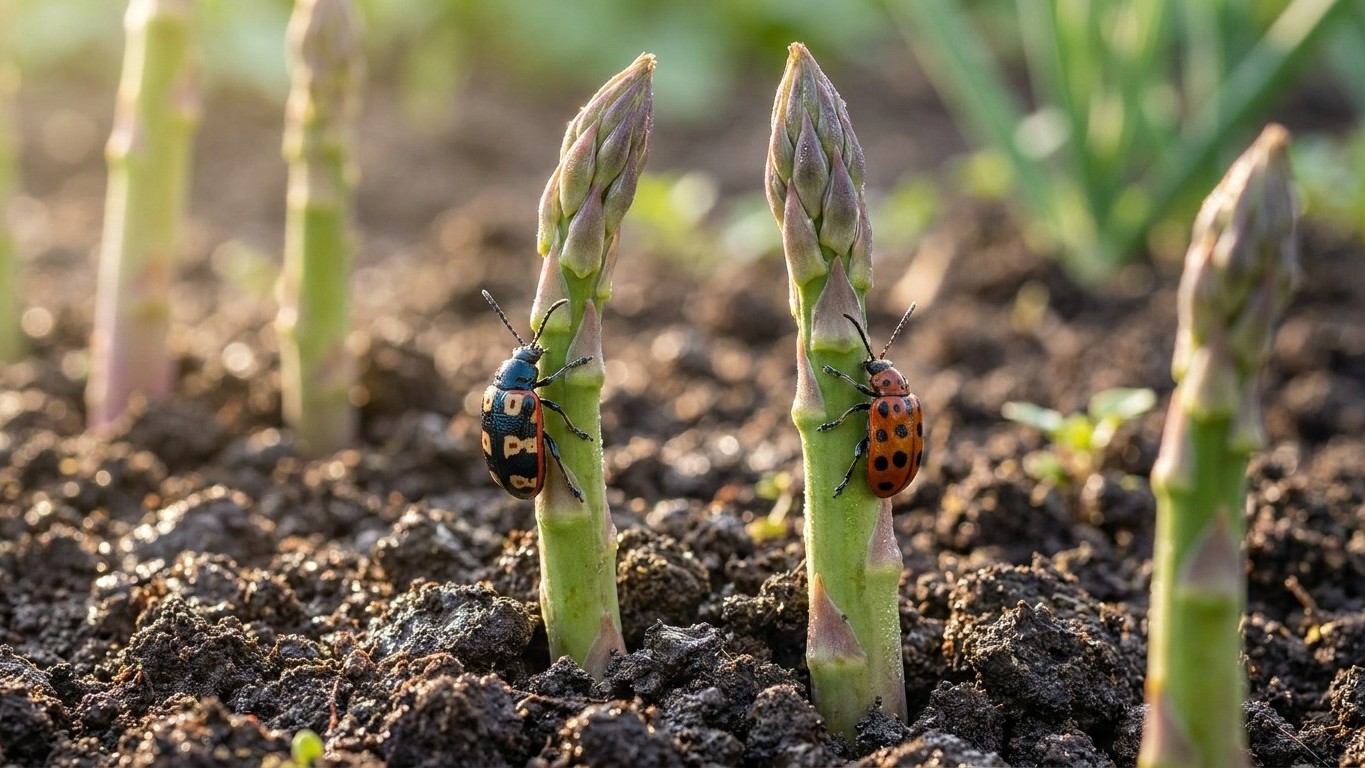

Stop cutting when most of the spears coming up are thinner than a pencil. That signal matters more than any calendar date, because thin spears mean the crown is running low and needs ferns to refill it. Once a spear is cut, it keeps best at 32°F to 35.6°F in air close to saturated. Chill it fast and keep the cut ends wet. For the full planting-to-harvest picture, start with Growing Asparagus in West Virginia.
Keeping it, and for how long
A spear does not stop working the moment the knife goes through. It keeps breathing, losing water and turning fibrous, and temperature sets how fast all three happen. The UC Davis Postharvest Technology Center, in its produce fact sheet on green asparagus, puts the best conditions in two numbers. The first is temperature: 0°C to 2°C, or 32°F to 35.6°F. The second is relative humidity: 95 to 100 percent. The sheet calls high humidity essential to prevent desiccation, which is the shriveling and tip-drying you see on spears left in dry air.
What happens if the temperature drifts either way?
Both edges of the window bite. Above 10°C (50°F), the sheet says, spear toughening occurs rapidly, so a few hours on a warm counter or in a hot car can cost you the tender texture you grew the crop for. At the other end, freezing injury shows up at -0.6°C (30.9°F) or lower. The spears take on a water-soaked look and go extremely soft once they thaw. Only a little over one degree separates the bottom of the ideal range from that damage, which is why a spear pressed against the back wall of a fridge can ruin itself while the rest of the shelf is fine.
How long will cut asparagus last?
Any storage time you read for asparagus is a ceiling, reached only when temperature and humidity both sit in the ranges above. No home refrigerator holds those conditions exactly, so plan on cooking the spears soon after cutting. Every extra day in a kitchen fridge trades away a little tenderness. A bundle cut in the morning and cooked that evening gives you a better meal than any storage trick.
The gap between the optimum and a typical kitchen explains why store-bought spears so often taste woody. They have usually spent time at temperatures well above that narrow band. Garden spears have the advantage here, because you control the clock from cut to cold.
Where in the house that actually is
A domestic refrigerator runs warmer than the optimum range, and the door runs warmer than the shelves inside. Every time the door opens, the door shelves take the room’s air first. That makes the door the worst place for asparagus, however convenient the tall bottle rack looks.
Which shelf comes closest?
The lowest shelf, toward the back but not touching the back wall, usually runs coldest and steadiest. The crisper drawer is the next best spot because it holds humidity better than open shelving. Cold air pours from a vent in many fridges, and a spear sitting right in that stream can dip toward the freezing damage described above. An inexpensive fridge thermometer left on the shelf for a day tells you which spot is actually closest to 32°F to 35.6°F in your own appliance.
How do you get 95 to 100 percent humidity at home?
High humidity in a kitchen means keeping the spears surrounded by moisture, and the cut ends matter most because they lose water faster than anything else on the spear. Stand the bundle upright in a jar with about an inch of water under the cut ends, then slip a loose bag over the tips. If a jar will not fit, wrap the butts in a damp paper towel and seal the bundle in a bag. Skipping this step means limp, dry-ended spears within a short time, no matter how cold the shelf is.
Refresh the water if it clouds, and trim a sliver off the butts before cooking. Do not wash the tips until you are ready to cook, since sitting wet in a closed bag invites slime on the tender scales.
How do you know when to stop cutting asparagus in West Virginia?
Start with the years, because a new bed has to earn its harvest. Asparagus goes in as crowns, set in 8-inch furrows in early spring. Nothing gets harvested until year 3, and that means nothing, not even a few spears for dinner. After that the bed produces for 10 to 15 years. The first cutting season runs 4 weeks, the next 6, and the one after that 8. Those lengths hold the plant to a schedule it can afford.
Within any season, the end of cutting is set by the spears. When most of what comes up is thinner than a pencil, quit and let the ferns grow. The ferns feed the crown for next spring. A late cut of skinny spears pulls from the very reserve the bed needs to come back thick.
What does the bed need after cutting ends?
Ferns need water and room. Rainfall at the Charleston reference station averages 4.72 inches in June, 5.38 in July and 3.75 in August, about 13.8 inches over the summer and 46.2 over the year. August is the driest of the three. Those are 1991-2020 normals, so they show what to expect, not what will fall. A single hard thunderstorm in a hot spell mostly runs off, and a rain gauge in your own bed settles whether the ferns are getting enough. Watch for what is feeding on them too, which What Eats Asparagus in West Virginia, and When covers.
The furrow fills in gradually across the year, not all at once. Add soil gradually until the furrow is level. Dumping the whole furrow back in at once buries the young plants.
Will West Virginia ground hold a bed for fifteen years?
Most soils suit asparagus as long as they drain well, and this is the one crop where you pick a spot for fifteen years. The state soil, Monongahela, is a loam to silt with 27 percent sand, 18 percent clay and 54 percent silt, about 3.0 percent organic matter and a surface pH near 5.0, which is strongly acid. It is moderately well drained, one step short of well drained. That is a borderline score for a bed that cannot be moved. On a flat or low spot, build the bed up or choose a slope. River bottoms, hill country and filled ground can all differ from that representative soil, so test your own plot. The deeper look is in Will West Virginia Soil Hold an Asparagus Bed for Fifteen Years?
Timing runs on the valley calendar too. At Charleston, the last spring freeze falls between April 9 and April 23 on the 30 to 70 percent probability band. That is a river valley, and higher ground across the state freezes noticeably earlier in fall, which shortens the season for fern growth on a ridge. Your county extension office can tell you how far your site sits from those dates.
Common questions
Can I cut a few spears in the first or second year?
No. Asparagus is not harvested until year 3. Cutting earlier takes leaf area from crowns still building their root systems, and a bed expected to last 10 to 15 years is worth the wait.
How long does the cutting season last once the bed is established?
Within that frame, the real stopping rule is the spear itself. When most spears come up thinner than a pencil, stop and let the ferns grow.
Can I keep cut asparagus in the refrigerator door?
The door is the warmest part of the fridge. Above 50°F, spears toughen within hours. Keep the bundle on a low shelf toward the back, with the cut ends standing in about an inch of water, where it is closest to 32°F to 35.6°F.
Does it matter which variety I plant?
Four varieties come up often. For anything beyond that, ask your county extension office what grows well locally.