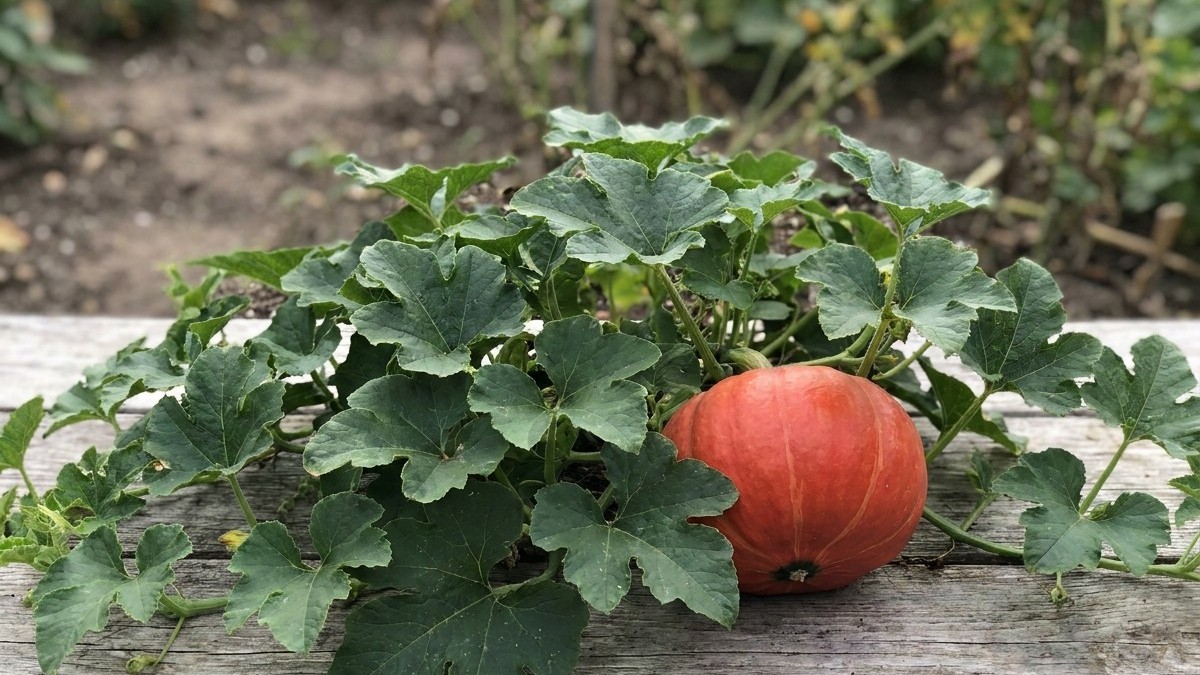

Cut a pumpkin when the rind has taken on its full color, resists a thumbnail, and the stem has dried and gone corky. Cut it with the stem still attached, and do it before the first fall frost. At Burlington, on Lake Champlain, that frost lands somewhere between October 3 and October 13, and the Green Mountains and the Northeast Kingdom run substantially shorter. Whole pumpkins then keep for months, but only in the right spot.
When pumpkins are ready in Vermont
NOAA’s NCEI climate normals for the Burlington station put the 30 to 70 percent odds of a 32 F freeze between October 3 and October 13. The last spring freeze falls between April 30 and May 10. Those dates describe the mildest corner of the state. Hill farms, high valleys and anything north of the Champlain Valley should plan on frost arriving earlier, so check with your county extension office for the nearest local date.
How do you know a pumpkin is ready to cut?
Watch the fruit, not the calendar. A ripe pumpkin has an even, deep color all the way around, including the underside where it sat on the soil. Press a thumbnail into the rind. If it dents or scratches easily, wait. The stem tells you the same story: green and soft means the fruit is still taking sugar and size from the vine, while dry, hard and corky means the connection is finishing up.
Utah State University Extension advises harvesting with the stem attached and before frost. The stem is the pumpkin’s seal. Once it breaks off, bacteria and mold have a direct path to the flesh, and the keeping time drops with it. Use pruning shears or a sharp knife and leave a few inches of stem. Lift the fruit from underneath rather than hauling on the handle.
If cucumber beetles or squash bugs have stripped the vines late in summer, the fruit can stall short of full color. The state guide on What Eats Pumpkin in Vermont, and When covers those insects, and Will Pumpkins Ripen Before Frost in Vermont? covers what to do with fruit that is still green when cold weather closes in.
Will a flower that opens in late August still make a ripe pumpkin?
Mostly no. Pumpkins take 45 to 55 days to mature after flowering. The clock starts when the female flower opens, not when you sow the seed, and not when the seedling goes into the ground. Packet days that count from sowing run longer, because the vine has to grow and bloom first.
Cross that 45 to 55 days with a Burlington frost between October 3 and October 13. A flower that opened by about August 9 has the full 55 days even before the early end of that window. A flower that opened after about August 29 will not finish by the late end, and anything opening after that is green fruit. Pinch off late flowers and tiny fruit so the vine puts its energy into the pumpkins that can still make it.
Spring timing matters too, though people often mix up the dates. Pumpkins are sown once the soil reaches 65 F. That is not the last frost date. Soil lags the air by weeks, so a stretch of mild days in early May can sit on top of ground that is still too cold. Push a soil thermometer a few inches down in the morning, and sow when it reads 65 F.
Keeping them, and for how long
The University of Illinois Extension says a whole pumpkin keeps for three to six months in a cool, dark location between 45 and 50 F. That is a ceiling, reached when everything goes right: a sound pumpkin, a stem still attached, a steady temperature and no company that shortens its life. A pumpkin with a nick, a soft spot or a snapped stem will go sooner, so use those first.
What does a pumpkin need besides cool temperatures?
Darkness is part of the instruction, and so is distance. Illinois Extension says to store pumpkins away from ripening fruit and vegetables such as apples, potatoes and tomatoes. Ripening produce gives off a gas that ages the pumpkin faster, which is why a porch or a cellar shelf next to the apple crate is the worst place for it. Plenty of Vermont households keep apples and potatoes in the same cool corner where they would put squash, and that habit quietly cuts the pumpkin’s storage life.
Utah State University Extension adds a limit on the cold side: store pumpkins where they will not freeze. A frozen pumpkin looks fine going in and collapses into mush on thawing. So the target is a range, cool enough to slow the fruit down and never below freezing. In Vermont, where the first freeze can come in early October and hard freezes keep returning through the winter, that matters more than in most of the country.
Does a carved pumpkin keep as long?
No. The 45 to 50 F range and the three to six months apply to whole fruit with an intact rind and stem. Once you cut into a pumpkin, the flesh is exposed to air, moisture and microbes, and the clock runs much faster. Carve close to the day you want to display it, and plan on composting it soon after.
Whole pumpkins bought at a farm stand in early October are not necessarily at the start of their storage clock either. They may have been cut weeks earlier, so the practical shelf life of any pumpkin you didn’t grow is shorter than the textbook figure.
Where in the house that actually is
A kitchen refrigerator runs far colder than 45 to 50 F. It also has no room for a pumpkin worth keeping, and the damp chill is wrong for a whole fruit. A heated living room goes the other way: it is too warm, and the pumpkin will soften months ahead of schedule. A garage swings with the weather, mild on an October afternoon and below freezing on a January night, and a frozen pumpkin cannot be saved.
The closest match in most Vermont houses is an unheated or lightly heated space that stays dark and steady. An unfinished basement on the north side is a good candidate, particularly a corner away from the furnace, the water heater and any ductwork. An interior closet or a spare room with the heat turned low can also hit the range. Whatever you pick, keep the pumpkins on a shelf or a wooden pallet rather than on bare concrete, and leave a little space between them so air can move.
The best test costs a few dollars. Put a min/max thermometer at pumpkin height where you plan to store them and read it daily for a week before you move them in. Skip that step and you may find out in January, when a basement that read 48 F in October has fallen to freezing near an uninsulated sill, or crept up past 55 F beside a boiler. Watch the low reading as closely as the high one. A cellar that holds steady between 45 and 50 F is the one to use.
Check the pumpkins every couple of weeks. Soft spots, weeping or mold on the rind mean that one is done, and removing it protects its neighbors. Keep any apples, potatoes or tomatoes in another room, or as far from the squash as the house allows. For the growing side of the story, from seed to vine, see Growing Pumpkins in Vermont.
Common questions
Should I cut pumpkins before the first frost?
Yes. Utah State University Extension advises harvesting before frost with the stem attached. In Burlington the first fall freeze falls between October 3 and October 13, and colder parts of the state see it sooner. If the forecast shows a freeze and the rind is already hard, cut the fruit that night or earlier.
Why leave the stem on a pumpkin?
The stem seals the fruit. A pumpkin cut with several inches of stem stays protected, while one with a broken or missing stem is open to rot. Carry the pumpkin from underneath, because the handle can snap under the weight.
How long will a whole pumpkin keep in Vermont?
Up to three to six months, according to University of Illinois Extension, if it sits in a cool, dark place between 45 and 50 F and away from apples, potatoes and tomatoes. That is the best case. Damaged fruit and warm rooms shorten it.
Can I store a carved pumpkin the same way?
No. The 45 to 50 F range was set for whole pumpkins with the rind and stem intact. A carved pumpkin has exposed flesh and breaks down much sooner, so carve close to the day you plan to display it.