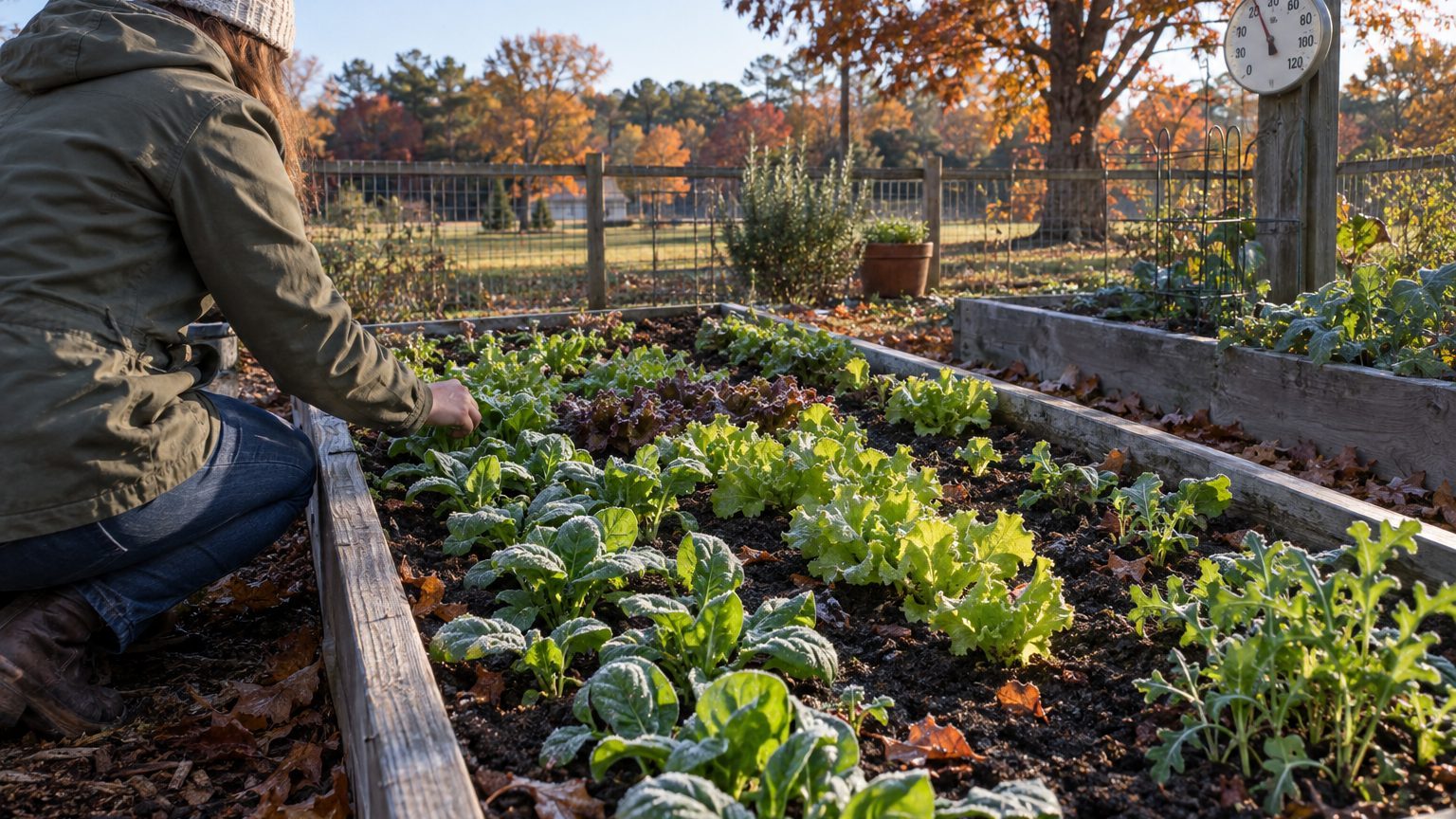

Sow winter salads in North Carolina in the fall, from early September into October, so the plants are established before the first hard freeze. A second, smaller window opens in late winter for a spring harvest. The exact dates shift with where you garden, because the state runs from the Atlantic coast to the Blue Ridge.
The short answer for North Carolina
Count back from the first fall freeze. At the Charlotte reference station, the 32°F freeze arrives between October 30 and November 8. Sow so that seedlings have several true leaves by that point, which in practice means early September through mid-October. Those two dates mark the band where the chance of a 32°F freeze runs between 30 and 70 percent, taken from the NOAA NCEI U.S. Climate Normals for 1991-2020. Some years the freeze comes sooner, and some years it comes later.
The spring end works the same way. The last 32°F freeze falls between March 23 and April 5, again as the 30 to 70 percent band. Charlotte sits in the Piedmont. The Blue Ridge runs several weeks later in spring, and the coastal plain runs earlier.
Winter itself is mild at the reference station. The average daily low in the coldest month is 31.8°F, so nights hover right around freezing. Spinach, mâche, kale and mustards take that without help. Lettuce and other tender leaves do better under a layer of row cover on the colder nights, since an average low means some nights drop well below it.
What is the fall sowing window by crop?
Hardier crops can go in a little later, because they keep growing in cooler soil. Tender ones need to go in earlier, while the weather still warms them.
| Crop group | Sow outdoors (Charlotte reference) | What to expect |
|---|---|---|
| Spinach and mâche | Mid-September to mid-October | Germinate best once the heat has broken, then sit through winter and resume growth in late winter |
| Arugula, mustards, baby kale | Early September to late October | Fastest to a cuttable size, and the most forgiving if you are late |
| Lettuce | Mid-September to early October | Seed germinates poorly in hot soil, and plants need cover below the mid-20s |
| Any of the above under row cover or a low tunnel | Up to the first-freeze band, October 30 to November 8 | Small plants that hold through winter and take off again in late winter |
For variety choices within each group, see The Best Winter Salads for North Carolina.
Can you sow winter salads in late winter too?
Yes. Hardy greens can go in as soon as the soil is workable, and under cover they can start earlier. They run ahead of the heat that sets in after the last spring freeze band of March 23 to April 5. A spring sowing gets only a few good weeks, so treat it as a bonus crop. The fall sowing is the one that fills the winter.
What will not work here

Waiting for frost to start. The first freeze at the reference station arrives October 30 to November 8, and a seed sown that week has almost no growing time left. Daylight shrinks to its shortest around the winter solstice, and even mild weather cannot make leaves grow without light. A November sowing gives you a few seedlings, not a salad bowl.
Sowing lettuce in August is the opposite mistake. Early fall in the Piedmont and the coastal plain stays hot and humid. Lettuce seed germinates poorly in hot soil, and the seedlings that do come up tend to bolt or fade in the first warm spell. Wait for the soil to cool, or start the seed indoors in a shaded spot and transplant.
Close spacing is a quiet failure in a damp climate. North Carolina winters are mild enough that leaves stay wet for days, and crowded rows invite downy mildew and gray mold. Slugs also stay active through the mild, wet spells. Thin to the spacing on the seed packet. Water in the morning so leaves dry by dusk.
Relying on the average low alone will also burn you. At 31.8°F, the coldest month still looks gentle on paper, but the real nights vary, and a cold snap can kill uncovered lettuce in one night. Keep a roll of row cover on hand and put it on whenever the forecast shows a frost.
Finally, don’t carry a sowing date from a different part of the state. A date that works on the Piedmont gives a coastal gardener seedlings that bolt in warm soil, and it gives a mountain gardener plants that are too small to face an early freeze.
What changes across North Carolina
There is no single answer for the state. The USDA Plant Hardiness Zone Map (2023, built on 1991-2020 normals) places North Carolina between zones 5b and 8b. That zone system rests on one number, the average annual extreme minimum temperature, so it describes how cold the worst nights get. It says nothing about when the first freeze arrives. Charlotte, the reference station for the dates above, represents the Piedmont only.
In the mountains, plan on the cold side of that range. Spring freezes last several weeks longer than at Charlotte, and fall freezes arrive earlier. Move your fall sowing up toward the start of the window, or earlier still, and lean on the hardiest crops: spinach, mâche, kale, and mustards. Use a low tunnel or cold frame if you want lettuce past the first hard freeze.
Toward the coast, the picture reverses. Freezes come later in fall and end earlier in spring, so the sowing window runs later and the winter harvest runs longer. Heat is the bigger risk there, so wait for the soil to cool before sowing tender crops. The risk of mildew in damp, mild weather also rises.
Don’t guess your own zone from the spread above. The USDA Plant Hardiness Zone Map lets you enter your ZIP code. For the full picture of how winter salads fit the state, start with Winter Salads for North Carolina Gardens.
Where to check this for your own county
Your county office of NC State Extension is the best next stop. Every county has a center staffed by agents and trained Master Gardener volunteers, and they work from local conditions rather than a state average. A county recommendation beats a state one, and what you are reading here is the state one.
Look for two things. The first is the local planting calendar for vegetables, which gives fall sowing dates for your county, usually broken out by crop. The second is the list of varieties that have been trialed or recommended in your area, since a lettuce that performs in the Piedmont may bolt early on the coast or lack the cold tolerance for the mountains.
While you are there, ask about the average first and last freeze dates for the nearest weather station. Also ask about local pest and disease pressure in winter, such as mildew in a wet stretch or slugs in a mild one. Agents field these questions every fall and can tell you what has been happening in local gardens.
Checking this against your own garden
Your own observations outrank every date above. A garden that sits low, shaded by a house, or beside a paved lot can run weeks apart from the next yard over. Three things are worth watching.
- Soil warmth by feel. In early September, press your hand into the bed at seed depth. If the soil still feels warm, even in the morning, lettuce and spinach seed will germinate poorly. Wait until the soil feels cool in the morning and mild by afternoon.
- Where the first frost shows. On the first frosty morning, walk the yard. White grass shows you the cold pockets, usually low spots and open areas. Put tender crops where frost arrives last, and plant the hardy crops in the cold corners.
- First true leaves. The first pair of leaves after the seed leaves is the sign a seedling has taken hold. If your seedlings have true leaves by late October, they are on track for the freeze. If they have not, add row cover now and expect a slower, smaller winter crop.
Note the dates in a notebook this fall. After one season you will have your own calendar, which is more reliable than any statewide table.
Common questions
What is the latest I can sow winter salads in North Carolina?
Under row cover or a low tunnel, you can sow hardy greens up to the first-freeze band at the Charlotte reference station, October 30 to November 8. Expect small plants that wait out the winter and grow again in late winter. Without cover, aim for the end of October at the latest in the Piedmont, and earlier in the mountains.
Can I sow winter salads in August?
Hardy, fast crops such as arugula and mustards will sprout, but heat and humidity make it a poor window for lettuce and spinach. Wait until the soil cools, usually in September. If you want an early start, sow in a shaded spot or start seed indoors.
Do winter salads survive North Carolina winters without protection?
The hardy ones usually do on the Piedmont, where the coldest month averages 31.8°F at night. Tender lettuce is riskier, and the mountains are colder still. Row cover on the coldest nights is cheap insurance anywhere in the state.
When do I stop harvesting and sow again in spring?
Overwintered plants bolt as days lengthen and the weather warms in March and April. Pull them when the center stalk starts to rise and the leaves turn bitter. For a continuing crop, sow a fresh round of hardy greens in late winter, then switch to warm-season crops once the last freeze band of March 23 to April 5 has passed.