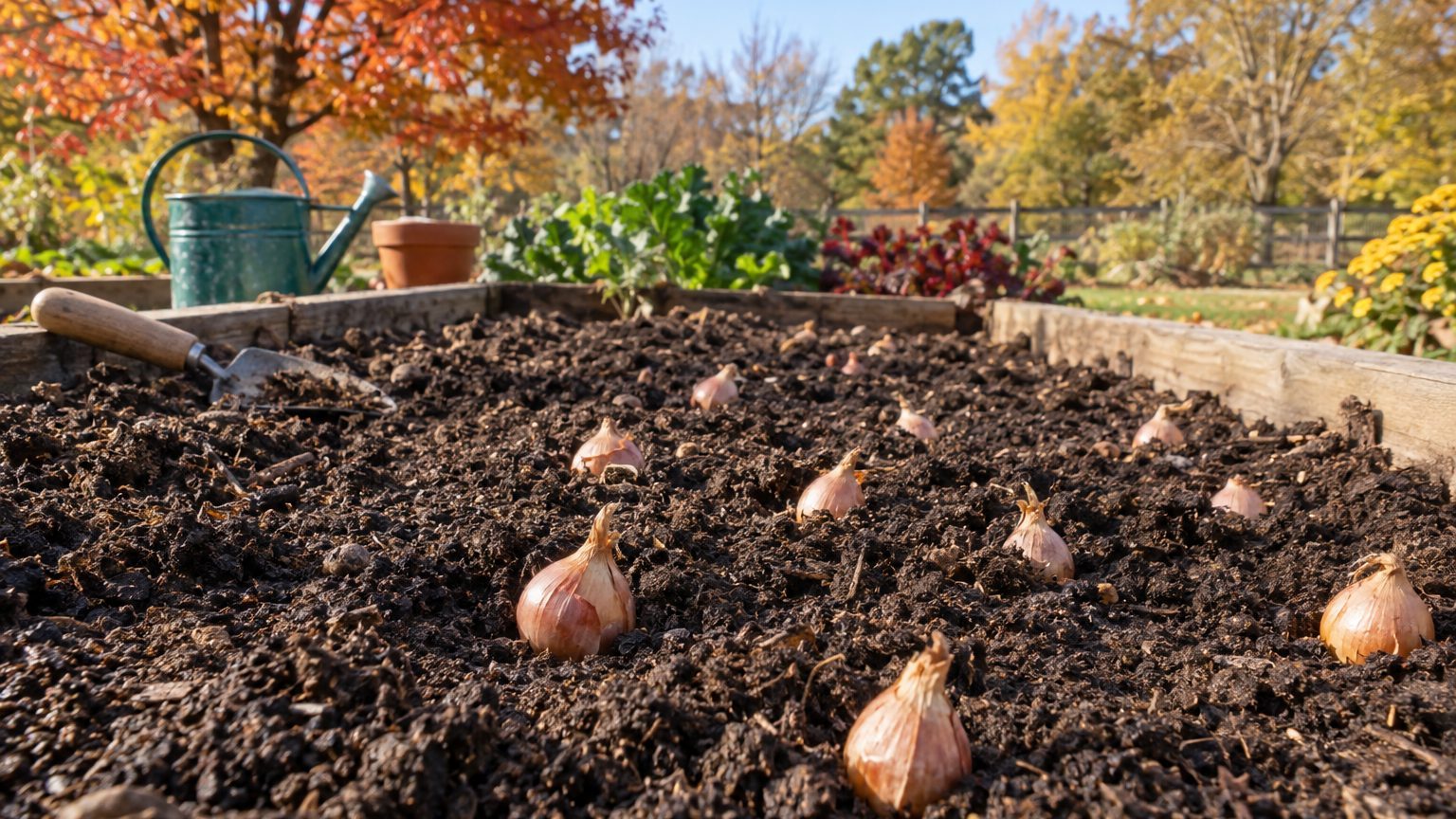

In Yukon, plant shallots in spring as soon as the soil can be worked, or in late September for a crop that overwinters under mulch. Spring is the safer default. The season is short, and the bulbs need every week of leaf growth they can get. Shallots take light frost without harm, so the average last frost on June 5 does not have to be your planting date.
The short answer for Yukon
Set shallot sets in the ground at the first thaw that lets you dig, which in most years falls ahead of June 5. If you prefer to overwinter them, plant in late September, once the soil has cooled but before it freezes hard. Both windows exist because shallots are among the hardiest members of the onion family. The frost dates only tell you how much summer is left once you start.
Those dates come from Environment and Climate Change Canada’s 1981-2010 normals for the Whitehorse A station. The average last spring frost is June 5, and the average first fall frost is August 25. Both are means, which makes them midpoints. In one year out of two, a spring frost still arrives after June 5. In one year out of two, the first fall frost arrives before August 25. Treat each date as the middle of a window that stretches weeks either way. These normals cover 1981-2010, while the US figures on this site cover 1991-2020, so the two sets of numbers are not on exactly the same footing.
The Whitehorse A station has about 81 frost-free days between the mean last spring frost and the mean first fall frost.
How does the spring window work for shallots?
A shallot grows leaves first and swells its bulb later, and the bulb can only be as big as the leafy plant that feeds it. Sets planted at thaw spend the cool, early weeks building roots and green tops, so by the time summer warmth and long days trigger bulbing, there is a full canopy at work. Sets planted three weeks later start that canopy from scratch and run out of season before it finishes.
Plant sets in rows, with the tip of each set at or just below the soil surface. In cold ground, a raised bed or a south-facing slope drains and warms sooner than a low, shaded spot.
When should you plant shallots in fall in Yukon?
Aim for late September, before the ground freezes solid. That gives the sets time to root without pushing much green growth, since a tall top going into winter has nothing to gain. Set them in the ground and cover the bed with straw or shredded leaves. The coldest month at Whitehorse has a mean daily minimum of -19.2 °C (-2.6 °F), and individual nights run colder than the mean. A steady snow cover helps, but mulch does the insulating when snow comes late or blows off.
| Planting time | When | What you gain | Main risk |
|---|---|---|---|
| Spring | As soon as the soil thaws enough to dig | Predictable results, no winter loss | Every week of delay shrinks the bulbs |
| Fall | Late September, before the ground freezes hard | Earliest growth at thaw, larger bulbs in a good year | Winter heaving and loss in thin-snow years |
For a broader look at the crop, Growing Shallots in Yukon covers soil, feeding and harvest in more detail.
What will not work here

A planting calendar borrowed from the Lower 48 fails in Yukon. Advice to plant in October or November assumes soil that stays workable for weeks after the first frost, and an average first fall frost of August 25 tells you how early the cold arrives. Several other habits that work elsewhere also break down against an 81-day frost-free stretch and a coldest-month minimum of -19.2 °C.
Why does waiting for the last frost date backfire?
Many gardeners hold off planting until the last frost has passed, a sound habit for tomatoes and beans. Shallots do not need it. If you wait for June 5, you have already spent weeks of a season that only has about 81 frost-free days, and in half of all years that date still arrives before the last frost does. The practical rule is simple: plant when you can dig a hole without hitting frozen ground, and let a late frost nip the tips if it must.
Variety choice matters too. Slow-maturing types that thrive in a long, warm summer will stall in Yukon. The guide to The Best Shallots to Grow in Yukon sorts the types by how well they handle a short season.
Can you cure shallots outdoors in Yukon?
Often you cannot. The first fall frost arrives before August 25 in half of all years, and cool, damp September weather slows drying. Shallots left to cure in the garden or on a porch can pick up moisture and rot at the neck. Pull them when the tops have fallen over and begun to yellow, then dry them indoors in a warm, ventilated spot such as a spare room, a heated garage, or a covered porch with a fan. Bring them in before the nights turn hard.
Fall planting has its own failures. Sets planted too early send up green tops that winter kills, and sets planted after the soil freezes never root. Bare, unmulched beds are the worst case. Repeated freezing and thawing pushes the sets up out of the ground, and exposed bulbs do not recover. A thick layer of straw or leaves over the bed is cheap insurance against all of it.
What changes across Yukon
Yukon is not one garden. The frost dates above come from a single station at Whitehorse, and northern or upland districts run weeks behind it. The territory’s hardiness zone for the reference city is 1b in the Canadian system, but that number describes one place, and river valleys, northern communities and high ground each sit differently. There is no single answer for the whole territory.
That Canadian zone is not a USDA zone, and it will not convert to one. The Canadian system is built on seven climate variables, and the USDA system on one. Natural Resources Canada publishes the comparison itself: there are no simple conversions between the two, and Canadian zone 4a overlaps nine different USDA zones, from 3a to 7a. Natural Resources Canada’s figure is based on 1991-2020 normals, so it also covers a different period from the frost dates above. For your own location, look it up on Natural Resources Canada’s plant hardiness map rather than guessing from a neighbor’s garden.
How do you adjust shallot planting dates in northern or high-elevation Yukon?
Colder places shift both ends of the calendar. Spring thaw comes later, so the spring planting window moves later by the same margin, often by weeks. Fall freeze-up comes earlier, so late September may be too late for fall planting, and early in the month is safer. In those districts the growing season is short enough that spring planting from sets, with a head start indoors, is the more dependable route.
Where to check this for your own county
Yukon has no counties, so your community or district is the right scale. Start with Agriculture and Agri-Food Canada for federal crop and climate resources, and then check with the territorial agriculture branch and local growers’ groups for something closer to home.
What you want from them is specific. Look for a planting calendar built for your community, because dates there reflect your own thaw and freeze-up. Look for the shallot varieties that growers near you have tried, and for what happened in bad years as well as good ones. Ask what mulch depth they use for fall plantings and when they pull the crop.
Checking this against your own garden
Your own observations outrank every date above. Three things are worth watching, and none needs equipment.
The first is where the snow melts first. Bare ground in early spring marks your warmest, best-drained spot, and that is where sets should go first. A bed that holds snow two weeks longer will run two weeks behind, and you can plan around that gap.
The second is how the soil feels in your hand. Grab a handful from below the surface. If it crumbles and breaks apart without sticking to your fingers, it is ready. If it clumps into a cold, wet ball, wait a few days, because sets in saturated soil rot instead of rooting.
The third is when the shallot tops start to yellow and fall over in late summer. The date you see it, compared across years, reveals how long your own garden really grows. If the tops fall early, plant earlier next spring or choose a faster variety. Keep a note of the date each year.
Common questions
Do shallots need to wait for the last frost in Yukon?
No. Shallots tolerate light frost, so plant them as soon as the soil is workable. At Whitehorse the average last spring frost is June 5, but half of years have a frost later than that, and waiting for it wastes weeks of an already short season.
Can fall-planted shallots survive a Yukon winter?
They can if they are planted in late September and covered with 4 to 6 inches of straw or leaves. The coldest month at Whitehorse has a mean daily minimum of -19.2 °C (-2.6 °F), so mulch matters most when snow cover is thin or comes late.
Can you start shallots indoors to gain time?
Yes. Plant sets in pots or deep trays a few weeks before the soil thaws, keep them cool and bright, and set them out once the ground can be worked. This is most useful in northern and upland districts where thaw comes late.
Is Yukon’s hardiness zone the same as a USDA zone?
No. Whitehorse is zone 1b in Canada’s plant hardiness system, which uses seven climate variables. The USDA system uses one, and Natural Resources Canada says there are no simple conversions between them.