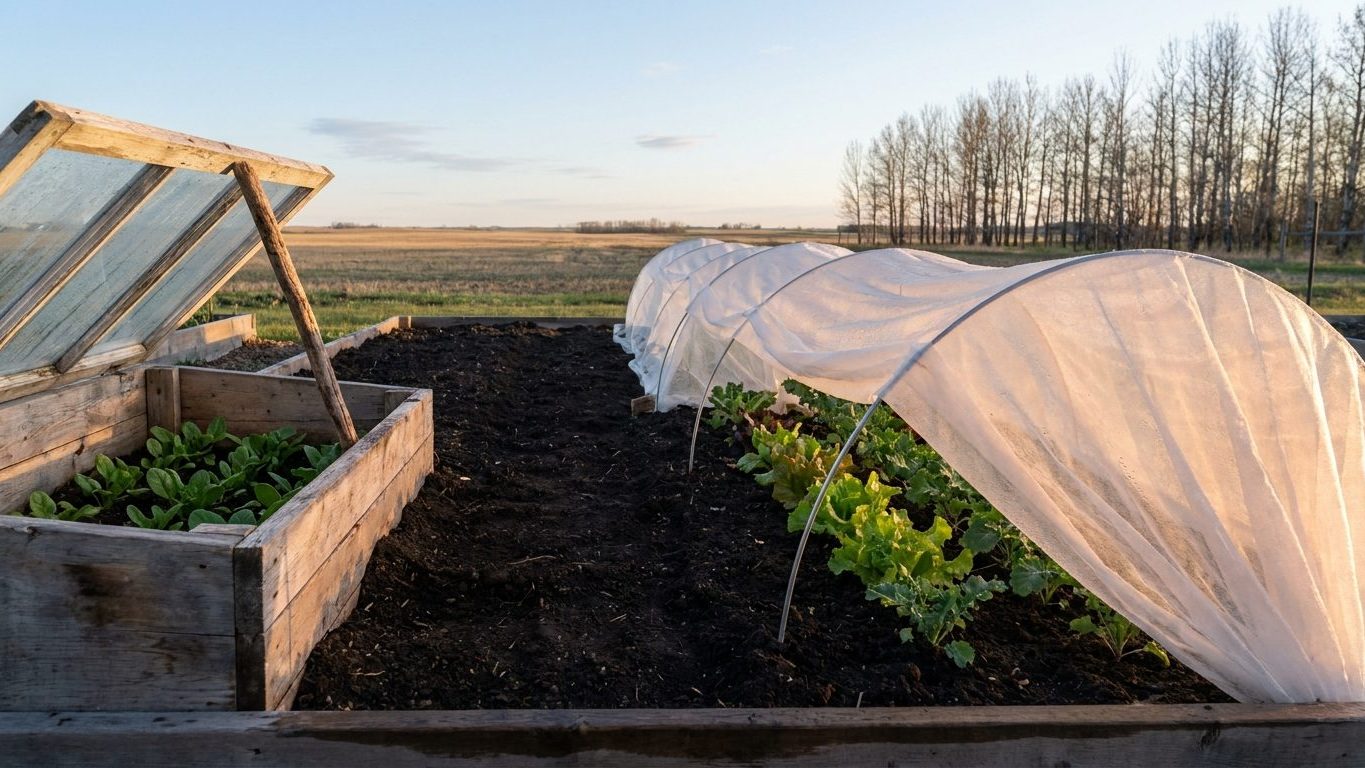

For most Michigan gardens, a roll of lightweight row cover, a few wire hoops, and one cold frame cover nearly every need. Together they add a few weeks to each end of the season. Heated greenhouses and heavy plastic cost far more and rarely pay back in a backyard. The details below sort out which tool suits which job.
The short answer for Michigan
Start with row cover on hoops, then add a cold frame. Row cover handles light frosts and wind in both spring and fall. A cold frame, a bottomless box with a clear lid, carries hardy greens into the coldest months. A full high tunnel makes sense only if you sell produce or garden on a large scale.
Covers do not make heat. They hold in warmth the soil collected during the day and block the wind that strips it away at night. That is why a cover gives a few degrees of protection on a calm, clear night when frost threatens, and almost nothing during a long, windy cold snap.
The calendar sets how much room you have to work with. The last spring frost comes around April 30 in the Detroit area, and early to mid May across most of the Lower Peninsula. In zone 6a, the first fall frost lands between October 6 and October 21. Those are averages, so frost can arrive on either side of them in any given year. A cover widens your margin at both ends.
Which season extenders suit which job in Michigan?
| Extender | Best Michigan use | Main limit |
|---|---|---|
| Lightweight row cover | Frost nights in spring and fall, flea beetle and insect barrier | Little help in a hard freeze |
| Low tunnel (hoops with cover or plastic) | Early spring greens, peas, brassicas; late fall salad crops | Needs venting on sunny days; snow can flatten it |
| Cold frame | Hardy greens through the coldest months, hardening off seedlings | Small footprint; overheats fast in sun |
| Water-filled plant tents or cloches | Setting out tomatoes and peppers a bit early | One plant at a time |
| Black plastic mulch | Warming soil before squash, melons, and peppers | Does not stop a frost on its own |
| High tunnel | Serious production, longer harvest windows | Cost, anchoring, and snow load |
Which crops gain the most from covers?
Cool-season crops gain the most. Lettuce, spinach, radishes, peas, and brassica transplants can go under cover weeks before the average last frost. In fall, kale, spinach, carrots, and salad greens keep going well past the first frost when covered. Tomatoes and peppers also benefit, but only once the soil has warmed. Covering a cold bed just keeps the cold in.
What will not work here
Covering tender crops in January fails. The mean daily minimum in the coldest month at the Detroit reference station is 19.2°F. A single layer of cover over lettuce or basil will not hold that kind of cold night after night. Hardy crops such as spinach, kale, and mache survive. Tender ones die.
Expecting growth in midwinter fails too. At about 42.23 degrees north (the latitude of Detroit), winter days are short enough that even protected greens nearly stop growing for the darkest weeks. A cover keeps those plants alive. It does not keep them producing. Gardeners who sow late and expect January salad are usually disappointed, and the fix is to sow earlier, so plants are nearly full size when the days shorten. Then you harvest from them through winter instead of waiting for growth.
Sealed plastic on a sunny day is another failure. Michigan springs swing from freezing mornings to bright afternoons. A closed low tunnel on a sunny March or April day can cook seedlings. Clear plastic needs to be vented or opened by mid-morning. Row cover breathes better and forgives more.
Long-season heat lovers are a poor bet. Sweet potatoes, watermelons, and big winter squash need a long run of warm weather. A cover can start them a week or two sooner, but it cannot make Michigan’s summer longer. Pick shorter-season varieties instead of relying on protection.
Light structures often fail under snow and wind. Thin hoops bend under wet snow, and loose cover flaps free in a lake-effect gust. Anchor edges with soil, boards, or sandbags, and brush snow off tunnels when it piles up.
Finally, covering late does not help. If the forecast already shows a freeze, the time to put hoops up was earlier in the day, while the soil still held warmth. For timing details, see When to Cover Your Garden in Michigan.
What changes across Michigan
No single answer covers the whole state. The USDA Plant Hardiness Zone Map (2023 edition, based on 1991-2020 normals) runs from zone 4a to zone 6b inside Michigan’s borders. That spread comes from the average annual extreme minimum temperature, and it is wide. A garden in the far north and one in the southeast can be two or three zones apart.
The Detroit-area figures above describe one city, and the latitude of 42.23 degrees north belongs to that station. A gardener in the northern Lower Peninsula or the Upper Peninsula sits at a higher latitude, with shorter fall days, colder winter minimums, and a later spring. Check your own latitude and your own zone on the map by ZIP code, since the zone depends on where you live and not on what a state-level number says.
Someone in the north should shift in three ways. Start fall crops earlier, because shorter days slow growth sooner. Expect cold frames and low tunnels to need more insulation, such as a double layer of cover or a straw blanket over the frame. Treat heat lovers as a gamble, and lean on cool-season crops that benefit most from protection.
Lake Michigan and the other Great Lakes complicate the picture. Land close to the water often warms later in spring and stays milder later in fall, which can delay the first hard freeze on the lakeshore. Inland spots a few miles away may frost earlier. Frost pockets, where cold air pools in low ground, can undo all of it within a single yard.
Where to check this for your own county
Your county’s recommendations outrank a statewide guide. A state-level number averages a very long state, from the Ohio border to the tip of the Upper Peninsula. A county office knows your growing season, your soil, and which varieties have done well nearby.
Start with MSU Extension, the state’s land-grant extension service. Look for two things. The first is your local planting calendar, with sowing and transplanting windows tied to frost dates in your area. The second is the vegetable varieties trialled in your county or the nearest one, since a variety that finishes in a southern county may run out of season farther north. Local Master Gardener programs can also tell you what works under cover in your area.
For the broader picture on tools and timing, Extending the Growing Season in Michigan covers the full set of options. The state-level view in this article is a starting point. A county recommendation should override it whenever the two disagree.
Checking this against your own garden
Your own observations outrank every date here. Three signs tell you the most.
- Soil warmth by feel. Press your hand flat into the bed in mid-morning. If it feels cold and damp, wait for warm-season seeds. Compare a covered bed to a bare one; the difference shows what your cover is actually gaining.
- The first male flowers on squash. Watch the flowers on your squash plants to see when both male and female blooms appear. If they show up early under cover, the plants are established, but pollinators may not be flying yet, so you may need to hand-pollinate.
- The first true leaves on seedlings. The first pair of leaves is the seed leaves; true leaves come after. Seedlings with true leaves handle cool nights much better, which tells you when it is safe to open the cover wider.
These signs also show your microclimate. A bed that warms early sits against a south-facing wall or a windbreak. A bed that lags may sit in a low spot where cold air collects. Over a season or two, those notes tell you where to put your earliest crops and your tenderest transplants.
Common questions
Is row cover or plastic better for Michigan gardens?
Row cover is easier and more forgiving for most gardeners. It breathes, so it rarely overheats plants. Plastic traps more warmth and works better in a cold frame or high tunnel, but it needs daily attention on sunny days.
Can I grow vegetables through a Michigan winter under a cover?
Hardy ones, yes. Spinach, kale, mache, and some carrots can survive under a cold frame or a double-covered tunnel. Growth slows to a crawl in the darkest weeks, so plant early enough that they are nearly full size before the days shorten.
When should I put covers on in fall?
Cover before the night, not after the freeze. Watch the forecast starting in early October, since the first frost in zone 6a falls between October 6 and October 21. Farther north, expect it earlier. Cover in the afternoon while the soil still holds the day’s warmth.
Do covers help with spring frost after I transplant?
They do. The last spring frost is around April 30 in the Detroit area and early to mid May across most of the Lower Peninsula, but it can come later. Keep row cover or buckets ready for a few weeks past those dates, and use them on any clear, calm night when frost is forecast.