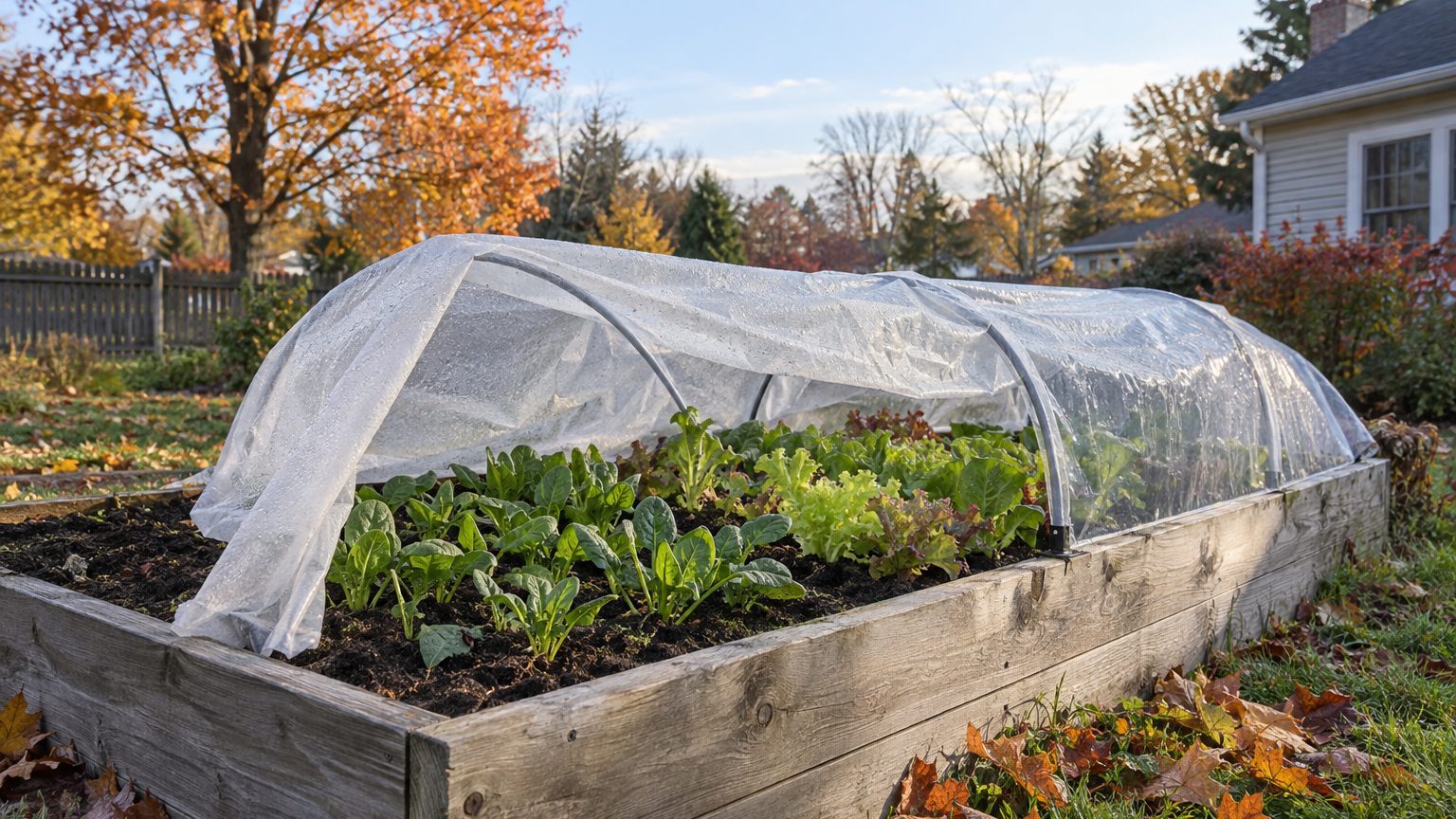

Most Lower Peninsula gardeners can start extending the season in early to mid May, once the soil has warmed. Covers, low tunnels and cold frames then add a few weeks at each end of the year. They do not turn Michigan into a longer-summer state. Daylight and winter cold still set the outer limits, and the right structure depends on which limit you are pushing.
When the soil is warm enough in Michigan
The average last spring frost falls around April 30 in the Detroit area, according to MSU Extension’s frost-free dates. Across most of the Lower Peninsula it slips to early to mid May. Any frost date is an average, so a frost after it happens in some years. Many gardeners plant warm-season crops a week or two later than the date for that reason.
The frost date only tells you when the air stops freezing. Seeds and roots respond to the soil, and soil trails the air by weeks. It is full of water, and wet ground takes a long time to heat. So the days right after the last frost are often too cold for beans, squash, tomatoes and peppers, even when the forecast looks mild.
How can you tell the soil is ready?
Use a soil thermometer. Push it in to planting depth and read it in the morning, when the ground is at its coolest. Cool-season crops such as peas, spinach, lettuce and radishes germinate in cold ground and can go in as soon as the bed is workable. Warm-season crops want soil that feels distinctly warm to a hand pushed into it. Your county MSU Extension office can give you the minimum for each crop. A strip of clear or black plastic laid over the bed for a couple of weeks before planting gives the ground a head start.
What does a cover actually do for a spring seedling?
A cover works by holding in warmth the soil has collected from the sun. It slows the heat’s escape at night, keeps the air around the plants still, and blocks wind. A second layer, such as fabric draped inside a hooped tunnel, traps another pocket of still air. The gain is real but variable. It depends on the material, the wind, the clarity of the night, and whether the ground was warm to begin with. A clear, calm night loses the most heat to the sky, and that is exactly when growers get caught.
A cover shifts the frost limit and does not remove it. A hard freeze can still kill what is under it. Any closed structure also needs ventilation. A cold frame shut tight under spring sun can overheat its contents within an hour, even on a chilly day. Prop the lid open each morning and close it again in late afternoon. Everything here is passive. Heaters, lamps and candles inside a covered structure create fire and carbon monoxide hazards, so leave them out entirely.
For the bigger picture on what covers can and cannot do, see Extending the Season: What a Cover Buys, and What It Cannot.
How long the season lasts here
Between the average last spring frost of April 30 and a first fall frost of October 6 to October 21 (zone 6a, per the MSU Extension garden calendar), the southern Lower Peninsula has a long frost-free growing season. Farther north the window shrinks from both ends, since spring frost runs into May and fall frost arrives earlier. The USDA hardiness map spans zones 4a to 6b across the state, which shows how much the growing conditions change from one end to the other.
What does a longer window allow?
A window of five months or more leaves room for two or three sowings of quick crops. Lettuce, radishes and spinach can be sown every couple of weeks in spring. A second sowing of bush beans or carrots in midsummer can ripen before the fall frost. Fast cool-season crops sown in late summer reach harvest size in fall, and a cover then buys a few extra weeks of picking. The succession sowing guide on this site lays out the spacing between sowings.
Direct-sown crops count their days to maturity from sowing. Transplanted crops count from the day they go in the ground, after they have recovered from the move.
When is transplanting worth the root check?
Where the window is short, as in the northern Lower Peninsula, the first sowing may be the only one a warm-season crop gets. Starting tomatoes, peppers and eggplant indoors then makes up the weeks the outdoor season cannot give. Before transplanting, slide a seedling out of its cell and look at the roots. White roots holding the soil together mean it is ready. A dense, circling mat means it has been waiting too long and will take longer to settle in.
Root crops such as carrots and beets resent being moved, so sow them where they will grow. Gardeners comparing notes with other states can look at Extending the Growing Season in Massachusetts and Extending the Growing Season in Utah. Both sit under the same logic of soil warmth first, then window length, but with different limits.
Heat and water in Michigan
Heat is seldom what limits a Michigan garden. Days above 90 F do happen, mostly in the southern part of the state, but they come as short spells and not as a defining feature of summer. Water is usually present, and humid, damp stretches are common. The usual troubles of a cool, wet summer are powdery and downy mildew, slow ripening, and fungal disease on crowded leaves. A cover left closed through a muggy week makes all of that worse. Open the sides and give the plants airflow whenever the weather allows.
The limit that matters more here comes from light and cold together.
Why does latitude matter more than heat?
The reference station for Detroit sits at 42.23 degrees north. At that latitude, autumn days shorten fast. Past a certain point in the fall, there is too little daylight for plants to put on new growth, whatever the temperature under the cover. After that point, a cover holds a crop alive and stops growing it. Fall plantings need to be close to full size by then, so sow earlier than feels necessary. That figure belongs to Detroit. Gardeners in the northern Lower Peninsula or the Upper Peninsula live several degrees farther north and should look up their own latitude, since the date daylight drops below the growing threshold comes earlier there.
Day length also governs onions. Daylight tells the plant when to stop making leaves and start swelling a bulb, so the variety type has to match the latitude.
Is a light fabric enough for Michigan winters?
It depends on the month. The mean daily minimum in the coldest month at Detroit is 19.2 F (NOAA climate normals, 1991-2020), and plenty of nights run colder than that average. A light fabric handles the occasional frost night in spring and fall. It is not enough for the deep-winter months. For crops you want to hold through January and February, a framed structure with an inner layer of fabric makes the difference. That structure still needs its vents, because a sunny day in winter can heat a closed frame quickly.
Which season extension suit Michigan
A short season favors the earliest-maturing types. For warm-season crops that means choosing the ones with the fewest days to maturity and starting them indoors. A cool, humid summer puts disease resistance at the top of the list. Look for resistance to mildew and leaf diseases, and give plants wide spacing so the foliage dries after rain. Where a hot spell does arrive, mulch the root zone and use shade cloth to keep roots cooler. Open the sides of any tunnel or frame to keep air moving.
No variety names appear here, on purpose. A cultivar that does well in a trial plot in one county can fail in another a few hours north, because the frost date, daylight and humidity all shift. The only recommendations worth following come from trials run in this state. MSU Extension and its county offices know which types have performed locally, and they can match them to your own frost date and soil.
Which structure fits which job?
| Structure | Best use | Ventilation need |
|---|---|---|
| Floating row cover | Frost nights in spring and fall, insect exclusion | Low, but remove it during hot spells |
| Low hooped tunnel | Early warm-season transplants, a second layer over cool crops | Open the ends or sides on sunny days |
| Cold frame | Hardening off seedlings, late fall and early spring greens | High: prop the lid daily or contents overheat |
| Unheated hoop house | Holding hardy crops through winter | High: vent on every sunny day |
Start with the lightest option that handles your worst night and add structure only if that falls short. Each added layer holds in more heat, and it adds more humidity too.
Common questions
When can I plant tomatoes outside in Michigan?
The average last frost is around April 30 in the Detroit area and early to mid May across most of the Lower Peninsula. Tomatoes also need warm soil and mild nights, so most gardeners wait until after those dates and the soil thermometer agree. A cover can bring planting forward a little, but it will not make up for cold ground.
Does a row cover make plants frost-proof?
No. A row cover or tunnel moves the damage point somewhat lower, by an amount that varies with the fabric, the wind and how warm the soil was. A hard freeze on a clear night can still kill the crop underneath.
How late into fall can I keep growing?
The first fall frost typically arrives between October 6 and October 21 in zone 6a. A cover pushes picking a few weeks past that for hardy crops. The limit then becomes daylight. Once days get too short for growth, plants stay alive under cover but add little new growth.
Where do I find varieties that suit my part of the state?
Ask your county office through MSU Extension. The varieties trialled locally account for frost date, humidity and daylight in ways a general list cannot.