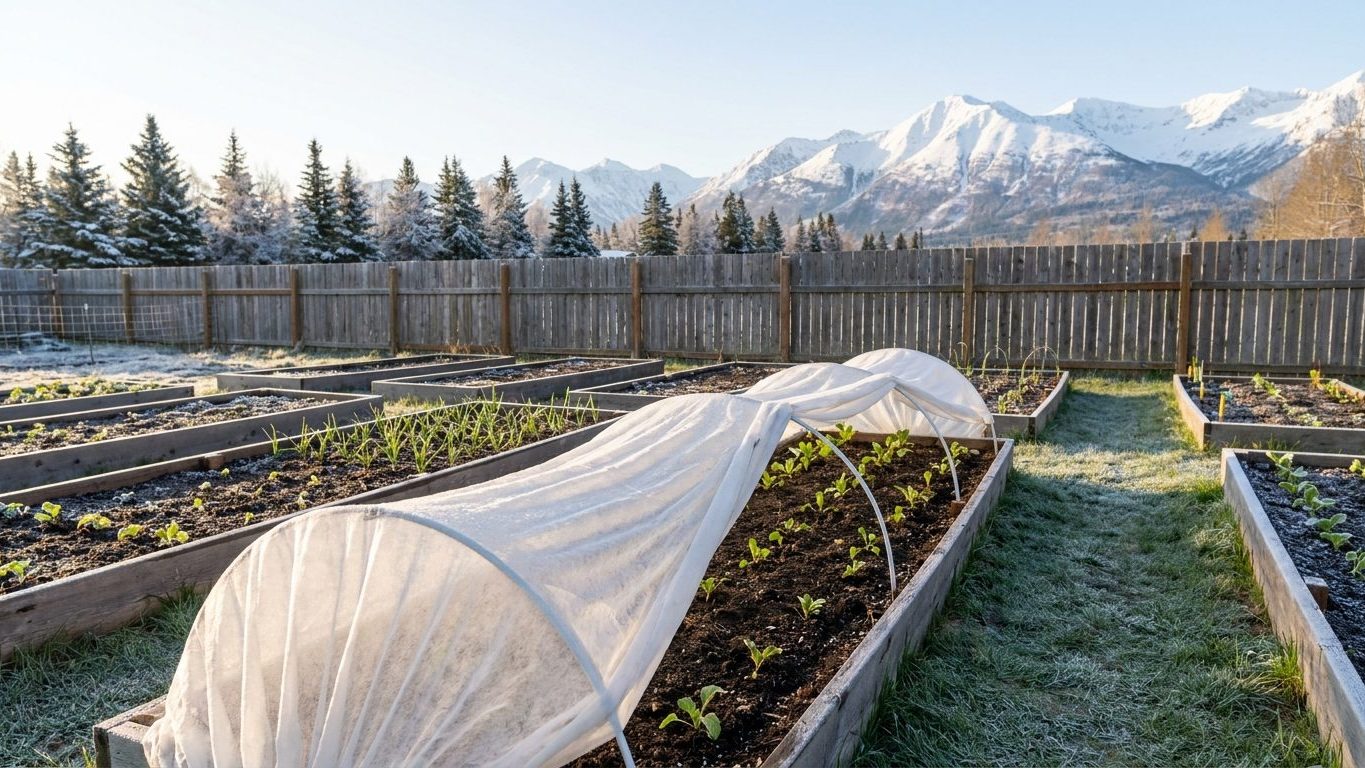

In Michigan, cover tender plants from transplanting until nights stay reliably above freezing. Cover hardy crops from the first fall frost warning until growth slows to a stop. The two seasons have different jobs: spring covers guard against a late frost, and fall covers hold a harvest open. Exact dates depend on where you live, and the Lower Peninsula alone differs by about two weeks.
The short answer for Michigan
Start watching the forecast for frost around April 30 in the Detroit area, and in early to mid May across most of the Lower Peninsula. Those are the average last spring frost dates. In fall, the average first frost in zone 6a falls between October 6 and October 21. Between those dates, a cover goes on whenever the forecast calls for a clear, calm night with temperatures near freezing.
When should you cover in spring?
Cold-hardy crops such as peas, spinach, lettuce and kale can go in weeks before the average last frost if you have fabric or a low tunnel ready. Tender crops such as tomatoes, peppers, squash and cucumbers should wait until about the average date, with a cover on hand for the first week or two after planting. Averages are only the middle of the range. A frost after April 30 or mid-May happens in some years, and a single night can kill a bed of transplants.
Put the cover on in late afternoon, before the air cools, and take it off the next morning once it warms. Fabric on at dusk traps the heat the soil released during the day. Fabric thrown over plants at midnight traps very little.
When should you cover in fall?
The first frost usually arrives on a clear, still night, often a couple of weeks before the weather turns for good. A sheet or row cover over tomatoes, peppers and beans on that first cold night can buy extra weeks of harvest. After the tender crops finish, covers switch to a different job: keeping hardy greens, carrots and beets in good shape into late fall.
Light matters too. Detroit sits at 42.23 degrees north, and by late October the days are short enough that most crops grow very slowly no matter how warm the cover is. A cover keeps a fall crop alive and harvestable. It does not make it grow much faster. Gardeners farther north should check their own latitude, since it runs several degrees higher in the Upper Peninsula.
What will not work here
Planting tender transplants in mid-April and counting on a cover to carry them is the most common failure. A cover handles a frost night well but does little for cold soil. Tomatoes and peppers set into chilly ground sit and make no growth, whatever is over them. With the average last frost around April 30 in Detroit and later across most of the Lower Peninsula, early planting risks several cold nights in a row, and one windy night can strip fabric off the bed.
A single layer of fabric also will not carry crops through the coldest weeks. The average nightly minimum in the coldest month is 19.2°F in Detroit, and that is an average, so many nights are colder. A light row cover adds only a few degrees. Spinach and kale may hold under a tunnel with fabric inside it, but lettuce, chard and most root crops left under thin cover through deep winter usually do not. Which Season Extenders Work in Michigan sorts fabric, low tunnels and cold frames by how much cold each one handles.
Late sowing is the third trap. With the first fall frost between October 6 and October 21 in zone 6a, a bed of lettuce, spinach or carrots sown in late August may not reach harvest size, because days shorten as it grows. Count back from the first frost date using the days on the seed packet, then add a couple of weeks for slowing light. Direct-sown crops count their packet days from sowing. Transplanted crops, such as broccoli or cabbage starts, count from transplanting.
Sealed tunnels cause trouble in the opposite way. On a sunny spring afternoon, a closed plastic tunnel can overheat seedlings within hours, and in a humid Michigan summer, a tight cover left on lets leaf diseases take hold on crowded plants. Vent or open covers on any sunny day, and use light fabric instead of plastic once the weather settles.
What changes across Michigan
There is no single answer for the state. The USDA Plant Hardiness Zone Map (2023, built on 1991-2020 normals) places Michigan across zones 4a to 6b. The Detroit area, the reference point for the dates above, is zone 6a. Zones rest on the average annual extreme minimum temperature, which decides what survives winter, not when frost arrives. Still, the two tend to move together: a colder zone usually means a later spring and an earlier fall.
Gardeners in the northern Lower Peninsula and the Upper Peninsula should push spring cover dates later and fall cover dates earlier than the Detroit numbers. They should also lean harder on hardy crops and heavier protection, since the frost-free stretch is shorter and the first fall frost comes sooner. Each week of difference counts more in a short season.
Microclimates inside a county can shift things as much as the zone map does. Gardens near Lake Michigan often get a later first fall frost, so check your own local frost dates with your county extension office. Low spots at the bottom of a slope collect cold air and frost earlier than ground a few feet higher.
Look up your own spot on the USDA Plant Hardiness Zone Map instead of assuming a zone from a neighbor or a seed catalog. The larger picture of how covers fit into a Michigan year is in Extending the Growing Season in Michigan.
Where to check this for your own county
Your state extension service holds the local numbers. MSU Extension runs county offices across Michigan and publishes frost-free dates and a Michigan garden calendar. Start there, then call or visit the office for your county.
Three things are worth finding:
- The frost-free dates for the weather station nearest you, with the spring and fall averages.
- A local planting calendar that says when to sow or transplant each crop, and when to expect to cover.
- Varieties trialed in your county, especially cold-tolerant greens and short-season tomatoes and peppers.
Statewide dates smooth over local differences, so a county recommendation beats a state one. County offices also know which varieties struggled in nearby gardens and which spots in the area are frost pockets. Master Gardener volunteers affiliated with the extension office are a good second source for hyperlocal timing.
Checking this against your own garden
Your garden’s own signals outrank every date above. Three are easy to read without any special tool.
Soil warmth by feel. Dig a few inches down and hold a handful. If it feels cold and damp against your palm, warm-season transplants will sit. Compare a bed under plastic or fabric with an open bed. The gap tells you how much your cover warms soil in your own yard.
First true leaves. Seedlings first show rounded seed leaves, then the first true leaves, which look like the mature plant. If true leaves appear earlier under cover than in the open, the cover is working. If they appear at the same time, the extra layer is doing little for that crop.
First male flowers. Watch squash and cucumbers for male flowers opening before female ones. The first flush under cover, compared with the same crop outside it, shows how far ahead your protected spot runs.
Write down the date of each observation for a few seasons. Cold air drains downhill, so a bed at the base of a slope will often show frost days before one a few feet above it.
Common questions
Do I cover plants for every frost warning?
Cover tender plants for any forecast that gets near freezing on a clear, still night. Hardy greens and root crops tolerate light frost and usually need protection only when the forecast turns hard.
Can I leave row cover on all day?
Light fabric can stay on in cool weather, because it lets air, water and some light through. Plastic should come off or be vented on any sunny day, or the air inside will overheat.
Is the average last frost date safe for planting tomatoes?
It is a good time to start planting with a cover nearby, not a guarantee. Frost after the average date happens in some years, and the date shifts later as you go north in the state.
What is the best cover for the first fall frost?
An old sheet or a row cover covers most gardens on a light-frost night. Anchor the edges so wind does not pull it off, and remove it once the sun has warmed the bed the next morning.