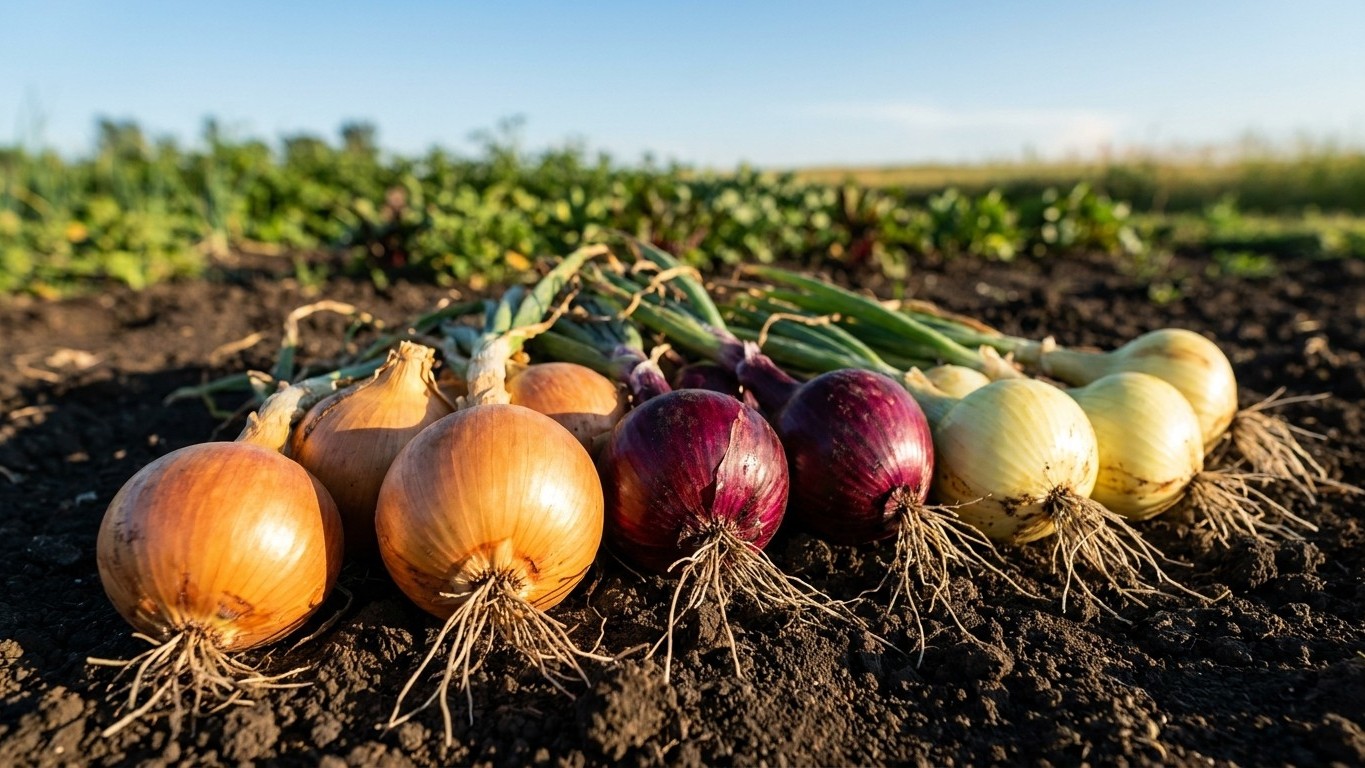

Lift onions once most of the tops have flopped over and the necks have gone soft. Cure them in a dry, shaded, airy spot until the necks are tight and the skins feel papery. Only then do they go into storage. Held at 45 to 55 °F and 50 to 60 percent humidity, a pungent onion can last well into winter. A sweet onion will not, however carefully you handle it. Which room in a house comes closest to those conditions is the next question.
Keeping them, and for how long
What do onions need to store well?
Cool and dry. Clemson Cooperative Extension’s Home & Garden Information Center puts it this way: “Ideal conditions are between 45 °F and 55 °F, and 50 to 60 percent humidity.” Their onion, leek, shallot and garlic factsheet sets those numbers as the target for the whole storage period.
That humidity range surprises people who store carrots, beets or potatoes. Root crops want damp air, and onions want the opposite. Put them in the same cellar and one of the two crops loses. Onions in damp air grow mold at the neck and start to sprout. Carrots in dry air go limp.
Curing comes before any of it. A bulb pulled from the ground still has a wet, open neck, and that opening is how rot gets in. Spread the bulbs out of the rain and out of direct sun, with air moving around them. They are ready when the neck is tight and the outer skins rustle. Wait for that. Bulbs put in a crate while the neck is still green and soft tend to rot from the top down. In the southern Plains, a stretch of humid or rainy weather can slow curing. Move the bulbs under cover when rain is forecast.
How long will cured onions keep?
Any storage time you read is a ceiling. It describes the best case, with sound bulbs held at the ideal temperature and humidity, and a warm closet or a damp garage will cut it short. The type of onion matters more than anything else you control. A pungent, tight-necked bulb has the best chance of reaching late winter. A sweet bulb may be soft within weeks.
Why do sweet onions spoil sooner?
Sulfur. The bite of an onion comes from volatile sulfur compounds, and those same compounds help protect the bulb while it sits in storage. A sweet variety carries fewer of them. That makes it better raw and worse in a crate. The University of Missouri Extension, in its guide to planting, growing and harvesting onions (G6355), states it plainly: “As a rule, ‘sweet’ onions do not store as well as the more pungent types.”
Day length lines up with this. Bulbing is set off by hours of daylight, not by warmth, and short-day varieties begin at about 12 hours, according to Clemson Extension. Oklahoma City sits at 35.39 degrees north and gets 14 h 24 of daylight on the longest day of the year, so short-day types start bulbing early in spring and finish well ahead of midsummer. Those are the sweeter, quicker onions, the ones to eat first. Long-day types wait for 14 to 16 hours of light and keep longer, which is why northern gardens produce onions that last into March. Oklahoma stretches across several degrees of latitude, so a gardener in the Panhandle or near the Red River should check their own latitude before assuming the Oklahoma City number applies. The best onion varieties for Oklahoma are sorted with this trade-off in mind. For the broader picture of the season, start with onions in Oklahoma.
Plan the harvest in two piles. Eat the sweet bulbs, the thick-necked ones and anything nicked or bruised first. Save the hard, tight-necked, pungent bulbs for storage. Insect damage during the season shows up later as soft spots, so the list of what eats onion in Oklahoma, and when, helps you spot bulbs that will not make it to winter.
Where in the house that actually is
The refrigerator is the first place people think of, and it is wrong for whole bulbs. A domestic fridge runs colder than the 45 °F floor, and the air inside is humid. Cold, damp conditions soften onions and encourage mold. A fridge works for a cut half, wrapped, and only briefly.
A heated living space has the opposite problem. Most rooms stay well above 55 °F for much of the year, and warm air tells a bulb to wake up and sprout. An Oklahoma kitchen in July is no place for a crate of onions.
The garage looks promising and fails on consistency. It can bake during a hot summer and drop below freezing during a winter cold snap, and a frozen onion turns to mush once it thaws. Oklahoma weather can swing from hot to freezing within a few months. A garage that sits near the right range on one October day tells you little about January.
Which room comes closest in an Oklahoma house?
Look for an interior space that stays cool without being cold, away from exterior walls, water heaters, furnace closets and sunny windows. An unheated spare room with the vent closed is a good candidate. So is an inside closet on the north side of the house, or a pantry that sits away from the stove. Most Oklahoma homes sit on slabs and have no basement, so a cool interior room is usually the best choice. A dry basement or storm cellar, if you have one, can work, but check the humidity first. Those spaces often run damp.
Choose the spot, then let the instruments decide. Leave a thermometer with a humidity reading in the spot before you move any onions in, because skipping that check can mean losing the whole crop to rot or sprouts by midwinter. Read it at the height where the crates will sit, and read it morning and evening. If the temperature holds between 45 and 55 °F and humidity stays between 50 and 60 percent, use the spot. If humidity runs above that range, add airflow with a small fan or move to a drier room.
Store the bulbs in mesh bags, slatted crates or shallow baskets, in a single layer if you can. Air has to move around them. Check the crop regularly and pull any bulb that feels soft or smells sour, because one rotting onion can spoil its neighbors.
Common questions
How do I know when to lift my onions?
Watch the tops. When most of them have fallen over and the necks have gone soft, the bulbs have finished growing. Stop watering as the tops start to yellow, loosen the soil gently, and lift on a dry day. In the southern Plains this generally lands in the warm part of the year. Your county extension office can tell you what has been typical locally.
How can I tell if an onion is fully cured?
Squeeze the neck. It should be tight and dry, with no moisture and no give. The outer skins should be papery and rustle when you handle the bulb. If the neck is still thick and soft, keep curing, or set that bulb aside to eat soon.
Can I store sweet onions through the winter?
Do not count on it. Sweet onions have fewer of the sulfur compounds that protect bulbs in storage, so they soften sooner than pungent types. Cure them well, store them in the best spot you have, and use them first. A sweet onion that lasts a few extra weeks is a bonus, not something to plan around.
Can I keep onions and potatoes or carrots in the same place?
It is a poor match. Onions need dry air at 50 to 60 percent humidity, while carrots and other root crops need damp air. One space cannot hold both well. Give the onions their own dry, cool spot, and keep the root crops somewhere humid.