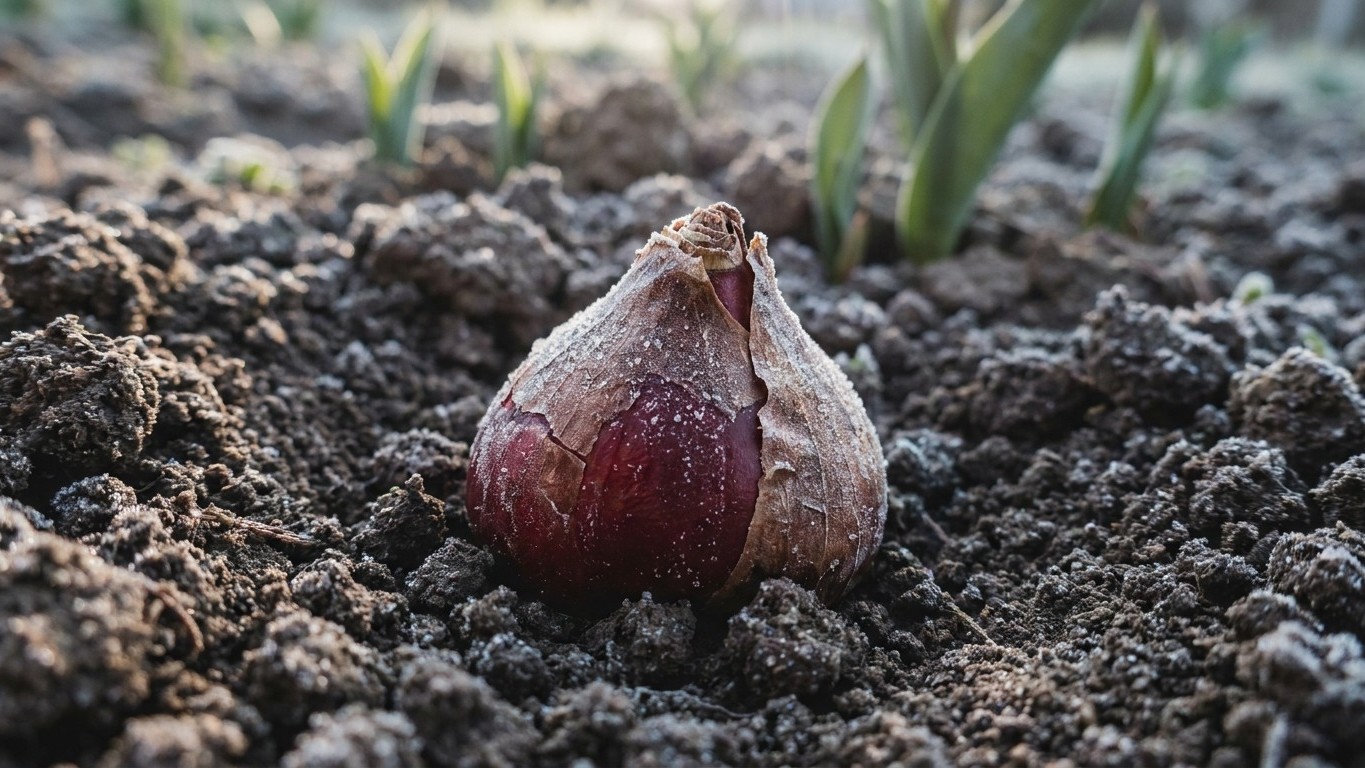

Garlic has few enemies in Oklahoma, but they arrive in a predictable order. Rodents and soil insects go after cloves in the ground from autumn through winter. Aphids and thrips show up as spring warms the leaves. Mites and rot finish off bulbs that sit too long in wet soil or storage. Each threat belongs to a stage of the crop, so a calendar helps more than a spray bottle.
The short answer for Oklahoma
The calendar hangs on one figure: the first fall freeze at the reference airport station falls between October 29 and November 8, according to the NOAA NCEI U.S. Climate Normals for 1991-2020. That range is the band where the chance of a 32°F freeze runs from 30 to 70 percent. Garlic goes in around that window, so every pest window is counted from it.
Treat those dates as a midpoint, never a safe date. In one year out of two, the freeze arrives later than the range suggests, and a warm autumn leaves soil active well into November. That matters for pests because cloves planted into warm ground are on the menu longer.
The three feeding windows
The first window opens at planting. Cloves sit in the soil while voles, mice, wireworms and white grubs forage. Wireworms and grubs are common where a bed was cut out of lawn or pasture, because they live in the sod. Garlic is planted in autumn and lifted the following summer, so cloves sit exposed through the whole winter.
The second window opens in spring. Aphids move in first, and onion thrips follow as leaves lengthen and temperatures climb. Thrips rasp the leaf surface and leave silvery streaks. Oklahoma springs can swing from cool to hot quickly, and hot, dry spells favor thrips.
The third window comes around lifting in summer. Bulb mites and rot organisms get into bulbs with damaged bases or wet soil. A bulb that was nicked by a shovel or a wireworm is the easiest target.
Why the dates move
The frost figure comes from a single airport station, and it describes that city. A garden in open country usually freezes earlier than the airport does, often by one to two weeks, and more at elevation. The pest windows slide with it, so use these dates as a reference and not a guarantee.
Working it out for your own garden
A state is not one climate, so the arithmetic is worth redoing for your own ground. It takes four steps, and none needs special equipment.
Start from your county’s date, then adjust
First, get the first fall freeze date for your county or nearest station. Treat it as the midpoint of a spread, because half of all years freeze later. Second, adjust for where you actually garden. If you are outside a city, in a low pocket where cold air settles, or on higher ground, assume the first freeze comes earlier than the station says. For a rural garden, subtracting one to two weeks from the airport range of October 29 to November 8 is a sensible stress test.
Third, plant relative to that date, not to the calendar page of a book. The When to Plant Garlic in Oklahoma: Counting Back From the First Frost page covers that count in detail. This page does not publish a set number of weeks, so use that page or your county extension office for the planting window itself.
Then count forward to the pests
Fourth, lay the pest windows over your planting date. Plant early into warm soil and cloves face weeks of extra exposure to wireworms and rodents, and they may push top growth that winter weather can damage. Plant late and roots are thin going into winter, which makes plants more vulnerable to pests and to heaving.
Then mark spring. Start checking leaves for silvering and aphid clusters as soon as growth speeds up, and again every week or so until the leaves begin to brown. Mark summer too: lifting before bulbs sit in saturated soil cuts the mite and rot risk.
Elevation moves these dates the most in Oklahoma. A coast does not apply here, since the state is landlocked. I am not publishing a lake-effect figure, because none is carried in the verified data. The two adjustments with real numbers behind them are city versus country and low versus high ground.
What changes across Oklahoma
The airport figure sits in the middle of the state, so gardens elsewhere run ahead or behind it. The Panhandle, on the high plains in the far northwest, sits at a higher elevation than most of the state. It usually freezes earlier, which pulls the planting window forward and shortens the rodent and soil-insect exposure before dormancy. Lower, warmer ground along the Red River in the south tends to freeze later, which lengthens that exposure.
The hills of the southeast, including the Ouachita and Kiamichi areas, add another wrinkle. Cold air pools in valleys there, so a bottomland garden can freeze earlier than one on a slope a short walk away. Heavy, wet soils in that part of the state also raise the rot and bulb mite risk at lifting time.
| Area | Freeze timing compared with the airport range | Pest note |
|---|---|---|
| Panhandle and high plains | Usually earlier, because of elevation | Shorter fall exposure to soil pests; thrips can still build in dry spring spells |
| Central Oklahoma | Reference range, October 29 to November 8, at the airport; country gardens often one to two weeks earlier | Rodents and wireworms in new beds; thrips in warm, dry spells |
| South, near the Red River | Usually later | Longer fall activity in soil; check cloves for chewing |
| Southeast hills | Varies by slope; valleys freeze earlier | Wet soils raise mite and rot risk at lifting |
These are directions of difference, not published dates. Anyone comparing a cold-winter climate can see the same arithmetic in When to Plant Garlic in Ontario: Counting Back From the First Frost, where the order of events is the same and the dates are far earlier. Variety choice shifts the picture too, and Garlic Varieties That Suit Oklahoma Winters covers it. For the Ontario side of that comparison, see Garlic Varieties That Suit Ontario Winters.
The mistakes this climate punishes
Oklahoma winters swing between mild spells and hard freezes, and that pattern creates its own set of errors. Most of them come down to timing, soil and seed stock.
Planting too early, mulching too deep
Planting into warm October soil is the most common error. Warm soil keeps wireworms, grubs and rodents active, and it can push green shoots before winter. A cold snap after a mild spell then catches tender growth. Waiting for the frost window described above keeps cloves underground and quiet.
Heavy mulch laid too soon is the second. A thick, loose blanket of straw gives mice and voles shelter right over a bed of cloves. Lay mulch after the ground has cooled, keep it modest, and pull it back in spring when growth starts.
Third is planting in lawn-turned-garden beds without checking the soil. Grubs and wireworms live in sod, and a first-year bed carved from lawn is their best habitat. Dig a few test holes first, or prepare the bed a season ahead.
Bad seed stock and wet clay
Saving or buying cloves from a bulb with swollen, distorted leaves risks carrying stem and bulb nematodes into the bed. They live in the plant and soil, and there is no cure once they are established. Start with clean seed garlic and rotate beds so alliums do not follow alliums. Hardnecks planted in a mild stretch can also underperform, which the Growing Garlic in Oklahoma page covers.
Heavy clay that stays wet is the last. Water that sits around cloves invites rot, and rot weakens the tissue that mites and fly larvae exploit. Raise beds, loosen the soil before planting, and lift bulbs once tops have browned, not weeks later in a wet June.
Checking this against your county
County-level freeze dates, pest alerts and soil advice are available from Oklahoma State University Extension, which has offices across the state. Ask for the first fall freeze date at the station nearest you, and bring a sample if you find chewed cloves or silvered leaves. A local agent can identify the culprit and tell you what is active in your area that season.
Common questions
Do deer and rabbits eat garlic in Oklahoma?
They mostly leave it alone, because garlic’s strong smell puts them off. Rodents under the soil and mulch are the bigger concern.
What chews cloves soon after planting?
Voles and mice dig them up, and wireworms and white grubs gnaw them in place. Digging a sample hole usually shows which one it is.
When should I start checking for thrips?
Start in spring once leaves are growing quickly and keep looking weekly through the warm stretch. Silvery streaks on the leaves are the sign.
Can I replant cloves from a bed that had pests?
It depends on the pest. Thrips do not ride in on cloves, but nematodes and mites can. Avoid saving cloves from bulbs that were distorted, soft or damaged.