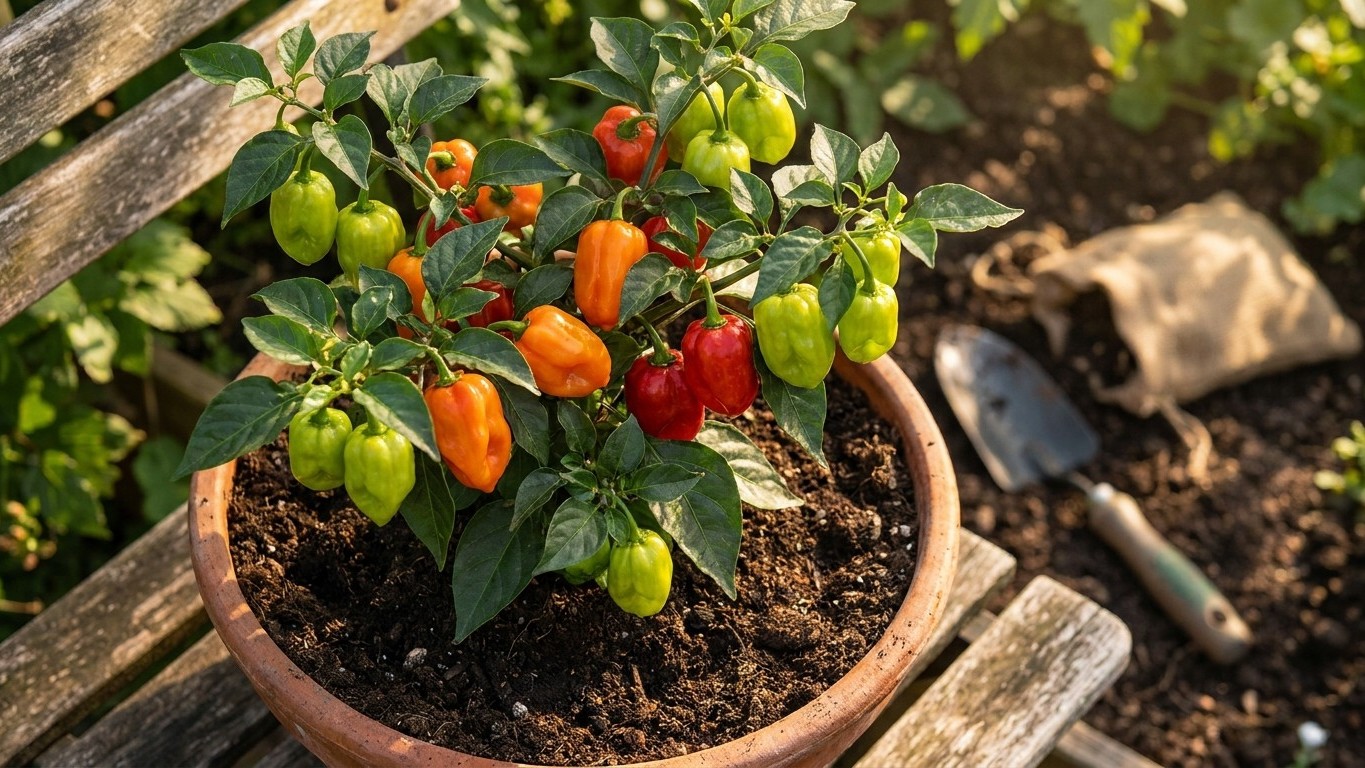

Pick peppers when the fruit has reached full size and feels firm. For transplants, that usually means 70 to 85 days after they went into the garden, according to Clemson Cooperative Extension. Then keep them out of the refrigerator. A domestic fridge runs colder than peppers tolerate, and below about 45 °F the skin pits and the flesh goes soft. A cool room in the 45 to 50 °F range holds them far better, and an ordinary New Mexico house usually has one spot that comes close.
Keeping them, and for how long
Peppers come from warm climates, and the fruit has kept its dislike of cold. Stored too cold, the cells in the skin break down. That is chilling injury, and it happens well above freezing, in the range where most refrigerators run. The signs are small sunken pits on the skin and flesh that goes soft. The damage often shows up only after the fruit warms back up, so a pepper that looked perfect going in comes out limp and spotted.
What conditions does a picked pepper want?
Clemson’s Home & Garden Information Center states the optimal storage conditions for peppers as temperatures of 45 to 50 °F and 80- to 90-percent relative humidity (Clemson Cooperative Extension factsheet on peppers). That is cool but not cold, and it is humid. The humidity half matters as much as the temperature. Dry air pulls water out of the skin, and a pepper left in it wrinkles within days. Air in much of New Mexico is dry indoors for most of the year, so a loose, perforated bag or a vented container does real work here. It holds moisture around the fruit while letting air move.
How long do picked peppers last?
The same Clemson factsheet gives two to three weeks at those conditions. Read that as a ceiling. It applies to sound fruit, picked at the right stage, in a spot that holds steady. Peppers with cracks, sunscald patches, bruises or insect bites break down first, and one soft fruit in a bag will spoil its neighbors. Sort as you pick. Set the damaged ones aside for the kitchen that day, and read What Eats Pepper in New Mexico, and When if bite marks keep showing up.
Plan to eat, roast, freeze or dry most of the harvest well inside the three-week window. Check the stored fruit every few days and use the softest first. Roasting and freezing is the old standby in this state for a good reason: a big picking arrives all at once, and no storage spot stretches that far.
When are peppers ready to pick in New Mexico?
Count from the day the transplants went into the ground. Add 70 to 85 days, and that is the window when the first fruit should be full size. Transplants go out after the last frost, once the soil reaches 60 F, and they need 8 to 10 weeks indoors first, according to Utah State University Extension. At the Albuquerque reference station, the last spring frost falls between March 31 and April 12 (NOAA NCEI U.S. Climate Normals). Gardens in the suburbs and the country usually see it one to two weeks later, and higher ground sees it later still. Your county extension office can tell you the date for your own address.
Heat reshuffles that calendar. Pepper fruit set fails at both ends, with nights below 55 F or days above 90 F, according to Utah State University Extension. The Albuquerque reference station averages 42.5 days a year at or above 90 F, so a stretch of flowers can drop in midsummer and leave a gap in the harvest. Nights are the other half. Watch your own, because they vary a lot from one yard to the next. The result is that peppers often ripen in waves instead of one tidy batch. Why Peppers Fail to Set Fruit in New Mexico covers what to do when the flowers keep falling.
As for the fruit itself, pick when it is full size and firm with glossy skin. Green peppers are fine to pick, and leaving them on the plant lets them color up and sweeten, though it also keeps the plant working on that fruit. Cut the stem with clippers or scissors instead of pulling, since branches snap easily. Before the first fall frost, pick everything that is full size. Frost damages the fruit and the plant. For the full growing calendar, start with Growing Peppers in New Mexico.
Where in the house that actually is
The target is a room that stays between 45 and 50 °F with humid air. Most of a house misses it on one side or the other. The refrigerator is too cold, heated and cooled living space is too warm, and the garage swings with the weather.
Which room comes closest?
A domestic refrigerator runs colder than the 45 to 50 °F range, which puts peppers in the chilling-injury zone. This is the mistake nearly everyone makes, because the fridge feels like the obvious place for fresh produce. Rooms kept for comfort, like the kitchen, sit well above 50 °F. Peppers left on the counter there soften and wrinkle sooner than they would in a cooler spot.
The garage looks promising until you watch it for a day. In New Mexico’s dry air, the gap between afternoon highs and overnight lows is large, and a garage follows that swing. It can run warm at 4 p.m. and drop toward freezing on a late-fall night. A steady spot beats a spot that averages out right.
The better candidates are the ones the house keeps steady without trying:
- A basement or a below-grade room, if the house has one
- An interior pantry or closet on the north side, away from heating and cooling vents
- An unused bedroom with the vent closed and the door shut
- An appliance with an adjustable thermostat, such as a wine cooler, set into the range and checked
Any of these might land in range, and some won’t. The only way to know is to measure.
How do you check a spot with a thermometer?
An inexpensive min-max thermometer records the coldest and warmest readings since you last reset it, which is what you need. Leave it in the spot for a full day and night before you trust it, and set it at pepper height, inside the container if you can. If the low stays at or above 45 °F and the high stays near 50 °F, the spot qualifies. If the low dips under 45 °F, expect pitting. Skipping this check can cost you the whole basket, and the damage may not show until days later.
A small hygrometer, the kind sold for humidors and reptile tanks, tells you about the humidity half. Readings well under 80 percent mean the peppers need a perforated bag or a lidded container with a few holes to hold moisture in. Check again after a few days. A spot that was right in early fall can drift as the heating season starts, and the measurement should follow the weather.
Common questions
How do I know a pepper is ready to pick?
Look for full size, firm flesh and glossy skin. Count from transplanting day, since 70 to 85 days is the window Clemson Cooperative Extension gives for peppers to be ready for harvest. Use that as a prompt to start checking, and let the fruit make the call. A pepper that is still growing or feels rubbery can stay on the plant a bit longer.
Should I pick all my peppers before the first fall frost?
Yes, pick everything that is full size. Frost damages both the fruit and the plant. Suburban and rural gardens usually see the first fall frost earlier than a city airport station does, often by one to two weeks, and higher ground sees it sooner still. Watch the forecast in early fall and ask your county extension office for the typical date near you. Green peppers picked at that point are still usable, and many cooks like them.
Can I use the refrigerator if I have nowhere else?
You can, but only as a short-term fallback. The fridge is colder than the 45 to 50 °F range that Clemson lists as optimal, and below about 45 °F peppers pit and soften. A day or two in the crisper drawer, in a loose bag, risks less than a long stay. If you can’t hold the fruit in range, roast or freeze it soon after picking, or cook it that week.
Why do my plants stop setting fruit in the summer?
Pepper fruit set fails with nights below 55 F or days above 90 F, according to Utah State University Extension. The Albuquerque reference station averages 42.5 days a year at 90 F or more, so a hot spell is a normal part of a New Mexico summer. Flowers that open during one tend to drop. Record your own overnight lows, since cool nights count against you as well, and read Why Peppers Fail to Set Fruit in New Mexico for ways to ease the stress on the plants.