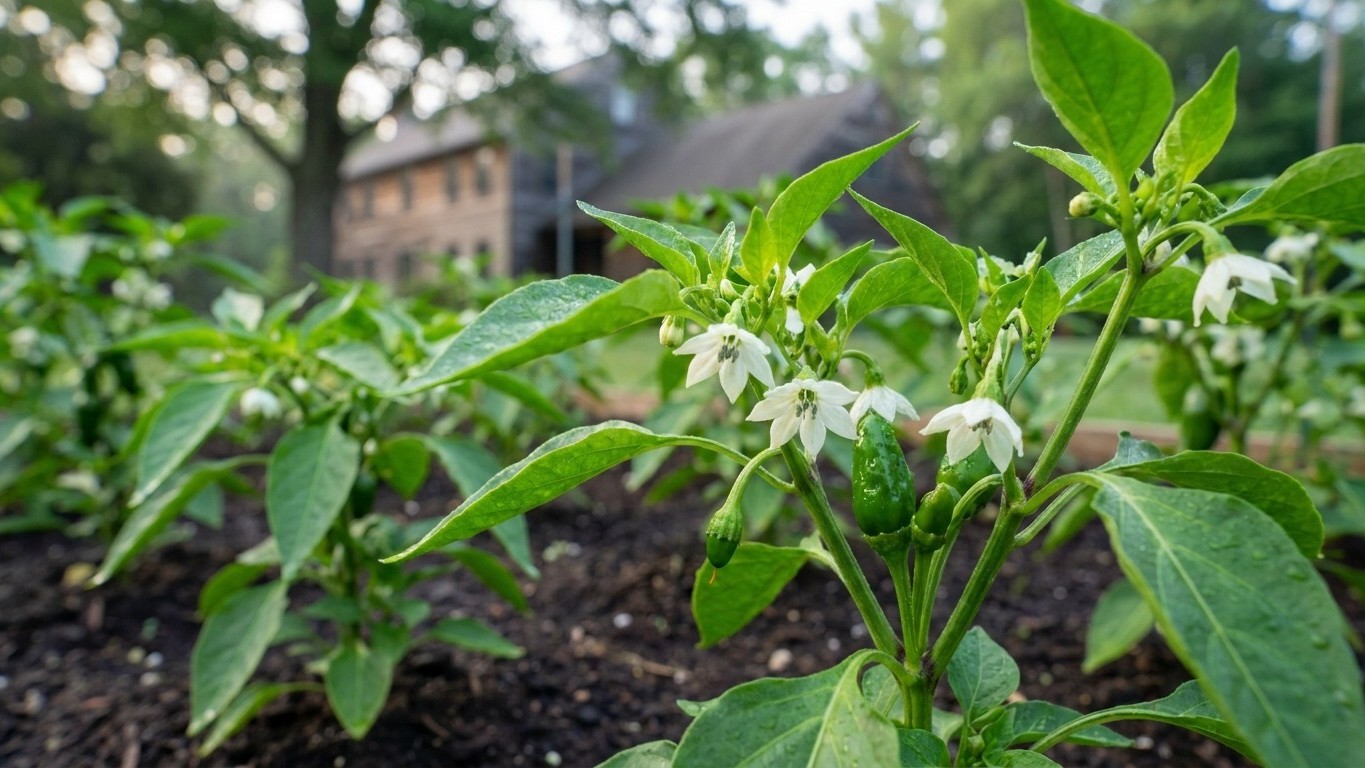

The honest answer is that no single published source names a specific list of insects or animals that feed on pepper plants in New Mexico. What is documented, and documented precisely, is a temperature mechanism that produces the exact same result, flowers and small fruit dropping off the plant, whenever nights fall below 55°F or days climb past 90°F. Albuquerque averages 42.5 days a year in that hot range. Anyone chasing an actual pest name for their own yard needs the county extension office, not a statewide climate table.
Which pests attack pepper in New Mexico

Search for a species-level pest list tied specifically to New Mexico pepper crops, and there’s less than most gardeners expect: none. That’s not an oversight. Insect pressure on a crop varies by elevation, irrigation district, and even which side of a county line a garden sits on, so a single “New Mexico pepper pest list” would be misleading the moment it left the low desert around Albuquerque for a higher, cooler county. The organization that actually tracks insect activity at that local level is the New Mexico State University Cooperative Extension Service, working county by county, not from a single state roster.
What the state’s own climate data does document, in detail, is a mechanism that mimics pest damage closely enough to fool an experienced gardener. Pepper fruit set fails at both ends of the temperature range: nights below 55°F or days above 90°F stop pollination cold, and the plant drops its flowers and tiny fruit exactly the way it would if something had chewed through the stem. Albuquerque’s reference station logs 42.5 days a year at or above that 90°F line, concentrated in the hottest stretch of summer, which makes heat, not insects, the dominant reason New Mexico pepper plants lose their crop before it ever forms.
That reshapes how a gardener should sort what they’re seeing. Instead of trying to match a bug to a name that isn’t published for this state, the useful split is between two categories: damage with a visible cause, chewed leaf margins, ragged holes, frass, sticky residue, which points to insect feeding and belongs on a call to the county extension office, and damage with no visible cause at all, flowers and small fruit falling off intact plants, which lines up with the heat and cold thresholds above and has nothing to do with an animal or insect. Treating the second category as a pest problem wastes time and money on a product aimed at a species that was never there.
When each one shows up, and what it does first
Timing in New Mexico starts indoors, long before anything goes in the ground. Transplants need 8 to 10 weeks under cover before they’re ready, and they shouldn’t go outside until the soil itself reaches 60°F, after the last frost has passed. At the Albuquerque reference station, that last spring frost falls somewhere between March 31 and April 12, though gardens outside the immediate metro area, especially at higher elevation, typically see frost linger one to two weeks longer than that station records. Anyone gardening outside the valley floor should treat that window as a starting point, not a guarantee, and watch their own ground rather than a date on a chart.
The first thing most New Mexico gardeners report after transplant isn’t a chewed leaf. It’s flowers or pea-sized fruit disappearing from otherwise healthy-looking plants during a cool snap that dips nights near or under that 55°F floor. No holes, no residue, nothing crawling on the stem. That’s the cold end of the fruit-set failure showing up early in the season, and it resolves on its own once nights warm back up.
If actual insect feeding is present in a given garden, it tends to announce itself differently and earlier in the plant’s life: chewed edges or small holes appearing on the young, tender leaves within the first few weeks after transplant, while the plant is smallest and most vulnerable. Because no species list is published for this state, exactly which insect and exactly which week varies by county, and that’s a question for the local extension office, not a calendar.
Later in the season, a second and separate wave of flower drop tends to line up with the hottest stretch of summer, when daytime highs push past that 90°F mark on a stretch of days. The plant looks otherwise fine, sets flowers, and then simply drops them again, faster than it did in spring. Harvest itself typically lands 70 to 85 days after transplant, which means a late transplant risks having its fruit-set window collide directly with the hottest weeks of the year rather than dodging them.
Telling the damage apart from everything else
Pepper plants in a New Mexico garden fail for more reasons than anything with legs. Sorting out which cause is which before reaching for a fix saves both time and money, and the rule that matters most is simple: damage with no visible chew marks, holes, or residue is almost never insect feeding, whatever it looks like from a distance.
| Symptom | Likely cause | What separates it |
|---|---|---|
| Flowers or small fruit drop, plant otherwise intact | Heat above 90°F or nights below 55°F | Happens plant-wide at once, no chewing, no residue, coincides with a temperature swing |
| Ragged holes or chewed leaf margins | Insect feeding | Visible insects, frass, or sticky residue present; confirm species with the county office |
| Sunken, leathery dark patch at the fruit’s blossom end | Blossom-end rot from uneven watering, often after a heat spike | Always at the fruit tip, never the stem end, and not caused by anything eating it |
| Pale, blistered patch on the sun-facing side of the fruit | Sunscald from direct heat exposure | Located only on the exposed side, spreading with more sun days, not random |
| Wilting despite damp soil | Root disease or transplant shock | Extension diagnosis needed; unrelated to insect activity |
None of this replaces an actual identification. A gardener who spots chewed leaves and residue has real grounds to call it insect feeding; a gardener whose plant simply drops its flowers during a stretch of 90°F afternoons is looking at the climate mechanism described here, not a pest at all. Either way, a photo and a sample handed to the local extension office settles it faster than guessing from a symptom list.
What actually works here, and what is a waste of time
On a season this short and this hot, timing does more work than any treatment applied after the fact. Getting transplants into the ground only once soil hits 60°F and frost risk has passed, then covering young plants with a floating row cover through any lingering cool nights, protects against both a late frost and whatever early insect feeding shows up while leaves are still tender. The part that trips people up: that cover has to come off before the season’s hot stretch arrives, because a cover that traps heat on a day already pushing past 90°F only adds to the fruit-set failure it was never meant to fix.
Spraying anything at flower drop that has no chew marks, holes, or residue attached to it is close to a guaranteed waste of time. That symptom traces back to the 55°F and 90°F thresholds, and no product changes the temperature. The fix there is entirely about timing, planting early enough and choosing a spot with some afternoon shade during the hottest weeks, not about treating the plant for something that was never on it.
Once fruit does set, moving fast at harvest protects it further. Peppers are generally ready 70 to 85 days after transplant, and pulling them close to that window limits how long ripening fruit sits exposed to both heat and any active insect pressure. After harvest, the storage mistake nearly everyone makes is putting peppers straight in the refrigerator: the fridge is too cold for peppers. The right range is 45 to 50°F with 80 to 90 percent humidity, which holds fruit for two to three weeks at most, and a standard home refrigerator runs colder than that, which pits and softens the fruit through chilling injury rather than any pest ever touching it.
For anything that turns out to be genuine insect feeding, the county extension office is the only place that knows what’s actually registered for use in New Mexico. This page doesn’t name a product or an active ingredient, and neither should any gardener guess at one; what’s legal and effective changes by state and sometimes by county.
Where to check this for your own county
Everything documented here comes from statewide or single-station data: the Albuquerque reference station for frost dates and heat days, national extension sources for fruit-set thresholds and storage. None of that tells a gardener what’s actually feeding on plants in their own backyard. That answer sits with the New Mexico State University Cooperative Extension Service, and specifically with its office in the reader’s own county, since insect activity, elevation, and even frost timing shift meaningfully across the state.
A garden in a high mountain county can see frost weeks later than the Albuquerque figures suggest and face a shorter run of 90°F days than the valley floor logs. A garden down in the lower desert districts can hit that heat threshold earlier and harder than the reference station average implies. State-level numbers are a starting point, not a forecast for one specific yard, and the extension office is where that gap gets closed with local knowledge instead of a statewide table.
The practical next step is straightforward: when a plant shows damage that doesn’t match the heat or cold patterns described here, bring a photo, or better, an actual leaf or insect sample, to the county extension office rather than guessing from a description online. That’s the only route to an actual species name, actual local timing, and, if treatment is genuinely warranted, guidance on what’s registered for use in that state.
Common questions
Does New Mexico have a published list of pepper pests by county?
Not in the sourced climate and extension data behind this page. Species presence is documented at the local level by the New Mexico State University Cooperative Extension Service through its individual county offices, not through a single statewide list.
Why do my pepper flowers keep falling off with no visible damage?
That pattern matches the documented fruit-set failure at both temperature extremes: nights below 55°F or days above 90°F. It isn’t necessarily a pest at all, and no treatment fixes a temperature threshold.
Can I store harvested peppers in my refrigerator?
A standard refrigerator runs colder than peppers can tolerate. The correct range is 45 to 50°F with 80 to 90 percent humidity, good for roughly two to three weeks at most, and colder storage causes pitting and softening through chilling injury.
When should I transplant peppers outdoors in New Mexico?
After the last frost, once soil reaches 60°F. At the Albuquerque reference station, last spring frost typically falls between March 31 and April 12, though outlying and higher-elevation gardens often see it one to two weeks later.