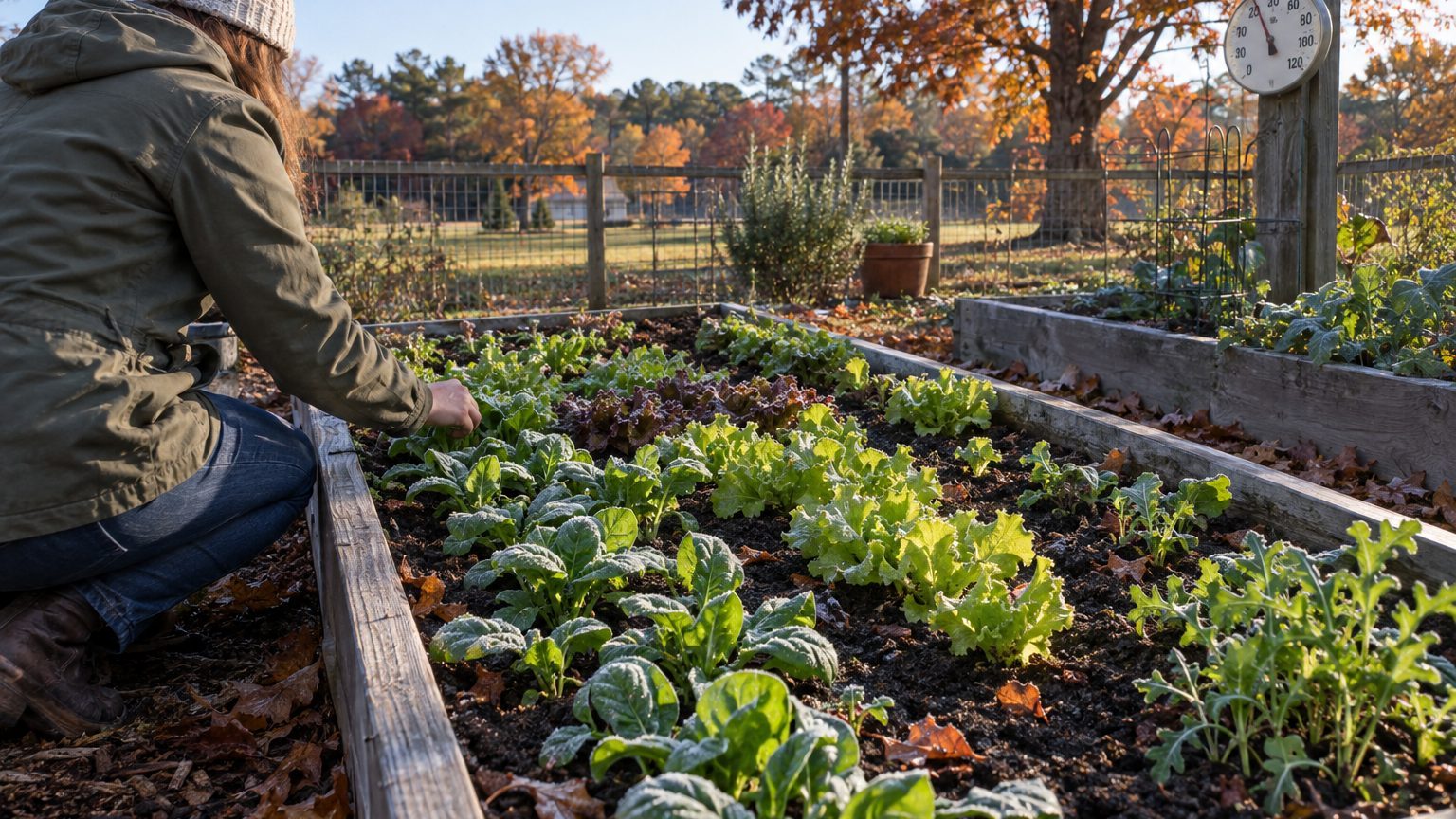

Sow winter salads in Nebraska from mid-August through mid-September for outdoor beds, and into early October under a cold frame or low tunnel. Those dates hang on the first fall frost, which at the Omaha airport station falls between October 15 and October 26. A second window opens in late winter. The sections below give the dates, what fails, and how to adjust them to your ground.
The short answer for Nebraska
The calendar runs backward from the fall frost. NOAA’s 1991-2020 normals for the Omaha airport station put the last spring freeze between April 12 and April 23 and the first fall freeze between October 15 and October 26. Each range is the band where the chance of a 32°F freeze sits between 30 and 70 percent. A given year can land well outside it. Suburban and rural gardens usually freeze later in spring and earlier in fall than an airport does, often by one to two weeks, and more at higher elevation.
When do you sow winter salads for fall harvest in Nebraska?
Winter salads need to be well established before late fall. As daylight shortens in late autumn, growth nearly stops until late January. A plant that is small on that date mostly sits and waits. A plant that is full size becomes a pantry you can harvest from all winter. That is why sowing happens in late summer, long before anything looks wintry. For a wider look at the crop, see Winter Salads for Nebraska Gardens.
| Method | Sowing window | Suited to |
|---|---|---|
| Open bed, fall crop | Mid-August to mid-September | Spinach, arugula, mustard greens, kale, lettuce |
| Cold frame or low tunnel | Mid-September to early October | Mâche, claytonia, spinach, leaf lettuce |
| Late-winter start under cover | Late February to March | Spinach, arugula, leaf lettuce, mustard greens |
Is there a spring window?
Yes. Hardy greens tolerate light frost, so seed can go in under cover in late winter and outdoors as soon as the soil can be worked. With the Omaha last-freeze band at April 12 to April 23, an early March sowing leaves cool weather before that band opens. Spring salads are a different job from winter salads, though. They run against rising heat and lengthening days, and spinach and arugula will bolt once the weather warms.
What will not work here

Outdoor sowing in late October fails in most years. With the first freeze due October 15 to October 26, seed sown after that date germinates slowly, if at all, and the seedlings reach the short days of November and December still tiny. They survive, but they give almost nothing before spring. Sowing for winter harvest has to be finished before the first freeze. Sowing later only gets you an early spring crop.
Cold is the second problem. The mean daily minimum of the coldest month at Omaha is 15.2°F, and that is an average, so individual nights run well below it. Spinach, mâche, claytonia and kale take that kind of cold. Head lettuce and tender leaf types do not, unless a tunnel or frame covers them. Wind and dry winter air add to the damage, because leaves lose moisture faster than frozen soil can supply it.
Late-summer heat catches gardeners from the other side. Lettuce seed often refuses to germinate in hot soil, and a bed watered only once a week dries out between waterings while seedlings are still shallow-rooted. A few habits fix most of it:
- Sow where afternoon shade falls on the bed, or lay a board or row cover over the row until seedlings emerge.
- Water daily until seedlings are up, then taper off.
- Soak the seed row before sowing on hot days so the soil is cool at seed depth.
The last failure shows up on mild winter days. A sealed tunnel in strong sun gets warm and humid fast, and crowded plants then stay wet, which invites mildew and rot. Space plants generously and vent the cover on any day the sun is out. A sealed cover left shut for a week protects against cold and then lets the crop spoil.
What changes across Nebraska
The USDA Plant Hardiness Zone Map (2023 edition, built on 1991-2020 normals) places Nebraska in zones 4a to 5b. That is a spread of several zones, so no single sowing date fits the whole state. The system rests on one variable, the average annual extreme minimum temperature. It says how cold the worst night gets, but nothing about when the first frost arrives. The Omaha frost dates describe the eastern edge of the state and should not be applied to every county.
How should northern and western gardeners shift the dates?
Colder ground means an earlier first frost. A good rule is to move fall sowing earlier by about as many weeks as your first frost comes ahead of the Omaha band. If frost reaches your garden a week early, start a week early. Gardeners toward the south and southeast get a longer fall, but they meet the harshest August heat, so shade and daily watering at sowing matter more.
To see where your own garden falls, look up your ZIP code on the USDA map. Plant tags and catalogs use the same system, so a zone number on a seed packet means something once you know your own.
Where to check this for your own county
A county recommendation beats a state one. The dates above are a statewide frame built on one reference station, and your county office knows your frost pockets, soils and wind. Start with University of Nebraska–Lincoln Extension, which serves every county through local offices.
When you get there, look for three things:
- A planting calendar for your county or region, with dates for fall and late-winter vegetables.
- Varieties that have been trialled near you, since a hardy variety in one trial may bolt or rot in another climate.
- The contact details of your local extension educator, who can tell you how recent winters treated cold-frame crops in your area.
Varieties matter as much as dates. Our guide to The Best Winter Salads for Nebraska covers which types hold up to the cold, and your county trials will refine that list.
Checking this against your own garden
Your own observations outrank every date here. Calendars are averages, and a garden behind a south wall or in a low spot beside a creek can sit a week or more away from the airport. Three signs are worth watching, and none needs a gadget.
- Soil warmth by feel. In late August, push your hand into the bed in the morning. If it still feels warm at depth, lettuce seed will sulk, so wait a few days or cool the row with shade. A bed that feels cool early tells you it is a good spot for the first sowing.
- First true leaves. After the seed leaves come the first true leaves, which look like a miniature of the adult plant. Seedlings that have grown true leaves have a real chance to size up. If yours are still bare in mid-October, that is your cue to cover them and expect an early-spring crop.
- First frost on tender plants. Note the morning basil, squash or tomato leaves blacken. Compare that date with the Omaha range of October 15 to October 26. A gap of a week or two is your microclimate, and it is the offset to apply to every date above next year.
Write those dates down each year. After two or three seasons your notes will beat any chart for your own bed.
Common questions
Can I still sow winter salads in late October in Nebraska?
Mostly no for open beds, since the first freeze at Omaha falls between October 15 and October 26. Under a cold frame, mâche and spinach can germinate and sit through winter as small plants, then take off in early spring. A late-winter sowing under cover in late February is the other option.
How cold do Nebraska winters get for a winter garden?
The mean daily minimum of the coldest month at Omaha is 15.2°F. Nights vary around that, and the state spans USDA zones 4a to 5b, so colder areas see lower lows. Hardy greens handle this with a cover. Tender lettuce usually needs a tunnel.
Do I need a cold frame or tunnel?
Kale and spinach can stand in the open through much of the winter in the eastern part of the state, though they grow slowly. Mâche and claytonia are worth trying, too. A cover adds a margin on the coldest nights and keeps wind off the leaves, and it makes any lettuce worth trying.
When do I sow for a spring salad crop?
Start under cover in late February to March, and sow outdoors as soon as the soil can be worked. The Omaha last-freeze band runs April 12 to April 23, and hardy greens tolerate light frost. Many rural gardens see their last frost one to two weeks later, so a county office will give you a closer date.