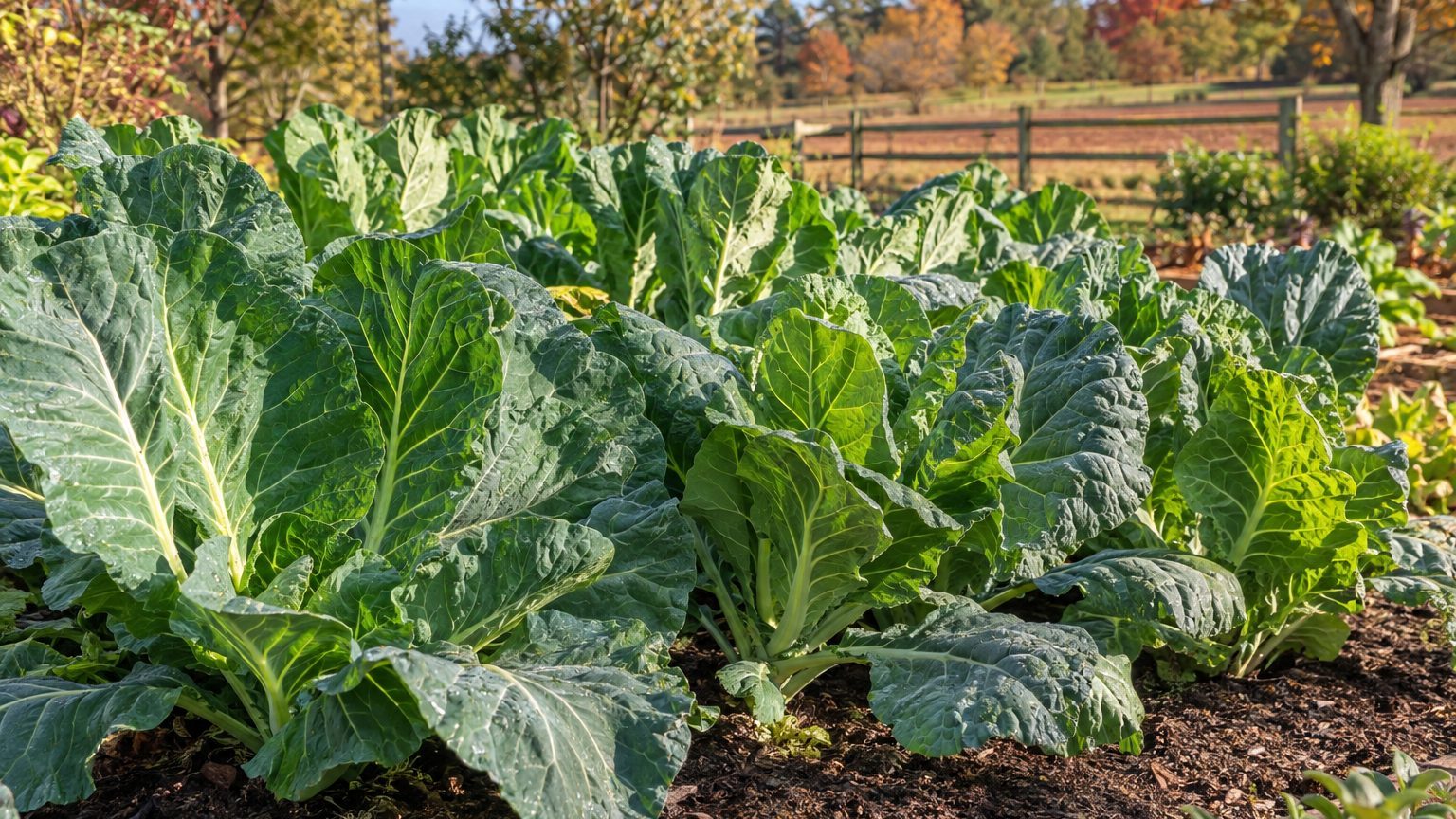

For most Kentucky gardens, the best collards are open-pollinated, non-heading types of moderate maturity, planted in early spring and again in midsummer for fall. Louisville’s coldest month averages a nightly low of 27.8°F, which collards handle well. The humid summers are harder on them. Mustard, turnip greens and kale fill the gaps. Timing details are in Growing Collards in Kentucky.
The short answer for Kentucky
Pick the standard, non-heading collard as your main crop, and treat spring and fall as two separate plantings. At the Louisville reference station, the last spring freeze falls between March 24 and April 4, and the first fall freeze between November 2 and November 12. Those windows mark where the odds of a 32°F freeze run between 30 and 70 percent. The stretch in between is long enough for slower collards to reach full size, but the middle of it is hot and humid, so the best leaf comes from the cool ends.
Fall is the stronger season. Collards sweeten after a few frosty nights, and a planting set out in midsummer matures as temperatures fall instead of rise. A spring crop is still worth growing for early greens, as long as you pick a type that does not stall once the heat arrives. The same dates for planting collards in Kentucky apply to the type choices below.
| Collard type | How it fits Kentucky’s season | Best use |
|---|---|---|
| Standard non-heading, open-pollinated (Georgia-style and similar) | Reliable leaf production, takes freezes in stride, moderate pace | Main crop in spring and fall |
| Quick-maturing or hybrid types | Reach harvest before summer stress or the first fall freeze | Late sowings, rural and northern gardens, higher ground |
| Heading (cabbage-type) collards | Slower to fill out and want a long, cool run | Fall crop, set out early |
Which other greens belong in the bed?
Mustard and turnip greens are the fast partners. Both can be cut within weeks, which makes them good for the gap while collards size up. Kale is a worthwhile companion for fall and winter because it takes the same cold and gives a different texture. Swiss chard tolerates summer heat better than most of these and can carry the bed through July and August. Between them, you can eat from the garden for most of the year, with collards as the backbone from fall to the first hard winter cold.
What will not work here

The slowest collards, started late, fail first. The first fall freeze arrives between November 2 and November 12 at the Louisville reference station. NWS Louisville warns that this city station behaves differently from the surrounding rural parts of Jefferson County, and that rural gardens should expect a tighter window. A slow heading type seeded in August can still be small when growth slows in late fall. Count back from early November and choose a faster type if the calendar is short.
Why do crowded collards struggle in Kentucky summers?
Humidity is the reason. Collards set out too close together keep their leaves wet after rain and dew, and wet leaves invite leaf spot and rot. Cabbageworms and aphids also settle into crowded plants where they are hard to spot. Space the plants so air moves through and you can see the undersides of the leaves. Closer spacing makes sense in drier climates. It does not in a state this humid.
Will collards survive a Kentucky winter?
Sometimes, and it depends where you are. The mean daily minimum of the coldest month is 27.8°F at Louisville, so freezing nights are routine from December through February. The USDA Plant Hardiness Zone Map (2023) puts the state in zones 6a to 7a. That figure reflects the average coldest night of the year, and a hard snap in the colder zones can finish plants that a milder winter would leave standing. Treat winter harvest as a bonus. A thick layer of straw over the roots and a row cover on the coldest nights improve the odds.
A last mistake is borrowing a Deep South routine. Advice from places where collards stand in the garden all winter assumes a longer, milder season. In Kentucky, a spring planting set out in early April and then ignored through July produces tough leaves, so cut it back or replace it with a fall planting.
What changes across Kentucky
No single answer covers the whole state. The USDA Plant Hardiness Zone Map (2023) spans zones 6a to 7a, which is a real spread in how cold the worst winter nights get. The Louisville reference station sits within that range, and gardens in other parts of the state will differ from it. The hardiness zone is a territory-wide range, so cite the reference city rather than the range when making a dated recommendation, and note that other parts of the territory differ.
What should a northern or high-elevation gardener shift?
Move everything toward caution. Plant the fall crop earlier, since the first freeze arrives sooner on high ground and in cold hollows. Favor quick-maturing types over heading collards, and keep the slow ones for your warmest, most sheltered spot. In spring, hold transplants a little later than the Louisville window suggests, because a frost that passes one valley can linger in another. Mulch the plants heavily before winter, and expect to lose a few in a hard freeze.
Gardeners toward the milder south and west have more room. A fall planting can go in a bit later, and winter harvests from sheltered beds are more likely. Even so, a spring planting still wants early sowing, because summer heat shortens its useful life everywhere in the state.
Which zone applies to your address is a question for the USDA Plant Hardiness Zone Map. Type in your ZIP code there, and check it against your own sense of how cold the yard runs.
Where to check this for your own county
The University of Kentucky Cooperative Extension is the place to go next. Every county has an office, and the local agent knows which gardens in the area run cold, which soils drain slowly, and which pests turned up last year. Ask for the local planting calendar for cool-season vegetables, and look for the dates given for greens in particular.
The second thing to ask about is varieties. Extension programs often trial vegetables in their own demonstration plots and keep notes on what produced well and what bolted, rotted or suffered from disease. A variety that performed well in a trial in your county is a better bet than one that sounds good in a catalog.
A county recommendation beats a state one. Any statewide guidance, including the dates above, averages many different gardens, from the Ohio River valley to the eastern mountains. County offices also cover practical matters that no statewide calendar can: whether your soil needs testing before you amend it, which local pests to scout for, and when the first fall freeze usually arrives where you live.
Checking this against your own garden
Your own observations outrank every date above. Three of them are worth watching, and none needs equipment.
- Soil warmth by feel. In spring, push a hand into the bed. Soil that still feels cold and clammy will slow transplants, while soil that feels merely cool is fine for collards. A bed that warms early is a south-facing, well-drained spot, and that tells you where to plant first.
- The first true leaves. Seedlings first show seed leaves, then true leaves that look like small collard leaves. If true leaves appear quickly, the site is warm and sunny. If they take weeks, the spot is cool or shaded, and you should plan a longer wait before transplanting.
- Where frost settles. On the first frosty morning, walk the yard. White grass in the low corner and green grass up by the house means cold air pools downhill. Plant your slowest collards in the warm spots, and put hardy greens in the frost pockets.
Write down the date you notice each of these. After two or three seasons, you will have a calendar tuned to your own yard, and it will be more reliable than any published average.
Common questions
What is the best collard variety for Kentucky?
There is no single winner. A standard non-heading, open-pollinated collard of moderate maturity is the dependable choice for spring and fall plantings. Switch to a quick-maturing type if your garden is in the colder north or on higher ground, or if you are planting late.
When is the first fall freeze in Kentucky?
At the Louisville reference station, the first fall freeze falls between November 2 and November 12, the band where the odds of a 32°F freeze run between 30 and 70 percent. Rural gardens around the city should expect a tighter window, and other parts of the state differ.
Can collards grow through the winter in Kentucky?
In milder years and sheltered spots, yes. The coldest month averages a nightly low of 27.8°F at Louisville, and zones across the state run from 6a to 7a. A hard cold snap can kill plants, especially in the colder zones, so mulch the roots and cover the row on the coldest nights.
What other greens grow well with collards in Kentucky?
Mustard greens, turnip greens and kale all suit the same cool seasons. Mustard and turnip greens are the quickest to harvest, kale holds well into winter, and Swiss chard handles midsummer heat better than the others.