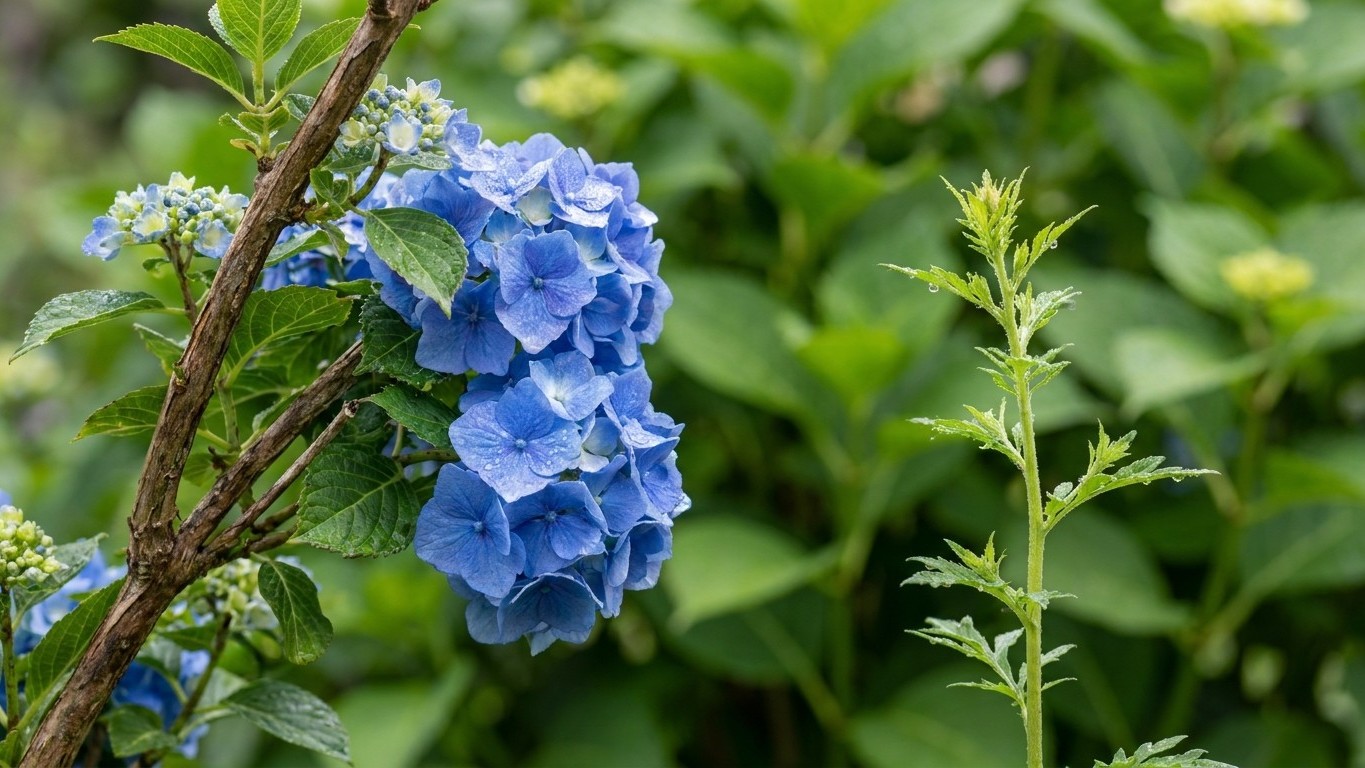

Prune bigleaf and oakleaf hydrangeas in summer, within a few weeks after the last flowers fade, which usually means June or July. Prune panicle and smooth hydrangeas in late winter, before the buds swell. Reverse the two and the shrub looks tidy but skips its blooms. Louisiana’s mild winters loosen the calendar compared with colder states, but the rule behind it holds everywhere: cut only when you will not remove next season’s flower buds.
What this comes down to in Louisiana

Late-winter pruning belongs in the weeks around the last spring freeze, which at New Orleans falls between January 18 and February 8. That window applies only to hydrangeas that bloom on new growth. The ones that bloom on last year’s stems need pruning in summer, right after the flowers fade.
The freeze dates come from the NOAA NCEI climate normals for New Orleans, and they are looser markers than a northern gardener would expect. South Louisiana barely freezes. A 32F freeze happens in only 86.8 percent of years at that station, so roughly one year in seven has no freeze at all. The first fall freeze, when it comes, lands between December 17 and January 8, which means the fall window straddles the New Year. Summer heat is the real constraint on timing here. That is why the best sign for late-winter pruning is on the plant itself: green tips swelling at the ends of the stems.
Which hydrangeas bloom on old wood?
Bigleaf and oakleaf hydrangeas set their flower buds on stems grown the year before, from late summer into fall. A cut in winter or early spring removes those buds along with the stem. After bloom, deadhead the spent flowers and take out a few of the oldest, weakest canes at ground level. Some reblooming bigleaf types also flower on new growth, but a hard cut still costs the main early flush. If you are unsure what is in the bed, Which Hydrangeas Survive a Louisiana Winter sorts the types by how they handle cold.
Which hydrangeas bloom on new wood?
Panicle hydrangeas (the ‘Limelight’ type) and smooth hydrangeas (the ‘Annabelle’ type) flower on stems they grow this season. Late-winter pruning removes no buds, and it pushes strong new shoots that carry bigger blooms. Shorten the stems by about a third for shape, or cut harder to rejuvenate a leggy plant.
| Type | Flowers on | When to prune | What to cut |
|---|---|---|---|
| Bigleaf | Last year’s stems (some rebloomers also on new growth) | Right after bloom, June to July | Spent flowers, a few oldest canes |
| Oakleaf | Last year’s stems | Right after bloom, June to July | Spent flowers, stray or crowded stems |
| Panicle | This year’s growth | Late winter, before buds swell | About a third of the height, or more to renew |
| Smooth | This year’s growth | Late winter, before buds swell | Weak stems, and height as wanted |
Working it out for your own garden
A fixed calendar date will fail you in a warm winter or after a move. A method built on the plant’s own schedule holds up. Start with the type, then let bloom time or bud swell set the date.
How do you find the pruning window for a bigleaf hydrangea?
Watch for the moment most flower heads turn papery and brown. In a typical bed that is mid-June. The window runs for several weeks from there, so mid-June plus several weeks gives mid-July to late July. Flower buds for next year begin forming as growth slows later in summer, and the plant has the rest of the year to harden them before the first fall freeze window of December 17 to January 8. Any cut made after the window closes starts taking buds.
Take the opposite case. A gardener tidies a leggy bigleaf in September, long after the buds are set. The shrub looks clean and stays bare the following spring. The same cut a couple of months earlier would have cost nothing. Heat matters too, so keep summer cuts light. Heavy cuts in peak heat leave interior stems exposed to sun.
How do you time late-winter pruning for panicle and smooth hydrangeas?
Begin with the last-freeze window, January 18 to February 8. Prune in the weeks leading into it and through its end, which works out to roughly mid-January into February. Finish before green tips begin to swell. In a warm winter the buds wake early, so follow the plant over the calendar. A freeze after a warm spell can burn tender new shoots, though the shrub regrows. Cutting earlier in winter does not hurt either type, it just leaves stems bare longer.
How can you tell dead canes from live ones?
Scrape a small patch of bark with a thumbnail. Green and moist underneath means the cane is alive. Brown and dry means it is dead. On bigleaf types, wait until leaves emerge in spring before cutting anything that looks lifeless, because canes that seem dead in February often sprout from lower nodes later. Cut only what is still bare after the plant has leafed out, back to the ground or to the first live bud.
What changes across the state
Louisiana does not run on one climate. The USDA hardiness zone system, which rests on one variable, the average annual extreme minimum temperature, places the state anywhere from 8a to 10a. The New Orleans dates above belong to the Gulf coast end of that range, and the rest of the state shifts away from them in a predictable direction.
Farther north, freezes are far more reliable and last longer into late winter. The late-winter pruning window for panicle and smooth hydrangeas slides later, and bud swell tends to follow the same slower pace. Cold also takes a larger toll on bigleaf stems there. Tip dieback is a normal sight in spring, so the wait-for-leaf-out rule matters more north of the Gulf coast, and the dead-wood cleanup is a bigger job.
Near the coast and around large bodies of water such as Lake Pontchartrain, winters are milder, hard freezes are occasional, and some years pass with none. Shrubs there may hold leaves into winter and wake early, so late-winter pruning is best done early, and summer pruning is more often about size than about winter damage. The parishes between the coast and the northern hills fall in between, and a cold hollow or a sheltered wall can move a single yard a notch in either direction. Local habit counts for something here. A neighbor who has kept a hydrangea alive for a decade knows when buds swell in your particular pocket of the parish.
The mistakes this state punishes

Cutting a bigleaf in winter because the bed looks bare comes first. Bare canes in January still hold next summer’s flowers, and a mild winter makes the temptation worse. Do the shaping in summer, right after the bloom, and leave winter work to dead wood you can positively identify.
Early removal of dead-looking canes is the next one. After a mild or cold winter, bigleaf stems often look lifeless in February and then leaf out from lower down. Give them until new leaves open, then cut what stayed bare.
Fall tidying is a third. In south Louisiana the first freeze may not come until after Christmas, and some years it does not come at all, so a shrub trimmed in October or November can push soft new growth that a late freeze burns. On bigleaf types, a fall trim also strips buds already formed. Leave the plant alone until winter, then deal with whatever the weather left behind.
A last mistake is the heavy summer cut. Taking a large share of a bigleaf’s height in July heat exposes inner stems and leaves to scorching sun, and the regrowth that follows has to harden before the cold. Remove the spent blooms and the oldest canes, and stop there.
Checking this against your county
A date taken from New Orleans is a starting point for a yard in Shreveport or Monroe, not an instruction. Louisiana uses parishes where other states use counties, and each parish has an office of LSU AgCenter that knows the local freeze pattern and the usual bloom times. Call or visit before a major cutback, especially on an old shrub. For the broader picture, including siting, watering and choosing varieties, see growing hydrangeas in Louisiana.
Common questions
Can I prune hydrangeas in fall in Louisiana?
Avoid it. Bigleaf and oakleaf types have already set next year’s buds, and the fall freeze window of December 17 to January 8 at New Orleans may be only weeks away. A fall cut on a panicle or smooth hydrangea does no harm to blooms, but it can push tender growth, so wait for late winter.
What if I don’t know which type of hydrangea I have?
Skip pruning for one season except for clearly dead wood. Watch when it blooms. If flowers open on stems that grew last year, it blooms on old wood and gets summer pruning. If they open on this spring’s shoots, late winter is the time.
How much can I cut back an overgrown hydrangea?
Panicle and smooth types can be cut hard in late winter. Bigleaf types do better with renewal over time. After bloom each summer, remove a few of the oldest canes at ground level, and the shrub refreshes itself without losing its flowers.
Does pruning change the flower color?
No. Bloom color on bigleaf hydrangeas follows soil chemistry, which Why Hydrangeas Are Pink in Louisiana, and How to Turn Them Blue explains in detail. Pruning affects how many flowers you get and when.