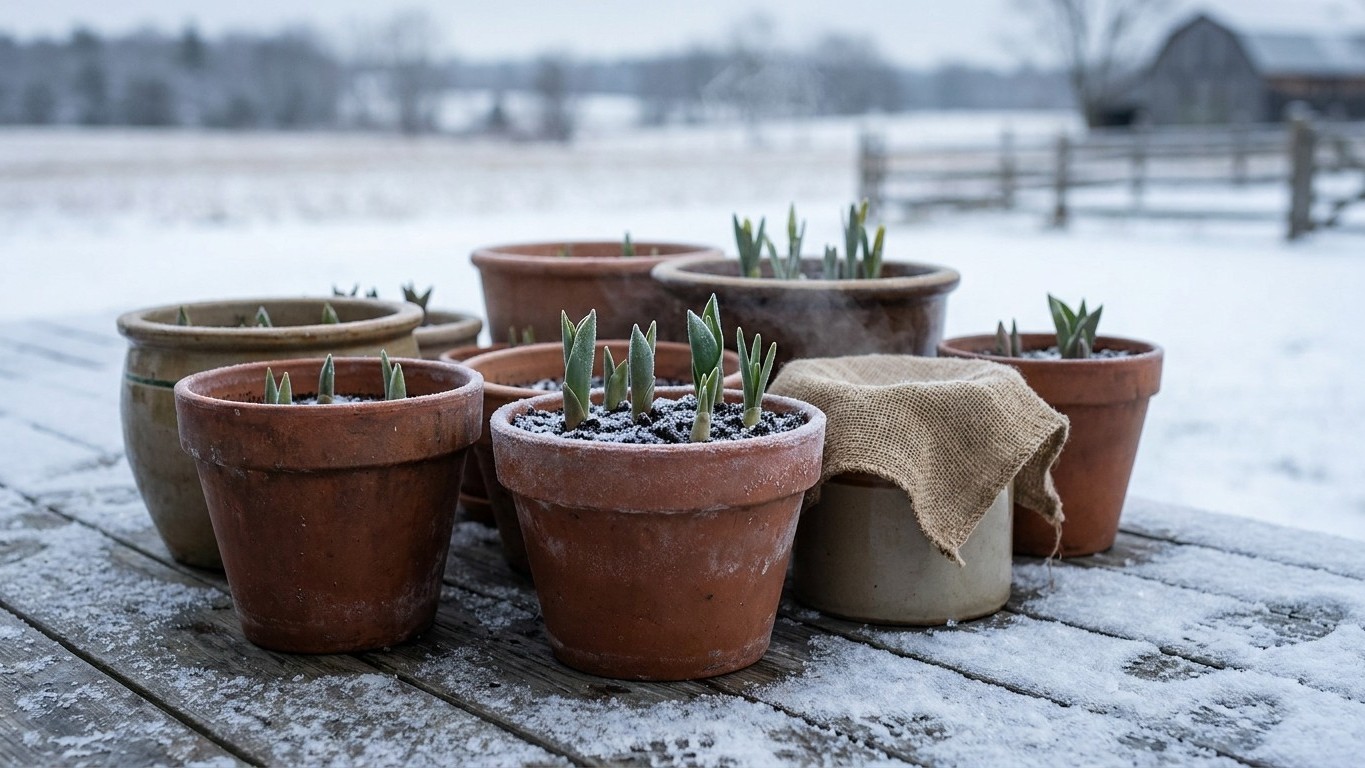

Dig dahlias, cannas and gladiolus after a frost has blackened the foliage. North Georgia and the mountains run several weeks earlier. In the milder south, cannas and often dahlias can stay in the ground under mulch. Gladiolus follow a different clock because they finish blooming in summer. Here is how to read your own yard, then how to handle the tubers once they are out.
Do you have to dig them up in Georgia?
Georgia spans USDA zones 6a-9b on the USDA Plant Hardiness Zone Map (2023 edition), a system built on a single number: the average annual extreme minimum temperature. Where the ground does not freeze deeply, dahlias, cannas and gladiolus can stay in the ground under mulch. Where it does, they must come up. The line falls roughly across the middle of the state, around the Atlanta metro area. It shifts with elevation, with how your lot drains, and with how exposed your bed is to open sky. Lift them in north Georgia and the mountains; in the Atlanta area and south, mulch in place if the bed drains well.
These three are summer-flowering tender bulbs, a different group from hardy Spring Bulbs like daffodils, which stay in the ground all year. For the spring group, Which Spring Bulbs Survive Your Winter sorts out what each one tolerates.
Can dahlias stay in the ground in the Atlanta area?
Often, yes. NOAA’s 1991-2020 Climate Normals for Atlanta put the mean daily minimum of the coldest month at 35.6°F. The average winter low stays above freezing, which means the soil rarely freezes deep enough to reach a tuber. Individual nights still dip below 32°F, and the tops will die back. The roots below sit in soil that stays above freezing most of the winter.
Atlanta is also a city airport station, and cities hold heat. A yard in the open countryside north of the metro will freeze harder and earlier than the official numbers suggest. If your bed sits in a low spot or on heavy red clay that stays wet, cold water can kill tubers even when the thermometer never looks alarming. In the South, wet and cold together do more damage than cold alone.
If you want to leave dahlias in, cut the stalks back after frost and cover the clump with a thick layer of pine straw or shredded leaves. Mark the spot so nobody digs there in January. If the winter turns wet, you may lose some clumps. Lifting one or two of your favorites as insurance costs little.
Which of the three is hardiest?
Cannas. Their thick rhizomes handle cold better than dahlia tubers, and across much of Georgia they behave as true perennials, coming back year after year and forming bigger clumps. You lift them in the colder north mostly to protect them, or in the warmer south mostly to divide a crowded clump.
Dahlias sit in the middle. They are dependable under mulch in well-drained soil in the milder parts of the state and risky almost everywhere that the ground freezes. Gladiolus corms are the least predictable. Left in the ground, they often decline over a few seasons, producing smaller spikes. In wet clay they rot. Most Georgia gardeners who want strong blooms from gladiolus lift the corms and replant fresh each spring.
When to lift them
Wait for a frost that blackens the foliage. That is the plant’s own signal that the season is over. Leaves that have gone limp, dark and slimy tell you the top growth has stopped sending energy down to the roots. Lifting after that frost lets the tubers finish maturing, and the skin toughens enough to survive storage.
For Atlanta, NOAA NCEI 1991-2020 Climate Normals give the first fall frost, the 32°F freeze at 30 to 70 percent probability, between November 13 and December 1. In the Atlanta area, lifting falls from about the third week of November to mid-December. This is a window, not a deadline.
Atlanta’s airport station runs warmer than the countryside around it. North Georgia and the mountains typically freeze several weeks earlier in fall, so lifting there moves earlier too. The coastal plain runs milder, and frost can arrive later than the Atlanta range, or in a warm year barely arrive before December ends. The county extension office can tell you the typical first freeze for your own town. The First and Last Frost Dates in Georgia gives local ranges.
Why does lifting early cause rot in storage?
Tubers dug while the plant is still green are still growing. Their skins are thin, their flesh is full of water, and their sugars have not settled. Thin skin loses moisture fast and invites fungus, and the water-heavy flesh softens in a box where air is limited. A tuber lifted too early often looks fine for a few weeks, then turns mushy from the stem end. The old stalk is also a wet wound. If it is still sappy, it carries rot straight into the crown.
The wait after the frost has a second job: the stalks dry and harden, which closes the entry point.
What if the frost does not come?
In mild years, a frost may not blacken the tops until late in the season. If foliage is browning and the plants are clearly finished, you can lift without waiting for a hard freeze. Do not leave tubers in soggy fall ground just because the calendar is empty. A light touch of frost that only nips a few leaves is not the signal either. Wait for the whole plant to go.
How do you lift them?
Cut the stalks back close to the ground, leaving a short handle on dahlias to lift by. Push a garden fork into the soil well outside the clump, not at the stem, since dahlia necks snap easily. Georgia clay clings, so loosen the soil all the way around before you pry. Lift the clump slowly and shake off the loose dirt. Gladiolus can come up once the leaves have yellowed and browned after bloom, which for early plantings can be well before frost, as long as the ground has not turned cold and wet. This is also the time of year to plant hardy bulbs in the emptied bed, and Planting Spring Bulbs in Georgia covers that.
Storing them over winter
Storage has three parts: cure, clean lightly, then keep them cool, dark and slightly moist. The goal is a tuber that neither rots nor shrivels, which is a narrow target. Too damp and it molds. Too dry and it turns into a wrinkled stick.
How do you cure and clean them?
Curing means letting the skin dry and toughen in a shaded, airy spot out of the rain, such as a covered porch or a garage with the door cracked. Dahlia tubers and canna rhizomes need only a short spell for the surface moisture to dry. Gladiolus corms take longer, until the old shriveled corm pulls away easily and the husks feel papery.
Then brush off the soil with your hands or a soft brush. A heavy wash invites rot unless the tubers dry completely again afterward, so most gardeners skip it. Trim any damaged or soft tissue back to clean flesh and let the cut dry before packing.
How do dahlias, cannas and gladiolus differ in storage?
They want the same cool, dark, frost-free room, but not the same packing. Dahlias and cannas stay slightly moist. Gladiolus corms stay dry and well ventilated.
| Plant | What you store | How to pack it | What to watch for |
|---|---|---|---|
| Dahlias | Tubers, with a bit of stem attached | Ventilated box or crate with lightly damp vermiculite, wood shavings or peat | Wrinkling (too dry) or soft spots (too wet) |
| Cannas | Whole rhizome clumps, or divided pieces with eyes | Box or paper bag with barely damp peat or sawdust | Drying out, which cannas tolerate less than dahlias do |
| Gladiolus | Cured corms, with small cormlets separated | Mesh or paper bags in a dry, airy spot | Mold, soft corms, or dried-out husks |
Pick a place that stays above freezing all winter and does not warm up much on a sunny day. A Georgia garage can swing warm in afternoon sun, so a shelf against an interior wall does better than one by the door. A closet, a crawl space with a vapor barrier, or a basement where you have one all work.
Skip plastic bags or sealed containers unless you plan to open them often. Trapped moisture is the usual way tubers rot in storage. Cardboard boxes with lids partly open, or paper bags with folded tops, give the right balance.
The step that saves the most tubers is the least exciting. Check the boxes regularly all winter. Squeeze a few tubers. Firm means good. Soft or smelly means cut it out before rot spreads to its neighbors. Wrinkled means mist the packing material lightly and close the box again. Corms rarely need misting, though a bag that feels brittle might. A regular look catches problems while they are small.
What goes wrong
Four problems account for most losses. Each leaves a clear sign if you look.
Rot shows up as soft, dark, sometimes smelly tissue, often starting at the stem end of a dahlia or on a cut surface of a canna. Gray or white mold on a corm husk counts too. The cause is nearly always too much moisture, poor air flow or a skipped cure. Prevent it by curing properly, packing in a lightly damp rather than wet medium, leaving some air in the box, and pulling out any soft piece the day you find it.
Shrivelling is the opposite problem. Tubers turn wrinkled, light and rubbery, and may never sprout. The air or packing was too dry, or the storage spot was too warm. A little moisture in the medium and a cooler shelf fix it. A mildly wrinkled tuber often recovers if you catch it early and mist the packing lightly.
Lifting too early gives tubers that rot in storage. Their skins are thin, they are still full of water, and the stalk is still green. If you find a box of dahlias turning soft by early winter, early lifting is the likeliest cause. The fix is to wait for the blackened foliage next year.
The last problem is geography. Gardeners in north Georgia or the mountains who copy advice from the Atlanta area or south Georgia leave tubers in ground that freezes. In spring, nothing comes up, and the clump turns out to be mush. If you garden in north Georgia or the mountains, lift every clump. If you are on the edge, lift half and mulch the rest as a test for a year. For more timing across the state, the Georgia guides follow the season month by month.
Common questions
Can I leave dahlias in the ground in Atlanta?
Often, if the bed drains well. Atlanta’s coldest-month mean daily minimum is 35.6°F (NOAA, 1991-2020), so the ground seldom freezes deeply. Cut the stalks after frost and add a thick mulch such as pine straw. In heavy clay that stays wet, lift the clumps instead, because winter wet kills more tubers there than cold does.
Do cannas need to be dug up in Georgia?
In most of the state, no. Cannas are the toughest of the three and return reliably under mulch in the Atlanta area and south. In north Georgia and the mountains, where the ground freezes harder, lift them after the foliage blackens and store the rhizomes slightly moist. You may also dig them to divide a crowded clump.
When should I dig up gladiolus in Georgia?
Lift gladiolus corms once the leaves have yellowed and browned after bloom. For early plantings, that can come before frost. They do not need to wait for the blackening that dahlias and cannas need. Cure them in a dry, airy place until the husks feel papery, then store them dry in mesh or paper bags.
Should I wash tubers before storing them?
Brush off loose soil and leave the rest. Washing adds moisture, and moisture is what rots tubers in storage. If you do rinse a heavily clay-coated clump, let it dry completely in a shaded, airy spot before it goes in a box.
Related guides
- When to Dig Up Dahlias, Cannas and Gladiolus in Alabama
- When to Dig Up Dahlias, Cannas and Gladiolus in Hawaii
Sources : threeacrefarm.net