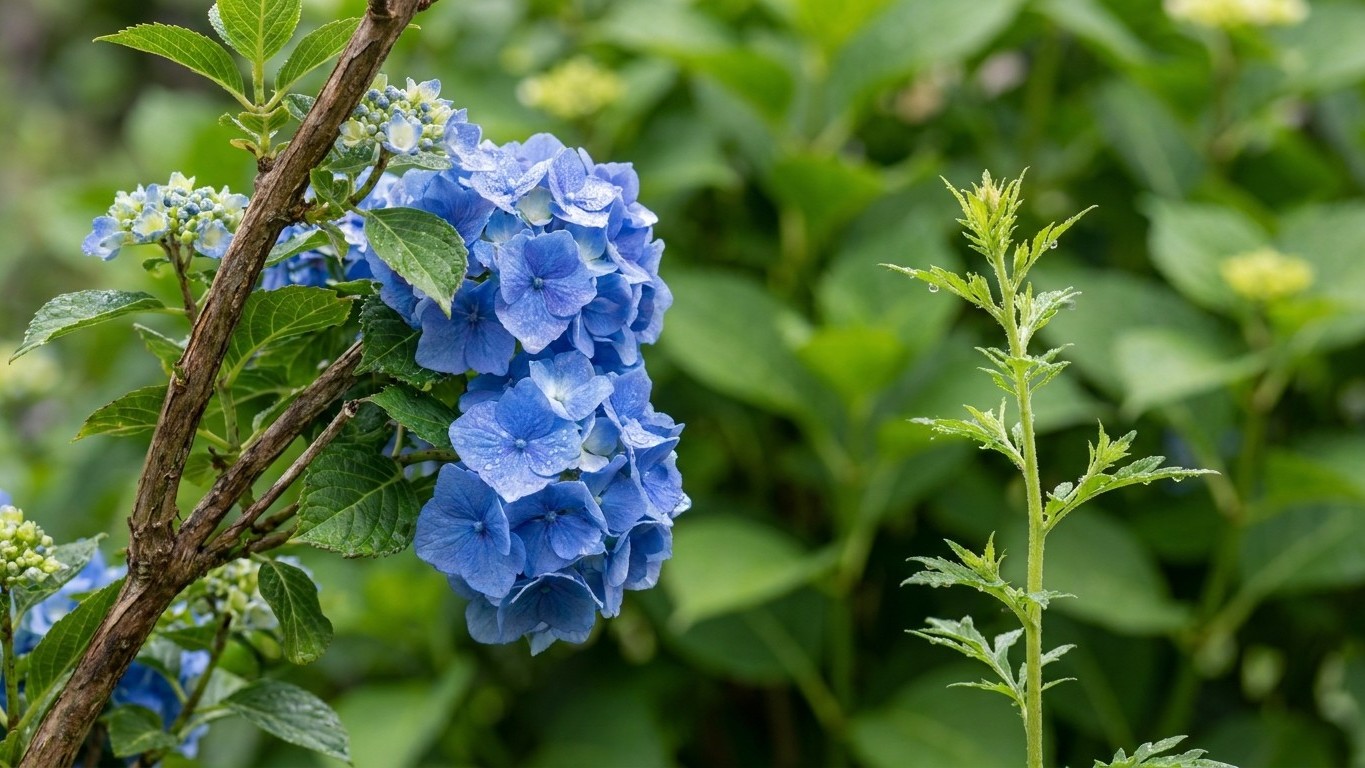

The right month depends on which hydrangea you own. Panicle and smooth types flower on stems grown during the current season, so they get cut in late winter. Bigleaf, oakleaf and climbing types set next year’s flower buds the summer before. Any trimming on those happens right after they finish blooming, and the last cut of the year should be done by early August. Reverse those windows and you can remove an entire season of flowers.
What this comes down to in Massachusetts

At Boston’s Logan Airport, the reference station used here, the last spring frost falls between April 1 and April 8, so panicle and smooth hydrangeas should be cut in March, a few weeks ahead of that range and before the buds swell. The old-wood types follow the other end of the calendar: their buds form through late summer, well ahead of a first fall frost that arrives between November 3 and November 14 at the same station. Logan is a waterfront site and one of the milder spots in the state, so inland yards run later in spring and earlier in fall.
Which hydrangeas bloom on old wood and which on new wood?
Old wood means stems that grew last year or earlier. A bigleaf hydrangea sets its flower buds on those stems in late summer and fall, then carries them through winter. Cut the stems in March and you cut the buds. New wood means stems that grow this spring. Panicle and smooth hydrangeas push fresh shoots in May and flower at the tips by midsummer, so pruning in late winter only changes how those shoots grow.
| Type | Flowers on | When to prune in Massachusetts |
|---|---|---|
| Panicle (cone-shaped blooms) | New wood | Late winter to March, before buds swell |
| Smooth (round white blooms) | New wood | Late winter to March, before buds swell |
| Bigleaf (mophead and lacecap) | Mostly old wood | Remove dead stems in spring; light shaping right after bloom |
| Reblooming bigleaf | Old and new wood | Spring cleanup of dead tips; deadhead after the first flush |
| Oakleaf | Old wood | Right after bloom, by early August |
| Climbing | Old wood | Right after bloom, only to control size |
How does the Massachusetts frost window shape pruning dates?
The frost range gives you two anchors. The spring anchor tells you when sap starts moving and buds start to open, which is your cue to be finished with panicles and smooth types. The fall anchor tells you how long the plant has to form buds, which is why old-wood bloomers need their pruning done early in the summer. Cold winters add a third factor: bigleaf stems often die back partway in the colder parts of the state, and the full extent of the damage only shows once the plant leafs out. Which varieties handle the cold best is covered in Which Hydrangeas Survive a Massachusetts Winter.
Working it out for your own garden
A calendar date copied from a neighbor works until the year turns cold or you move to the other side of the state. A method built on the frost range holds up better.
How do you count back from the frost window?
For new-wood bloomers, start from the last spring frost range of April 1 to April 8 and subtract three to four weeks. That lands in roughly the first half of March at a coastal location like Logan. Inland, where the last frost comes later, the whole window slides later too. The practical rule is to finish before buds swell and turn green, and any dry stretch in late winter when the ground is not frozen solid is fine. Cutting panicles in February is fine as well. Waiting until the shrub has leafed out means cutting off growth the plant already paid for, and bloom comes later.
For old-wood bloomers, work from the fall side. Start with a first fall frost between November 3 and November 14 and count back about thirteen weeks. That gives you August 4 to August 15, so make your last cut a few days before that, around the start of August. In practice the best moment is soon after the last flowers fade, in July for most plants. Anything cut after that point risks removing buds already set for the following year.
How do you tell which hydrangea you have?
Start with the flower. Cone-shaped clusters point to a panicle hydrangea. Large round white heads on thin, floppy stems point to a smooth hydrangea. Round or flat clusters in pink, blue or purple on a shrub with glossy, rounded leaves point to bigleaf, and leaves shaped like oak leaves with peeling cinnamon bark point to oakleaf. If you inherited the plant and have no tag, watch it for a full season before you cut anything. Note the bloom shape and the month it opens, since June flowers on last year’s stems suggest old wood. Color is a separate matter, and the soil chemistry behind it is explained in Why Hydrangeas Are Pink in Massachusetts, and How to Turn Them Blue.
How do you check for winter dieback before cutting?
Wait for leaves. On a bigleaf, a stem that looks dead in March may have live buds near the base. Scratch a small patch of bark with a fingernail: green underneath means the stem is alive, and brown and dry means it can go. Cut dead stems back to the first pair of healthy buds or to the ground, and leave anything green alone.
What changes across the state
Massachusetts spans USDA hardiness zones 5a to 7b, a range based only on the average annual extreme minimum temperature. That is a wide gap for a small state, and it affects pruning more than most gardeners expect. The coast and islands sit at the milder end, where the ocean slows both fall cooling and spring warming. Boston’s frost range comes from that mild setting, so use it as a reference point and not as your own date.
Move inland and the calendar shifts. Suburbs west of Boston and the Worcester hills see frost sooner in fall and later in spring, and the Berkshires run colder still. In those places the March pruning window for panicles moves toward April, and the first-flush bloom of old-wood types arrives later, so the August stopping point matters even more. A garden on a hilltop or in a low frost pocket can behave like a place one zone colder than the town’s average.
Winter damage follows the same pattern. Bigleaf stems along the coast and on Cape Cod often come through with only tip loss, while colder inland sites lose more stems and bloom less on old wood. That is one reason gardeners in the hills lean on panicle and smooth types, which bloom reliably on new growth whatever the winter did. Wind exposure and sun matter too: a south-facing wall by the house can stay warm enough to push growth earlier than the open yard.
The mistakes this state punishes

Pruning a bigleaf hard in fall or early spring is a common error. Gardeners tidy up in October or March, and the plant flowers poorly or not at all the next summer. Leave the old stems standing through winter, since they also protect the buds below, and cut only what is clearly dead once the shrub leafs out.
The second error is reacting to a mid-winter thaw. A warm spell in January or February can tempt you to uncover the plant or start cutting, and a hard freeze often follows. Buds that wake up early are the ones that get burned, so hold off on stripping mulch or protection until the frost range has passed. Inland, that can mean waiting until April or later.
The third is pruning a panicle or smooth hydrangea too late. Once leaves open, cutting back by half sets the plant behind and pushes bloom well into late summer, when early fall cold in colder parts of the state can cut the display short. Do that work in late winter, before buds swell, instead.
The fourth is summer pruning on old-wood types after early August. Oakleaf and bigleaf hydrangeas are already setting next year’s buds by then, and a late cut can remove them. If a shrub has outgrown its spot, plan to shape it in July, and if it needs more than that, rejuvenate it by taking out some of the oldest stems at the base across a few seasons instead of one big cut.
Checking this against your county
A state-wide frost range is a starting point, because Boston’s window does not describe the Berkshires or a hilltop in Worcester County. Your local contacts at UMass Extension can tell you how local conditions shift the dates, and what winter did to hydrangeas in your area this year. For the basics of site, soil and care, see growing hydrangeas in Massachusetts.
Common questions
Can I prune hydrangeas in fall in Massachusetts?
Panicle and smooth hydrangeas tolerate it, though late winter is the better time because the stems protect the plant through cold weather. Bigleaf, oakleaf and climbing types should not be pruned in fall, apart from removing clearly dead stems, because their flower buds are already formed on the stems.
What happens if I cut a bigleaf hydrangea to the ground?
The plant usually regrows from the base, but a bigleaf that blooms mostly on old wood will often skip flowering that year. A reblooming type recovers faster because it also flowers on new stems, though the display is smaller and later than normal.
My hydrangea has no leaves in May. Is it dead?
Not necessarily. Bigleaf hydrangeas are late to leaf out after a cold winter. Scratch a stem with a fingernail and look for green. If it is green, wait. If a stem is brown and brittle all the way down, cut it back to where you find live tissue or new growth at the base.
How much can I cut off a panicle hydrangea?
A modest cut is a safe trim in late winter. Remove dead or crossing branches first, then shorten the rest to a strong pair of buds. Heavier cuts give fewer but larger flower heads, and lighter cuts keep a bigger shrub with more, smaller blooms.