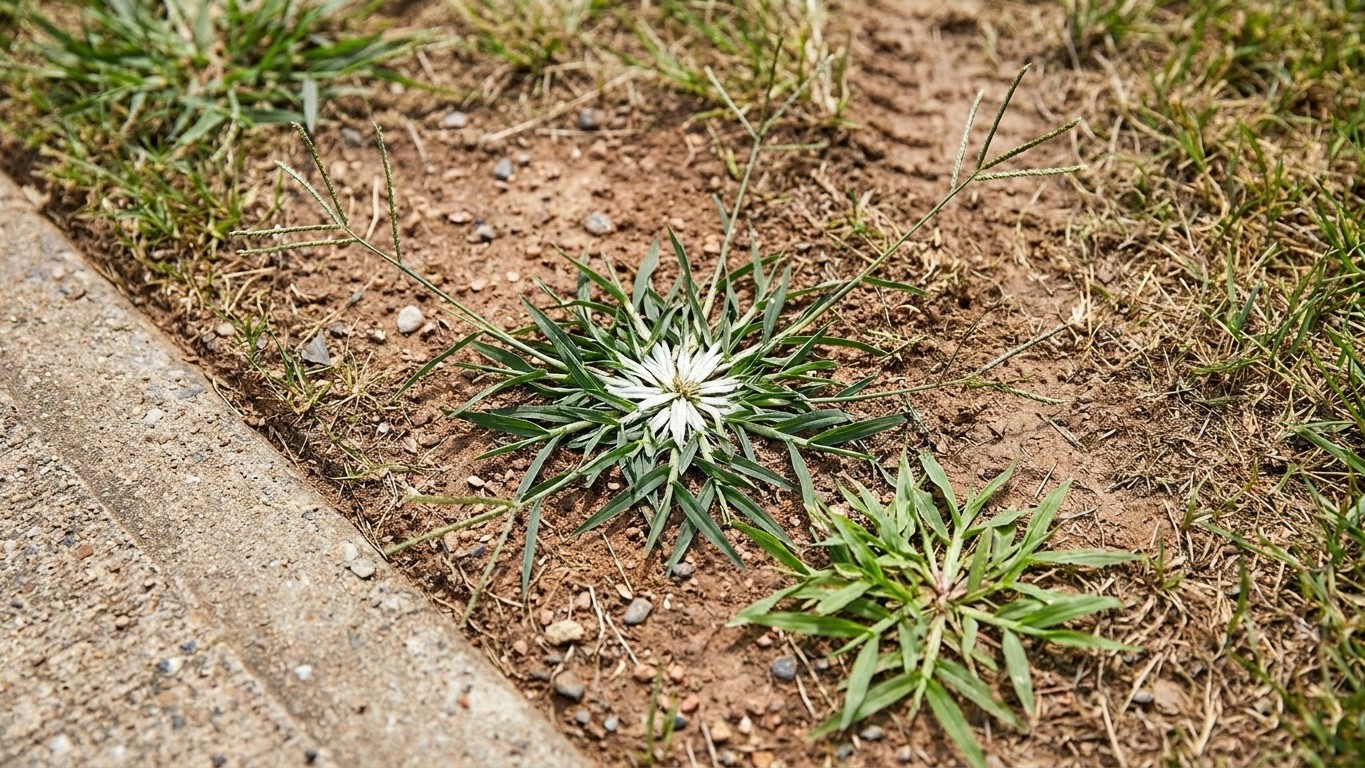

Mowing height in South Carolina depends on the grass under your feet. Bermudagrass, zoysiagrass and seashore paspalum want 1 to 2 inches. Centipedegrass and carpetgrass sit at 1.5 to 2 inches. St. Augustinegrass runs 2.5 to 4 inches, and bahiagrass 3 to 4 inches. Mix those up and the lawn pays for it. Set the deck for your species, raise it when summer heat arrives, and never remove more than a third of the blade in one cut.
The mowing height for South Carolina lawns
Clemson Cooperative Extension covers seven warm-season lawn grasses for the state: bahiagrass, bermudagrass, carpetgrass, centipedegrass, seashore paspalum, St. Augustinegrass and zoysiagrass. All seven are warm-season grasses. They grow fastest in heat and turn tan after frost. Cool-season grasses, the fescues and bluegrasses of northern lawns, run the other way. They slow down and thin out through long, hot, humid summers, and weakened turf invites disease, so they struggle across most of the state. Tall fescue is the main exception and is grown mostly in the cooler Upstate.
| Grass | Mowing height | Habit |
|---|---|---|
| Bermudagrass | 1 to 2 inches | Dense, full-sun turf |
| Zoysiagrass | 1 to 2 inches | Dense, slow to recover from damage |
| Carpetgrass | 1.5 to 2 inches | Low and spreading, suited to damp ground |
| Seashore Paspalum | 1 to 2 inches | Fine-textured, common near the coast |
| Centipedegrass | 1.5 to 2 inches | Low-maintenance, slow-growing |
| St. Augustinegrass | 2.5 to 4 inches | Broad blades, handles some shade |
| Bahiagrass | 3 to 4 inches | Tall and open, tough on low-input lawns |
These numbers are not close to each other, and that is the part people miss. Bermudagrass mowed at St. Augustine height gets stemmy and builds a spongy layer under the blades. St. Augustinegrass mowed at bermudagrass height scalps down to bare runners, thins out, and hands the space to weeds. Either mistake can thin the lawn badly and let weeds take over.
The gap exists because the grasses are built differently. The low group packs many short leaves onto dense creeping stems and tolerates a close cut. St. Augustine and bahia carry fewer, longer leaves, and those leaves are their food factory. Cut them short and there is not enough green left to feed the roots.
Within each range, a few things push you up or down. Shade pushes you toward the top of the range, because the grass needs more leaf surface to catch weak light. A reel mower handles bermudagrass and zoysiagrass far better than a rotary, which tends to tear at low heights. If you are not sure which grass you have, bring a clump to your county Clemson Cooperative Extension office and ask them to name it before you touch the deck. Neighbors to the south work from much the same warm-season list, and How High to Mow a Lawn in Georgia shows how those heights play out there.
Raising the deck when the heat comes
Summer is when a warm-season lawn grows hardest, and also when it takes the most stress. Moving the deck to the top of your species’ range from June through August gives the grass more leaf to shade its own soil, slows evaporation, and supports deeper roots. For St. Augustinegrass that means 4 inches. For centipedegrass and bermudagrass it means 2 inches. Bahiagrass belongs at 4 inches.
How much rain can you count on in summer?
Rain is the first thing people point to, and the numbers are generous. The Charleston airport reference station, using NOAA NCEI 1991-2020 normals, averages about 19.8 inches across June, July and August, out of 52.5 inches for the whole year. June is the driest of the three at 6.21 inches, then July at 6.6 and August at 6.97. Those are what a typical year delivers, not a forecast, and a hillside, a city lot or the Upstate will not match them exactly.
Soil and heat decide how much of that rain your lawn actually uses. Sandy soil drains quickly, while clay holds water much longer. A sandy yard can dry out between storms even in a wet summer. Hot afternoons, with temperatures at or above 90°F, pull moisture out of the ground fast. A single summer thunderstorm often runs off a compacted or sloped lawn before it soaks in.
A rain gauge on your own lot settles the question better than any regional average. Set a cheap one out in the open and check it after each storm. If a week brings less than an inch, water deeply once instead of sprinkling a little each day. Pair that with a taller cut and the lawn rides out the hot stretch much better.
Dry-heat lawns follow different rules, as How High to Mow a Lawn in Arizona explains. A closer match for South Carolina’s humid summers is How High to Mow a Lawn in Louisiana, where fast growth and fungus pressure show up the same way.
The one-third rule, and why it is not arbitrary
Never cut more than one third of the blade height at a single mowing. Aim for 2 inches on a bermudagrass lawn and the grass should be no taller than 3 inches when you mow. Keep St. Augustinegrass at 4 inches and it should be cut before it reaches 6. Cut a third or less and the grass loses a modest slice of leaf and bounces back within days.
The reason is mechanical. Leaves make the sugars that feed the roots. Scalp a third or more of that leaf area in one pass and the plant has to rebuild leaf before it can pay for root growth, so roots stall. Meanwhile the lower part of the blade, which is yellowish and tougher, is suddenly exposed to sun. The lawn looks burnt for a week or two, and thin spots open up where weeds can move in.
Summer rain and heat make the rule harder to follow. With more than 6 inches of rain arriving each month in June, July and August, a lawn can outrun a weekly mowing schedule. A grass left an extra week may be well past the one-third mark. The fix is not to chop it down to your target. Raise the deck for a first pass, then lower it a notch a few days later once the grass has settled.
Blade sharpness plays a quiet role here. A dull blade shreds the tips and leaves a gray-brown cast across the lawn, which looks like drought damage but is not. Sharpen at least once a season. Clippings can stay on the lawn, since short clippings break down quickly and return some nutrients. The full routine for equipment and frequency is in Mowing a Lawn.
The first and last cut of the year
The last spring frost at the Charleston airport reference station falls between February 28 and March 17 (the 30 to 70 percent probability band in NOAA NCEI 1991-2020 normals). The first fall frost falls between November 20 and December 5. Peninsular Charleston runs milder than the airport, and the Upstate runs several weeks tighter at both ends, so the dates for your yard may be earlier in fall and later in spring.
Warm-season lawns do not need a calendar date for the first cut. Watch the grass instead. When the tan winter blades start giving way to green shoots at the base, the lawn is waking up. The first mowing of the year can go at the low end of your species’ range to clear dead leaf tops and let sun reach the crowns. Do not drop below that range, and hold off if a hard frost is still in the forecast, because new growth is tender.
After that first cut, move up to your normal height as growth picks up through April and May. Mowing weekly with the one-third rule in mind is the easiest way to keep the lawn thick as it fills in.
In fall, growth slows as days shorten and nights cool. Keep mowing for as long as the grass grows, at the same height you used in summer, or raise it a notch as nights cool. Do not shave it short for winter. Taller grass holds more energy in reserve, and warm-season turf has no use for a buzz cut before dormancy. Once frost stops growth and the lawn turns tan, put the mower away. Rake or mulch leaves so they do not smother the dormant turf.
Common questions
How high should I mow St. Augustinegrass in South Carolina?
Between 2.5 and 4 inches. Stay near 4 inches in summer and in shade. Cutting below 2.5 inches scalps the runners and invites weeds.
Is the mowing height different on the coast and in the Upstate?
The height depends on the grass species, not on the region. What changes between the coast and the Upstate is timing: spring green-up comes earlier near the coast, and frost arrives later in fall.
Should I bag the clippings?
Usually no. If you follow the one-third rule, short clippings fall between the blades and decompose. Bag them only if the grass got too tall and left clumps that could smother the turf.
What if I skipped a week and the grass is too tall?
Raise the deck so you remove no more than a third, mow, and then lower the deck a notch a few days later. Repeat until you are back in your species’ range. A single rushed scalp can set the lawn back for weeks.