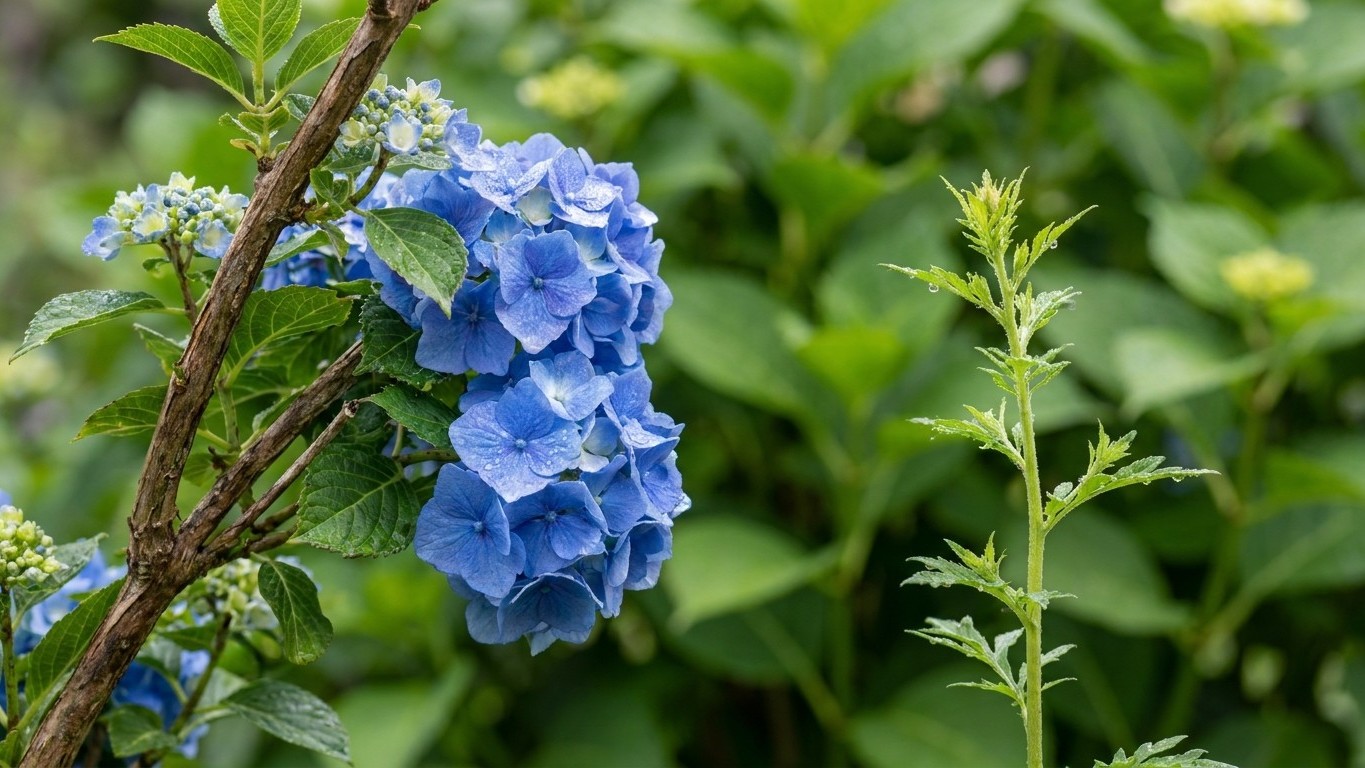

Panicle and smooth hydrangeas make it through New Hampshire winters almost everywhere in the state. Bigleaf and oakleaf types are a different story: the shrub itself often lives, but the flower buds it set the previous summer may not. The USDA Plant Hardiness Zone Map puts the state anywhere from zone 3b in the far north to 6a or 6b in the south and on the coast, so the answer shifts with where your yard sits. Below are named varieties sorted from shortest season to longest, plus a way to test any plant against your own garden.
What this comes down to in New Hampshire

At Concord, a convenient reference point, the average last spring frost falls around May 8 to May 15 and the average first fall frost around September 28 to October 3, based on the NOAA NCEI U.S. Climate Normals for the airport station. A hydrangea that blooms on new wood fits that window easily, while one that depends on buds formed last summer on old wood has to carry them through the whole winter intact.
The hardiness zone rating, built on the average annual extreme minimum temperature, tells you whether the stems survive. It says little about whether the buds do, and buds are usually the weaker part. Suburban and rural gardens can see the last spring frost later and the first fall frost earlier than the airport does, sometimes by a week or more, and more at elevation. Here are six hydrangeas, ordered from the shortest season to the longest.
Quick Fire
A panicle hydrangea rated for zones 3 to 8. Its blooms form on new wood. It is a dependable pick for the North Country and for high, frosty sites.
Annabelle
A smooth hydrangea with big white domes on new wood. Hard winters can kill it to the ground and it still blooms the same summer. The stems flop after heavy rain, a small price for that reliability.
Bobo
A compact panicle. The flowers form on new wood. It suits small yards and foundation beds, and the cold doesn’t threaten its flowering.
Limelight
A panicle. The flowers form on new wood. It opens later than Quick Fire but well ahead of the October frost range, so it works statewide.
Endless Summer
A bigleaf hydrangea. Where winter kills the buds, the new-wood flush gives a late rescue, though it arrives close to fall. Best in the southern tier and along the coast, with mulch.
Snow Queen
An oakleaf hydrangea with white cones and deep red fall foliage. A hard winter or a spring pruning removes the buds, so it belongs in the mildest, most sheltered corners of the state.
Working it out for your own garden
How do you check a variety against your frost window?
Start with two questions: which wood does it bloom on, and does the bloom time leave room before fall frost? Take Limelight. It blooms on new wood, so a container plant set out after the spring frost range passes will grow through June and open flowers in midsummer. That average runs around May 8 to May 15 at Concord and a week or two later in a rural yard, which means mid to late May. Fall frost is still months away, so it flowers the first season, though with fewer blooms than it will later.
Now take Snow Queen. Its flower buds for next summer form on the stems in late summer and fall. A nursery plant may carry buds from the grower’s greenhouse and bloom once. After that, a winter at the cold end of its range, or a spring cleanup with pruners, leaves a leafy shrub with no flowers. That is where the line falls: new-wood plants usually flower whatever winter does to the stems, and old-wood plants gamble on every cold snap.
Fall planting runs the same math backward. A shrub wants root growth before the ground freezes. Counting back from the September 28 to October 3 average frost date lands on roughly August to early September at Concord, and earlier for gardens inland or uphill.
How do you tell if winter killed a hydrangea?
Scratch a stem with a fingernail. Green and moist beneath the bark means it is alive, while brown and dry means it is not. Don’t judge too early, because hydrangeas leaf out late. Wait for growth to show before you cut anything, and use the guidance in When to Prune Hydrangeas in New Hampshire to decide how much comes off. If an old-wood type leafs out from the lower stems but never sets flowers, the buds above the snow line died, and the plant is telling you it needs more shelter or a different variety.
What changes across the state
New Hampshire stretches from the Atlantic shoreline to the White Mountains, and winter lows vary accordingly. Elevation matters a great deal. Each climb into the hills means colder minimums, a later spring and an earlier fall. A garden in the mountain valleys of the North Country lives in a different hydrangea world from one in the southeastern corner, even though both are inside the same state lines. The Concord frost figures describe neither extreme.
The ocean softens the coast. Seacoast gardens get milder winter lows because the Atlantic holds heat, which is why the warmest end of the state’s zone range sits there. The same water also slows spring warming, so coastal shrubs can leaf out a bit late. Large inland lakes have a smaller, local effect on the shoreline around them.
The valleys of the Merrimack and the Connecticut River come with a different catch. Cold air drains downhill on clear nights and pools in low spots, so a hollow can frost when the hillside above it stays clear. Snow cover matters too. Reliable, deep snow in the north insulates crowns and lower stems, which is part of why smooth and panicle types handle zone 3b so easily. A southern winter with thaws and refreezes, and little snow, can do more harm to buds than steady cold.
Your own yard adds one more layer. A south-facing wall, a windbreak or a slope can shift conditions. For old-wood types, that margin separates a bloom from a bare shrub.
The mistakes this state punishes

One common one is falling for a blue mophead at the garden center. The tag may say zone 4 or 5, which is workable in the southern tier and a gamble farther north. If the buds die, the shrub grows leaves and no flowers for the entire summer. Choose a panicle or smooth type in colder spots, or treat a bigleaf as a bonus.
Planting into cold soil after a warm spell is another. A mild stretch in early April tempts people to get shrubs in the ground, but the average last frost at Concord does not come until about May 8 to May 15, and inland yards run later. Wait until the range has passed, and keep frost cloth handy for new leaves.
Spring pruning of old-wood types removes the season’s flowers. Late-summer feeding backfires too. Nitrogen after midsummer pushes soft growth that cannot harden before the September 28 to October 3 average first frost, and the tender tips die back. Stop fertilizing by midsummer.
Pulling winter protection too soon catches people when a warm April day ends in a hard freeze. Leave mulch and cages until the frost range has passed, and see Protecting Hydrangeas Through a New Hampshire Winter for materials and timing. Fall planting that runs late is the last trap: a shrub set out with only a few weeks before the ground freezes heaves out of the soil in the first thaw.
Checking this against your county
The Concord figures come from one airport station, so treat them as a starting point for your own yard. Your county office at University of New Hampshire Extension can tell you how local frost dates and winter lows compare, and which varieties have held up in nearby gardens. For the basics of site, soil and care, the guide to growing hydrangeas in New Hampshire covers the rest.
Common questions
Which hydrangeas are hardiest in New Hampshire?
Smooth hydrangeas such as Annabelle and panicle hydrangeas such as Quick Fire, Bobo and Limelight. All are rated for zone 3 and bloom on new wood, so they flower even after a winter that kills the stems above ground.
Can bigleaf hydrangeas grow in New Hampshire?
They can, mostly in the southern tier and along the coast, where winters are milder. A reblooming type like Endless Summer gives a second chance at flowers on new growth. In the north and at elevation, expect green leaves and few flowers.
Do hydrangeas need winter protection?
Panicle and smooth types rarely do. Bigleaf and oakleaf hydrangeas benefit from a thick mulch layer over the crown and, in colder spots, a wire cage filled with leaves to shield the stems and buds.
How long should I wait before deciding a hydrangea is dead?
Hydrangeas leaf out late, and a stem that looks lifeless in April may be green under the bark. Scratch a few stems, and cut back only what is clearly brown and dry.