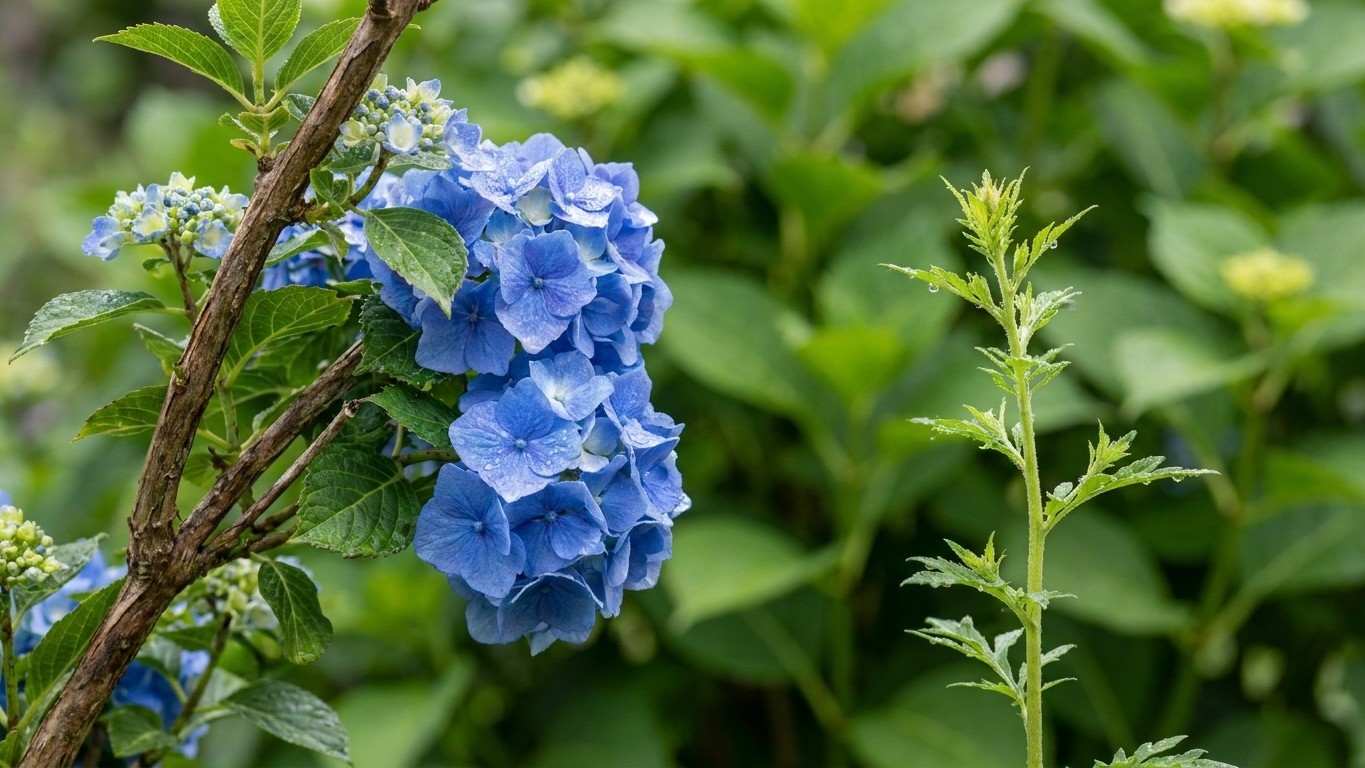

Plant container-grown Hydrangeas in New Hampshire once the spring freeze danger has passed, which in Concord means after April 27 and in most yards a week or two later. Early September is the fall alternative. Stick with panicle and smooth hydrangeas if you want blooms every year. Bigleaf types are lovely but unreliable here, because a hard winter or a late freeze can wipe out the flower buds they set the summer before.
When to plant Hydrangeas in New Hampshire

The reference point is Concord. The NOAA NCEI U.S. Climate Normals for 1991-2020 (the airport station file) put the last 32°F freeze in spring between April 16 and April 27, using the 30-70% probability band. The first fall freeze lands between October 13 and October 26. Those are airport numbers. A suburban or rural yard usually sees its last spring frost one to two weeks later and its first fall frost one to two weeks earlier. The White Mountains, the North Country and any hillside above the river valleys run later still. Call your county extension office for your own dates.
Spring planting, counted back
Almost nobody grows hydrangeas from seed. Seedlings take years to flower and named varieties do not come true, so the practical starting points are a nursery container or a softwood cutting rooted in June. That changes the “start indoors” step into a hardening-off step. A shrub that spent spring in a greenhouse, or a rooted cutting you kept in a sunroom, needs 7 to 10 days outdoors, starting in shade and moving toward its permanent light.
Do the arithmetic from the late edge of the frost window. Take April 27 and add a week for a typical inland yard, and your planting date is about May 4. Subtract ten days of hardening off and you start setting pots outside on April 24. A yard that runs two weeks behind Concord plants around May 11 and starts hardening off about May 1. Fully dormant bare-root or just-leafing shrubs can go in earlier, but a bigleaf with soft new growth is easily burned by one cold night.
Fall planting, counted back
A shrub needs roughly six weeks to anchor roots before the ground locks up. That is a rule of thumb, not a published figure. Counting back from the October 13 to October 26 frost window gives September 1 to September 14. Today is October 9, so that window has closed for this year. A potted hydrangea planted now can still make it with 2 to 3 inches of mulch and water until the soil freezes. A bigleaf is safer waiting until spring.
Soil and site preparation
Light decides more than soil. Panicle and smooth hydrangeas handle full sun in New Hampshire’s mild summers if the soil stays moist. Bigleaf and oakleaf types prefer morning sun and afternoon shade, and they sulk on a south-facing wall with no relief after 1 p.m. An east-facing bed near the house, where the foundation blocks winter wind, suits nearly all of them.
Hydrangeas want soil that holds moisture without staying soggy. Much of the state has glacial soil, which can mean stony loam in one yard and heavy clay or fast-draining sand in the next. Dig a hole about a foot deep, fill it with water and let it drain, then fill it again. If water is still standing the next morning, raise the bed 6 to 8 inches or pick another spot. Roots sitting in water rot before the first bloom.
Amend a wide area, not just the planting hole. Work 2 to 3 inches of compost into the top 8 to 10 inches of soil several weeks before planting, and the bed has time to settle. A soil test at the same time tells you the pH. Color matters only for bigleaf types: more acidic soil pushes flowers toward blue, near-neutral soil toward pink, and white varieties ignore the whole business. Lime and sulfur work slowly, so adjust a season ahead instead of the week you plant.
Spacing comes from the plant tag, since mature width runs from about 3 feet for compact panicles to 6 feet or more for big ones. Set the root flare at soil level, never deeper. Water the plant in well and lay mulch a hand’s width away from the stems.
Varieties that suit New Hampshire
The trait that counts most is which wood the flower buds form on. Panicle and smooth hydrangeas bloom on new growth, so a cold winter that kills stems to the ground still leaves you flowers by August. Bigleaf and oakleaf types set buds on last year’s stems, which makes them hostage to January temperatures and April freezes. Cold hardiness, sun tolerance and stem strength fill out the shortlist. Heat tolerance barely matters in this state. Check the tag’s hardiness rating against what your own county sees. Gardeners in colder, shorter-season places make the same trade-offs, as in our guides for Wisconsin and Alaska.
| Type | Blooms on | Reliability in New Hampshire | Widely sold examples |
|---|---|---|---|
| Panicle (H. paniculata) | New wood | Most dependable; tolerates sun | Limelight, Bobo, Quick Fire |
| Smooth (H. arborescens) | New wood | Very dependable; stems can flop | Annabelle, Incrediball |
| Bigleaf (H. macrophylla) | Old wood (some rebloomers add new) | Hit or miss; buds often lost | Endless Summer |
| Oakleaf (H. quercifolia) | Old wood | Variable; best in sheltered spots | Check local nurseries |
Among panicles, Limelight is the familiar workhorse with sturdy stems and lime-to-cream flowers that fade to pink in fall. Bobo stays compact for small beds and foundation plantings. Quick Fire opens earlier than most panicles, which helps in a short season. Annabelle is the classic smooth hydrangea with huge white heads, though rain can bend its stems to the ground. Incrediball was bred for stronger stems and solves that problem. Endless Summer is the bigleaf most often sold as a reblooming type: it can flower on new growth when winter wipes out the old, so it is a safer bigleaf bet than most.
What to plant alongside
Good neighbors for hydrangeas fill space under and around the shrub without stealing its water. Hostas, ferns, astilbe and heuchera all enjoy the same part-shade, moist conditions, and their foliage covers bare ground that would otherwise dry out. Spring bulbs such as daffodils give color before hydrangeas leaf out in May, and deer tend to leave them alone. Panicle hydrangeas, with their open flower clusters, draw native bees and other pollinators in July and August. Most mophead bigleaf blooms are sterile and offer little.
Keep hydrangeas away from thirsty competitors. Mature maples and beeches send shallow roots across the top foot of soil and will out-drink a young shrub every dry August. If your best bed sits under one, plan on extra water and thicker mulch, or pick another spot. Also avoid planting right at the edge of a heavily fertilized lawn, where nitrogen runoff pushes leaves at the expense of flowers.
Disease sharing is a minor concern. Powdery mildew on hydrangeas generally does not jump from neighbor to neighbor, since fungi tend to be picky about hosts, so crowding mostly matters through poor air circulation. Leave room between plants and let leaves dry out after rain.
Several popular pairings have little evidence behind them. Marigolds, garlic and chives are often said to repel Japanese beetles from nearby shrubs, but I have not seen solid trials showing it works. Pheromone beetle traps near hydrangeas draw more beetles into the yard. Plant for shade, moisture and bloom timing, and treat pest control separately.
Watering, feeding and support
Hydrangeas are named for water (hydra) and the roots are shallow, so a deep soak beats frequent sprinkles. Aim for about 1 inch per week in total, counting rain, and deliver it slowly at the base. New plants need that for the first two summers. Afternoon wilting on a hot day is normal if the leaves recover by evening. If they stay limp the next morning, check the soil 3 inches down before reaching for the hose.
Mulch does half the work. A 2 to 3 inch layer of shredded bark or leaf mold keeps roots cool, slows evaporation and suppresses weeds. Pull it back from the stems so bark does not stay wet against the crown.
Feeding should be modest. A slow-release shrub fertilizer in early spring, when the buds swell, is usually enough, and compost around the base does the rest. Stop feeding by midsummer. Late nitrogen pushes soft growth that gets hit by the first freeze. Heavy nitrogen at any time gives leaves and few flowers.
Support matters for smooth hydrangeas like Annabelle, whose heavy heads bow after rain. A ring of stakes and twine set up in early June is easier than propping stems in July. Pruning follows the same wood logic as bloom. Cut panicle and smooth types back by about a third in late winter or early spring, before new growth starts. Leave bigleaf and oakleaf types nearly alone, removing only dead wood after you see what survived in May, and do any shaping right after flowering. Pruning them in fall or spring cuts off the buds. Suckers that come up from the base of a grafted or rooted plant can be removed or left to fill out the clump.
Common problems

No flowers on a healthy bigleaf is the most common complaint, and the cause is usually winter or spring cold. Buds on old wood froze, or the stems died back. Wait until late May to see which stems leaf out before cutting anything, and consider switching to a panicle or rebloomer. Too much shade and too much nitrogen also reduce blooms, so check light before blaming the winter.
Wilting has two faces. Afternoon droop that recovers by dusk is the plant managing heat. Wilt that persists in morning, with crispy leaf edges, means dry roots. Wilt in wet soil points to poor drainage and root rot, a fix that involves moving the plant.
Spots on leaves are usually Cercospora or another fungal leaf spot, showing as small brown or purple flecks in humid summers. They are mostly cosmetic. Water at the base, thin crowded stems, rake up fallen leaves in fall, and tolerate some mess. Powdery mildew shows as a white dusting on leaves in late summer, again mostly cosmetic.
Browning petal edges on blooms come from heat and dry roots, and greening of white flowers in late summer is normal aging. Blue-to-pink color shifts mean the soil pH changed, and a soil test will tell you which way. Winter dieback, with stems black or brittle in spring, is not a disease. Scratch a stem with a thumbnail. Green underneath means alive.
Pests that actually show up in New Hampshire
The UNH Cooperative Extension fact sheet on beetles on ornamental plants and related vegetable pest sheets are the source for what home gardeners here should watch. Several of the listed pests target hydrangeas.
Japanese beetle
You see leaves turned to lace, with veins left and tissue eaten between them, plus metallic green-and-copper beetles clustered on blooms. Adults emerge in late June to early July and are most active mid-July through August. The control that works is hand-picking into a bucket of soapy water in the cool of early morning, when beetles are sluggish. Skip pheromone traps, which pull in more beetles than they catch.
Rose chafer
This tan, long-legged beetle arrives mid-to-late June, right as early hydrangea blooms open, and chews both flowers and leaves. The first sign is ragged petals and clusters of beetles on flower heads. Hand-picking into soapy water is again the practical answer on a home-sized planting.
Asiatic garden beetle
Check for ragged, notched leaves with no beetle in sight. These cinnamon-brown beetles feed at night and hide in the soil by day, so the damage appears before you spot the culprit. Go out after dark with a flashlight and knock them into soapy water.
The extension list also names striped cucumber beetle, squash vine borer and lily leaf beetle, but those go after cucumbers, squash and lilies, not hydrangeas. Tarnished plant bugs, flea beetles and brown marmorated stink bugs are on the list too. They can nibble hydrangeas, but I would not spend money or time on them unless damage is clear. If you cannot identify what is eating your plants, bring a sample to your county office.
Harvest and end of season
Hydrangeas are not harvested like vegetables, but cutting is part of the payoff. For fresh bouquets, cut in the cool of morning once a bloom is fully open and plunge stems into water at once. Cutting also sends the plant a signal to branch, and panicles tolerate it better than bigleafs, which can lose next year’s buds.
For drying, wait until late summer, when the flower heads turn papery and take on antique tones of green, rose or tan. Cut stems, strip leaves and hang them upside down in a dry, dark spot for a few weeks. Panicle and smooth heads dry best. Stored in a dry room, they last for months.
First fall frost in Concord falls between October 13 and October 26, earlier in most rural yards. Stop fertilizing well before then, and keep watering until the ground freezes, because dry roots suffer in winter. After a few hard freezes, mound 8 to 12 inches of leaves, shredded bark or straw around bigleaf and oakleaf plants, or build a cage of chicken wire and fill it with leaves. Panicle and smooth types usually need no wrapping. Leaving the dried flower heads on through winter adds visual interest and gives a little protection to stems. Pull the mounded mulch back in late April, when the forsythia are done and the worst cold has passed.
Local help
UNH Cooperative Extension can give you county-level frost dates, soil testing instructions and pest identification for samples from your own yard. For broader reading, see our New Hampshire guides and the full How to Grow Hydrangeas: The Complete Guide.
Common questions
What is the best hydrangea for New Hampshire?
Panicle hydrangeas such as Limelight, Bobo and Quick Fire are the most dependable, because they bloom on new growth and survive cold winters. Smooth types like Annabelle and Incrediball are close behind. Bigleaf hydrangeas can work in sheltered spots, with a rebloomer like Endless Summer the safest.
When can I plant hydrangeas outside in spring?
After the last frost. At the Concord reference station that means after April 27, so plan on about May 4 for a typical inland yard. Northern and higher-elevation gardens run later, so check with your county office.
Why won’t my hydrangea bloom?
The usual cause for a bigleaf is cold killing last year’s flower buds. Too much shade, pruning at the wrong time and heavy nitrogen are other common reasons. Panicle and smooth types that skip blooming usually need more sun or a lighter hand with fertilizer.
Can I change my hydrangea’s color in New Hampshire?
Only bigleaf types respond. Acidic soil favors blue and near-neutral soil favors pink, and it takes a season or more. Test your soil first, and note that white varieties will not change.
Do I need to protect hydrangeas in winter?
Bigleaf and oakleaf types benefit from a mound or cage of leaves, bark or straw around the base after a few hard freezes. Panicle and smooth hydrangeas generally do not need wrapping, though a layer of mulch never hurts.