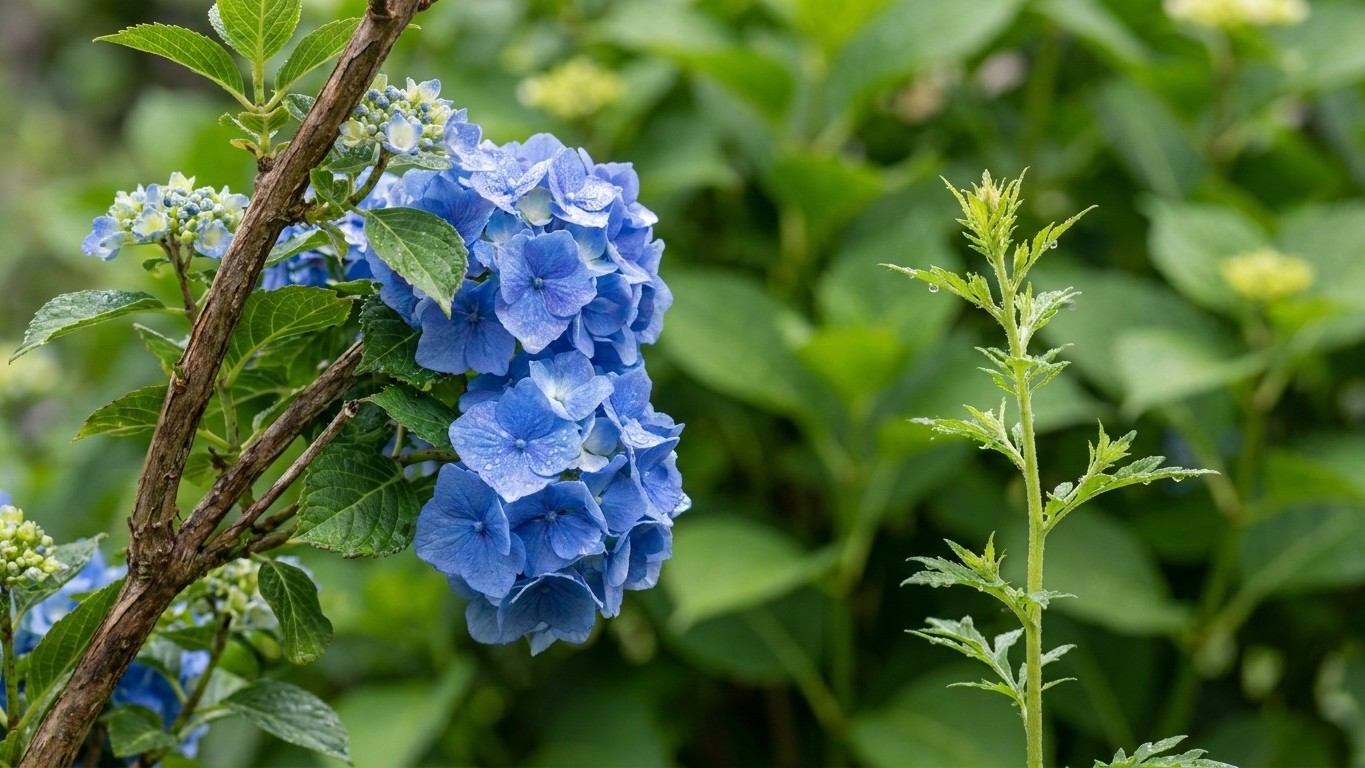

Hydrangeas in North Carolina are pruned on one of two calendars, and the plant decides which. Types that flower on last year’s stems get cut right after they bloom, in summer. Types that flower on this year’s growth get cut in late winter, before new shoots start. A well-meant cut at the wrong time is a frequent reason a healthy shrub produces no flowers. Telling the groups apart takes about a minute, and the frost dates set the rest of the schedule.
What this comes down to in North Carolina

Around Charlotte, the reference city for the Piedmont, the last spring freeze arrives between March 23 and April 5, so hydrangeas that bloom on new growth get cut in late winter, ahead of that window, while those that bloom on last year’s stems wait until after flowering. The first fall freeze falls between October 30 and November 8, and by then pruning of either kind should be long finished. Both ranges come from the NOAA NCEI U.S. Climate Normals, using the 30 to 70 percent probability band for a 32°F freeze.
The split exists because of when flower buds form. Hydrangeas that bloom on old wood carry their buds through winter on stems grown the previous season. Any cut made between that point and the next bloom removes flowers. Hydrangeas that bloom on new wood grow their buds on shoots that emerge in spring, so a cut made while the plant is dormant costs nothing.
Which hydrangeas bloom on old wood, and which on new?
Most garden hydrangeas fall cleanly into one group or the other, and a few straddle both. The table gives the pruning window for each type in the Piedmont.
| Type | Flowers form on | Pruning window (Piedmont) |
|---|---|---|
| Bigleaf (mophead and lacecap) | Old wood | Right after bloom, finished by midsummer |
| Mountain | Old wood | Right after bloom |
| Oakleaf | Old wood | After bloom, with a light touch |
| Panicle | New wood | Late winter, before buds swell |
| Smooth | New wood | Late winter to early spring |
| Reblooming bigleaf | Old and new wood | Dead wood in spring, light trim after the first flush |
Where do reblooming bigleafs fit?
Reblooming bigleafs, sold under names such as Endless Summer, flower on both old and new stems. A winter that kills the old-wood buds still leaves a later round of blooms on fresh growth. They forgive a mistimed cut better than a standard bigleaf does, but a hard cut still delays the first flush, so prune them as if they were old-wood types.
Working it out for your own garden
A date copied from a neighbor works until the year turns cold or warm, or until you move. The method below holds up anywhere: identify the group, check where the buds sit, then count from the frost window.
How do you tell which group your hydrangea belongs to?
Start with the flowers and leaves. Cone-shaped flower clusters that open white and age to pink mean a panicle. Big, round white heads on soft, floppy stems mean a smooth hydrangea. Rounded mops or flat lacecaps on glossy, toothed leaves mean bigleaf, and leaves lobed like an oak’s mean oakleaf. Bigleaf color shifts with soil chemistry, which is covered in soil pH and hydrangea color in North Carolina, and pruning has no effect on it.
If the label is long gone, use the bud test in late winter. Plump, paired buds along the upper stems are next summer’s flowers on an old-wood type, so leave them alone. Bare stems with only tiny buds, or stems that are mostly woody and thin, point to a new-wood type that can take a firm cut.
How do you count back from the frost window?
For new-wood types, aim to finish before buds break, ahead of the Charlotte last-freeze window of March 23 to April 5. Four weeks before March 23 lands in late February, and three weeks before April 5 lands in mid-March. So the window runs from late February to mid-March, and swelling buds on the plant itself are the final signal. A panicle cut in the first week of March has weeks to spare, and if a late freeze nips the new shoots, the plant regrows them and still flowers on that growth.
For old-wood types, count the other way, from the first fall freeze of October 30 to November 8. A bigleaf that blooms in June can be trimmed in late June or July, which leaves new stems the whole warm season to grow and set buds before that fall window opens. A cut in late August or September falls inside the bud-setting period, and the shrub heads into winter with fewer flower buds than it would have had. That is where the line falls.
What changes across the state
Charlotte is a single reference point, and elevation, distance from the coast, and a north-south gap of several hundred miles all move the calendar. The USDA Plant Hardiness Zone Map, which is built on one variable (the average annual extreme minimum temperature), runs from about 6a to 9a across the state on the 2023 map. That spread alone tells you the pruning window is not the same in Asheville, Raleigh, and Wilmington.
How do the mountains change when you prune?
West of the Piedmont, the Blue Ridge runs several weeks later in spring. Late-winter cuts on panicle and smooth hydrangeas slide later too, since an early cut followed by a hard freeze wastes the first flush of regrowth. Winter cold also kills old-wood buds on bigleafs more often at high elevation, which is why many mountain gardeners see few blooms from them. Cut the dead stems to the ground in spring and let the plant rebuild, or lean on panicle and smooth types that bloom on new growth. The types that survive North Carolina winters differ between the mountains and the Piedmont, and that changes how much old wood you can count on.
What is different on the coastal plain?
Spring comes earlier toward the coast, and warm spells in midwinter can wake buds long before the real last freeze. New-wood types can be cut earlier there, but a stretch of mild February weather is a reason to wait a week or two rather than a signal to go. Bloom also arrives earlier, so the post-bloom window for bigleafs opens earlier, and the summer cutoff arrives with it.
The mistakes this state punishes

North Carolina’s winters swing between warm and freezing, and that makes timing errors costly. Three are especially common causes of lost blooms.
Why does pruning in fall or winter cost you flowers?
A common error is pruning bigleaf hydrangeas in fall, winter, or early spring to tidy them. Everything cut at that point carries next summer’s buds. Leave the stems standing, and many gardeners also leave the dried flower heads on through winter to shield the buds below. In spring, remove only what the scratch test shows is dead, and wait for leaves to open on the lower stems before judging the upper ones.
What goes wrong when you prune after a warm spell?
A warm week in February tempts many people into cutting panicles early. A cut made then encourages buds to break, and a freeze in late March can burn the new shoots. The plant recovers, but it spends energy on regrowth, and flowers can come later and smaller. Watch the forecast, and hold off if more freezing nights are likely.
What about shearing everything at once?
Taking hedge shears to every hydrangea on the same weekend treats two groups of plants as one. The panicles and smooth types come through fine, but the bigleafs and oakleafs lose their buds. Do the old-wood plants in summer and the new-wood plants in late winter, and keep the two jobs on separate days.
Checking this against your county
A frost window tied to Charlotte is a starting point for the whole state, and your own yard may sit weeks ahead of or behind it. Your county’s Cooperative Extension center, reached through NC State Extension, can tell you how local frost timing runs and what has worked on nearby shrubs. For the rest of the care routine, see growing hydrangeas in North Carolina.
Common questions
Can I prune hydrangeas in fall?
Panicle and smooth types can have spent flower heads removed in fall without harm, though waiting until late winter is better for any structural cutting. Bigleaf, mountain, and oakleaf hydrangeas should not be cut in fall at all, because their buds for next year are already formed.
Why did my hydrangea not bloom after I pruned it?
The likeliest cause is that it blooms on old wood and the cut removed the buds. A hard freeze after an early warm spell can also kill buds on bigleafs, and shade or too much nitrogen fertilizer can hold flowers back.
How far back should I cut a panicle hydrangea?
Removing some of the height each year keeps the shrub full and the stems sturdy enough to hold the flower heads. A harder cut gives bigger heads on weaker stems that tend to flop after summer rain.
What if I do not know which hydrangea I have?
Prune nothing except dead wood and faded flowers for one full season, and note where the blooms appear. Flowers on stems that grew that spring point to new wood, and flowers on stems that were present all winter point to old wood. Bigleaf flower buds are visible on the stems well before spring, which is why the bud test works in late winter.