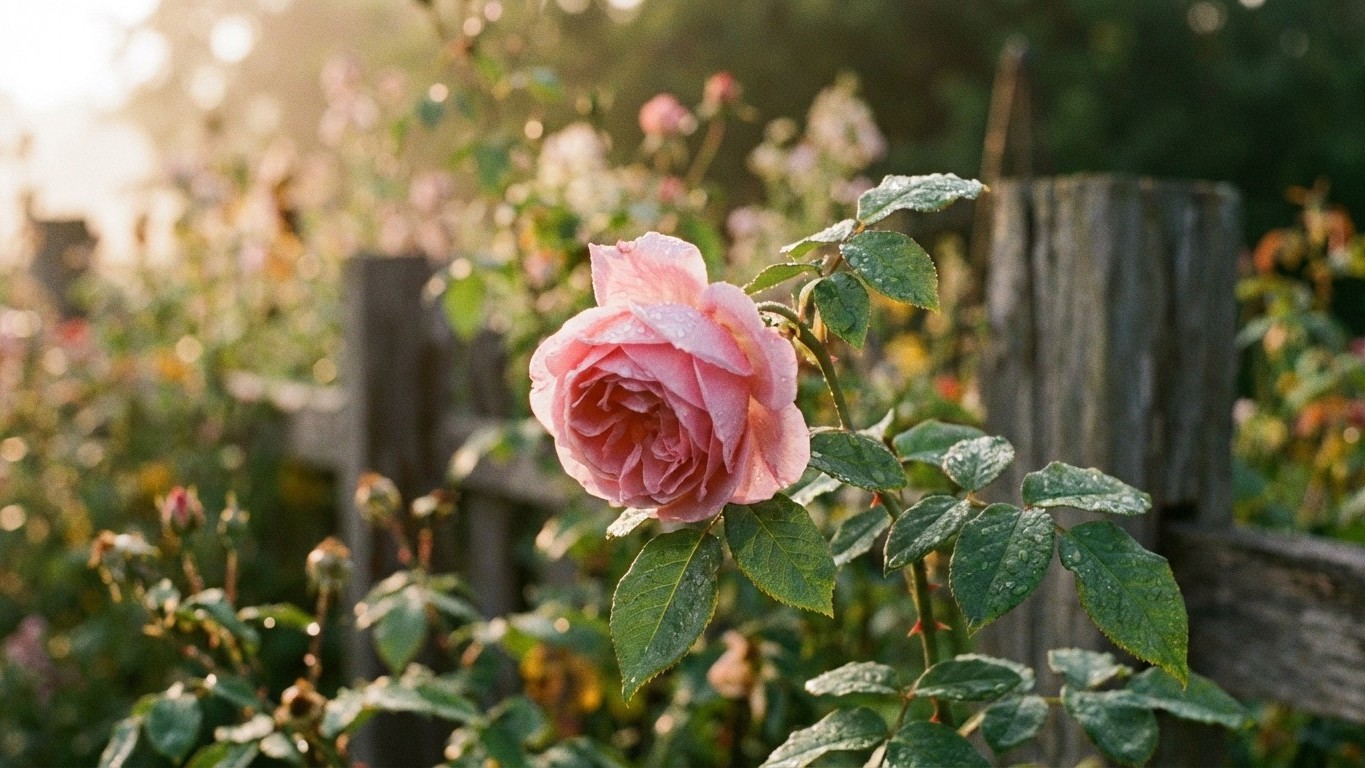

Shrub roses such as Knock Out, rugosas like Hansa and Therese Bugnet, and the climber New Dawn come through North Carolina winters without protection, from the Blue Ridge to the coast. Hybrid teas, grandifloras and tree roses fill the garden center benches and still need help in the colder parts of the state. The USDA Plant Hardiness Zone Map puts North Carolina between zone 6a and zone 9a, and where you sit in that range decides how much work a rose will cost you.
Which roses survive a North Carolina winter
North Carolina runs from USDA zone 6a to 9a. The high Blue Ridge sits at the cold end, the Piedmont in the middle and the coast at the warm end. The USDA system is built on one variable, the average annual extreme minimum temperature, so it tells you how cold the worst night of a typical winter gets. It says nothing about summer heat, humidity or soggy winter soil, all of which matter to a rose.
How cold is too cold for a rose here?
Rugosas and the Explorer series sit at the cold end of the hardiness scale. Rugosas are among the toughest roses grown anywhere, and the coldest mountain night in North Carolina is mild by their standards. The Explorer roses were bred in Canada to take prairie winters, so a zone 6 slope in Avery or Watauga County is well within their comfort. Most modern shrub roses and many climbers land in the same safe group.
Hybrid teas, floribundas and grandifloras are the types that need help in the colder parts of the state, which in this state means the higher mountain counties. These roses are grafted, and a hard winter can kill the named variety down to the graft while the rootstock survives. In zones 7 and 8, across most of the Piedmont and the coastal plain, they usually make it through a normal winter without covering.
Do the frost dates matter as much as the zone?
For roses, often more. NOAA’s 1991-2020 climate normals for Charlotte, a Piedmont station, put the last spring freeze somewhere between March 23 and April 5 and the first fall freeze between October 30 and November 8. Those are ranges, not single dates, and they shift with the ground you garden on. The Blue Ridge runs several weeks later in spring, and the coastal plain runs earlier.
The damage pattern follows those windows. A warm spell in February wakes a rose up, the new shoots push out soft and green, and a freeze in March or early April kills them. The same thing happens in fall if a rose is still pushing growth when the first freeze arrives. A rose rated well below your zone can still lose canes this way. The hardy types usually fare better, because they go dormant earlier and lose less wood.
Named roses that hold up here
The safest buys are roses that were bred for cold or for disease resistance, and ideally both. Each of the roses below has a track record across a wide range of winters. Their cold tolerance is in the table, and a few cautions follow it.
What does each of these roses handle?
| Rose | Type | What it handles here |
|---|---|---|
| Knock Out | Shrub rose | Winters across the whole state, mountains to coast; repeat blooms until frost |
| Therese Bugnet | Hybrid rugosa | The coldest Blue Ridge winters with no covering; heavy spring bloom, lighter repeat after |
| Hansa | Rugosa | Mountain cold, plus sandy soil and salt spray near the coast; fragrant, with hips in fall |
| New Dawn | Climber | Winters across the state; blooms on old and new wood, so a hard winter does not erase the season |
| William Baffin | Explorer climber | Mountain winters with no covering; a good choice for the coldest sites |
| Old Blush | China rose | Piedmont and eastern heat, an old Southern heirloom; give it shelter in the mountains |
Knock Out is the default for a reason. It tolerates the whole state’s range and keeps blooming into the fall. Therese Bugnet and Hansa are the picks for a mountain yard where nothing else is reliable. New Dawn suits a fence or arbor, and it carries a bonus: because it flowers on both old and new wood, a late freeze that damages some canes still leaves blooms on the rest.
Does hardy also mean easy in a humid summer?
Not always. Cold hardiness answers only the winter question. Rugosas and Explorers shrug off freezing temperatures but can look ragged in a humid Piedmont August, with leaf spotting that Knock Out mostly avoids. That is a trade worth knowing about when you pick one, though the pest and disease details belong on their own page.
One habit helps every rose on this list get through winter. As the first fall freeze window approaches, stop deadheading and fertilizing. Both signal the plant to keep growing, and soft late growth is what the first freeze kills. Leave the spent blooms on Hansa and Therese Bugnet and you also get the hips, which birds use all winter.
Sold here, but not for this zone
Garden centers in North Carolina stock roses from national growers. The same truck that serves a store in Minnesota or California serves one in Raleigh, so the shelf reflects what sells everywhere, not what is hardy locally. Most of the cold-tender roses on that shelf are not a problem in the warm part of the state. They become a problem in the mountains and in the Piedmont’s coldest winters.
Which roses on the shelf need winter work?
Hybrid teas are the best-known group. Classics such as Peace and Mister Lincoln have been sold for decades and are beautiful, but both are grafted and both lose canes in a hard freeze. Grandifloras and floribundas share the same weakness. Tree roses, which are a bloom-covered head grafted on top of a bare trunk, are among the most exposed, because the trunk freezes before anything else does.
Miniature roses sold in small pots around Valentine’s Day and Mother’s Day are another trap. They are usually greenhouse-forced, and many are not selected for outdoor winters. Planting one in the ground is worth a try, but treat it as short-lived. Those are roses that often disappear after a single cold season.
What does winter protection look like?
In colder areas, wait until the plant is dormant and the leaves have dropped, then mound soil or mulch over the crown. That keeps the graft union alive even if the canes above it die, and the named variety regrows from the protected base. Tree roses need the trunk wrapped or the whole plant laid down and buried. In zones 7 and 8, a mound is cheap insurance for a hybrid tea in an unusually cold year, and after an early warm spell, keep an eye on the forecast through the March 23 to April 5 stretch.
What to check on the label before buying
Three things on a rose label or tag predict how it will behave in your winters. The first is grade. Bare-root roses are sold in different grades, and the higher grades mean the thickest canes and the biggest root system. A cold-stressed rose needs reserves to recover, and a grade 1 plant has them. A plant sold only as a potted rose in bloom may not carry a grade at all, so judge it by cane thickness and the number of canes coming from the base.
The second is whether the rose is own-root or grafted. A grafted rose has a visible knob near the base where the named variety was joined to a different, tougher rootstock. Freeze it to the ground and what comes back is the rootstock, usually a rose nobody wanted. An own-root rose grows on its own roots, so if the top dies, the new growth is the same variety. Growers often label them “own root” or “grown on its own roots”, and a plant with no knob at the base is a sign too.
Own-root matters more the colder it gets. In zone 7 or 8, a grafted hybrid tea rarely freezes to the ground, so the graft is a small risk. In the mountains, where dieback to the base is realistic, buying own-root plants is the difference between a rose that recovers and a rose that is replaced. Check the zone on the tag as well, and look for one at or below your own zone number. That rating covers cold only, so it tells you nothing about heat or humidity.
Checking this against your own county
A zone map is drawn at a scale of miles, and a valley floor or a south-facing slope can differ from its neighbors. North Carolina Cooperative Extension has an office in every county, staffed by agents who know the local freeze patterns and which roses have performed there. Ask your county center which zone your address falls in and when the last hard freeze usually comes. If you are starting from scratch, the overview on growing roses in North Carolina covers site and care.
Common questions
Do Knock Out roses die back in a North Carolina winter?
In the Piedmont and east they usually keep their structure through winter. In the mountains, cane tips can die back in the hardest winters. The plant regrows from the base, and you prune out the dead wood once the buds swell in spring.
Can I grow hybrid teas in the Piedmont?
Yes. In zones 7 and 8 they normally survive winter without covering. They want more attention than a shrub rose, and a mound of soil or mulch over the crown is cheap protection in a cold year.
Is a rose labeled for zone 5 safe in the mountains?
Mostly, but a tag describes an average, and mountain sites vary a lot from one slope to the next. Choose an own-root plant, put it where cold air will not pool, and cover the crown the first winter while it settles in.
Are the potted roses sold in grocery stores hardy?
Usually not. Most are greenhouse-forced miniatures. You can plant one outdoors after the last spring freeze range has passed, but expect it to be short-lived, and do not count on it surviving a cold winter.