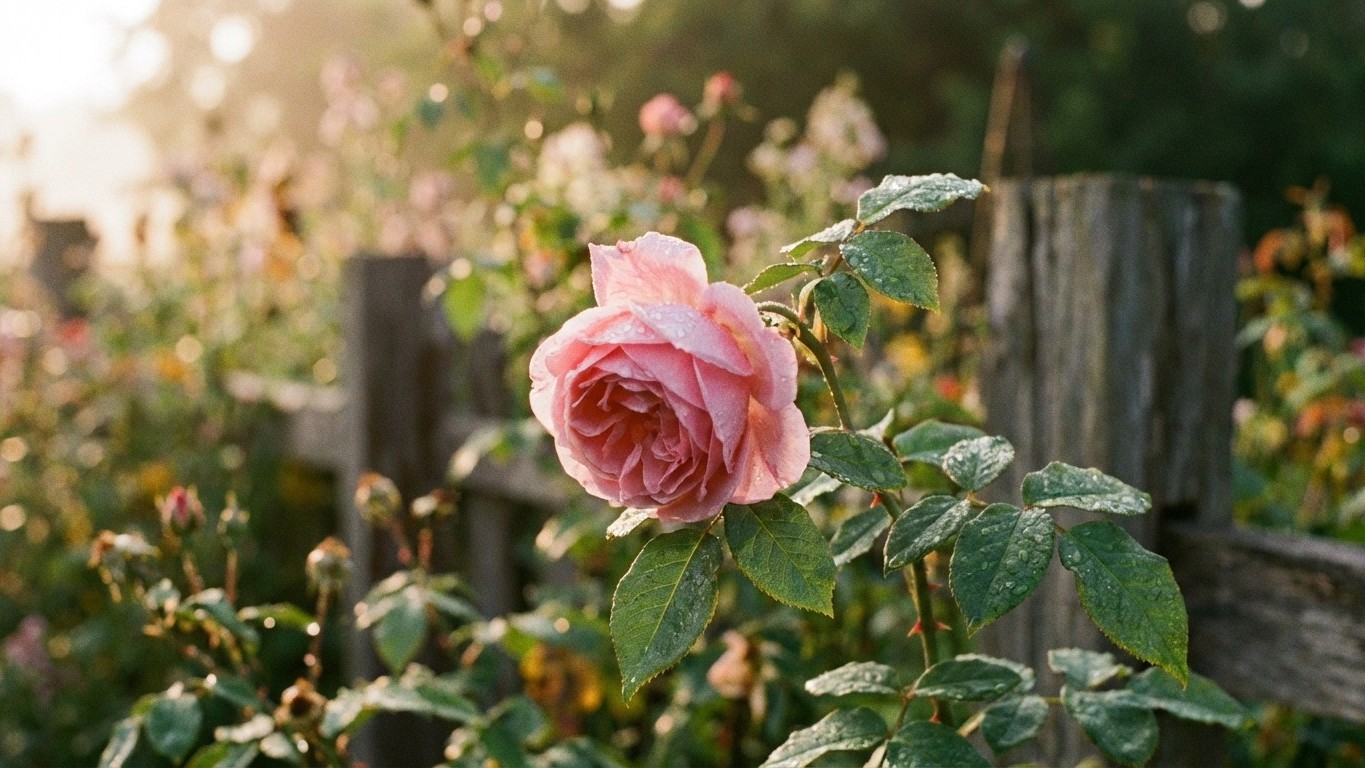

In most of North Carolina, container roses go in the ground after the last spring freeze or in the fall, and bare-root roses go in while still dormant. Pick disease-resistant varieties, because humid summers make black spot the default outcome. Japanese beetles and thrips are the pests that do the most visible damage to roses here, and both are predictable.
When to plant Roses in North Carolina
The reference city is Charlotte, which sits in the Piedmont. NOAA’s 1991-2020 climate normals put the 30-70% probability band for a 32F freeze there at March 23 to April 5 (NOAA NCEI U.S. Climate Normals). That figure belongs to one city. The Blue Ridge and other higher-elevation areas run several weeks later in spring, and the coastal plain runs earlier. Check which side of that line your yard falls on before you borrow Charlotte’s calendar.
Bare-root and container roses
Bare-root roses arrive dormant in late winter and do best planted soon after they ship, while the canes are still asleep. In the Piedmont that means February into March, ahead of the frost band. Soak the roots in a bucket of water for several hours, then plant. A late freeze will not hurt a dormant plant that has not leafed out, and the roots get a head start on summer heat.
Container roses from a nursery are already leafed out, so they follow the frost band. Wait until the 70% end of the odds has passed, around April 5 in Charlotte, or cover the plant on any night a freeze is forecast. Nursery plants raised in a greenhouse should be hardened off first. Set them outside in shade for a few hours, then lengthen the exposure over 7 to 10 days. Counting back from April 5, hardening starts around March 26.
Starting from seed
Few people grow garden roses from seed, and most named varieties do not come true that way. If you want to try with species roses or collected hips, the arithmetic is long. Rose seed generally needs roughly 8 to 12 weeks of cold, moist storage before it will sprout. Work backward from a transplant date of early April: allow a week for hardening off, then a few months of indoor growth after germination, then the cold period before that. That puts the refrigerator stage in late fall. Expect slow, uneven germination. It is a hobby project, not a shortcut.
Fall planting
Fall is the other good window. Charlotte’s 30-70% band for the first 32F freeze runs October 30 to November 8, and the soil stays workable well past that. A container rose planted in October has the cool months to root in without summer stress. Aim to finish several weeks before the ground starts freezing so the roots settle. In the mountains, plant sooner, since the cold arrives earlier there.
Soil and site preparation
Roses want six hours of direct sun, and morning sun matters most. It dries the dew off the leaves early, which cuts down on black spot. A spot that gets afternoon shade from a building or tree is fine in North Carolina‘s heat. Deep shade is not, and the plant will sulk, bloom sparsely and invite disease.
Drainage decides more rose deaths than any other factor. Much of the Piedmont has heavy clay. Fill a planting hole with water and watch it. If water is still standing after several hours, build a raised bed or mound instead of digging deeper. A hole dug into clay and filled with loose soil acts like a flowerpot with no drain hole.
Start in the weeks before planting. A soil test through your county office tells you the pH and nutrient levels, and roses like slightly acidic soil. Many North Carolina soils are already acidic, so test before you add lime. Then work 2 to 3 inches of compost or aged pine bark fines into a bed at least 2 feet wide, to a depth of about 12 inches. Do this two to four weeks ahead if you can, so the bed settles. Skip fresh manure, which can burn roots.
Spacing depends on the type. Hybrid teas and floribundas need roughly 3 feet between plants. Large shrub roses can need 4 to 5 feet. Crowding is a bigger problem here than in drier states, because tight spacing holds humidity in the canopy. Set the graft union (the swollen knob near the base of grafted roses) at or just above soil level, then water deeply and mulch.
Varieties that suit North Carolina
Three traits matter in this climate. First, black spot resistance, because warm, wet weather feeds the fungus from May through September. Second, heat tolerance, since a rose that stops blooming at 90F is a sulking green shrub for half the summer. Third, repeat bloom. Once-blooming types give one flush in spring and then only foliage. Repeat bloomers flower in waves until frost, a long season when the first fall freeze doesn’t arrive until around October 30 to November 8 in Charlotte. Growth habit matters too (the rose version of determinate versus indeterminate): compact shrubs stay put, while climbers keep extending canes and need a trellis.
| Variety | Type | What it is good for |
|---|---|---|
| Knock Out series | Repeat-blooming shrub | Strong black spot resistance, low maintenance, widely sold |
| Drift roses | Compact groundcover shrub | Small spaces, slopes, borders, repeat bloom |
| ‘Old Blush’ | Old garden China rose | Heat tolerance, long bloom season, a classic in Southern gardens |
| ‘The Fairy’ | Polyantha shrub | Tough and tidy, sprays of small pink blooms into fall |
| ‘Iceberg’ | Floribunda | Reliable white flowers, good for cutting, decent health in warm climates |
| ‘Carefree Beauty’ | Shrub rose | Large, fragrant pink blooms with good disease tolerance |
Resistance is relative. A rose labeled disease-resistant can still get spotted leaves in a wet August. And the most popular resistant shrubs, including Knock Outs, are not immune to rose rosette disease, a problem worth learning to recognize (see below). Try mixing a couple of types rather than planting a single variety in a mass. If one fails, you lose a plant, not the whole border.
Hybrid teas are the most demanding. They need regular spraying or tolerance for imperfect foliage. If you want long-stemmed cut flowers, plant a few in the sunniest, best-drained spot and treat them as a high-maintenance project.
What to plant alongside
Good companions for roses do their work on the ground. Low plants that shade the soil and the rose’s roots reduce moisture swings and weeds. Catmint and low salvias are solid choices, bloom at the same time as spring roses, and draw bees. Lavender works if drainage is sharp, though it sulks in humid summers and clay, so give it a raised spot or skip it.
Alliums and garlic are the most repeated rose pairing. The idea is that the smell confuses aphids. The evidence is thin. Gardeners report it, but controlled studies are limited, so plant them because they are attractive and take little room, not because you expect pest protection. Marigolds fall in the same category: pretty, harmless, and unproven against rose pests.
Avoid plants that compete for water and nutrients. Large shrubs and tree roots will beat a rose to every drop. Keep roses a few feet beyond the drip line of mature trees. Turf grass is another competitor, which is why roses do better with a mulched ring than with lawn run up to the stem. Do not plant a new rose in the exact spot an old rose died. The soil can carry problems that stunt replacements, so refresh the soil or pick a new site.
Crowding is the other mistake. Tall perennials planted too tightly block airflow, and airflow is a major factor in leaf diseases. And if wild multiflora rose is growing nearby, remove it. It can carry rose rosette disease and is a bad neighbor for cultivated roses.
Watering, feeding and support
Roses want about an inch of water a week, delivered deep and slowly. A soaker hose or drip line at the base beats overhead sprinkling, because wet leaves are what black spot needs. If you must use a sprinkler, run it early in the morning so foliage dries by mid-morning. During stretches of heat in July and August, roses in sandy soil may need water twice a week, while clay holds it longer. Stick a finger down 2 inches. If it is dry, water.
Mulch 2 to 3 inches deep with shredded bark or pine straw, kept a hand’s width away from the canes. Mulch holds moisture, keeps roots cooler in a hot summer and suppresses weeds. It also keeps soil from splashing onto leaves, which carries fungal spores upward.
Feed when new growth starts in spring, then again after each major flush of blooms, using a balanced rose fertilizer or compost plus a slow-release product. Stop feeding about six weeks before the first expected fall freeze. In Charlotte, with the freeze band starting October 30, that is mid-September. Late feeding pushes tender new growth that the first cold will kill.
Prune in late winter, as buds begin to swell, which in the Piedmont is typically February to March. Remove dead, damaged and crossing canes, and cut to an outward-facing bud. Cutting back by about a third is a reasonable default for shrub roses. Hybrid teas can go harder. Avoid heavy pruning in fall, because it stimulates growth that cold will damage. Deadhead during the season to encourage more blooms.
Suckers on grafted roses come from the rootstock, not the named variety. They usually have different leaves, often with seven leaflets where the variety has five. Trace the sucker to its origin below the graft and pull or cut it flush. Climbers need support: tie canes loosely to a trellis with soft ties and train them horizontally to produce more flowering shoots.
Common problems

Black spot comes first. Dark circular spots with fringed edges appear on leaves, which then yellow and drop. It starts on lower leaves and climbs. Water at the base, give plants air, and rake up fallen leaves. A fungicide labeled for roses, applied on schedule, protects healthy foliage but does not cure existing spots.
Powdery mildew looks like white dust on new growth and buds, and it likes cool nights and warm days with poor airflow. Thin crowded stems and move on. Rose rosette disease is a different animal: witches’ broom clusters of thick, red, thorny shoots, distorted growth and abnormal leaf color. There is no cure, and the usual advice is to remove the whole plant, roots included. Contact your county Extension office if you suspect it.
Blooms that don’t come usually trace to too little sun, overfeeding with nitrogen, or pruning at the wrong time. Yellow leaves with green veins point to a pH or nutrient problem, which is why testing pays. Yellowing with wet soil points to poor drainage. Canes that turn brown and die back after winter indicate cold damage. Cut back to green, healthy wood.
Stippled, bronzed leaves with fine webbing are spider mites, which thrive in hot, dry spells in mid-to-late summer. Clusters of small insects on tender buds and shoots are aphids, also a mid-to-late season issue. A hard spray of water knocks both back. Check the undersides of leaves, where mites start.
Balled-up buds that never open can come from thrips or from wet weather. Chewed, skeletonized leaves in summer usually mean beetles. Both get their own treatment next.
Pests that actually show up in North Carolina
NC State Extension highlights a long list of insects for home gardens, and the list leans toward vegetables. Corn earworm, cabbage looper and imported cabbageworm feed on crops, not rose canes. Hemlock woolly adelgid feeds on hemlocks. For roses, two names on the list do the real work, with a couple more worth a quick look. The extension’s Extension Gardener Handbook chapter on insects covers the full list, and your county office can identify what you find.
Japanese beetle
You see metallic green-and-copper beetles clustered on blooms and leaves, and foliage chewed into lace. Adults feed through summer, and they favor open flowers. The control that works is hand-picking into a bucket of soapy water in the cool of morning, when the beetles are sluggish. Skip pheromone traps near your roses, which can draw more beetles to your yard than they catch.
Thrips
Tobacco thrips are an early-season pest, April to May, and western flower thrips become important June to July. What you see first: petals streaked or browned at the edges, buds that open badly, and silvery scarring. Thrips are tiny, so shake a bloom over white paper to see them. Pick off and discard damaged flowers, and avoid heavy nitrogen, which makes soft growth they favor. If you spray, use a product labeled for roses and thrips and follow label timing.
Flea beetles and stink bugs
Flea beetles appear just after transplanting, making tiny shotgun holes in young leaves. Healthy plants outgrow it, and row cover on new plantings is enough. Stink bugs, including brown marmorated, show up mid-to-late season and mostly bother fruiting vegetables. On roses they are a minor visitor. Fall webworm, with its webbed nests in the ends of branches in late summer, favors trees. Prune out a nest if it lands on a shrub.
Harvest and end of season
Cut roses in the morning, when stems are full of water. Use sharp pruners and cut just above a leaf with five leaflets, which leaves a bud to produce the next flower. Pick flowers when buds are just starting to open. Roses will not ripen further once cut, though buds will open indoors. Strip the lower leaves, recut the stem under water, and set the stems in a clean vase with cool water. Cut flowers stored in a refrigerator keep longer, and changing the water every couple of days helps.
If you grow for rose hips, leave late-season blooms on the plant so hips form, and harvest when they turn fully colored. Hips on some varieties sweeten after a cold snap. Rinse, remove seeds and dry them for tea or syrup.
As the first fall freeze approaches (Charlotte’s 30-70% band runs October 30 to November 8), stop feeding and stop heavy pruning. Rake fallen leaves around the base, since they carry black spot spores. Add fresh mulch after the ground cools. Climbers need canes secured against winter wind. Leave the main pruning for late winter, and bring in any potted roses before a hard freeze if the pots are small.
Local help
NC State Extension has offices in every county. They can give you local frost timing, run soil tests and identify an insect or disease from a sample. For more state guides, see our North Carolina guides. For general technique, read How to Grow Roses: The Complete Guide, and compare conditions in Growing Roses in Oklahoma: Planting Dates, Varieties and Local Pests or Growing Roses in British Columbia: Planting Dates, Varieties and Local Pests.
Common questions
When is the best time to plant roses in North Carolina?
Plant bare-root roses while dormant in late winter, and container roses after the last frost band (March 23 to April 5 in Charlotte) or in fall. Mountain areas run several weeks later in spring, and the coast runs earlier.
Do roses grow well in North Carolina clay?
Yes, if drainage is handled. Amend the bed with compost or pine bark fines, or plant in a raised bed. Standing water around the roots is the main thing that kills them.
Which roses are easiest for beginners here?
Disease-resistant, repeat-blooming shrubs such as Knock Out and Drift roses are low maintenance. ‘Old Blush’ and ‘The Fairy’ are tough older choices that handle heat.
How do I control Japanese beetles on roses?
Hand-pick them in the morning into soapy water, and pick off badly chewed blooms. Avoid traps close to the roses, since they can attract more beetles.
When should I stop fertilizing roses in the fall?
About six weeks before the first expected freeze. With a Charlotte-area band that opens October 30, that means mid-September. Mountain gardeners should stop earlier.