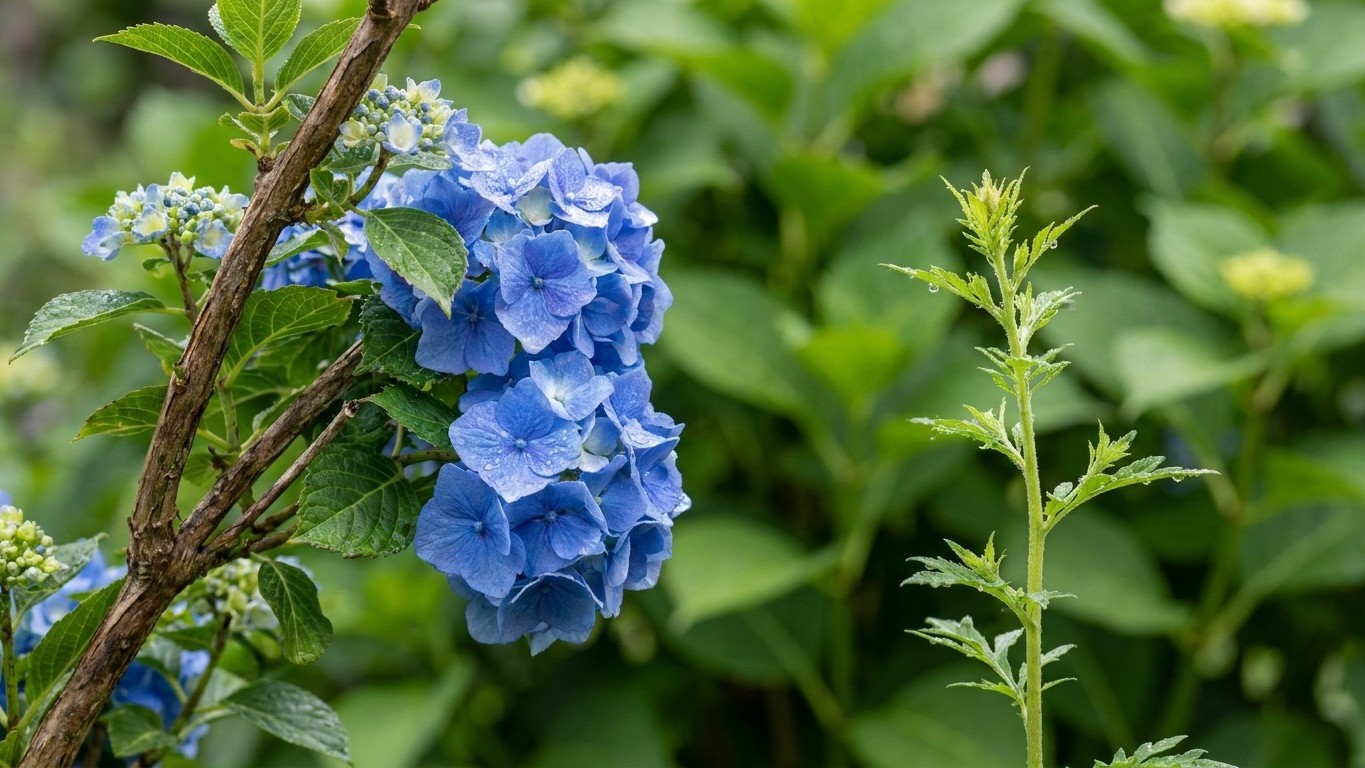

Pink bigleaf hydrangeas in Pennsylvania come down to soil chemistry. Blue flowers need aluminum the plant can absorb, and that happens only when the soil is acidic, roughly pH 5.5 or lower. Many Pennsylvania yards sit closer to neutral, especially over limestone in the southeast or beside concrete foundations. The aluminum stays locked in the soil and the flowers come out pink. Lower the pH, add aluminum in a form the roots can use, and the color shifts. It takes a season or two, and only certain hydrangeas respond.
What this comes down to in Pennsylvania

Hydrangeas turn pink in Pennsylvania because soil pH is too high for the plant to take up aluminum, and the window for changing that opens when growth starts in spring, which at the Philadelphia reference station means a last spring frost between March 29 and April 6. That window closes with the first fall frost, which falls between November 5 and November 16 at the same station, so you have about seven months to work with.
The mechanism is simple. Bigleaf hydrangeas (Hydrangea macrophylla) and mountain hydrangeas (Hydrangea serrata) carry a pigment that is red or pink on its own and turns blue when it binds with aluminum. Nearly every soil contains aluminum. Whether the plant can use it depends on pH. Below about 5.5, aluminum dissolves in soil water and flowers go blue. Above about 6.5, it locks into minerals and flowers go pink. Between those two numbers you get purple, or a mix of pink and blue on the same shrub.
Pennsylvania pushes many gardens toward the pink side. Valleys in the southeast and parts of the central ridge-and-valley region sit on limestone and dolomite, which buffer the soil toward neutral or alkaline. Farm fields that were limed for decades keep that effect after they become subdivisions. Builders often backfill around a house with crushed stone and leave concrete in the ground, and both leach lime into the nearby soil. Tap water from limestone aquifers is also hard and alkaline, so a hose can undo your work.
Not every hydrangea can change. Smooth hydrangeas such as ‘Annabelle’, panicle types, and oakleaf hydrangeas ignore soil chemistry. Their white and cream blooms stay that way, though panicle flowers age to pink on their own as they mature. If the shrub in question is a mophead or lacecap with pink, blue or purple flowers, you can steer it.
Phosphorus matters too. Fertilizers high in phosphorus tie up aluminum inside the soil and push color toward pink even when pH is right. A balanced or low-phosphorus fertilizer keeps aluminum available.
Working it out for your own garden
A method beats a one-time answer, because soil changes after you amend it and winters vary. Test first, treat on a schedule tied to the frost calendar, and retest.
How do you test soil pH for hydrangeas?
Take small samples from four or five spots around the shrub, about 4 inches deep and a foot or two from the stems. Mix them in a clean bucket and send a portion to a lab through your county extension office, or use a home kit and repeat it a couple of times. Read the pH against the color bands above. A result above 6.5 explains pink, and a result between 5.5 and 6.5 explains purple or mixed color. A result near 5.0 to 5.5 means the soil is already doing its part, and the problem is probably phosphorus or a variety that is slow to show blue.
How and when do you turn hydrangeas blue?
Start when new leaves open. At Philadelphia, the last spring frost falls between March 29 and April 6. Leaves usually open within a few weeks after that, so a first treatment lands somewhere from mid-April into early May. Farther north and at higher elevations the last frost runs two to four weeks later, so push your first treatment back by the same amount.
Aluminum sulfate is the fast option. A common rate is about 1 tablespoon per gallon of water, poured on moist soil around the root zone, repeated roughly monthly through early summer. Wet the soil first, since dry roots burn more easily. Follow the label on the product, because heavy doses damage roots. Elemental sulfur is slower and gentler. Worked into the soil in fall or early spring, it takes months for bacteria to convert it into acid. Pine bark mulch and compost help a little but will not move a limestone soil by themselves.
Expect partial results the first year, since flower buds were already forming before you started. A full blue usually arrives in the second season. Retest each fall. Stop applying aluminum sulfate by midsummer, long before the first fall frost window of November 5 to November 16 at Philadelphia.
Container planting is the dependable shortcut for a yard with strongly alkaline soil. Fill a large pot with an acidic potting mix, water with rainwater when you can, and the pH stays where you put it.
Does your hydrangea bloom on old wood or new wood?
This decides when you prune, and a wrong cut costs you flowers. Classic bigleaf and mountain hydrangeas bloom on old wood. They set next year’s buds on stems in late summer. Cut them in late winter and you remove the flowers. Prune right after bloom, by early August, and leave everything else alone.
Reblooming bigleaf types flower on both old and new wood, so a harsh winter or a mistimed cut costs less. To check which you have, look in late winter for plump buds along last year’s stems. Scratch a stem with a fingernail. Green underneath means alive. If the stems look dead in early spring, wait until leaves emerge, then cut back only to live wood. The USDA Plant Hardiness Zone Map rates Pennsylvania from zone 5a to 7b, based on average annual extreme minimum temperature. Gardeners at the cold end lose old-wood buds in many winters, and a blue shrub that makes no flowers is a hardiness problem, not a pH problem.
What changes across the state
Pennsylvania covers a lot of ground, and the Philadelphia numbers above describe its mildest corner. Spring arrives two to four weeks later across the northern tier and the Alleghenies, and fall frost tends to come sooner there. A treatment calendar built on Philadelphia dates will run early in those places.
Elevation shapes both temperature and soil. Higher ground runs colder, which means a shorter season and more winter damage to old-wood buds. The same uplands often sit on sandstone and shale, which produce more acidic soils than the limestone valleys. A gardener in the northern or western hills may find bigleaf hydrangeas already blue with no help, while a gardener in the southeastern valleys fights lime year after year.
Lake Erie softens conditions along the northwestern edge. Water delays the spring warm-up slightly and the lake-effect snow blankets shrubs through winter, which protects buds. Southwestern Pennsylvania has its own mix: acidic hillsides, mine-influenced ground and fill soil. In places like these, results vary from one lot to the next, so a test beats any regional rule.
For the south, think hard water and limestone. For the north, think cold buds and often acidic soil. Most yards fall somewhere between, and a cheap pH test sorts it out.
The mistakes this state punishes

Treating too early is a common one. A warm spell in March tempts gardeners to dump aluminum sulfate on cold soil before the plant is growing. Roots are not drawing water yet, and the chemical sits or washes away. Wait for leaf-out, then start, and remember that late frosts can still arrive into April in Philadelphia and later farther north.
Applying a heavy dose all at once is the next error. Aluminum sulfate in strong concentrations scorches roots and leaf edges. Several light applications beat one big one.
Pruning at the wrong time can cost you flowers year after year. A tidy-up in March or April on an old-wood hydrangea removes the buds that were going to bloom. Wait until leaves emerge so you can see what is alive, and do the real shaping right after bloom.
Planting right against a concrete foundation keeps feeding the soil with lime. Leave a couple of feet, or swap in acidic soil, or use a container.
Last, picking the wrong plant. A white ‘Annabelle’ or a panicle hydrangea will not turn blue no matter how much sulfate you pour on. And in colder parts of the state, a bigleaf that dies back every winter gives no color at all, so match the hydrangea to your zone before you chase pH.
Checking this against your county
A state-wide figure is a starting point. Philadelphia’s frost dates and soil are not your county’s. Penn State Extension serves every county, and its staff can help you understand your local soil type, point you to lab soil testing, and say how much your area differs from the reference city. For the larger picture of care, spacing, light and watering, see the guide to growing hydrangeas in Pennsylvania. The frost windows quoted here come from NOAA’s U.S. Climate Normals for the Philadelphia station.
Common questions
Can I turn a white hydrangea blue?
No. White hydrangeas such as smooth and panicle types lack the pigment that reacts to aluminum. Only pink, blue or purple bigleaf and mountain hydrangeas shift color with soil pH.
How long does it take to turn pink hydrangeas blue?
Plan on one to two growing seasons. Aluminum sulfate can tint new blooms the first year, but buds set the previous summer keep their color. Sulfur works more slowly and may need months to change the soil.
Can I turn blue hydrangeas back to pink?
Yes. Raise the pH toward 6.5 or slightly higher with ground limestone or dolomitic lime, applied according to a soil test, and avoid acidic fertilizers. Expect the same lag, with the full change showing in the second season.
Why are my hydrangea flowers purple?
Purple means the soil pH is in the middle, somewhere between about 5.5 and 6.5, so aluminum is only partly available. It also happens when pH varies across the root zone. Nudge the soil one way or the other if you want a cleaner color, or enjoy the mix.