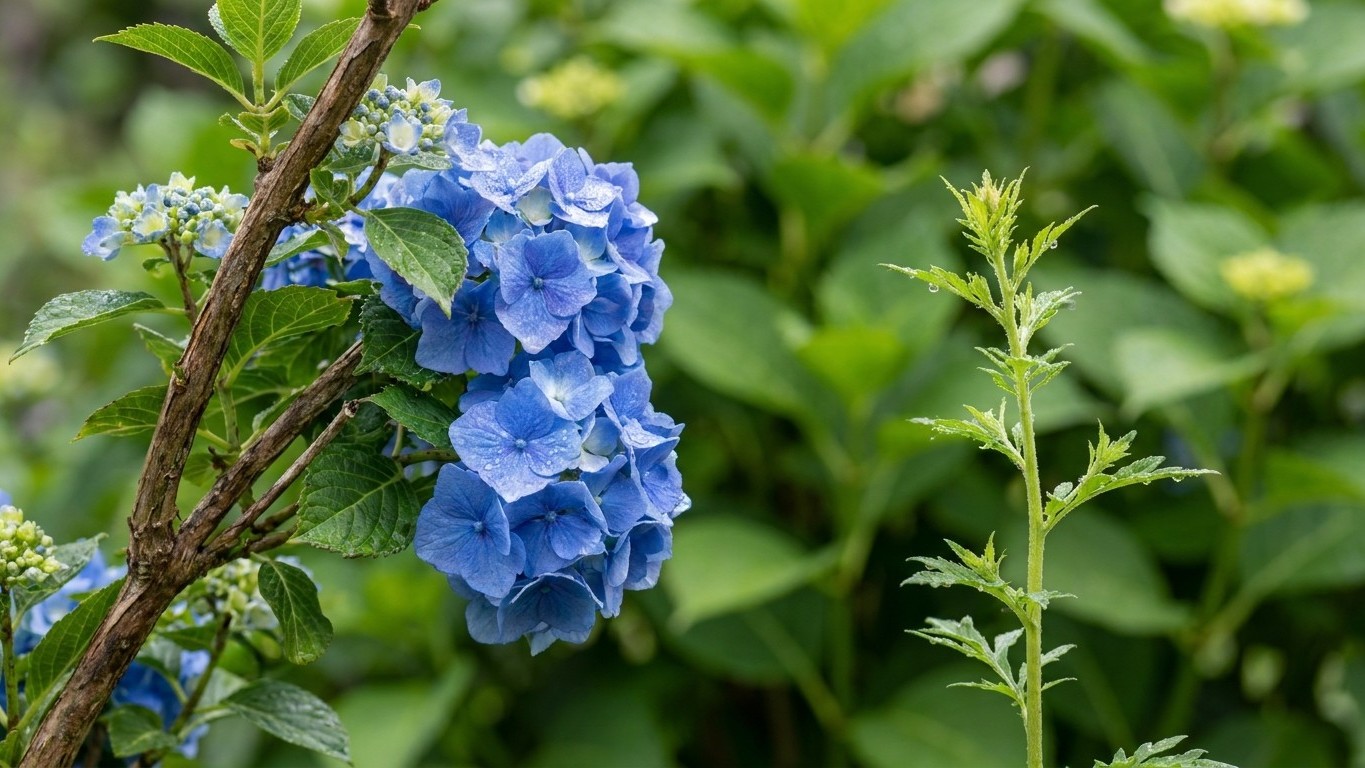

Bigleaf hydrangeas turn pink when the soil keeps aluminum out of the plant’s reach, which usually means a soil pH above roughly 6.0. Blue flowers need aluminum the roots can absorb, so the job is lowering pH and holding phosphorus down. White or green flowers will not change color, and some pink cultivars never turn blue. Here is how to tell which situation you have and what to do about it.
What this comes down to in Prince Edward Island

The working season for changing flower color runs from the mean last spring frost, May 16 at the Charlottetown A station, to the mean first fall frost, October 17. That gives the reference station about 154 frost-free days. Those are mean dates, so in one year out of two the last frost falls later than May 16 and the first fall frost falls later than October 17. Treat them as the middle of a window. Charlottetown is commonly listed in Canadian hardiness zone 5b on older Natural Resources Canada maps, and newer maps may place it higher, so check the current map. Either way, a Canadian zone does not translate directly into a USDA zone.
What makes a hydrangea pink or blue?
The pigment in a bigleaf hydrangea bloom is the same in both colors. What changes is whether the plant can take up aluminum. In acidic soil, aluminum dissolves and the roots absorb it, and the flowers turn blue. When the aluminum is mostly locked up, the flowers come out pink. In between you get purple, or a mix of pink and blue on one shrub. Phosphorus matters too, because it binds aluminum inside the plant, so a heavy dose of high-phosphorus fertilizer can keep a bush pink in fairly acidic ground.
Why do so many Island gardens end up with pink flowers?
Several ordinary habits push garden soil toward pink. Lime is spread widely on lawns and fields, and a shrub at the edge of a limed lawn picks up some of it. Wood ash from stoves and fireplaces raises pH quickly. Concrete foundations leach lime into the strip of soil beside the house, which is where many hydrangeas are planted. Hard well water adds calcium and raises pH a little with each watering. Bonemeal and bloom-booster fertilizers add phosphorus. Many shrubs are also bought in full flower, and some nurseries adjust the color of those plants through their potting mix. Once planted, they revert to whatever the garden soil produces.
Which hydrangeas can change color at all?
Only bigleaf hydrangeas (Hydrangea macrophylla) and mountain hydrangeas (Hydrangea serrata) respond to soil chemistry. Panicle types such as ‘Limelight’ open white or green and fade to pink as the flowers age, which has nothing to do with soil. Smooth hydrangeas such as ‘Annabelle’ stay white, and oakleaf hydrangeas open white and age to pink or tan. If a shrub is one of these, no amount of aluminum sulfate will make it blue. For the basics of siting and care, see the guide to growing hydrangeas in Prince Edward Island.
Working it out for your own garden
Start with a soil test rather than a guess. Home test strips give a rough number, but a lab test through a provincial or private soil lab also reports pH and phosphorus, and some labs can test aluminum. Take samples from several spots around the shrub and mix them. A reading near 5.5 or below means the soil is already right for blue, and the problem is likely phosphorus or the cultivar. A reading above 6.5 means you have a long job ahead.
How do you count the timing for a color change?
Bigleaf hydrangeas take up aluminum while the flower buds are developing, from leaf-out through summer. Plan the treatment around the frost window. Soil is workable and shrubs are leafing out around the mean last frost of May 16, and half of years that date falls later. Start applying amendments once new leaves have opened, and repeat them through the season. The mean first fall frost of October 17 closes the season. Anything applied after buds are set will not change this year’s flowers, only next year’s.
Take a worked example. A bigleaf such as ‘Endless Summer’ blooms on both old and new wood, so it has more than one chance to pick up the new color. Say your test reads pH 6.8 and the shrub flowered pink in July. Lowering the soil to the mid-5s is gradual work. Expect at best a purple shift in the first summer, more often the following summer, and clearer blue with consistent treatment. Now take ‘Limelight’, a panicle hydrangea that opens in midsummer. Treat it the same way and it still opens white to pale green, because the chemistry that colors a bigleaf does nothing for its pigments. That is where the line falls: the type of hydrangea sets the limit, and the soil only works within it.
What actually lowers soil pH around the shrub?
Two materials do most of the work. Aluminum sulfate acts fast and adds aluminum directly. A commonly cited approach is to dissolve the amendment in water, pour it around a well-watered plant and repeat a few times through spring. Keep it off the foliage and never apply it to dry soil, because it can burn roots. Elemental sulfur works more slowly and lowers pH over months as soil bacteria convert it. Pine needles and peat mulch help a little. Choose a fertilizer with a low middle number (phosphorus), and use rainwater when you can.
What changes across the province
The Charlottetown A station is one reference point, and Prince Edward Island is a long, narrow island with a lot of coastline. Gardens close to the water, on either the Gulf of St. Lawrence side or the Northumberland Strait side, get a slower spring and a milder fall than gardens inland. Northern and upland districts can run behind the reference station, so the start of the color-change season shifts with them. Where the last frost comes later, wait for leaf-out rather than the calendar.
Soil matters even more than frost for this topic. Soil type, parent material and local gardening history vary from district to district, and two neighbors can have different pH on the same road. A garden beside a field that has been limed for decades is likely to run higher than one beside a woodlot. Coastal sites may also carry shell and salt spray. Well water chemistry varies by aquifer, and a household on hard water will fight pH creep every season.
Even on one lot, pH changes over a few yards. The strip beside a concrete foundation, the bed beside a gravel drive and the corner where the lawn gets lime can all read higher than the rest of the yard. A shrub in a protected corner may open blue while the same cultivar by the foundation opens pink. Test where each plant actually stands.
The mistakes this climate punishes
Winter damage is a common reason bigleaf hydrangeas lose their flowers here. They bloom on buds formed the previous summer, and a cold winter or a late frost after leaf-out can kill those buds. The shrub then leafs out with no flowers at all, pink or blue. Mulching the base in late fall and waiting for plants to show live growth before pruning protects the buds. The timing is covered in When to Prune Hydrangeas in Prince Edward Island.
Several other habits undo a color-change effort:
- Applying aluminum sulfate in a single heavy dose to dry soil, which burns roots. Water first and use smaller doses spread over weeks.
- Liming the lawn right beside the shrub. Keep lime and wood ash away from the root zone.
- Using a bloom-booster fertilizer high in phosphorus, which keeps flowers pink even in acidic soil.
- Treating a panicle or smooth hydrangea and expecting blue.
- Expecting a change in one summer. Buds already formed are set, so give it a full season or two.
Planting right at a concrete foundation is the quiet mistake. The lime leaching from the concrete can keep pH high despite repeated sulfate applications. If you want blue flowers, plant a few feet away from it or grow the shrub in a large container with acidic potting mix, where you control the chemistry.
Checking this against your county
The dates and zone above come from one station in Charlottetown, so treat them as a starting point rather than an instruction for your own lot. Your district may run later in spring, and your soil may differ from the neighbor’s. For local soil testing and advice, contact Prince Edward Island’s agriculture department, and use the full guide to growing hydrangeas in Prince Edward Island for planting and care.
Common questions
Can I turn pink hydrangeas blue in one season?
Rarely. Flower buds are set the previous summer, and the color depends on aluminum uptake while they develop. At best, expect a purple shift in the first summer if you treat early in spring, and cleaner blue with continued treatment.
Is it safe to use aluminum sulfate every year?
It works, but it can burn roots and, with repeated use, build up salts. Test the soil each year and use only enough to hold pH in the low-to-mid 5s. Elemental sulfur is gentler, though slower.
Will coffee grounds or pine needles turn hydrangeas blue?
They help only a little, if at all. Pine needles lower pH slowly and weakly, and used coffee grounds change it very little, so in a limed or foundation-side bed neither will overcome the buffering. They work better as mulch alongside sulfur or aluminum sulfate.
Why did my blue hydrangea turn pink after a few years?
The soil most likely drifted back toward neutral from hard water, lime nearby or a phosphorus-heavy fertilizer. Test the pH again, correct it, and keep the lawn lime and wood ash away from the roots.