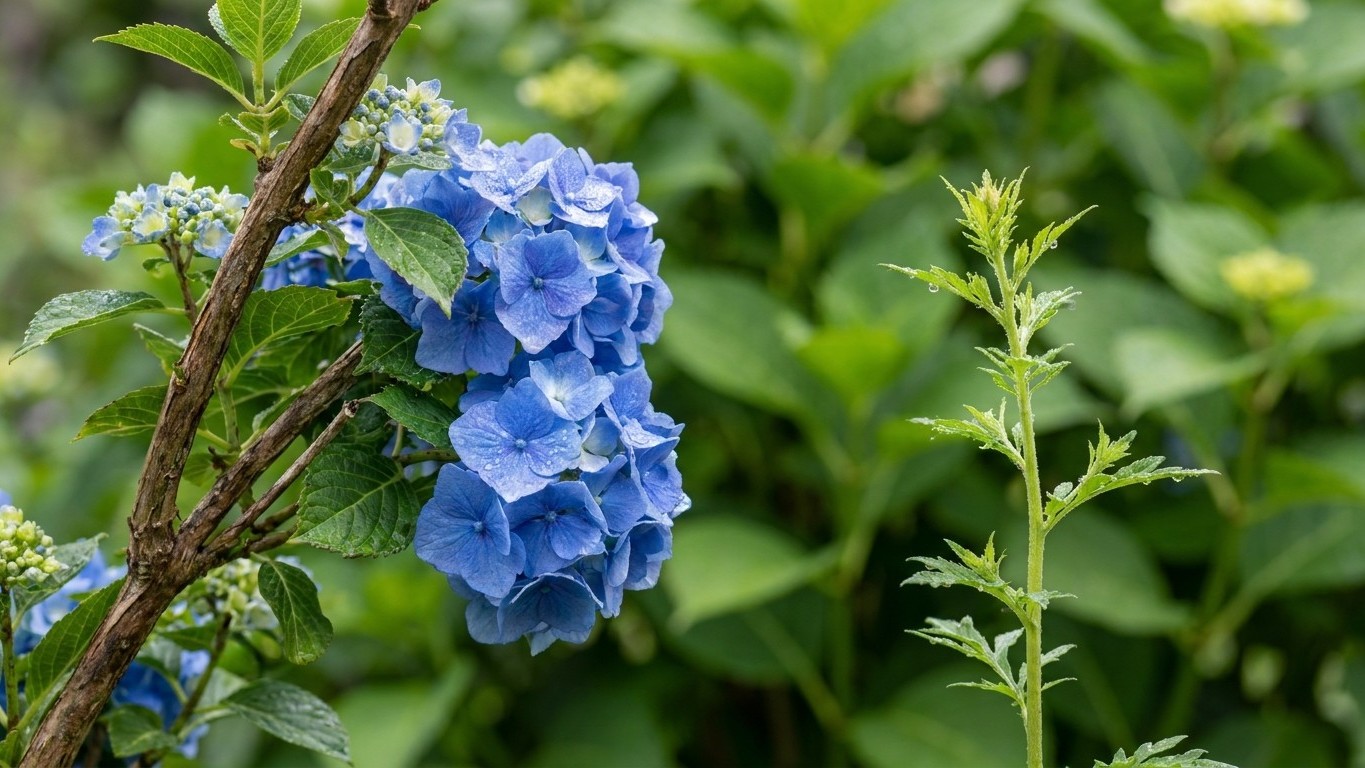

Panicle and smooth hydrangeas come through a Prince Edward Island winter with little fuss, because they flower on wood grown the same summer. Bigleaf and oakleaf types usually survive too, but their flower buds, formed the year before on old wood, often do not. A bigleaf can leaf out in June looking healthy and never bloom. On the Island, the wood a variety blooms on matters more than whether the plant lives.
What this comes down to in Prince Edward Island

At Charlottetown, the reference station for this province, the last spring frost falls on average on May 16 and the first fall frost on average on October 17. Both are mean dates, so in one year out of two the spring frost comes later and the fall frost earlier, and each is better read as the middle of a window than as a safe date.
Natural Resources Canada places Charlottetown in Canadian hardiness zone 5b to 6a, depending on the map edition. That is a different system from the USDA map, built on seven climate variables instead of one, and the two do not convert. The USDA ranges below are the ones nursery catalogs print for each cultivar, so treat them as a rough comparison of toughness between plants rather than a match for the Island’s zone. The normals behind the frost dates also come from an older thirty-year period, so recent winters may differ a little.
The cultivars below run from the shortest season to the longest, which is also roughly the order from safest to riskiest here.
Quick Fire
A panicle hydrangea (Hydrangea paniculata) that catalogs rate for USDA zones 3 to 8. It blooms on new wood, with white flowers that open and age to pink and deep rose. It starts blooming earlier than most panicle hydrangeas, which makes it a good pick for a cool summer or a late spring.
Annabelle
A smooth hydrangea (Hydrangea arborescens), rated USDA zones 3 to 9. It blooms on new wood, with big white round heads in midsummer. Even if winter kills the stems to the ground, it grows back and flowers the same year. The heavy heads flop after hard rain.
Incrediball
Same species and same new-wood habit as Annabelle, rated for USDA zones 3 to 8 or so, with white heads on sturdier stems. It suits exposed Island yards where wind and summer storms flatten weaker stems.
Limelight
A panicle type for USDA zones 3 to 8, blooming on new wood in mid to late summer. The flowers start lime green, fade to cream, then blush pink as nights cool in September. It is dependable here.
Tardiva
Another panicle hydrangea, rated USDA zones 3 to 8, with white flowers on new wood that open late in summer and carry into fall. The long wait for bloom is its main risk. In a year when frost comes early, the display gets cut short.
Endless Summer The Original
A bigleaf hydrangea (Hydrangea macrophylla), listed for USDA zones 4 to 9, with blue or pink flowers depending on soil acidity. It blooms on both old and new wood. If winter kills the old buds, it still flowers later in the summer from new growth, which makes it one of the more dependable bigleaf choices for the Island.
Nikko Blue
A classic bigleaf with blue flowers in acidic soil, listed from roughly USDA zone 5 or 6 upward. It blooms only on old wood. A hard winter, or a late frost after the buds swell, can leave a healthy shrub with no flowers. On open Island sites it is among the cultivars most likely to disappoint.
Working it out for your own garden
Three questions sort any cultivar: which wood does it bloom on, how many weeks does it need to bloom before the first fall frost, and how exposed will its buds be over winter?
For planting, start from the mean last spring frost of May 16 at Charlottetown. A container shrub wants settled weather to root before midsummer heat. In a late spring, shift the whole window a week or two later. Because the May 16 date is a midpoint, wait for the cold snaps to pass rather than planting on the calendar date.
Will Limelight flower in its first summer?
Take Limelight planted in late May. It blooms on new wood, so the stems grow through June, the flower heads form in July, and they open in mid to late summer. That leaves many weeks before the October 17 mean fall frost, and even a late-frost year barely affects it. The first-year flowers will be modest, but they will come. After a typical winter, the tips may die back, and the shrub still blooms because the flowers sit on wood that has not grown yet. It flowers reliably here.
What happens to Nikko Blue after a cold winter?
Now take Nikko Blue planted the same week. Its flower buds formed the previous late summer at the stem tips and have to sit through the whole winter above the snow line. A mild winter under steady snow cover, and you get flowers. A cold, windy winter, or a thaw followed by a hard freeze, and the stems stay green while the buds turn black. The result is leaves and no flowers. Where the line falls is simple: new-wood bloomers are reliable on the Island, while old-wood bloomers depend on the winter.
You can check this yourself in late spring. Plump, green-centered buds at the stem tips will flower. Dry, brown or black buds will not. Scratch a stem with a thumbnail: green underneath means the wood is alive and will leaf out, even if there are no flowers.
What changes across the province
Prince Edward Island is small, but its climate is not uniform. The Gulf of St. Lawrence and the Northumberland Strait surround it, and the water decides a lot. Coastal gardens warm up slowly in spring because the sea stays cold, which holds buds back and can protect them from a late frost. In fall the same water releases stored warmth, so the first frost tends to arrive later by the shore than inland.
Inland, the pattern reverses. Low hollows and open fields collect cold air on clear nights, so frost comes later in spring and earlier in fall than the Charlottetown figures suggest. Northern and exposed districts can run weeks behind the reference station, so a gardener there should lean toward the earliest-blooming cultivars and treat May 16 as a hopeful date rather than a likely one.
Wind and snow matter as much as air temperature. A shrub on a windswept lawn loses its snow cover, and the snow is what insulates old-wood buds. The same bigleaf planted against a south-facing wall or behind a fence, where snow collects, has a much better chance of flowering. Heavy coastal exposure also brings salt spray, which burns foliage on any hydrangea close to the shore road.
The mistakes this province punishes
Planting into cold soil after a warm spell is a common mistake. A few mild days in April feel like permission, but the ground is still cold and frost often returns well into May. Roots barely grow in cold soil, and a new shrub with swelling buds takes a frost hard. Wait until the soil has warmed and the frost window has passed.
Choosing by catalog photo is another. Many of the most photographed bigleaf and oakleaf cultivars bloom only on old wood. They look wonderful in a warmer region and sulk in an exposed Island yard. If you want a blue bigleaf, pick a rebloomer such as Endless Summer The Original and plant it in a sheltered spot.
Pruning at the wrong time costs flowers on old-wood types, because cutting stems in fall or early spring removes the buds. New-wood types forgive almost any timing. The details are in When to Prune Hydrangeas in Prince Edward Island.
Feeding late is the quiet one. Fertilizer after midsummer pushes soft new growth that has no time to harden before the October 17 mean fall frost, and the first hard freeze kills it back. Stop feeding by midsummer and let the wood ripen.
Checking this against your county
A province-wide figure is a starting point. Charlottetown’s frost dates and zone describe one location, and your own yard in Prince, Queens or Kings County may sit a few weeks off. Your local garden center knows what has survived in nearby yards, and the provincial government’s agriculture pages are a place to look for contacts and local growing information. For care after you choose, see the guide to growing hydrangeas in Prince Edward Island.
Common questions
Do hydrangeas need winter protection on Prince Edward Island?
Panicle and smooth types do not need more than a layer of mulch, since they bloom on new wood. Bigleaf types gain from protection. A cage of burlap or snow fence filled loosely with leaves, put up after the ground starts to freeze, helps keep old-wood buds alive.
Can I grow blue hydrangeas on the Island?
Yes, with a bigleaf that reblooms on new wood. Flower color depends on soil acidity, and blue needs acidic soil. A rebloomer will still flower in late summer even if the old buds froze.
Why did my hydrangea leaf out but never bloom?
Bud loss over winter is a common cause on bigleaf and oakleaf types, as is pruning that removed old wood. Heavy shade and too much nitrogen can also give you leaves and no flowers.
How long should I wait before deciding a hydrangea is dead?
Hydrangeas leaf out late, and wood that looks dead in May often wakes up. Scratch the bark of a stem with a thumbnail, and if it is green underneath, the plant is alive and will usually regrow from the base even when the upper stems are lost.