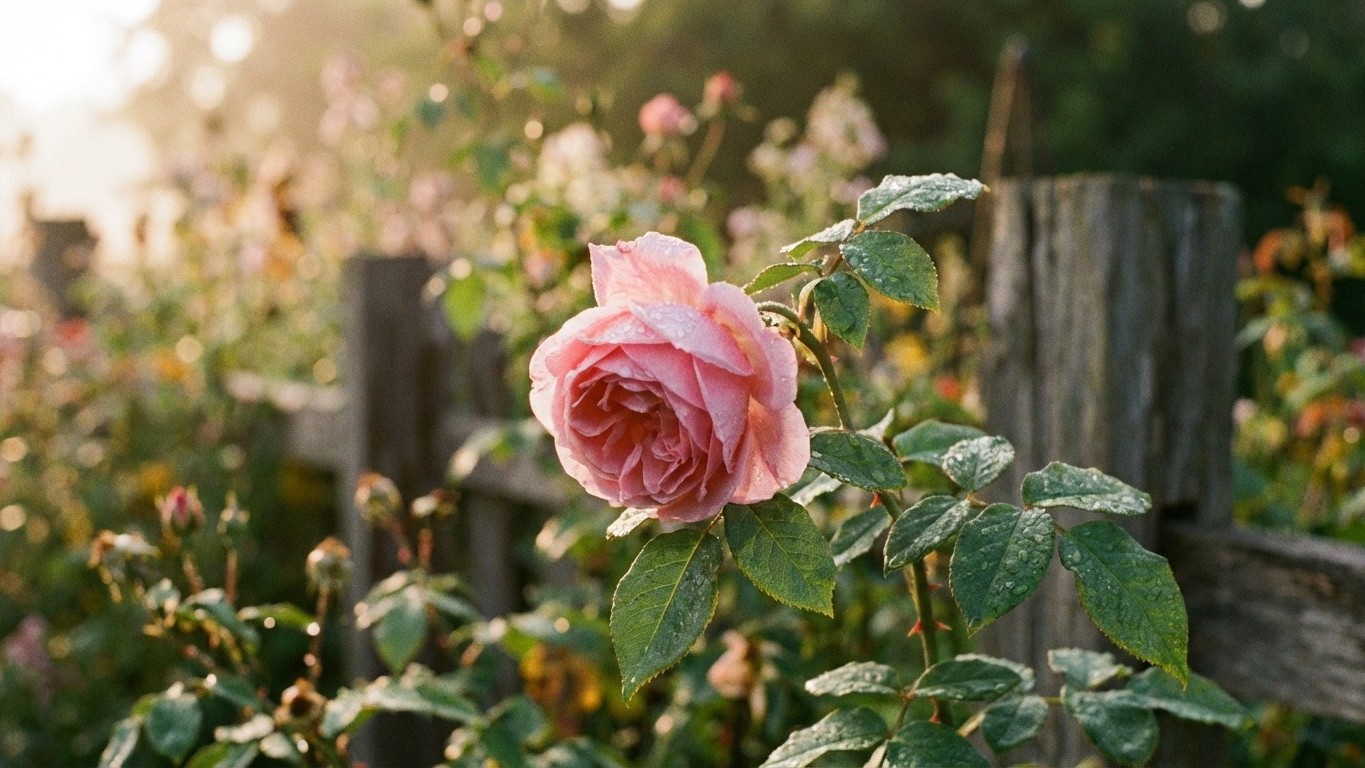

Most roses in Pennsylvania get their main pruning in the weeks around the last spring frost, when buds swell and before leaves open. Around Philadelphia that means late March to mid-April. In the northern tier and the Alleghenies, it means mid-April into early May. Roses that bloom once in early summer follow a different rule and wait until their flowers fade. For everything else about the plant, see growing roses in Pennsylvania.
When to prune roses in Pennsylvania
The calendar starts with frost. At the Philadelphia reference station, the last spring freeze at 32°F falls somewhere between March 29 and April 6, depending on how much risk you accept. That is a range of probabilities, and it describes the mildest corner of the state. The northern tier and the Alleghenies run two to four weeks later. The USDA Plant Hardiness Zone Map puts Pennsylvania anywhere from zone 5a to 7b, so a rose in Erie County and a rose in Bucks County are on different clocks.
What is the pruning window near Philadelphia?
Aim for late March to mid-April. By then the canes have come out of dormancy. Buds on the stems turn from tight and dark to plump and reddish, and some show a pinpoint of green. The plant is about to push growth, when a cut heals quickly and the plant puts its energy into the buds you leave. Forsythia in bloom is a handy local signal. When its yellow flowers open in your neighborhood, the roses are ready.
What about the northern tier and the Alleghenies?
Shift everything two to four weeks later, which puts the window at mid-April into early May. Snow can linger on shaded beds well into April at higher elevations, and a rose cut in a warm week in March has months of freezing nights ahead of it. The buds are a better guide than any date. Wait until they swell and the worst of the hard freezes have passed.
The fall side of the calendar matters too. The first 32°F freeze at the Philadelphia reference station arrives between November 5 and November 16. Do not do any hard pruning in autumn. A light trim to take off tall canes that might whip in winter wind is fine, but the real cut waits for spring. Protecting canes over winter is its own topic, covered in rose winter protection in Pennsylvania.
The date is not the same for every type of rose
Everything above applies to roses that flower on new wood. Those are hybrid teas, floribundas, grandifloras, most shrub roses and Knock Out roses. They produce new canes each spring and bloom on that fresh growth, so cutting hard in early spring does not cost them flowers.
Ramblers and once-blooming old garden roses are the exception. Gallicas, damasks, albas and most centifolias flower on wood grown the previous summer. Their buds are already set on last year’s canes by the time winter ends. Prune them in March and you cut off this year’s flowers along with the canes. The rule for these is simple: prune them right after they finish flowering, usually in late June or July in Pennsylvania. That gives the plant the rest of the summer to grow canes that will carry next year’s bloom.
Which rose falls into which group?
| Type of rose | Blooms on | When to prune |
|---|---|---|
| Hybrid teas, floribundas, grandifloras | New wood | Spring, as buds swell |
| Knock Out and other shrub roses that repeat | New wood | Spring, as buds swell |
| Climbers that repeat bloom | New growth on side shoots | Spring, with a light cut to the main canes |
| Ramblers | Old wood | Right after the single flush fades |
| Once-blooming old garden roses | Old wood | Right after bloom, early to mid summer |
Climbers sit between the two groups. In spring, remove dead wood and trim the side shoots back to a few buds. Leave the long main canes mostly alone, because those are the framework that carries the flowering shoots. If you are not sure what you have, wait until the first flush. A rose that blooms once and never again is almost always an old-wood type.
How far back to cut here
Start with what survived winter. In a cold part of the state, canes often die back from the tips, sometimes halfway down. Remove that dead wood first, because the cut belongs below the damage. Where winters are mild, you choose the height. Where they are harsh, the dieback chooses it for you. A hybrid tea in the southeast may be cut to 12 to 18 inches and one in the northern tier may end up shorter, because healthy wood only starts lower down.
How do you find where the live wood starts?
Cut a cane a bit at a time, working downward. Look at the center of the cut. White or pale cream pith means healthy tissue, so stop there. Brown or gray pith means keep going. Make each cut about a quarter inch above an outward-facing bud, angled at 45 degrees so water runs off the bud. Pointing the top bud outward opens the center of the plant to air and light.
What height should each type be cut to?
Knock Out roses are cut to about 12 inches. They are forgiving and will grow back fast, and a hard cut keeps them from turning into leggy, woody thickets. Hybrid teas and floribundas do best with three to five strong canes cut to 12 to 18 inches. Remove anything thinner than a pencil, along with canes that cross or rub. Leave a rose too tall and it blooms on thin, weak stems high above where you can enjoy it.
A tidy open vase shape is the goal. Wet leaves and crowded centers are where fungal trouble starts, which is covered in rose diseases in Pennsylvania. Clear out the middle and you will have fewer problems to deal with later.
What pruning too early costs in Pennsylvania
Pruning tells a rose to wake up. Cut in February or during a warm spell in early March, and the buds below each cut start pushing soft, new growth within days. Pennsylvania weather does not cooperate with that. A hard freeze in late March or April is normal even in the southeast, and in the north it can come into May. Tender new shoots have no protection, and the freeze kills them.
What does freeze damage look like?
The young red or green shoots wilt and go limp overnight. Within a day or two they turn dark brown or black and shrivel. Leaf tips look scorched and water-soaked. The canes below can look fine, which is why people often miss the problem and leave the damaged tips on the plant.
What should you do about it?
Do not panic. The plant still has dormant buds lower down, and the roots are untouched. Cut each damaged cane back to the first healthy bud as soon as the black tissue is obvious, using the same pith test as before. Skip fertilizer until you see new growth, because feeding a stressed plant pushes more tender tissue. Expect a delay of two to four weeks while the rose rebuilds. It will bloom later than usual that year, but it will bloom. If a cold snap is forecast right after you prune, cover the plant overnight with a bucket or blanket, and see winter protection for what to keep on hand.
Checking this against your own county
Pennsylvania covers a lot of ground, and the dates here are a starting point. Elevation moves the schedule, since every few hundred feet of climb brings later springs and colder nights. Distance from water matters as well. Areas near Lake Erie and the Delaware River warm later or earlier than their neighbors a few miles inland. A garden in a valley pocket can stay frosty long after a ridge nearby has thawed.
Your county office of Penn State Extension can tell you the local frost pattern and what has worked for growers nearby. Watch your own buds and compare them with what the office tells you, and you will have a date that fits your yard.
Common questions
Can I prune roses in the fall in Pennsylvania?
Only lightly. Trim tall canes that might whip in winter wind, and remove dead or diseased stems. Hard pruning in fall can stimulate growth that the first freeze will kill, and that freeze arrives between November 5 and November 16 at the Philadelphia reference station.
Is it too late to prune if my roses already have leaves?
No. Roses can be pruned after they leaf out, and the cut simply costs the plant some energy. The one exception is old-wood roses, which should wait until after bloom regardless.
Do I need to prune Knock Out roses every year?
Annual pruning is recommended, and it is easy. Cut them to about 12 inches in spring, remove dead wood, and thin any crowded stems. They are tolerant and will bloom even if you are late.
What if I do not know what kind of rose I have?
Wait for it to bloom. A rose that flowers once in early summer is an old-wood type and should be pruned right after bloom. A rose that flowers repeatedly from early summer to frost generally blooms on new wood and can usually be pruned in spring.