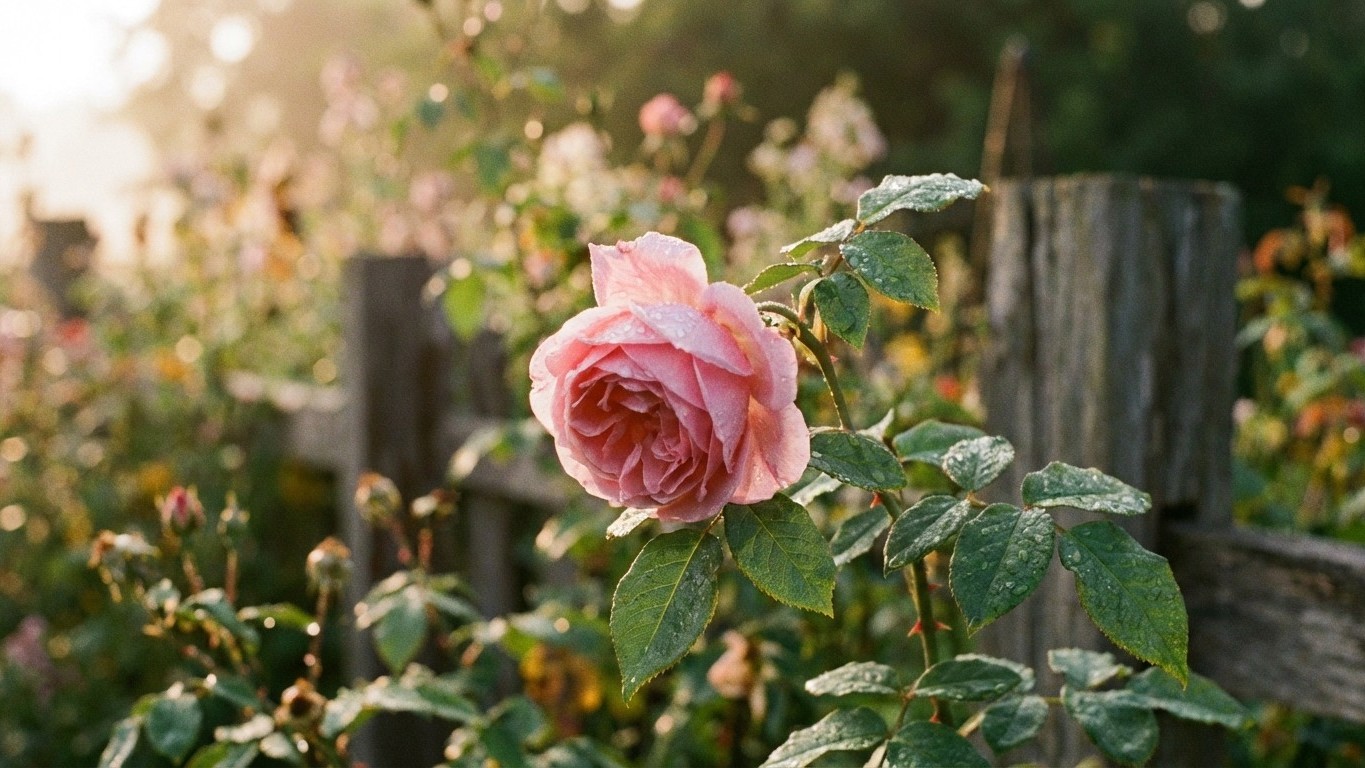

Rugosa roses, the Canadian-bred Explorer and Parkland series, and a few tough own-root shrubs get through a Saskatchewan winter with little fuss. Most hybrid teas, floribundas and many climbers sold in the same garden centers do not. The gap comes down to winter hardiness and how the plant was propagated. For planting and general care, start with growing roses in Saskatchewan.
Which roses survive a Saskatchewan winter
Saskatoon sits in Canadian hardiness zone 3a on Natural Resources Canada’s plant hardiness map. That is a Canadian zone, not a USDA zone. The Canadian system is built on seven climate variables, the USDA system on one, and Natural Resources Canada says there are no simple conversions between them. Its own example: Canadian zone 4a overlaps nine USDA zones. So a tag that says “zone 4” tells you nothing until you know which system printed it.
Which types clear zone 3a?
Rugosas sit at the cold end of the range. They have thick, bristly canes, wrinkled leaves and a habit of flowering on wood that survives the winter. The Explorer series, bred in Canada for exactly this climate, and the Parkland series from the Morden research station in Manitoba, follow close behind. Most of these shrubs keep their canes to the snow line or higher. The rest of the plant comes back from the base without any help.
Hybrid teas are a different story. They were bred for milder winters, and in Canadian zone 3a they need real protection just to stay alive. The canes die back hard, and the grafted union (the knuckle where the named variety joins the rootstock) is the first thing to fail. Floribundas and grandifloras behave much the same way.
How long is the frost-free window?
At the Saskatoon station, the mean last spring frost falls on May 18 and the mean first fall frost on September 18, which leaves roughly four months between them. Both are midpoints. In one year out of two the last spring frost comes later than May 18, and in one year out of two the first fall frost comes later than September 18. Northern and upland districts run weeks behind Saskatoon, so treat both dates as the middle of a window and not a safe planting or protection date. (Canadian normals also cover a different stretch of years than the US figures used elsewhere on this site, so don’t line the two up.)
For roses, the window matters at both ends. A late frost burns tender new shoots on roses that leaf out early. An early one catches canes that haven’t hardened off, and soft, green wood kills far more easily than wood that has turned brown and firm.
Named roses that hold up here
Rose catalogs make hardiness sound like a single trait. Names matter more. The roses below are sold across the prairies and have a long record on cold ground. The table compares what each one typically does over a Saskatchewan winter.
| Rose | Type | What it survives |
|---|---|---|
| Therese Bugnet | Hybrid rugosa shrub | Prairie winters with little or no dieback |
| Hansa | Rugosa shrub | Hard cold and wind, canes usually come through intact |
| William Baffin | Explorer climber | Most winters, with some tip dieback on exposed canes |
| Morden Blush | Parkland shrub | Winters on the open prairie, regrows from low on the plant |
| Knock Out | Repeat-blooming shrub | Survives as a root system and regrows, but the canes often die back |
Therese Bugnet was bred on the Canadian prairies by Georges Bugnet in Alberta, and it shows. It makes a tall, upright shrub with fragrant, double pink blooms and reddish canes. It is among the easier roses to keep alive in zone 3a conditions. It blooms heavily in early summer and then lightly into fall.
Hansa is a rugosa with deep magenta, clove-scented double flowers and orange hips in fall. It tolerates cold, wind and poor soil. The catch is that it can sucker, sending up new shoots a few feet from the parent, so give it room or plant it where a mower can handle the edges. Rugosa foliage also resists black spot better than most roses, which is worth knowing before you read up on rose diseases.
William Baffin, from the Explorer series, is one of the few climbers that makes sense here. Tie it to a fence or trellis and it will cover several feet each season. Expect some tip dieback in an exposed spot, but the lower canes usually carry enough wood to flower.
Knock Out sits in a gray area. Gardeners across the continent buy it because it blooms from early summer until frost and shrugs off black spot. In Saskatchewan, though, it was not bred for the cold, and in a hard winter it often dies back to the snow line or lower. Because it flowers on new growth, that dieback costs you size and not blooms, and a plant on its own roots will regrow true. If you plant one, accept that you are growing a shrub that starts over every spring, and cut out dead canes in spring once new buds swell so you can see what lived.
Sold here, but not for this zone
Garden centers in the province stock roses nationally. The same truckloads that serve warmer regions end up on the same benches in spring, with blooms already open and a price tag next to them. A rose on the shelf in Regina or Saskatoon may not have been vetted for Canadian zone 3a. Some are shipped simply because they sell.
Several kinds show up every year and rarely survive without work. Hybrid teas are the largest group, with long-stemmed blooms and grafted plants that lose their top growth in a normal winter. Floribundas and grandifloras go the same way. Repeat-blooming climbers such as New Dawn are rated for milder winters than this one, and their long canes die back or die outright if left standing on a trellis. Many English-style shrub roses are marginal too, because the hardiest of the group handle a cold snap and the rest don’t handle a Saskatchewan January.
The weak point in all of them is the same. Whatever lives above the snow line is exposed to wind and temperature swings, and whatever lives below it, under snow, is far better insulated. A rose that has to be laid down, covered or hilled with soil to survive is a project, and it is a project every fall for as long as you keep the plant. Winter protection for roses covers the methods. The honest question to ask before buying is whether you want that job, because a plant skipped one year is often a plant lost.
If you already own one of these, wait before judging it. Spring dieback can look total when the plant is simply slow. Scratch the bark of a cane with a thumbnail. Green underneath means the cane is alive. Brown and dry means it is dead. Cut dead wood back until you reach green, and if there is none, look for buds low on the plant or at the base.
That leaves one decision for plants that clearly lost their top growth. If it came back true to its name, keep it. If it came back as something else, you are now growing the rootstock, and replacing it with an own-root rose saves you repeating the same loss next winter.
What to check on the label before buying
Three things on a rose label say a lot about how a plant will fare: the grade, whether it is grafted or own-root, and the hardiness zone printed on the tag.
Grade applies mainly to bare-root roses sold in spring. A No. 1 grade is the heaviest, with more canes and thicker ones. Grades below it are smaller and slower to establish, and in a short northern season a weak start matters. A potted rose has no grade, so judge it by its canes. Look for several firm, green canes of roughly pencil thickness and avoid plants with one spindly stem or canes already black at the tips.
Own-root versus grafted becomes a key question as winters get colder. A grafted rose has a named variety joined to a different, vigorous rootstock at a visible knuckle near the soil. If the cold kills the top, the plant can regrow from the rootstock and give you something you didn’t buy. An own-root rose is the variety all the way down, so when the canes die back, whatever regrows from the base is still the rose you chose. At the cold end of the range, that is the difference between a plant that recovers and one that has to be replaced. Look for “own-root” or “grown on its own roots” on the tag, and choose own-root plants whenever the nursery offers a choice.
Finally, read the zone number and find out which system printed it. A tag written for the US market gives a USDA zone, which does not carry over to Canadian zone 3a. A tag that gives a Canadian zone is more useful, and a tag that names the series, such as Explorer or Parkland, tells you the plant was bred for prairie cold.
Checking this against your own district
A single reference city cannot speak for a province this size. Northern districts, river valleys and open upland farms all have different winters, and a south-facing yard with a windbreak can grow roses a neighboring quarter section cannot. The Government of Saskatchewan’s agriculture resources for farmers and ranchers can point you to regional offices and agrologists. They focus on commercial agriculture, so a local nursery or horticultural society may know better what has overwintered in your district. Ask which roses have come through the last few winters near you before spending money, and bring a photo of your planting site.
Common questions
Is Knock Out hardy in Saskatchewan?
It survives, but it often dies back hard. Expect the canes to die to the snow line or lower in many winters, with regrowth from the base. It blooms on new wood, so it still flowers, though the plant stays smaller than it would in a milder climate.
Can I grow hybrid teas here?
Yes, with full protection every fall, and many gardeners treat them as short-lived. A hybrid tea is a poor fit for Canadian zone 3a. If you want long-stemmed blooms, plant one or two in a sheltered spot and put the main rose bed in rugosas and Explorer shrubs.
Will Hansa take over my yard?
It can spread by suckers, sending up new shoots from the roots. Give it room, plant it where you can mow around it, or put it against a barrier such as a driveway. It is a good choice for a hedge or a windbreak, where spreading helps.
Does the zone on a plant tag apply to Saskatchewan?
Only if the tag uses the Canadian system. A USDA zone number does not convert to a Canadian zone, because the two systems measure different things. When the tag leaves the system unclear, check the variety name against Explorer and Parkland lists or ask the nursery.