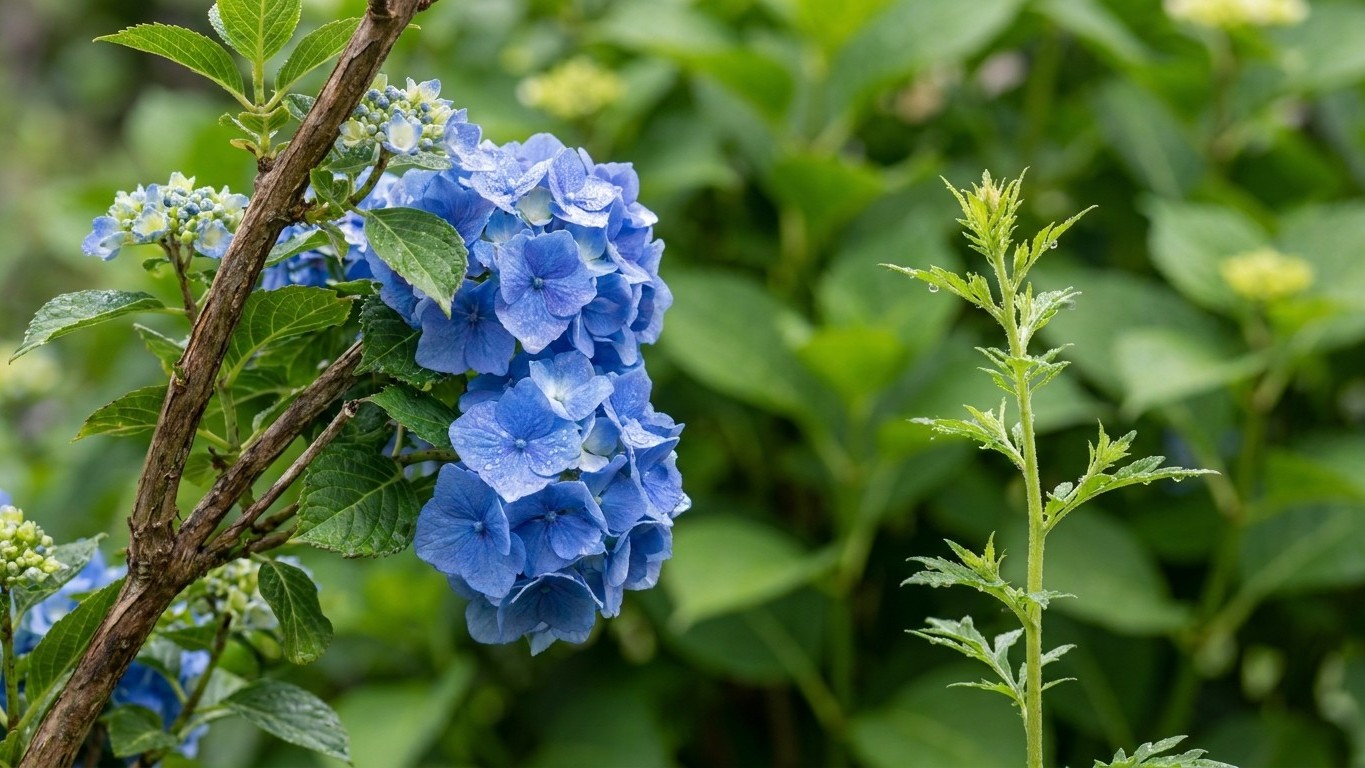

Hydrangeas that bloom on new wood get through Utah winters reliably. That means smooth hydrangeas such as Annabelle and Incrediball, and panicle hydrangeas such as Limelight, Quick Fire and Bobo. Bigleaf and oakleaf types set flower buds the summer before, and a hard winter can wipe those buds out. For soil prep, watering and care, see the guide to growing hydrangeas in Utah. Here the question is narrower: which ones make it.
What this comes down to in Utah

At Salt Lake City, the reference station for the frost numbers here, the last spring freeze falls between April 12 and April 29, and the first fall freeze between October 18 and October 29. Those dates come from the 30 to 70 percent probability band for a 32F freeze in the NOAA NCEI 1991-2020 Climate Normals, and they leave about six months for a hydrangea to leaf out, flower and harden off.
Salt Lake sits in a relatively mild valley, so treat these dates as a rough guide only. Most of Utah is higher and colder, and southern Utah is warmer. The USDA Plant Hardiness Zone Map, which rates a place only by its average annual extreme minimum temperature, runs from 4a to 9a across the state. That is a wide spread, and it is why the choice between new-wood and old-wood bloomers matters more here than any single planting date.
Bigleaf and oakleaf types, such as Endless Summer and Snow Queen (described below), rely on old wood, so they need a winter mild enough to spare buds formed the summer before.
Quick Fire
An early-blooming panicle hydrangea. It opens white, then ages to pink and red. It blooms on new wood, so a cold winter only delays it, and the early start leaves a long margin before the fall freeze.
Annabelle
A smooth hydrangea with big white round flower heads on new wood. It dies back in hard winters and still flowers. The heavy heads flop after rain unless the stems are sturdy.
Incrediball
A smooth hydrangea with white blooms on new wood. It has thicker stems that hold the heads upright. It needs the same short season as Annabelle and handles cold the same way.
Bobo
A compact panicle hydrangea that stays low enough for small yards and containers. White flowers on new wood open in midsummer and age toward pink. A hard winter rarely stops it.
Limelight
A panicle hydrangea with lime-green cones that turn white, then pink. It blooms on new wood from midsummer into fall. It wants a full season, but the Salt Lake window gives it plenty.
Endless Summer
A bigleaf hydrangea, blue in acidic soil and pink in alkaline soil. It blooms on both old and new wood, so a freeze that kills the old-wood buds still leaves a later, lighter flush. It carries more risk in cold zones than any plant above.
Snow Queen
An oakleaf hydrangea with white cones that age to pink and leaves that turn bronze-red in fall. It blooms only on old wood. It does well where winters are mild and can fail to bloom in the colder parts of the state.
Working it out for your own garden
How do you test a cultivar against your frost window?
Hydrangeas are sold as potted shrubs, so the planting date is a matter of when the soil and nights are safe. Take the last spring freeze at Salt Lake City, April 12 to April 29, and add two to three weeks of margin for cold nights. That puts planting at roughly late April to the third week of May.
Now count forward. Suppose a cultivar needs a stretch of leafy growth before its first flowers. Planted in that window, it opens somewhere between late June and early August. The first fall freeze is October 18 to October 29, so Quick Fire has a margin of several weeks. It blooms with room to spare.
Where does a later cultivar fall short?
Take Limelight, which opens in midsummer and keeps going into fall. At Salt Lake City it still clears the fall freeze comfortably. In a high valley where spring arrives late and the first freeze comes weeks earlier, the same sum shrinks. A shrub planted in late May may be only starting to color when frost hits. The gap between planting and the first freeze is what shows whether a garden can carry a late bloomer.
Old-wood types fail differently, and no planting date fixes it. Endless Summer and Snow Queen carry next year’s flower buds through winter on last year’s stems. A cold snap below what those buds tolerate kills them, and the shrub leafs out normally but never flowers.
How do you tell if the buds survived winter?
Wait until the shrub leafs out before pruning. Scratch a bit of bark with a thumbnail: green underneath means the stem is alive. Then look at the buds along it. Plump buds that swell in spring will flower. Dry, shriveled or brown ones will not. If the stems are green but the buds are dead, leave the stems alone, because they will leaf out and some may set a few late flowers.
What changes across the state
A state with zones from 4a to 9a is several climates, and elevation does most of the work. Air cools as you climb, so mountain towns and high benches get later springs, earlier falls and colder winters than the Salt Lake valley floor. Where the freeze window narrows, a hydrangea that blooms in midsummer on new wood is safe, and a late bloomer gets risky.
Shape of the land matters too. Cold air drains downhill on calm nights and pools in low spots, so a basin or valley floor can freeze when a slope just above it stays clear. Along the Wasatch Front, the Great Salt Lake takes some of the edge off the coldest nights. Farther from it, in the high valleys and basins of the north and east, winters bite harder and the new-wood types are the safest choice.
Southern Utah runs the other way. Winters are milder, so old-wood hydrangeas have a better chance of keeping their buds. The trouble there is heat and strong sun, which scorch leaves, and the shrubs need afternoon shade to look good. Much of Utah’s soil is alkaline, which pushes bigleaf blooms toward pink. Gardeners moving within the state should treat their own spot as the reference, not Salt Lake City.
The mistakes this state punishes

Planting into cold soil after a warm spell is the classic one. A string of mild days in late March or early April tempts people to plant, and then a freeze arrives inside the April 12 to April 29 window. New growth and roots stall in cold ground. Wait until the window has passed and nights are safe, or be ready to cover the shrub on freezing nights.
Choosing an old-wood hydrangea for a cold site is the next. Bigleaf and oakleaf plants look great at the nursery, may bloom once, then can fail to flower after a hard winter. Where the zone leans toward the cold end of the state’s range, pick a smooth or panicle type and skip the gamble. A gardener who loves the look of mophead blooms can still try one, but should not plant it as the main show.
Pruning old-wood types in fall or early spring removes the buds that would have flowered. Wait until the shrub leafs out, then cut only what is plainly dead. New-wood types can be pruned in late winter or early spring without losing blooms.
The last is trusting a single date. A frost range is a probability band, so a freeze after the window closes is not a surprise. Watch the forecast for the first week or two after planting. A sheet or burlap over the shrub for one night costs nothing.
Checking this against your county
A state-wide figure is a starting point. Your county’s elevation, slope and soil can shift the dates and the winter lows a good deal. Your county office of Utah State University Extension can tell you the local frost pattern and which hydrangeas have held up in nearby yards. They can also advise on soil, watering and care for your area.
Common questions
Can bigleaf hydrangeas survive a Utah winter?
The plant often does, since hardy cultivars are available for cold climates. The flowers are what fail. Buds on old wood can die in a hard winter, leaving a leafy shrub with no blooms. Rebloomers like Endless Summer give a second chance on new wood.
Do panicle hydrangeas need winter protection?
Established panicles such as Limelight and Quick Fire rarely do, because they bloom on new wood. A layer of mulch over the roots helps young plants in their first winter, and a freeze after planting calls for a cover on the night itself.
Why did my hydrangea leaf out but not bloom?
Usually the buds were killed by winter cold or removed by pruning. This happens on bigleaf and oakleaf types, which flower on old wood. A late spring freeze can also nip buds that were just opening. New-wood types rarely have this problem.
Which hydrangea is safest in a cold mountain town?
A smooth hydrangea such as Annabelle or Incrediball, or an early panicle such as Quick Fire. All bloom on new wood and flower early enough to beat a short season.