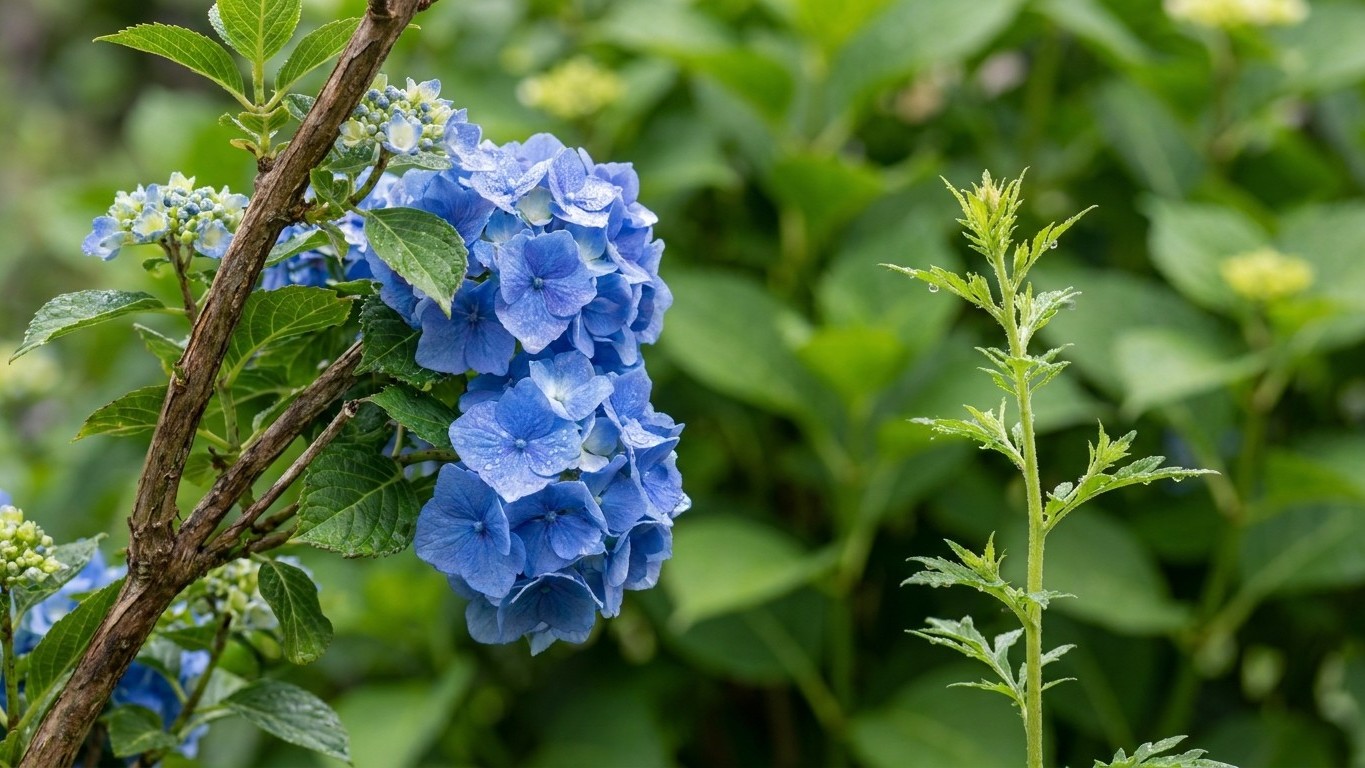

Most hydrangeas that survive a Utah winter rely on mulch, water and a little shelter. Bigleaf hydrangeas need the most protection, because their flower buds form the summer before and sit exposed on the stems all winter. Panicle and smooth hydrangeas bloom on wood grown the same season and shrug off most cold. What follows covers when to cover, what to cover with, and how Utah’s dry air, temperature swings and elevation change the job.
What this comes down to in Utah

Winter protection is timed around the first fall freeze and the last spring freeze. At Salt Lake City, the reference station for these dates, the first 32°F freeze typically arrives between October 18 and October 29, and the last one between April 12 and April 29. Cover goes on after the leaves drop and the soil cools, and it comes off in stages as the spring range approaches.
Salt Lake sits in a mild valley. Most of Utah is higher and colder, and southern Utah is warmer, so treat those dates as a starting point for your own yard. The USDA Plant Hardiness Zone Map (the system built on a single variable, the average annual extreme minimum temperature) places Utah anywhere from zone 4a to zone 9a. A gardener in a high mountain valley and one in the far southwest are working with very different winters.
Which hydrangeas need winter protection?
The answer depends on where the plant sets its flower buds. Bigleaf hydrangeas (Hydrangea macrophylla) bloom on old wood, meaning the buds ride through winter on last year’s stems. If a hard freeze kills those stems or buds, the plant leafs out green and healthy and never flowers. Oakleaf hydrangeas also bloom on old wood, though they tolerate cold better than bigleaf types.
Panicle hydrangeas (H. paniculata) and smooth hydrangeas (H. arborescens) bloom on new wood. Their stems can freeze back nearly to the ground and the plant still flowers that summer. These two groups need a layer of mulch and a place out of the worst wind, and little else. Reblooming bigleaf types flower on both old and new wood, which softens the loss but does not remove it.
Why does a dry Utah winter hurt hydrangeas?
Utah winters are dry, with long stretches of sun and wind and often no snow on the ground. Deciduous shrubs still lose water through their stems and buds on those days, and roots sitting in dry soil cannot replace it. Bare stems on a sunny, windy day dry out faster than most people expect.
A blanket of snow is good insulation for a hydrangea, and Utah does not always deliver it on schedule. A warm afternoon followed by a hard night also heaves shallow roots and cracks bark on young stems. Water deeply before the ground freezes. Then water again every few weeks during dry, snowless spells whenever the soil is not frozen. A slow soak at midday is enough.
Working it out for your own garden
A fixed calendar date will not hold up from one valley to the next, or from a mild winter to a brutal one. A short routine will. Check the plant type, compare it with your site, and set the timing by the reference dates and what your own plants are doing.
How do you decide whether your hydrangea needs protection?
Start with the bloom wood. If the plant tag or nursery listing says it blooms on old wood, it is the one to protect. If it blooms on new wood, mulch and water cover it.
Then compare the plant’s lowest rated hardiness zone with your USDA zone. A plant rated to the same zone you garden in is marginal, so check with your local extension office about protecting it. A plant rated a full zone colder than yours will usually manage with mulch alone. Take a bigleaf hydrangea planted in a cold garden: it gets a cage and cover every year. A panicle hydrangea in that same garden needs only a layer of mulch over the roots. If you do not know your zone, your county extension office can tell you in a phone call.
Timing follows the plant. In the Salt Lake City valley, the first freeze range of October 18 to October 29 is the signal to start watching. Wait until the leaves have dropped and the soil has begun to cool, which usually lands in November. At higher elevations, where fall freezes come earlier, shift all of this earlier. Build a wire cage around the shrub, fill it loosely with shredded leaves or straw, and wrap burlap around the outside to block wind. Do not pack the material tight. Air pockets insulate and tight packing holds water.
In spring, uncover gradually as the last-freeze range of April 12 to April 29 approaches. Open the burlap first, then pull some of the fill, then remove the cage once nights stay mild. Keep a sheet or burlap handy for a freeze after the buds swell.
How do you tell winter damage from a dead plant?
Do not judge a hydrangea by how it looks in March. Hydrangeas leaf out late, often well after neighboring shrubs, and stems that look dead may still be alive. Scratch a small patch of bark with a fingernail. Green underneath means the stem is alive. Brown and dry means that section is dead.
Wait until buds open and leaves start to show, then cut dead stems back to the first healthy pair of buds. If the whole top is dead but the base shoots new growth, a bigleaf will likely skip blooming that year, while a panicle or smooth hydrangea will bloom on the new stems.
Gnawing at the base is a different problem. Clean, angled cuts on stems point to rabbits. Bark stripped around the base, often under mulch or snow, points to voles. Neither shows up as dieback from cold, so look at the base before blaming the weather.
What changes across the state
Utah is not one climate. Elevation does most of the work. Valley floors along the Wasatch Front are the mildest places most people garden. Mountain valleys, the higher benches and the high plateaus run colder, with earlier fall freezes and later spring ones, so the protection season stretches at both ends. A gardener at higher elevation leaves cover on longer in spring and puts it on earlier in fall than the Salt Lake City dates suggest.
Cold air also settles. On clear, calm nights it drains downhill and pools in low spots, so a yard at the bottom of a slope can freeze while a neighbor higher up does not. The Great Salt Lake takes the edge off the coldest nights close to its shores. Farther from the water, that effect fades and swings between day and night get larger.
Northern valleys such as Cache Valley and the eastern basins get colder winters, often with more reliable snow cover, and snow on the ground is real protection for the crown and roots. In southern Utah, winters are milder and the zone is higher. Winter there threatens hydrangeas less through cold than through sun and dryness, so the emphasis shifts to mulch, deep winter watering and afternoon shade rather than heavy cages.
Site matters as much as region. A spot near a south or west wall can run warmer than open ground, which helps in winter but pushes buds awake too early in a warm spell. An east-facing bed shaded from afternoon sun in winter keeps buds dormant longer, which is often the safer choice.
The mistakes this state punishes

Utah’s weather swings hard in late winter and early spring, and many hydrangea losses trace back to that. A warm stretch in March wakes the buds, and the freeze that follows kills them. Pulling cover early because the weather feels like spring invites this. Take protection off in stages and leave the cage frame standing until the last-freeze range has passed. At Salt Lake City, that range runs April 12 to April 29, and it runs later at higher elevations.
Mulching too early is another common error. Cover applied while the weather is still mild gives voles a warm place to nest and chew bark at the base. Wait until the leaves have dropped and the first hard freezes have come. Plastic wrap does more harm than good. It traps moisture and heats up on sunny winter afternoons, which can push buds into growth. Burlap and loose leaves breathe.
Pruning a bigleaf hydrangea in fall removes next summer’s flower buds. Leave the stems alone until you can see which ones are alive. Late fertilizing is a quieter problem, because it pushes soft new growth that the first hard freeze kills.
Skipping winter water is a mistake dry winters punish hard. A shrub that went into fall dry and sat through weeks without snow can lose stems that cold alone would not have killed. Planting a bigleaf in an open, windy spot and hoping it adapts is another big one. Put old-wood types where a fence or building breaks the wind, and keep tougher panicle types for the exposed beds.
Checking this against your county
A single-station figure is a starting point. The dates above come from Salt Lake City, and your yard may differ by a week or more in either direction, depending on elevation and the lay of the land. Your county office of Utah State University Extension can tell you local frost timing, which hydrangeas have done well in your area and when to expect your first freeze.
For the basics of planting, soil and care, see growing hydrangeas in Utah.
Common questions
Should I cut back hydrangeas in fall?
Leave bigleaf and oakleaf hydrangeas alone, because the stems hold next summer’s buds. Panicle and smooth hydrangeas can be cut back in late winter or early spring, before new growth starts. For any type, wait until leaves appear to see which stems survived, then remove only the dead ones.
Can I wrap hydrangeas in plastic for winter?
Plastic holds moisture against the stems and heats up in winter sun, which can wake buds too early or cause rot. Use burlap around a wire cage filled loosely with leaves or straw. Both let air move.
Do potted hydrangeas need different protection?
Yes. Roots in a container freeze much harder than roots in the ground. Move pots to an unheated garage or a sheltered spot against the house once the leaves drop. Water lightly every few weeks so the root ball does not dry out, and bring pots back out when nights ease in spring.
When do I take off the winter cover?
Do it gradually as spring arrives. At Salt Lake City the last 32°F freeze typically falls between April 12 and April 29, and it falls later at higher elevations. Open the wrap first, then remove the fill, and keep a sheet or burlap handy for a freeze after buds swell.