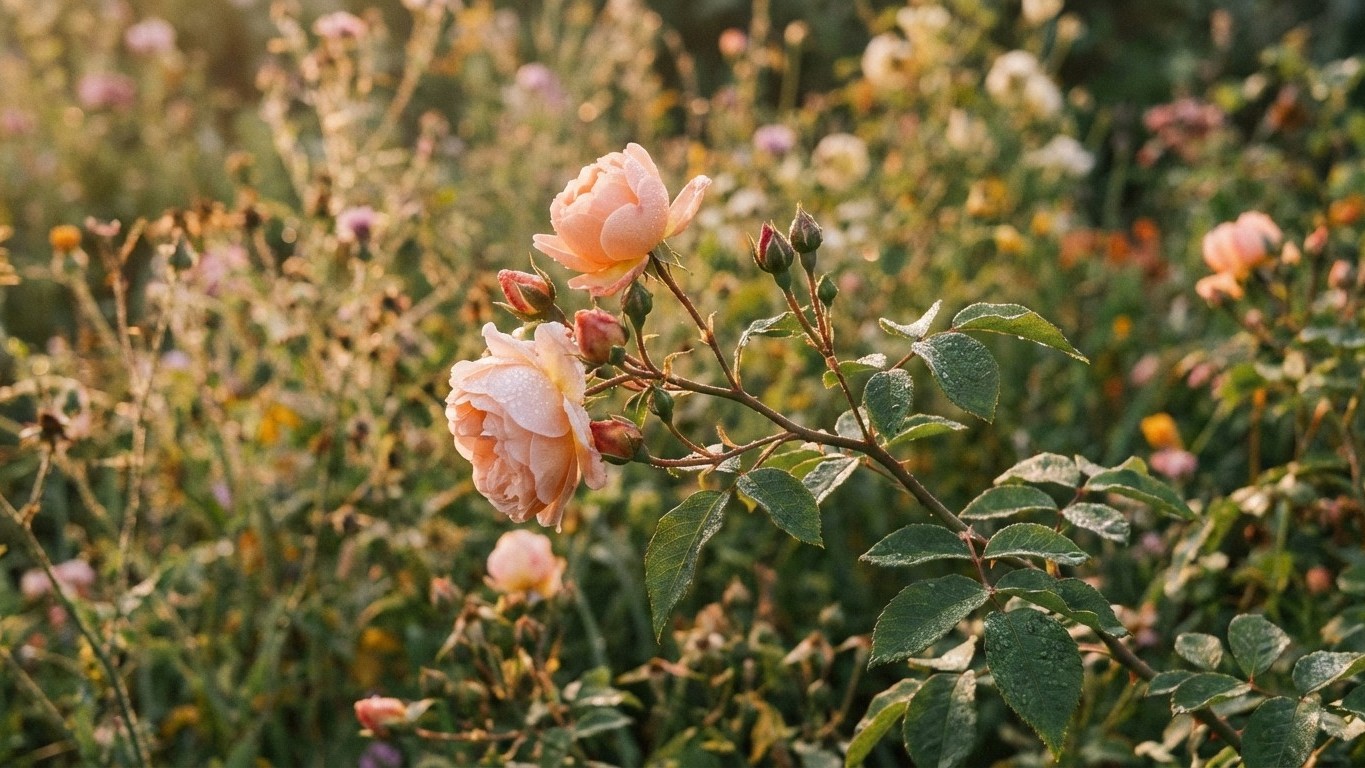

Roses that hold up in South Carolina are mostly the tough shrub and climber types: Knock Out, rugosas such as Hansa and Therese Bugnet, and the climber New Dawn. Winter cold rarely kills them here, because each is hardy to zone 5 or colder, well below anything in the state. The roses that struggle are the fussier ones on the same garden-center shelf, chiefly grafted hybrid teas. They survive the cold but ask for more care than the tag suggests. For the wider picture, start with our guide to growing roses in South Carolina.
Which roses survive a South Carolina winter
The USDA Plant Hardiness Zone Map rates ground by one number, the average annual extreme minimum temperature, and it places South Carolina between zone 7a and zone 9b. The Upstate sits at the cold end of that range and the coast at the warm end. That is mild territory for roses. Rugosas, the Canadian-bred Explorer series, most modern shrub roses, old garden roses and the big climbers are generally hardy in zone 7a.
Hybrid teas, grandifloras and many floribundas are the exception. They generally need winter help in colder zones. In zones 7a to 9b they usually live through the season, but their canes can still burn back in a hard cold snap, and the Upstate’s cold pockets are where that happens.
The bigger risk is timing. Roses that leaf out early get caught by a late freeze, and the plant loses its first flush of growth. NOAA’s 1991-2020 climate normals for the Charleston airport station put the last spring freeze somewhere between February 28 and March 17 in the middle band of years (the 30 to 70 percent probability range). The first fall freeze lands between November 20 and December 5. Those are windows, and any single year can fall outside them.
Charleston’s peninsula runs milder than the airport station. Upstate South Carolina runs several weeks tighter at both ends, so spring growth there is exposed longer and fall growth stops sooner. A rose that is perfectly safe in Beaufort can lose its early buds in Greenville.
Do hybrid tea roses need winter protection in South Carolina?
Most years, in most of the state, the answer is a light yes in the Upstate and close to no on the coast. A hybrid tea in Charleston or Beaufort rarely needs more than a pass with the pruners in late winter. In the Piedmont and foothills, a mound of mulch over the base of the plant is cheap insurance. The details of when and how are covered in our page on winter protection for roses.
Named roses that hold up here
Four names cover most of what a South Carolina gardener needs, and each one answers a different problem. All of them are widely sold, so you can find them at nurseries and through mail-order catalogs without hunting.
Are Knock Out roses really trouble-free here?
Knock Out is a go-to recommendation in the Southeast for good reason. It takes the heat, blooms from spring until frost, and shrugs off black spot better than most other roses sold. Winter is no issue, since it is hardy well past the state’s coldest zone. Where it falls short is rose rosette disease, a virus spread by a microscopic mite that has hit Knock Out plantings across the Southeast hard. The giveaway is distorted, crowded, bright red growth that looks like a witches’ broom, with unusually thick and thorny canes. Nothing cures it, and the standard advice is to pull the whole plant, roots included, and bag it rather than compost it.
Do Hansa, Therese Bugnet and New Dawn take South Carolina conditions?
Hansa and Therese Bugnet are rugosa types, bred and selected for cold far beyond anything South Carolina produces. Hansa is a dense, thorny shrub with fragrant double magenta flowers and bright hips in fall. Therese Bugnet is taller and more open, with pale pink blooms. Rugosas are known for tolerating sandy soil and salt spray, which is useful on the coast. They do best where summers are cooler, so expect them to look a little tired by late summer in the Midlands and Low Country. In the Upstate they are more comfortable.
New Dawn is a pale pink climber and a different story. It is vigorous, repeat-blooming, handles partial shade better than most roses, and has a long track record in Southern gardens. It is a good choice for a fence, an arbor or the corner of a porch. Give it a sturdy support, because one plant can fill a large space in a few seasons.
If you want a fifth name, Old Blush, an old China rose, has been grown in Southern gardens for generations and tolerates heat, humidity and neglect without complaint. Its flowers are modest, but it keeps coming back.
Sold here, but not for this zone
Garden centers stock roses on a national schedule. A rose shows up on the shelf in March because March is planting time somewhere, and the tag usually cannot tell you whether it suits Spartanburg or Hilton Head. Several kinds on the shelf here come through the winter only with some work.
Which store-bought roses need extra work in South Carolina?
Grafted hybrid teas and grandifloras top the list. Classics such as Peace and Mister Lincoln are sold across the country, and they generally live through zone 7 winters. They rarely stay healthy through the humid summers without a regular spray program for black spot and powdery mildew. If you are not willing to spray, skip them. Our page on Rose Diseases in South Carolina: What the Climate Here Actually Brings explains why the summers are the real test.
The Explorer series and other roses bred for Canadian winters are sold here too, and they are bred for cold more than for an August in the Midlands. They survive winter easily but can struggle with heat and humidity. They are worth trying in the Upstate, and a gamble nearer the coast.
Then there are the boxed and potted roses forced into leaf in a greenhouse and put out in early spring. They look ready to bloom, but soft, early growth is exactly what a late freeze burns. If a freeze is forecast after a rose has leafed out, cover the plant overnight with a frost cloth or an old sheet, and take the cover off in the morning.
What to check on the label before buying
Three things on the tag tell you more than the photo does. The first is grade. Bare-root roses are graded, and the top grade has thicker, more numerous canes and a bigger root system. A No. 2 plant can still grow into a fine rose, but it takes longer to catch up. Potted roses carry no standard grade, so judge them by cane count and by leaves that look clean and healthy rather than spotted.
The second is whether the rose is grafted or own-root. A grafted rose is a named variety joined to the roots of a different, tougher rose. Look for a knobby swelling just above the soil line, called the graft union. An own-root rose grows on its own roots all the way down, and the tag will usually say so. This matters more the colder it gets, because a hard freeze can kill the top of a plant to the ground. If an own-root rose does that, it regrows as the variety you bought. If a grafted rose does that, the shoots that return can come from the rootstock, which is a different rose entirely, usually a thorny one with small, plain flowers. In South Carolina’s mild zones the problem is uncommon on the coast and real in the Upstate, so look for “own root” on the tag if you garden above the Midlands.
The third is the zone rating and the disease note on the tag. Check that the rose is rated for your local hardiness zone. Then look for a note on black spot resistance, since that is the trouble you will actually spend time on.
Checking this against your own county
South Carolina covers a wide climate range, from the mountains of Oconee County to the barrier islands. A rose that is easy in Charleston can be a different plant in Greenville. Clemson Extension keeps an office in each county, and the agents there know which roses do well locally, which diseases are active, and which nurseries stock plants suited to your area. Call or visit your county’s extension office before you buy more than a couple of plants, especially if you live near the border between two zones.
Common questions
What hardiness zone is South Carolina for roses?
The USDA Plant Hardiness Zone Map runs from zone 7a to zone 9b across the state, with the Upstate at the cold end and the coast at the warm end. Because that is a range, check the zone for your own ZIP code before you buy.
Are Knock Out roses disease-free in South Carolina?
No. They resist black spot well, but they can still get rose rosette disease, which has no cure. If you see crowded, red, distorted growth, remove the whole plant, roots included.
Can I grow hybrid tea roses in South Carolina?
Yes, and they live through the winters in most of the state. They demand a spray program for black spot and mildew in the humid months, so they suit gardeners who want to do that work.
Will a rose bought at a big-box store in early spring survive?
Often it will. The risk is a potted rose already in leaf when a freeze arrives. Cover it overnight when frost is forecast, and check the cane with a scratch test if it looks damaged.