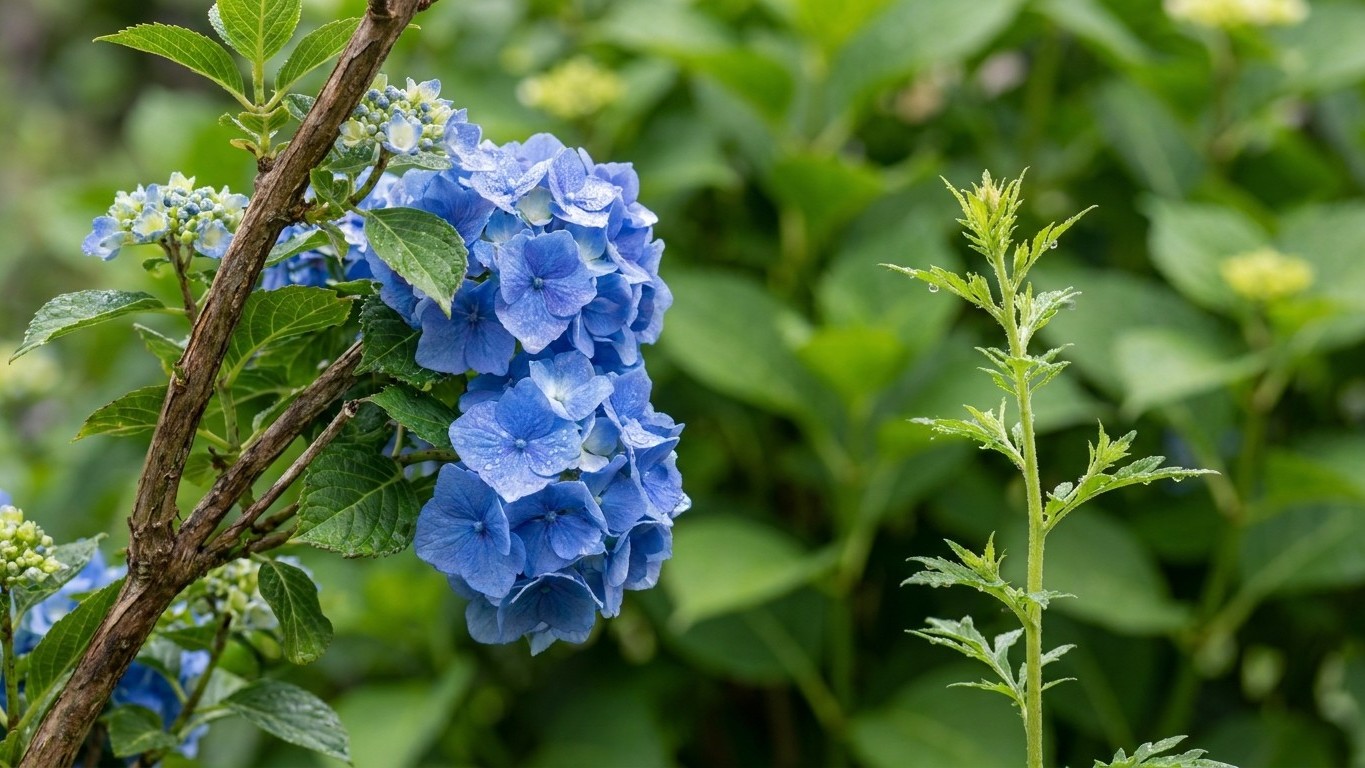

Pink hydrangeas in South Carolina usually mean the plant can’t take up enough aluminum from the soil. Acidic soil frees aluminum for the roots, and the flowers turn blue. Near-neutral or alkaline soil, or heavy phosphorus, locks it up, and the same plant blooms pink. A pink bigleaf can be nudged toward blue with soil work that starts in early spring. A white one can’t be changed at all.
What this comes down to in South Carolina

At the Charleston reference station, the last spring frost falls between February 28 and March 17, and the first fall frost between November 20 and December 5. Those two windows frame the whole color season: you change the soil as growth wakes up after the spring window, and the flowers that result open well before the fall one. The station sits at the airport, and peninsular Charleston is milder still, while the Upstate runs several weeks tighter at both ends. That leaves roughly eight to nine months of growing weather at the reference station, which is plenty of time for soil work to show up in the blooms.
Why do hydrangeas turn pink instead of blue?
The pigment in a bigleaf flower is the same in pink and blue plants. What changes is whether aluminum is available to bind with it. Aluminum is abundant in most soils, but it dissolves only when the soil is acidic. As the soil moves toward neutral and then alkaline, the aluminum stays locked in mineral form, and the plant produces pink or red flowers. Phosphorus makes it worse, because it ties up whatever aluminum is free. A fertilizer high in the middle number on the bag can push a blue plant toward pink even in decent soil.
Gardeners here often add lime to lawns and beds without thinking about the hydrangea nearby. Concrete foundations, stucco, and walkways leach lime into the soil beside them. Along the coast, crushed oyster shell and shell-based fill raise the pH around the plants that sit next to them. Irrigation water that runs hard or alkaline has the same effect, slowly, over a season or two.
Which hydrangeas can actually change color?
Only bigleaf hydrangeas (Hydrangea macrophylla) and their close relatives, the mountain hydrangeas (H. serrata), respond to soil chemistry. Classic mophead types such as ‘Nikko Blue’ belong to this group, and so do the reblooming bigleaf lines sold under the Endless Summer name. Panicle hydrangeas like ‘Limelight’, smooth hydrangeas like ‘Annabelle’, and oakleaf hydrangeas keep their color no matter what you put in the ground. White bigleaf cultivars also stay white, because they lack the pigment to shift. Across the state, USDA hardiness zones run from about 7 in the northwestern corner to 9 on the coast (the USDA system rates only the average annual extreme minimum temperature, not soil or summer conditions), so check your exact zone with your local extension office before choosing bigleaf types. The Lowcountry sits at the milder end of that range.
Working it out for your own garden
A fixed recipe fails when your soil, water, or winter differs from the one the recipe was written for. A method holds up: find out what is making the plant pink, choose a start date from your own frost window, and give the change a full season to show.
How do you tell what is making your hydrangea pink?
Start with a soil test from your county extension office, which reports pH and often phosphorus. Then check the likely causes in this order:
- Is the plant within a few feet of a concrete foundation, driveway, or block wall?
- Has lime been spread on the lawn or beds nearby?
- Does the water you use come from a hard-water well or a source known to be alkaline?
- Does the fertilizer you use have a high middle number?
A plant with purple or mixed pink and blue blooms is sitting in between, and it usually shifts quickly with a modest change. A plant that has been strongly pink for years in limed or shell-rich soil needs a bigger correction.
How do you turn a pink hydrangea blue?
Lower the soil pH, and keep phosphorus low. Sulfur lowers pH slowly over months. Aluminum sulfate acts faster and adds aluminum directly, but it can burn roots if overapplied, so follow the product label for rate and spacing, and water it in well. Switch to a low-phosphorus fertilizer. Mulching with pine bark or pine straw may help a little in keeping soil acidic, and rainwater suits a plant that is fed by hard tap water.
Take a pink bigleaf at the reference station. Growth restarts after the last spring frost window of February 28 to March 17, and the flower buds on a reblooming type develop through spring. That is the time to start treatments, since buds already forming take their color from the aluminum the plant absorbs. Begin around bud break once the frost window has passed, repeat through spring, and expect a partly blue first season and a clearer blue the next. If a late freeze in March kills the buds, there is no bloom to color that year, so the soil work simply carries into the next one.
A panicle hydrangea planted next to it gets the same treatment and shows no change. The line falls at the species, not at the soil. Sulfur and aluminum sulfate help only where the plant has the chemistry to respond.
What changes across the state
The Charleston numbers are one reference point, and the state is not one climate. Spring comes earliest along the coast, so color work can start there while the Upstate is still dormant. In the Upstate and in the foothills toward the mountains, elevation and distance from the ocean shorten the season at both ends. The first treatments wait until the plants have leafed out, and the fall frost arrives sooner. A gardener there counts from local bud break rather than from the coastal dates.
Soil matters as much as temperature. The coastal plain has sandy soils, and parts of the Lowcountry carry shell and lime in the ground, in fill, or in old paths and foundations. Sandy soil changes pH quickly after an amendment and slips back just as quickly, so coastal gardeners often have to repeat treatments. Piedmont and Upstate clay buffers changes. It resists a pH shift at first, but the shift lasts longer once it takes. Many Piedmont clays start out acidic, though years of liming around houses and lawns can change a bed completely. Two neighbors a few miles apart can have very different hydrangeas for exactly this reason.
Local water counts too. A city supply and a private well in the same county can differ in alkalinity, and that difference gradually shows up in the flowers.
The mistakes this state punishes

Is it a mistake to start in a warm February?
Yes, and it can happen in the Lowcountry. A warm spell can wake up bigleaf hydrangeas well before the last frost window has closed, which at the reference station runs to March 17. New growth and swelling flower buds are then exposed to a freeze. Gardeners who prune early or feed heavily at that moment lose the blooms, and no color treatment can fix a bud that has frozen. Wait until the window has passed, or cover the plants on a cold night.
What goes wrong with aluminum sulfate and fertilizer?
Overdoing aluminum sulfate is a common way to damage roots, especially in sandy soil where it moves fast. Applying it to a dry plant, or in midsummer heat, makes the burn worse. Skipping the soil test is the other big one: adding sulfur to soil that is already acidic does nothing useful, and the pink may come from phosphorus or from lime leaching off a nearby foundation. Treating a white or panicle hydrangea is simply wasted work.
The better approach is to test first, correct one thing at a time, and mulch to keep the changes. Pruning matters too. Cutting back an old-wood bigleaf in late winter removes the buds, and a plant with no flowers has no color to change.
Checking this against your county
A frost window for one city is a starting point. Your county extension office can test your soil, tell you what your water does to pH, and say when plants in your part of the state break bud. Clemson University Extension runs those offices and publishes South Carolina’s own hydrangea guidance. For the basics of siting and care, see our guide to growing hydrangeas in South Carolina. The frost windows above come from NOAA’s NCEI climate normals for the Charleston station.
Common questions
Can I turn a white hydrangea blue?
No. White bigleaf cultivars lack the pigment that reacts with aluminum, and panicle, smooth, and oakleaf types are white or green regardless of soil. Only pink or blue bigleaf and mountain hydrangeas can shift.
How long does it take to see blue flowers?
Plan on a full season. Treatments started in early spring can give partly blue blooms the same year, and the clearest blue often shows the following year, once the soil and the plant have fully adjusted.
Will a blue hydrangea turn pink again?
It can. If the soil drifts back toward neutral because of lime from a foundation, alkaline water, or high-phosphorus fertilizer, the new flowers shift back to pink. Sandy soils drift faster than clay.
Do coffee grounds or Epsom salt make hydrangeas blue?
Neither is a dependable fix. Epsom salt supplies magnesium and sulfur but no aluminum, and used coffee grounds change soil pH only slightly. A soil test followed by sulfur or aluminum sulfate, applied as the label directs, gives much more reliable results.