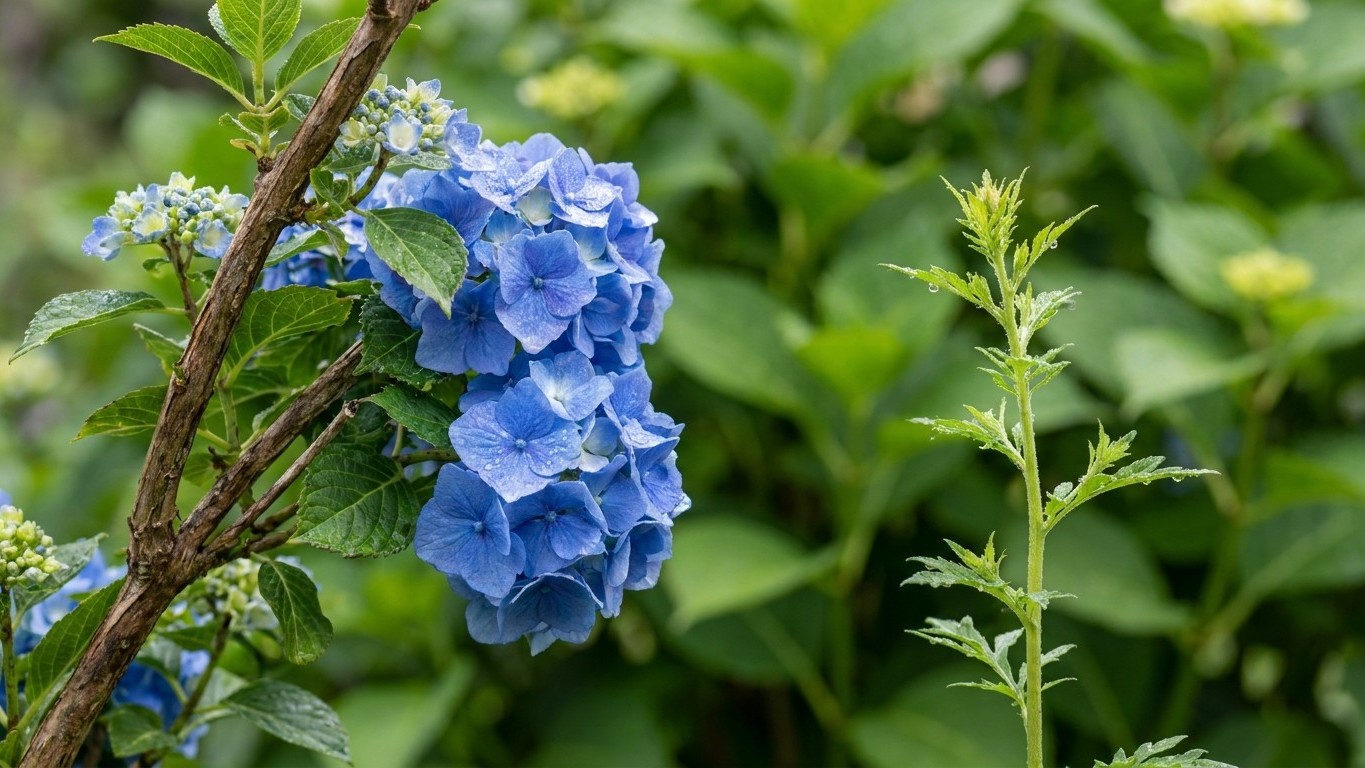

Prune panicle and smooth hydrangeas in late winter or early spring, while the shrub is dormant and before the buds swell. Bigleaf, oakleaf and mountain hydrangeas carry next summer’s flowers on stems they have already grown. Cut them only in the weeks right after they bloom, and in Wyoming wait until leaves open in late May before removing winter-killed stems. The type you own sets the calendar, and the frost window decides how much of the plant you can trust.
What this comes down to in Wyoming

At Cheyenne, the reference station, NOAA NCEI climate normals put the last spring frost between May 7 and May 18 and the first fall frost between September 24 and October 5. That window is short and it ends abruptly, so the best pruning time depends on whether a hydrangea flowers on new wood (stems grown this season) or old wood (stems grown last season). New-wood types are pruned while dormant, and old-wood types are pruned right after flowering or only to remove dead stems. Depending on the frost threshold and averaging method, the station has roughly 125 to 140 frost-free days between the last spring frost and the first fall frost.
The reason is how each type sets its buds. Panicle and smooth hydrangeas start from fresh shoots every spring, so a hard cut in March costs them nothing. Bigleaf, oakleaf and mountain hydrangeas form flower buds in late summer and carry them through winter. In Wyoming those buds face wind, dry air and late freezes, so many bigleaf stems die back partly or all the way to the ground. For these types, pruning is mostly about finding out what survived.
For a broader look at site and care, see our guide to growing hydrangeas in Wyoming. The table below covers timing only.
| Hydrangea type | Flowers on | When to prune | Wyoming note |
|---|---|---|---|
| Panicle (Hydrangea paniculata) | New wood | Late winter to early spring, before buds swell | A dependable type for the state’s short season |
| Smooth (Hydrangea arborescens) | New wood | Late winter to early spring | Can be cut low every year, and usually regrows from the base even after hard winters |
| Bigleaf (Hydrangea macrophylla) | Old wood | Right after bloom; remove dead wood after leaf-out | Frequently loses flower buds to cold, wind and late freezes |
| Reblooming bigleaf | Old and new wood | Remove dead wood after leaf-out; light shaping after first flush | New-wood blooms open late and may be cut short by early fall frost |
| Mountain (Hydrangea serrata) | Old wood | Right after bloom | Same bud risk as bigleaf |
| Oakleaf (Hydrangea quercifolia) | Old wood | Right after bloom, and only lightly | Marginal across much of the state; expect dieback |
If you are unsure which type you have, look at the leaves and the flower head. Panicles have cone-shaped clusters and rough, oval leaves. Smooth hydrangeas have rounded white heads on thin green stems. Bigleafs have glossy, thick, toothed leaves and big mophead or flat lacecap blooms.
Working it out for your own garden
Two pieces of arithmetic settle most pruning questions: when the plant wakes up, and how many weeks it needs to flower. Budbreak (when leaf buds open) follows the last hard freeze by a short margin, so in the Cheyenne window it comes in the second half of May. New-wood hydrangeas typically need a stretch of warm weather from budbreak to open bloom. That lands in mid-summer, which leaves weeks of flowers before the earliest end of the frost window.
Annabelle, a white smooth hydrangea, blooms on new wood. Cut it to a low framework or even close to the ground in late March or April, and it still sends up fresh stems that flower in summer. The cut can even be late. If you get to it as the first buds swell in May, the stems still have about eight to twelve weeks before bloom. Limelight, a panicle, works the same way, but cut it back only partway to keep a woody frame.
A classic bigleaf mophead, usually rated for warmer zones, shows where the line falls. Its flower buds formed last August and sit at the stem tips all winter. A freeze between mid-April and the May 7 to May 18 window can kill buds that have already swelled, or the stems themselves. Pruning in spring then removes whatever buds remain, so the usual rule is to wait until the plant leafs out, then cut only to living wood.
The test is simple. Scratch a stem with a thumbnail. Green underneath means live, and brown or dry means dead. Cut dead stems back to the first pair of live buds, or to the ground if none show. A non-reblooming bigleaf forced to regrow from the base is unlikely to flower that year, because its new stems start in late May and need to set buds in late summer before the first fall frost. A reblooming bigleaf (Endless Summer is a well-known one) has a chance to flower on new wood, though the bloom arrives late.
What changes across the state
A state-wide figure always comes from one place, and Wyoming’s hydrangea country varies. The USDA Plant Hardiness Zone Map, built on the average annual extreme minimum temperature, runs from roughly zone 3 to zone 6 across the state. Elevation drives most of that spread. Higher towns, such as those in mountain basins and valleys, have later springs, earlier falls, and frost that can arrive in any month. Lower river valleys and basins on the northern and eastern sides warm up earlier and hold the season longer.
For pruning, that shifts the calendar in two ways. First, the date when new-wood types should be pruned follows the date the buds start to swell. In a cold high basin that may be later in spring, while in a sheltered lower valley it may be sooner. Second, the date you can judge winter damage on bigleaf moves too. In warmer spots you may see green buds sooner, while in colder places you may be waiting longer before dead wood becomes obvious. Cutting earlier risks removing stems that would have leafed out.
Wind and snow can matter as much as elevation. Open exposures on the high plains dry out stems in winter and strip snow away, so stems die back more severely. A planting against a south or east wall, or a spot where drifts settle each winter, often keeps the lower stems alive. Valley bottoms where cold air pools can do worse than nearby slopes. Treat the sheltered, snow-covered bed and the windy open bed as two different climates, even when they are close together.
The mistakes this state punishes

A common mistake is cutting a bigleaf in early spring because it looks dead. Bare, gray stems in April often hide live buds lower down. Pruning in March, or fall cleanup of all old stems, removes both the live wood and the buds that would have flowered. Wait until late May, scratch-test, and then cut.
The second mistake is pruning too late in the season. Cutting any hydrangea, or fertilizing heavily, in late summer pushes soft new growth that has little time to harden before the first fall frost, which can arrive from September 24 to October 5. For old-wood types, pruning after midsummer also removes the buds forming for next year. Save shaping cuts for right after bloom or for the next dormant season.
The third is pruning new-wood hydrangeas on a warm winter day and then assuming the work is finished. A warm spell can wake buds, and a May freeze can then nip the first leaves. That damage looks bad but rarely kills these types, because they can resprout. Still, if you have a choice, prune panicles and smooth hydrangeas in the last weeks before budbreak, when the weather has settled.
A fourth mistake is cutting off every dead flower head in fall. Spent blooms on bigleaf and oakleaf help shelter the buds just below them, and on panicles they trap snow and add winter interest. Remove them in spring, cutting just above the first healthy pair of buds.
Checking this against your county
The Cheyenne window is a starting point for your garden, since your own last freeze may fall a few weeks either side of it. Your county office of University of Wyoming Extension can tell you how local elevation, wind and soil shift the timing, and which hydrangeas have held up in nearby yards. For the planting side of the question, return to our guide to growing hydrangeas in Wyoming.
Common questions
Can I prune hydrangeas in fall in Wyoming?
Leave spent flower heads on over winter and save cuts for spring. Fall cuts leave open stem ends exposed to winter wind and drying, and pruning too early in fall can push tender growth ahead of the first frost. Old-wood types should not be cut in fall at all, because the buds for next year are already on the stems.
How hard can I cut back a panicle hydrangea?
Remove up to about a third of the height each year to keep a sturdy frame, or cut lower to control size. Harder cuts give fewer but larger flower heads on stems that can flop when wet. Do the work in late winter or early spring, before the buds swell.
My bigleaf has no green growth by early June. What now?
Scratch-test the stems and cut each one to the lowest live bud. If every stem is brown, cut to the ground and let new shoots come from the base. A non-reblooming variety will probably give leaves but no flowers that summer, while a reblooming one may flower late.
Should I leave the dead flower heads on over winter?
On bigleaf and oakleaf hydrangeas, yes. The heads give some protection to the buds just below them and hold snow around the shrub. Trim them off in spring once the plant begins to leaf out. Panicle heads can also stay for winter interest and snow-trapping, and come off when you prune in late winter or early spring.