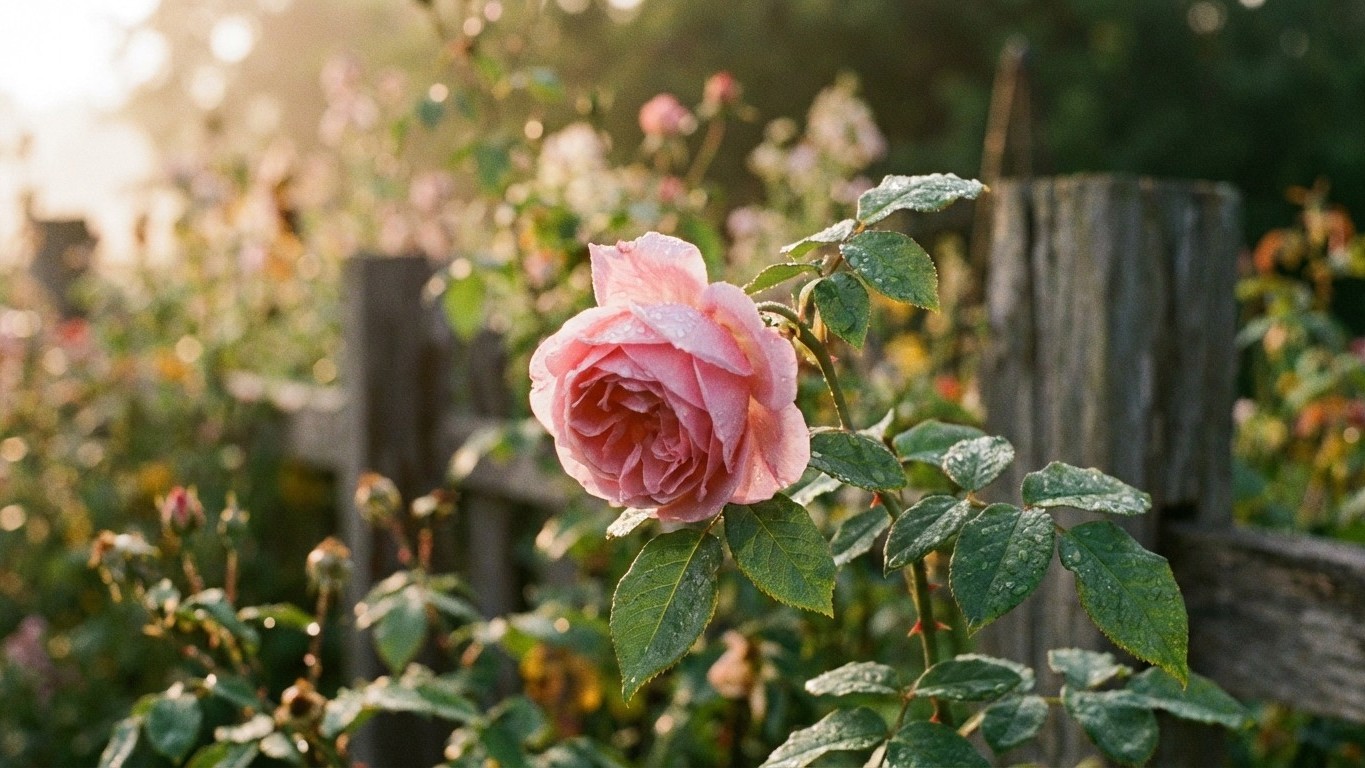

Rugosa roses, the Explorer series bred in Canada, and the native prickly rose are the best bets around Whitehorse, though even these rely on snow cover. Hansa, Therese Bugnet and William Baffin are the names to look for. Hybrid teas, English roses and most of the colorful bush roses on national garden-center benches were bred for far milder winters, and they usually die to the ground or die outright. The sections below sort the survivors from the casualties and explain what to read on a tag. Care once they are in the ground is covered in growing roses in Yukon.
Which roses survive a Yukon winter
Whitehorse, the reference city for the territory, sits in Canadian hardiness zone 1b on Natural Resources Canada’s plant hardiness map. That is the Canadian system, which is built from seven climate variables, and it is not a USDA zone. Natural Resources Canada states that there are no simple conversions between the two systems. A tag printed with a US zone number therefore cannot be translated into 1b by arithmetic. The zone also belongs to Whitehorse itself, and communities farther north or higher up run colder.
Which kinds of rose are the best bets in zone 1b?
Three groups are the best bets, though in a zone 1b winter they still depend on snow cover. The first is the rugosas, meaning Rosa rugosa and its hybrids. Their wood hardens early in fall, and they send up new canes from the base, so a frozen cane tip costs a few inches rather than the plant. The second is the Explorer series, bred by the federal agriculture department in Canada for cold prairie and northern gardens, along with the Parkland roses from the same cold-climate tradition. The third is the true species, led by the prickly rose (Rosa acicularis), which grows wild in the territory.
Hybrid teas, floribundas and grandifloras sit at the other end. Even in regions many zones milder than 1b they are mounded with soil or covered for winter. In Whitehorse they stay a gamble, because the graft at the base of the plant is exposed to the cold along with the canes.
How do Whitehorse frost dates limit a rose?
At the Whitehorse airport station, Environment and Climate Change Canada’s climate normals put the average last spring frost on June 3 and the average first fall frost on August 28 (1991–2020 normals). Those are averages. In roughly half of years the spring frost comes later than June 3, and in roughly half of years the fall frost comes earlier than August 28. A frost a week or two past the spring average is ordinary, and districts to the north or at higher elevation run weeks behind the airport. The station’s average frost-free period is about 85 days.
That short season shapes which roses make sense. A rose has to finish its growth and harden its canes before the ground freezes, and the rugosas and species roses do this early. Repeat-blooming types get few flushes, so a rose that gives its main show in early summer is the safer buy. Soft, late growth that is still green at the first hard freeze is the part that dies.
Named roses that hold up here
Each rose below is a named, widely sold cultivar or species. They differ in size and habit, so the column on the right tells you where each one fits. All are rated by their breeders for cold well beyond what most garden roses take. Whitehorse is colder than that, so snow cover under the plant does a share of the work.
| Rose | Type | What to expect in Whitehorse |
|---|---|---|
| Hansa | Hybrid rugosa shrub | Double, magenta-purple, strongly fragrant flowers. It suckers from the base, so cane tips lost to cold are replaced quickly. |
| Therese Bugnet | Hybrid rugosa shrub, bred in Alberta | Pale pink, fragrant flowers on an upright shrub with reddish canes. It ripens its wood early, so winter damage is usually limited to tips above the snow. |
| Henry Hudson | Explorer rugosa hybrid | A compact, low shrub with white flowers that open from pink buds. It is short enough for snow to bury the whole plant. |
| William Baffin | Explorer climber | Deep pink flowers in clusters. It is among the hardiest climbing roses, but tall canes tied to a fence stand above the snow. |
| Prickly rose | Native species | Single, pink, five-petaled flowers on bristly canes. It already lives through every winter in the territory. |
William Baffin needs one habit the shrubs do not. Where snow is thin, tall canes standing in wind can dry out or snap, so lay the canes flat before the ground freezes and let the snow cover them. A fence trellis works only if the canes can come off it.
Do Knock Out and New Dawn survive here?
Both are on shelves across the continent, and both were bred for far milder winters than Whitehorse has. Knock Out is a shrub rose that blooms from spring until frost in warmer regions. In a zone 1b winter its canes freeze to the snow line or below, and whether the crown sprouts again depends on snow depth and on whether the plant is on its own roots. With frost arriving on average in late August, a plant that has to rebuild every spring has little time left to bloom.
New Dawn, a pale pink climber, runs into the same wall, because its long canes are what the winter kills. Both can be grown for a season or two with luck and extra effort. Neither belongs in the same list as Hansa or Therese Bugnet.
Sold here, but not for this zone
Garden retailers buy roses for a whole continent, and a label that says hardy in a given zone often refers to a US number. A rose can sit on a bench in a cold region without ever having been tested in one. These are the groups that most often turn up and will not come through a Whitehorse winter without real work:
- Hybrid teas such as Peace and Mister Lincoln, which are almost always grafted and lose their canes in any hard freeze.
- Floribundas such as Iceberg, which are somewhat tougher than hybrid teas but were still bred for mild to moderate winters.
- David Austin English roses, whose full, old-fashioned flowers come from breeding for temperate climates.
- Tree roses, a hybrid tea or floribunda grafted onto a tall trunk. The trunk holds the whole plant above the snow, so one hard winter usually ends it.
- Groundcover and landscape lines in the Knock Out and Drift family, which share the mild-winter breeding described above.
The practical rule is to expect them to die back to the ground or to die. Gardeners who want one anyway, for a favorite color or fragrance, are better off to treat it as an annual and buy a replacement each spring rather than counting on it to return.
Cold damage can also be mistaken for disease. Shriveled, dark or blackened canes in spring usually mean winter injury. For the infections that actually show up in this climate, see Rose Diseases in Yukon: What the Climate Here Actually Brings.
What to check on the label before buying
Start with the grade. In the US system, grade No. 1 is the top grade, and lower grades are smaller plants with fewer or shorter canes. The grade measures size and cane count and says nothing about hardiness. A hybrid tea that is grade No. 1 is just a bigger plant that will freeze the same way.
The more important line is whether the rose is own-root or grafted. A grafted rose is a cultivar bud attached to a different rootstock, and the knob where they meet is the bud union. If cold kills the canes down to the union, the plant can regrow, but the new shoots from below it belong to the rootstock, a different and often inferior rose. An own-root rose has no graft, so every shoot that regrows from the crown is the rose you paid for.
That is why own-root matters more as winters get colder. In mild climates the union sits protected near the soil surface and canes rarely die back to it. In Whitehorse, dieback is routine for any rose that is not a rugosa or a species, and a grafted plant has only one chance. Many of the roses in the table above, including Hansa, Therese Bugnet and Henry Hudson, are usually sold on their own roots. When the tag does not say, ask whether the plant is own-root before you pay, and pass on it if the answer is no.
Finally, read which zone system the tag uses. A line that gives only a number could be Canadian or American, and the two do not match. The tag’s hardiness number is a starting point. The type of rose, its root system and snow cover decide the result.
Checking this against your own community
Zone 1b describes Whitehorse. A property in another community, on a north slope or in a frost pocket, can behave differently. Look up your own community on the Natural Resources Canada hardiness map, then compare notes with the federal department, Agriculture and Agri-Food Canada, which developed the Explorer roses, and with the territorial agriculture department. Local nurseries and neighbors who have grown the same cultivar for several winters know which of the roses above came back on your particular ground.
Common questions
Can a hybrid tea grow in Whitehorse? It can live for a season, and some survive when protected, but the graft and canes are exposed to cold that hybrid teas were never bred for. Plan on replacing it every year.
Do Hansa and Therese Bugnet need winter protection? Usually not much. They rely on snow cover, and the rugosa habit of regrowing from the base takes care of tip dieback. In an exposed spot where wind strips the snow, a loose mulch of leaves around the base helps.
Is a rose rated for US zone 3 safe in Yukon zone 1b? There is no direct match. The Canadian zone is built from seven climate variables and the USDA zone from one, and Natural Resources Canada says no simple conversion exists. Choose by rose type and root system.
Will a rose that froze to the ground come back? An own-root rose often will if the crown survived. In spring, scratch a cane with a fingernail. Green underneath means the cane is alive, and brown and dry means cut it back to the first green wood. Wait for buds to swell before judging a plant that looks dead.