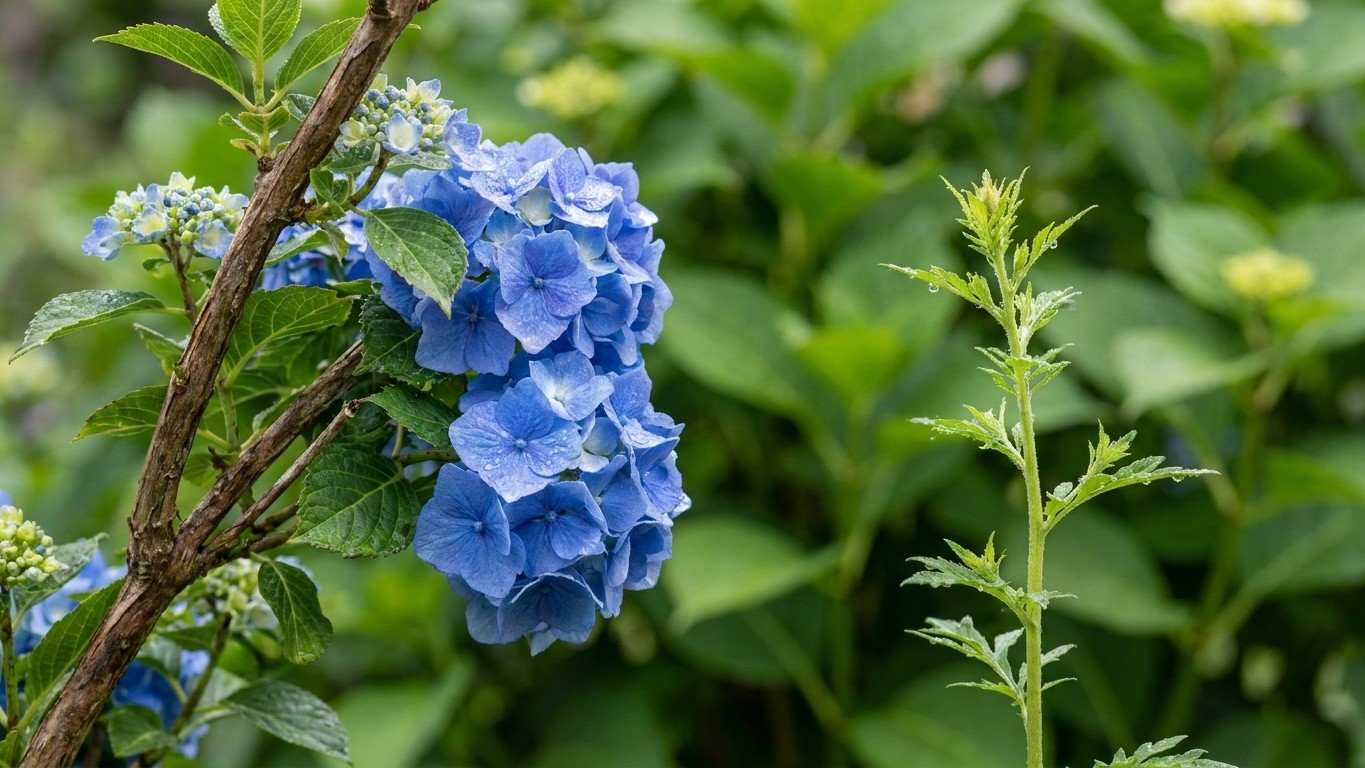

Panicle hydrangeas (Hydrangea paniculata) and smooth hydrangeas (Hydrangea arborescens) are the two types that live through Wyoming winters and bloom reliably afterward. Both flower on new wood, meaning stems grown in the current season, so a winter that kills the top of the plant still leaves a full set of flowers. Bigleaf hydrangeas (Hydrangea macrophylla) and oakleaf hydrangeas (Hydrangea quercifolia) form their buds the summer before, and those buds rarely come through the cold.
What this comes down to in Wyoming

At Cheyenne, based on NOAA NCEI climate normals, the mean last spring frost falls between May 7 and May 18, and the mean first fall frost between September 24 and October 5. A hydrangea has to open its flowers inside that gap, so only new-wood cultivars that start early enough fit. The station has roughly 130 to 150 frost-free days between those two frosts, and frost can come in any month at higher elevations.
Cold itself is the smaller problem. The USDA Plant Hardiness Zone Map, which rates zones by the average annual extreme minimum temperature, places Wyoming between zone 3b and zone 6a, and a cultivar rated to zone 3 survives the coldest of those. What separates a shrub that flowers from one that only leafs out is how much of the summer it needs before the first bud opens. The six cultivars below run from the shortest season needed to the longest.
Quick Fire
This panicle hydrangea blooms on new wood. Its white flowers age to pink and then deep rose. It opens well ahead of other panicle types, which makes it the safest pick where fall frost comes early.
Bobo
Bobo is a dwarf panicle hydrangea that blooms on new wood. It carries white flowers that fade to pink on a low mound. The compact size suits small beds and windy spots, and it flowers from midsummer.
Annabelle is a smooth hydrangea with round heads that open lime green and turn white on new wood. It freezes to the ground in hard winters and still flowers the same summer. Heavy blooms can flop after rain or hail, so give it a spot with some support.
Limelight is a panicle hydrangea that blooms on new wood. Its cone-shaped flowers open lime green, turn white, and blush pink as nights cool. It is a large shrub that begins flowering in midsummer, so it works anywhere the season runs to the middle of the frost range.
Pinky Winky is a panicle hydrangea that blooms on new wood. Its white cones turn pink from the base upward, and that color change needs warm days followed by cool nights. It starts later than the cultivars above, so a very early fall frost can end the show before the pink develops.
Endless Summer is a bigleaf hydrangea, and its flower color depends on the soil. It fails outright in the coldest parts of the state. Elsewhere the old-wood buds usually freeze, and the flowers that come from new growth open late, close to the first fall frost.
Working it out for your own garden
Three checks sort any cultivar at the garden center: the zone rating, whether it blooms on new wood, and when it starts flowering compared with the frost dates for your town. The tag usually covers the first two. The third takes a little arithmetic.
Container shrubs go in after the last spring frost range has passed and the soil has warmed. Adding about two weeks of cushion to the Cheyenne range puts planting in late May to early June. Take Quick Fire, which opens in early to midsummer. Planted in that window, it flowers in July and has at least two months of bloom before frost arrives from late September to early October.
Now run the same test on Endless Summer. It can repeat bloom from spring to fall, but that depends on old-wood buds surviving winter, and in Wyoming they usually don’t. Everything then has to come from new stems, which start flowering late in summer. Frost from late September to early October can stop the flush before the flowers fully open. That is where the line falls: a cultivar that opens by midsummer fits, and one that opens near the end of summer is a gamble.
Wait until the danger of frost has passed, then scratch a stem with a thumbnail. Green tissue under the bark means living wood, while brown and brittle means dead. On a panicle or smooth hydrangea, dead stems cost you nothing, because flowers come from new growth. On a bigleaf, dead stems mean no flowers that year. The timing of cuts matters for each type, and When to Prune Hydrangeas in Wyoming lays it out.
What changes across the state
Cheyenne sits at roughly 6,000 feet, and much of the state is at or above that. Elevation is one of the biggest influences on the frost window. Towns higher than Cheyenne, such as Laramie, have a shorter season and a later last frost. Lower basins, like the Bighorn Basin in the north, have a longer one. The statewide zone range of 3b to 6a reflects that spread.
North and south matter less than height and shelter. Cold air drains into valley floors on clear nights, so a low spot can frost after a slope just above it has stayed clear. A planting on a south-facing wall, out of the wind, runs warmer than the same shrub in an open yard. In the high mountain valleys, frost is possible in any month, and there the compact, early cultivars like Quick Fire and Bobo are the realistic choices.
Wind and dry winter air add to the cold. Chinook winds, the warm dry gusts that come off the Rockies, can thaw the ground and the top of the shrub in midwinter, and the next cold snap then hits stems that have lost their dormancy. Plains towns east of the mountains see this most. Snow cover, where it holds, insulates the crown, which is one reason a shrub tucked against a fence or house often does better than one on an open slope.
The mistakes this state punishes

Planting during a warm spell in April is the first trap. The soil warms and the nursery stock looks eager, but the mean last frost does not arrive until May 7 to May 18, and cold snaps can come after that. A young shrub with tender new growth takes the hit. Hold off until the range has passed, and keep a frost cloth or an old sheet handy for late May.
Buying a bigleaf because it is the one on the shelf is the second. Garden centers stock blue and pink mopheads regardless of the local climate. In most of the state they come back from the roots, grow leaves all summer, and rarely flower. If you want one anyway, plant it in a sheltered spot near a south wall, and expect a few blooms in a good year.
The third is choosing a late-season cultivar for color. Pinky Winky’s pink and Limelight’s fall blush develop as nights cool, and in a cold year the first hard frost can arrive before that happens. Quick Fire gives the same pink-to-rose change much earlier.
The fourth is cutting an old-wood hydrangea back in spring, which removes the buds that survived. New-wood types can be cut back freely, and the timing for each is covered in the pruning guide. Last, in the first fall, mound mulch over the crown of new plantings before the ground freezes, because young roots are vulnerable to freezing.
Checking this against your county
The frost dates here come from the Cheyenne station, so they are a starting point for your own yard rather than a ruling. Elevation, slope, and shelter can shift them. Your county office at University of Wyoming Extension knows the local frost pattern and which cultivars have held up in your area. For the rest of the growing basics, including siting, soil, and watering, see the state guide to growing hydrangeas in Wyoming.
Common questions
The four answers below cover what comes up most once a cultivar is picked and the frost range is known.
Can a bigleaf hydrangea survive a Wyoming winter?
The roots often do, especially in the milder parts of the state and with mulch over the crown. The flower buds on last year’s stems usually don’t. The shrub then leafs out and grows well but has few or no flowers.
Do panicle hydrangeas need winter protection?
Established plants rated to zone 3 generally do not. In the first winter, mulch over the crown helps young roots, and a spot out of the prevailing wind reduces stem damage.
Which hydrangea blooms earliest?
Among the cultivars covered here, Quick Fire opens earliest, followed by Bobo and Annabelle. Limelight comes into bloom in midsummer, and Pinky Winky is the last to show full color.
Can hydrangeas grow at high elevations in Wyoming?
Yes, if they are rated to zone 3 and flower on new wood. Quick Fire and Bobo are the best bets, and a frost cloth for early autumn nights protects open flowers. Skip anything rated to zone 4 or warmer.