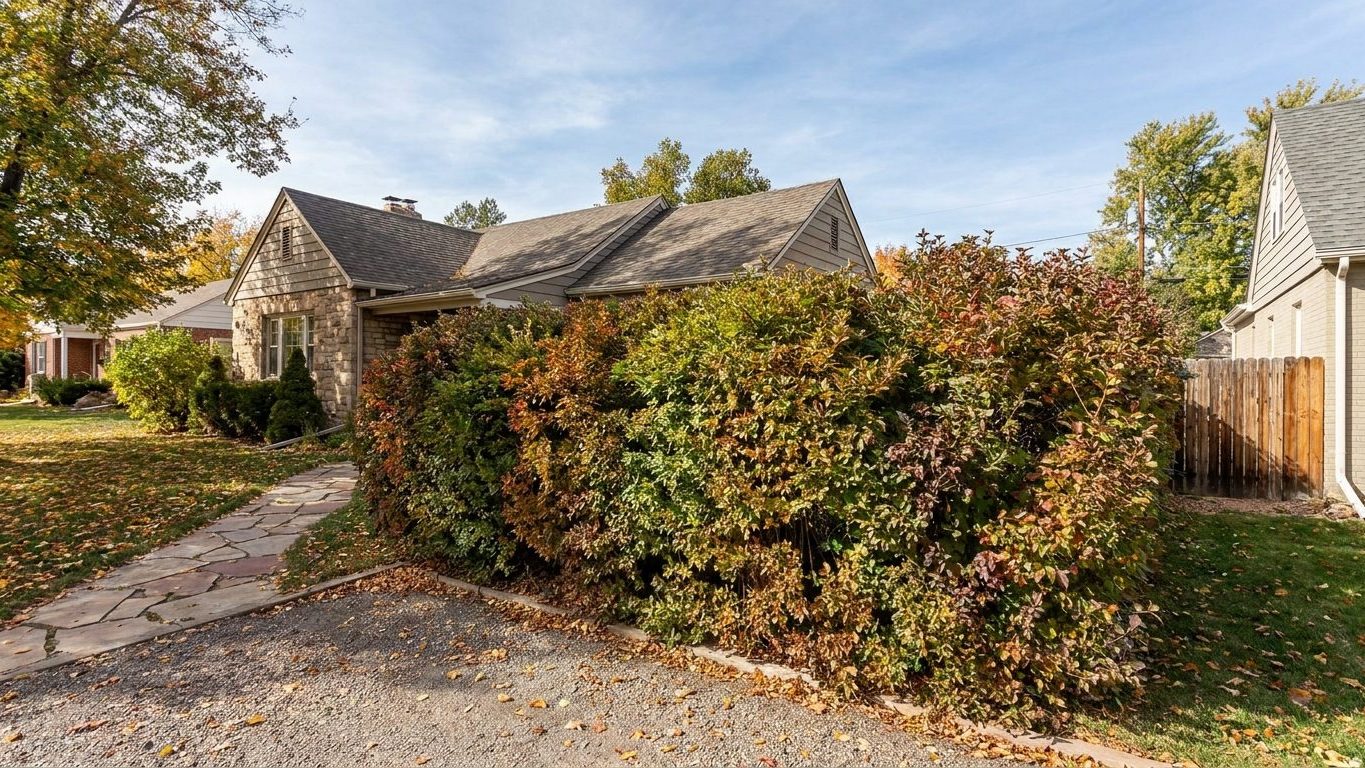

Alabama has no statewide hedge height limit. There’s no section of the Alabama Code that caps how tall a hedge can grow on residential property. The number you’re looking for doesn’t exist at the state level at all, it lives in your city’s zoning ordinance, and it can be wildly different two towns apart.
There is no Alabama hedge height law
Search “hedge height law Alabama” and you’ll find pages confidently stating a figure, often 6 feet, sometimes 4 feet in front yards. Every one of those numbers is borrowed from somewhere else, or simply invented to fill a page. Alabama’s legislature has never passed a statute regulating how tall a homeowner’s hedge, shrub row, or living screen may grow. That’s not an oversight. Plant height regulation in the United States has always been treated as a local land-use matter, not a state one, and Alabama is no exception.
What Alabama does have is a body of state law covering property lines, boundary surveys, and general nuisance principles, the kind of law that matters when a dispute ends up in front of a judge. But none of it sets a number in feet for how tall you can let a boxwood row or a leyland cypress screen get. That number, if one exists at all where you live, comes from your municipality’s zoning code.
This matters because the practical answer to “how tall can my hedge be” depends entirely on which side of a city line your house sits on. A hedge that’s perfectly legal in one Alabama town could be a code violation a few miles away, in the next incorporated city over, simply because that city’s council passed a different ordinance. Unincorporated county land often has even less regulation than either, sometimes none at all outside of health and safety nuisance provisions.
Why commercial sites get this wrong
Most of the sites ranking for this kind of query are aggregators pulling together fence and hedge rules from dozens of states into one table, and tables need a number in every cell. When a writer can’t find a state law, the temptation is to substitute the most common city rule, or the fence height limit from a neighboring state, and present it as if it were statewide. That’s how a made-up 6-foot figure ends up circulating as “Alabama law” when no such law was ever passed.
The honest version is less tidy: Alabama defers the question entirely to local government. Some cities regulate hedges explicitly. Many don’t mention them at all, only fences. A few fold both into a single “screening” or “sight obstruction” section. There’s no shortcut that replaces checking your own city’s code, and no state office is going to hand you a single applicable number, because none exists.
How to find the rule that actually applies to you
Since Alabama pushes this question down to the municipal level, the real task isn’t memorizing a number, it’s knowing where to look. Nearly every American city that publishes its ordinances online uses one of three platforms, and once you know the pattern, finding your city’s rule usually takes fifteen minutes.
- Municode (library.municode.com) hosts the largest share of small and mid-size city codes, searchable by state and city name.
- American Legal Publishing (codelibrary.amlegal.com) covers many other municipalities, with a similar search-by-jurisdiction structure.
- eCode360 is the third major publisher, used by a smaller but still significant number of towns.
Search “[your city name] Alabama Municode” or “[your city name] Alabama code of ordinances” and one of these three should surface. Once you’re in, don’t search for “hedge” first. Go to the zoning code, usually a separate chapter or appendix from the general municipal code, and look under headings like “Fences,” “Fences and Walls,” “Accessory Structures,” or “Screening and Buffering.” That’s where height limits for living and built barriers tend to sit, when they exist at all.
The word matters more than you’d think
Read the definitions section before you assume anything. Some ordinances define “fence” broadly enough to include “any structure or vegetation used to enclose or screen a property,” which pulls hedges into the same height cap as a wooden fence. Others define “fence” narrowly as a built structure only, meaning hedges fall outside that section entirely and may be unregulated, or regulated somewhere else entirely, like a separate “vegetation” or “vision clearance” clause. Don’t skim past this distinction. A hedge that’s exempt from the fence rule in one town might be squarely covered by an identical-sounding rule in the next, purely because of how the code defines its terms.
If you search the online code and come up empty, that’s information too, it likely means your city hasn’t legislated hedge height at all. In that case, the next call is to the city or county planning and zoning department. Most Alabama municipalities list a direct phone line or email for zoning questions on their website, and a five-minute call will tell you whether an unwritten enforcement practice exists, whether your property falls under county jurisdiction instead, and whether a permit or variance process applies to tall screening plantings.
For homeowners in unincorporated areas, check with the county planning commission rather than any city, since county zoning (where it exists) runs on its own separate code, often with far lighter regulation of residential landscaping than incorporated cities carry.
The branches that cross the line
Even where no ordinance caps overall hedge height, one rule shows up almost everywhere, in some form: the sight triangle at intersections and driveways. This isn’t really about how tall your hedge can be in general, it’s about what a driver needs to see. Most cities require a clear, unobstructed sightline at corner lots and at the point where a driveway meets the street, and that clearance zone is typically enforced at a height far lower than any general fence or hedge limit, sometimes as low as 2 to 3 feet for anything within the triangle itself. This applies even in towns whose code says nothing else about hedge height, because it falls under public safety and traffic visibility, not landscaping regulation.
If your hedge sits near a corner, a driveway apron, or an alley intersection, that sight-triangle rule is very likely the one thing that does apply to you, even when the rest of your code is silent on hedges. Checking for it is worth doing before you check anything else, since it’s the rule most likely to trigger a complaint from a neighbor or a call from the city.
What happens when growth crosses a property line
Separate from height limits, there’s a long-standing legal principle, developed through court decisions rather than any single statute, that applies across most states in some form: a neighbor whose property is invaded by branches or roots crossing the boundary line generally has the right to cut back that growth, at their own expense, up to the property line and no further. They typically cannot trespass onto your side to do the cutting, and they generally cannot take action that kills the plant, since that can shift the dispute from routine trimming into a damages claim.
This principle comes from case law and general property doctrine, not from an Alabama statute written specifically for hedges, and its exact contours (what counts as reasonable trimming, who pays if the plant dies, whether notice is required first) vary by jurisdiction and by the specific facts of a dispute. Treat it as the general shape of how these conflicts usually get resolved, not as a precise Alabama rule you can quote back to a neighbor. If a boundary hedge dispute escalates past a friendly conversation, that’s the point to talk to a local attorney rather than rely on a general principle found online.
What to check before you plant
The best time to sort out hedge height rules is before you put anything in the ground, not after a neighbor complains or a code enforcement notice shows up. A few checks take less time than a trip to the nursery and save you from ripping out a mature screen later.
Start with your city’s zoning code, using the Municode, American Legal Publishing, or eCode360 search described above, and specifically check whether “fence” in your local definitions section includes vegetation. If it’s ambiguous or the code is silent, call the planning department directly and ask two things: whether there’s a height limit for living screens on your specific lot type, and whether a sight-triangle clearance applies to your corner or driveway.
If you belong to a homeowners association, check the HOA’s covenants separately from the municipal code. HOA rules operate independently of city zoning and are often stricter, and they’re enforced through the association rather than the city, meaning a hedge that’s perfectly legal under your city’s code can still put you in violation of your HOA’s private agreement.
A few practical habits reduce friction no matter what the local rule turns out to be:
- Keep any hedge near a driveway or corner well below eye level in the immediate sight-triangle zone, regardless of what height is allowed elsewhere on the lot.
- Plant boundary hedges a foot or two inside your own property line rather than directly on it, giving you room to maintain the far side without stepping onto a neighbor’s land.
- Choose slower-growing or size-controllable species for anywhere near a property line or sightline, since a fast grower forces more frequent decisions about whether you’re crossing a limit you haven’t confirmed yet.
None of this replaces reading your own city’s ordinance. But it means that whatever number you eventually find, whether it’s 6 feet, 8 feet, or no number at all, you’re not planting yourself into a dispute in the meantime.
Common questions
Is there a maximum hedge height allowed anywhere in Alabama?
Not at the state level. Any maximum height comes from an individual city’s zoning ordinance, and those limits vary by municipality, so the same hedge could be compliant in one Alabama town and not in another.
Does Alabama treat a hedge the same as a fence?
It depends on the individual city’s code, not on any statewide definition. Some municipal ordinances define “fence” broadly enough to cover living screens, others regulate fences and hedges under separate sections, and some don’t address hedges at all. Check your local zoning definitions before assuming a fence rule applies to your plants.
Can my neighbor legally trim my hedge if it grows over their property line?
General property law principles, developed through court decisions rather than a specific Alabama statute, typically allow a neighbor to cut back growth that crosses onto their side, up to the boundary line and no further, at their own expense, without killing the plant. The specifics can vary, so a serious dispute is worth taking to a local attorney rather than relying on general rules.
Where do I actually find my city’s hedge or fence ordinance?
Search your city’s name along with “Municode,” “code of ordinances,” or “eCode360.” Most Alabama municipalities publish their zoning code through one of these three platforms. Once inside, look under the zoning chapter for headings like “Fences,” “Accessory Structures,” or “Screening,” and call your city’s planning and zoning department directly if you can’t find a clear answer online.