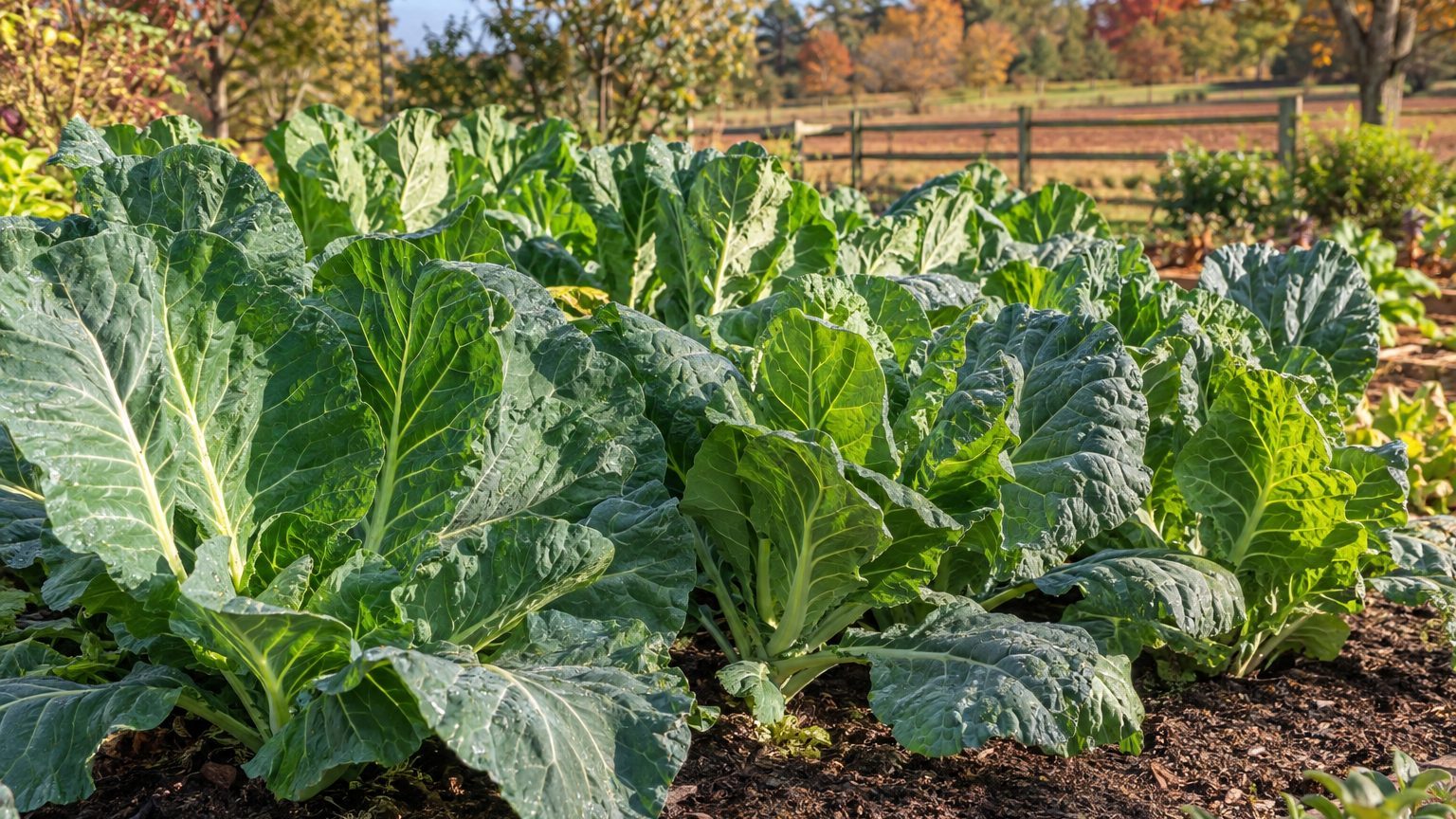

Alaska gardeners get roughly 143 frost-free days to grow collards, and that number decides almost everything about variety choice. Skip the classic long-season Southern types bred for months of steady heat, and lean on fast-maturing, cold-tolerant collards and their closest brassica cousins that can finish a crop before the first fall frost shuts things down. Anchorage’s climate sets the baseline for this page; colder regions of the state need even quicker plants.
The short answer for Alaska
Alaska’s growing season, measured at the Anchorage reference station, runs from a last spring frost between May 3 and May 12 to a first fall frost between September 22 and October 1. That’s about 143 frost-free days, and it’s the single fact that should drive variety selection. Collards that need a long stretch of warm weather to bulk up their leaves simply run out of runway here, even with Alaska’s famously long summer daylight helping push growth along.
The decision, by type, comes down to speed and cold tolerance rather than heat resistance. Fast-maturing, compact collard types (the kind bred for quick cutting rather than for standing through a long hot Southern summer) are the safer bet across most of the state. Curly kale and Siberian kale, both close relatives grown the same way, tend to perform even more reliably in Alaska’s cooler summers, since they were selected for cold-climate gardens in the first place rather than for heat tolerance.
What this page cannot do is hand you a specific cultivar name with a guaranteed maturity date, because the verified facts available for Alaska cover frost dates, winter cold, and hardiness zone, not summer heat units or county-level variety trial results. Any article that gives you a precise “this exact variety, planted this exact week” answer for the whole state is borrowing a number from somewhere else. What the facts do support is a category-level answer: choose short-season, cold-tolerant brassica greens over long-season Southern collard types, and treat everything after that as a local refinement.
Why heat isn’t the limiting factor here
In much of the Southeast, variety choice is about bolt resistance under heat and humidity. In Alaska, that pressure barely exists. The limiting factor is the calendar, not the thermometer during the growing months. A collard variety that would bolt in a Georgia July has no such problem in an Anchorage July, but it still has to get from seed to usable leaf before that September frost date arrives, and that’s the part slower varieties fail at.
What will not work here

Long-season collard varieties bred for Southern gardens, the kind meant to be direct-seeded in spring and harvested well into a hot, extended summer, are the clearest mismatch for Alaska. With a frost-free window that ends between September 22 and October 1, a variety that needs a long stretch of sustained warmth to fill out simply gets cut off mid-development. The plant isn’t dead, it’s just not finished, and an Alaska gardener ends up with a stand of small, underdeveloped leaves instead of a full harvest.
Succession planting timed the way it’s done further south also runs into trouble. A gardener who sows a second round of collards in July, expecting a long fall harvest window like a mid-Atlantic garden would have, is working against a much tighter margin in Alaska. The first fall frost arrives weeks earlier here than in most of the Lower 48, and a late-sown, slow-maturing crop can be caught before it’s worth cutting.
Winter survival is the other trap. The coldest month’s average daily minimum in the Anchorage area sits at 11.0°F, which rules out any attempt to treat collards as a biennial or overwintering crop outdoors the way some warmer-zone gardeners do to save seed or get an extra-early spring harvest. Collards in Alaska are strictly a single-season, frost-to-frost annual crop; nothing about the winter conditions here supports leaving plants in the ground.
Where the “just water more” advice breaks down
General collard-growing advice often assumes a hot, dry summer where irrigation frequency is the main variable to manage. That’s not the Alaska problem. The facts available here don’t support claims about summer rainfall or drought stress, and readers should be skeptical of any Alaska-specific growing guide that leans heavily on watering schedules borrowed from warmer-region advice. The real constraint in this state is time, not moisture management.
What changes across Alaska
Alaska is not one garden, and this is where a state-level page has to be honest about its limits. The USDA Plant Hardiness Zone Map places the state across an extraordinary range, from zone 1a to 8a, which is one of the widest internal spreads of any state in the country. That range is built on a single variable, the average annual extreme minimum temperature, so it speaks to winter survival more than it does to summer growing season length, but it’s still a strong signal of how different conditions are from one part of Alaska to another.
The frost dates and season length used above come from the Anchorage reference station, and Anchorage sits among the mildest inhabited parts of the state. Interior Alaska, including the area around Fairbanks, runs a noticeably shorter and colder season than the coast, with a narrower frost-free window and harsher winter minimums. Gardeners there need to shift toward the fastest-maturing collard and kale types available and treat the Anchorage-based dates on this page as an optimistic upper bound, not a target.
Southeast Alaska’s coastal communities, by contrast, tend to run milder winters than the Anchorage area, closer to the higher end of that hardiness zone range, though still without the sustained summer heat that Southern collard varieties were bred for. Altitude adds another layer of variation even within a single community; a garden a few hundred feet higher than the valley floor can run measurably cooler and frostier than one down low.
Given a spread this wide, there is no single frost date or variety recommendation that fairly represents the whole state. A gardener’s best move is to confirm their own hardiness zone on the official USDA map rather than assume the Anchorage figures apply to their yard.
Where to check this for your own county
The University of Alaska Fairbanks Cooperative Extension Service is the official source for Alaska-specific growing information, and it’s reachable at https://www.uaf.edu/ces/. This is the right next stop for anyone who wants a recommendation sharper than what a statewide page can responsibly give.
Two things are worth looking for once there. First, a local planting calendar for your district, since the Anchorage frost dates used on this page won’t match conditions in the Interior, the Southeast panhandle, or other regions with their own extension offices and district agents. Second, any record of variety trials the extension service has run in your area. Land-grant extension services routinely test collard, kale, and other cool-season greens under local conditions and publish which ones held up, and that kind of trial data reflects your actual soil, daylight, and frost pattern in a way no state-level article can.
It’s worth being direct about the hierarchy here: a county or district recommendation from your local extension office will always outrank a state-level page like this one. This article works from verified frost dates, cold minimums, and hardiness zone data for the Anchorage region and for Alaska as a whole, but it can’t substitute for a district agent who has watched actual collard plots through actual Fairbanks or Juneau or Kodiak summers. Treat this page as the starting framework, the extension office as the local correction.
Extension offices are also generally free to contact by phone or email, and district agents are usually glad to talk through what’s realistic for a specific garden site, including whether a particular collard or kale variety has a track record in that part of the state.
Checking this against your own garden
None of the dates on this page beat what a gardener can observe directly in their own soil and plants, and three simple checks matter more than any calendar figure.
Soil warmth by feel comes first. Collard and kale seed germinate slowly in cold soil, and a gardener who works their hands into the bed and finds it still cold and heavy, even after the calendar says the last frost has passed, is looking at a real signal to wait, not a reason to distrust the frost date itself. Warmth in the top few inches of soil is what actually triggers reliable germination, regardless of what the thermometer says about air temperature.
The appearance of the first true leaves is the second checkpoint. Seedlings push up two small, rounded seed leaves first, and only afterward produce the ruffled or smooth true leaves that look like a miniature version of the mature plant. Once those true leaves show, growth typically speeds up, and that’s a better gauge of how the season is actually unfolding in a specific yard than counting days since sowing.
Bolting is the third thing to watch, especially late in the season. When a collard or kale plant starts pushing up a central flowering stalk, it’s redirecting energy away from leaf production, and that stalk is the signal to harvest what’s there rather than wait for more growth. In Alaska’s cool summers this is less common than in hot Southern gardens, but a plant stressed by an unusually warm stretch or crowded roots can still bolt early, and catching it at the first sign of a flower stalk saves the harvest before the leaves turn bitter.
Taken together, these three observations tell a gardener more about their own microclimate, whether it runs a week ahead of or behind the Anchorage averages, than any single planting date ever could.