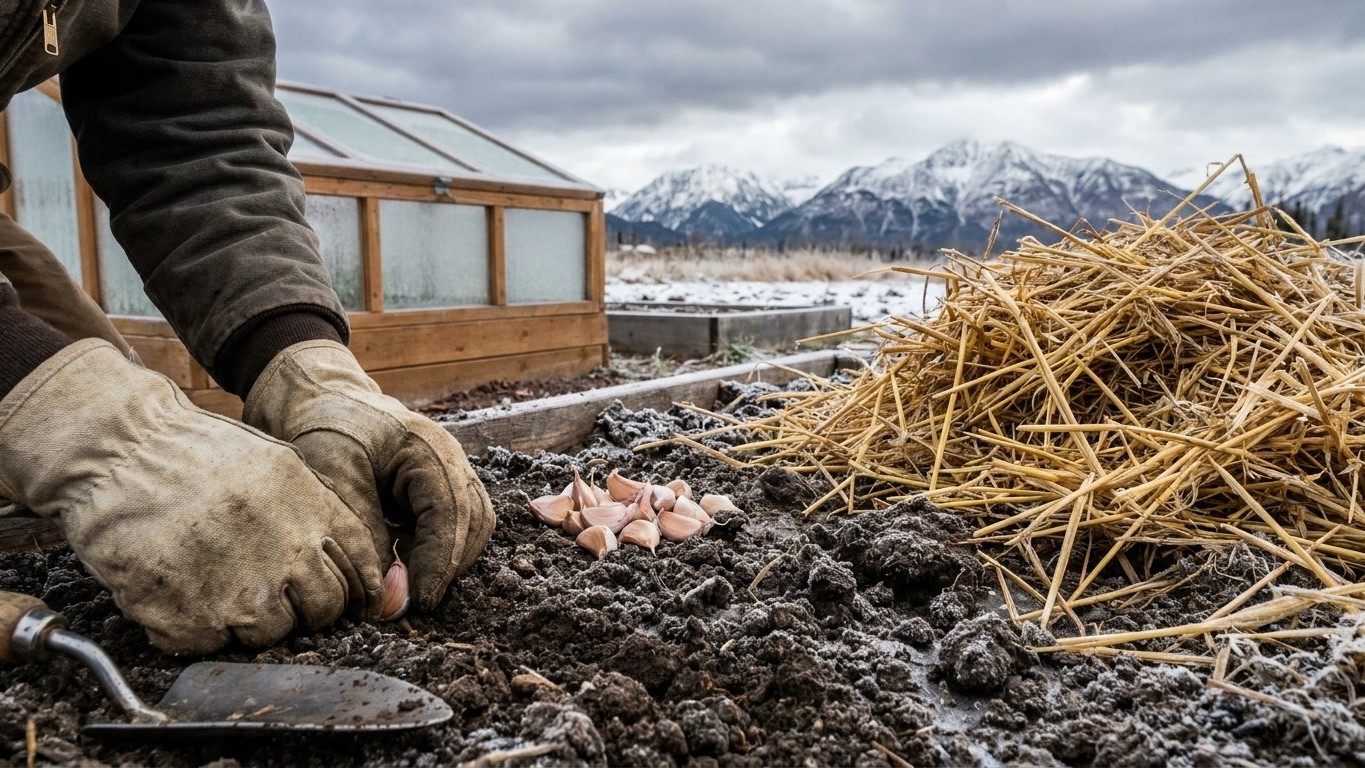

In Anchorage, November sits weeks after the first fall frost (September 22 to October 1) and months before the next one, so the open-ground season is closed. What still happens: garlic tucked in before the ground locks up, cold frames holding hardy greens, bare-root plantings where the soil allows it, and a handful of crops forced indoors for fresh food while the beds sleep.
What goes in the ground in November

The frost window that matters here already closed. NOAA’s 1991-2020 Climate Normals put the first fall freeze at Anchorage’s station USW00026451 between September 22 and October 1, which means by the time November arrives the soil has usually frozen at the surface, if not deeper. Calendar aside, soil temperature is what decides everything, and by this point it has dropped past the range where roots grow or seeds germinate. For most of the state, the honest answer is that nothing goes into open, unprotected ground this month.
That does not mean the trowel stays in the shed. Garlic and shallots can still go in if the ground has not fully locked and a gardener missed the earlier fall window; a thick mulch of straw or leaves right after planting buys some insulation before the freeze sets in for good. Anchorage sits toward the milder end of Alaska’s wide hardiness range, USDA zone 1a to 8a statewide, so pockets along the coast may have a few more workable days than the Interior, where the ground is often solid by now.
Cold frames, low tunnels, and dormant stock
Cold frames and low tunnels are doing the real work this month. Kale, spinach, and mâche already established under cover can keep producing lightly as long as the frame stays closed on hard-freeze nights and vented on the rare mild afternoon. Bare-root fruit trees, currants, and other dormant stock can still be heeled into a trench if a nursery order arrives now and the ground underneath the mulch layer hasn’t frozen solid. Beyond that, this is the month for forcing rather than planting: rhubarb crowns and chicory roots lifted and brought into a dark, cool space will push tender growth for the table over the following weeks, no outdoor soil required.
What to start under cover
Run the math backward from Anchorage’s last spring frost window, May 3 to May 12, rather than from any fixed date on a seed packet. Slow crops like onions or leeks typically want 10 to 12 weeks indoors before transplanting, which lands their sowing date in mid to late February, not November. Even celery, one of the slowest starts most gardeners attempt, still points to a winter sowing date well after this month closes. So November’s indoor work is less about counting toward spring transplant and more about two other things: winter sowing and stratification.
Many perennial flowers and some native or cold-hardy herb seeds need a period of cold, moist chilling before they’ll germinate at all. Sowing them into small containers now and setting those containers into an unheated cold frame or a sheltered spot outdoors lets nature do the stratifying over winter, with germination showing up on its own once temperatures climb in spring. It costs nothing but a little planning, and it fills a slot that would otherwise sit empty on the windowsill.
The two failure modes are worth naming plainly. Sow too early relative to that May frost window and the transplants sit indoors under weak light for months, turning leggy and rootbound long before the ground is ready for them. Sow too late, particularly for the slow starters like onions and celery, and Alaska’s roughly 143-day frost-free season simply runs out before the crop matures. November sowing belongs almost entirely to the stratification group; the transplant-bound crops wait for their own backward count closer to February.
What is ready to pick
Outdoors, there is little to nothing left to harvest by November in most of the state. Anything still standing unprotected has already been through more freezes than it can survive, and the growing season closed on the calendar back in early October. That said, the kitchen doesn’t have to go without.
Cold frames holding kale, mâche, or spinach can still be opened on calm days for a light picking, since these crops tolerate hard frost and simply slow down rather than die once covered. Sprouts and microgreens grown on a countertop or under a grow light fill the fresh-green gap entirely indoors, ready in a week or two from seed with no outdoor exposure at all. For gardeners in milder coastal pockets, overwintered leeks or kale mulched heavily before the ground froze may still be diggable through a light snow cover, though this depends heavily on how far south and how sheltered the spot is.
The other harvest this month happens in the root cellar or pantry, not the garden. Stored squash should be checked for any soft spot or sour smell, since one rotting piece can spread quickly to its neighbors in a bin. Potatoes need a look for green shoulders or soft rot, and onions should be checked for the papery ones that have gone soft at the neck, all pulled and used before they take the rest of the batch with them.
The jobs that matter this month
The garden may be closed for planting, but this section carries real weight, because the work done now decides how well next spring starts. Dormant pruning tops the list: apple trees, currant and gooseberry bushes, and raspberry canes can all be cut back once they’ve dropped their leaves and gone fully dormant, and doing it now, while wounds heal slowly through winter, is far gentler on the plant than pruning in active growth.
Seed catalogs deserve attention this month too. Alaska’s short season rewards early varieties bred specifically for northern daylight and cool soil, and the best of those sell out well before spring shipping starts. Ordering now, while the list is still full, beats scrambling for a substitute variety in March.
Soil, tools, and storage
Soil testing and amending can still happen wherever the ground isn’t frozen solid, and adding compost or amendments now gives them a full winter to break down before spring planting. Turning the compost pile one more time before it freezes keeps the decomposition going a little longer and sets it up to restart faster once temperatures rise. Tools are worth an hour of attention too: cleaning soil off blades, sharpening pruners and hoes, and oiling anything that moves means less time lost to a dull, rusty tool come the first workable day of spring.
Raised beds and fencing often show their wear by this point in the year, and repairs are easier now, before snow load adds its own stress, than they will be after a winter of freeze-thaw cycles. And that pantry check from the harvest section is worth repeating as an ongoing job, not a one-time task; stored crops keep deteriorating through the dark months, and catching rot early saves the rest of the bin.
What not to do in November
The most common mistake this month is trusting a mild afternoon over the calendar. A stretch of unusually warm days can tempt a gardener to uncover a cold frame fully or pull mulch off a bed to “let it breathe,” and then a hard freeze moves back in overnight and undoes weeks of protection in a single cold snap. Cold frames and mulch layers should stay in place through these warm spells; vent a cold frame for an hour if it’s truly needed, then close it back up before evening.
Feeding nitrogen at this point is another classic misstep. Nitrogen pushes soft, tender new growth, and that new growth has no time to harden off before winter cold arrives, which makes the whole plant more vulnerable to freeze damage than if it had been left alone. Any fertilizing that’s still happening this late should skip nitrogen entirely.
Pruning frost-tender shrubs or perennials now, thinking it “tidies up” before winter, can backfire the same way, since fresh cuts stimulate a small burst of growth right when the plant should be shutting down. And skipping that stored-crop check because the harvest season already feels over is how a single soft potato quietly takes out half a storage bin by the time anyone opens it again in deep winter.
Checking this against your own county
A statewide answer for November is a starting point, not a fixed instruction, and nowhere is that truer than Alaska. Elevation, distance from the coast, and the sheer size of the state can shift these frost windows by weeks in either direction; the Interior often freezes solid well before Anchorage, while some southern coastal areas hang on longer. Before acting on any date in this article, check it against the University of Alaska Fairbanks Cooperative Extension Service, which publishes county-level and regional planting guidance built for these local differences.
Common questions
Can garlic still go in the ground in November in Alaska?
Only if the soil hasn’t fully frozen yet, which is uncommon by this point in most of the state. Where it’s still workable, plant garlic cloves and cover heavily with straw or leaf mulch immediately to protect them through the freeze that follows.
Is it too late to start seeds indoors for spring?
For most transplant crops, yes, since counting back from the May 3 to May 12 last-frost window puts their indoor sowing dates in February or later. November is better suited to winter-sowing seeds that need cold stratification, set outdoors in containers to chill naturally.
Why does my cold frame need to stay closed even on a warm day?
A single mild afternoon doesn’t change the season, and a hard freeze can return overnight. Venting briefly is fine if the frame is overheating, but leaving it open risks undoing the protection right before the next cold snap.
What’s the single most useful job to do in the garden this month?
Dormant pruning of fruit trees and canes tends to pay off the most, since it’s easiest on the plant once it’s fully leafless and dormant, and skipping it now means a harder, riskier prune later in the season.