
Winter Squash in Alaska works best in and around Anchorage, where roughly 143 frost-free days give the fruit just enough time to size up and mature before fall cold sets in. Farther into the Interior or north, the window shrinks fast, and the crop becomes a much bigger gamble.
When the soil is warm enough in Alaska

Around Anchorage, NOAA’s 1991-2020 climate normals put the last spring frost between May 3 and May 12, based on 32F freeze probabilities at station USW00026451. That’s a real range, not a single magic date, and it reflects a 30-70% probability band, meaning frost can still show up outside those dates in a given year. Treat it as a probability, not a promise.
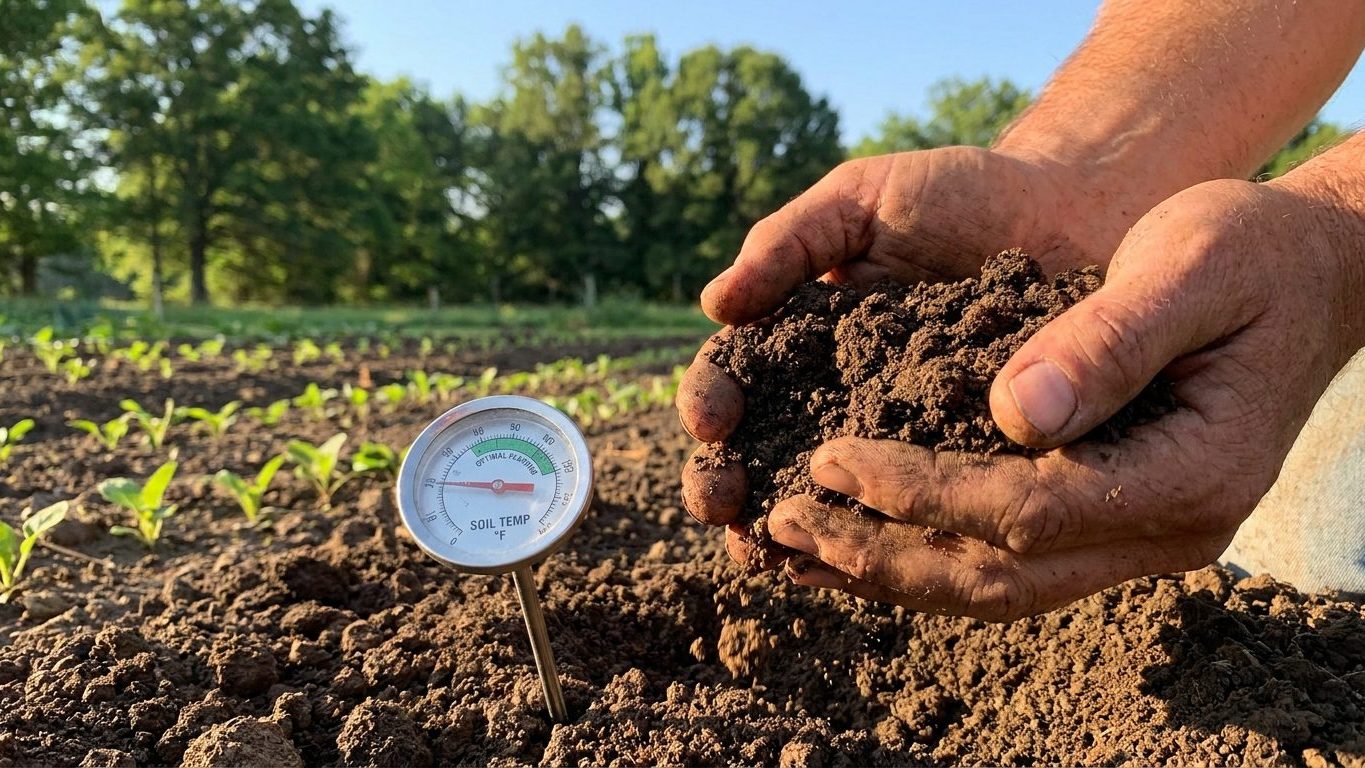
Here’s the part gardeners often miss: that frost date tells you when the air stops freezing, not when the ground is ready for seed or transplants. Winter squash germinates and roots into soil, and cold, wet Alaska soil in early May is nowhere near warm enough for a heat-loving vine crop, even once the freeze risk has passed. Soil in the Anchorage bowl typically needs another stretch of sunny days, sometimes into late May or even early June, before it holds enough warmth for squash roots to take off without stalling.
That gap between “frost is over” and “soil is warm” matters more in Alaska than almost anywhere else in the Lower 48, because the season is already tight. Gardeners who plant winter squash into cold soil right after the last frost date often watch the seedlings sit and sulk for two or three weeks while their soil-warmed neighbors’ plants pull ahead. Raised beds, black plastic mulch, or simply waiting for a run of warm days all help close that gap.
Transplants started indoors give Alaska’s short season a head start, but only if they go into soil that’s actually warm, not just into a calendar slot. Checking soil temperature at planting depth, rather than counting days from the frost date, is the more reliable habit here.
This is also the point where cultivar choice starts to matter, but that’s a conversation for later in this piece. For now, the practical takeaway is simple: use the May 3 to May 12 window as your frost guide, then add patience for the soil to catch up before winter squash goes in the ground.
None of this replaces a spray schedule or a pest calendar. In this climate, watching soil warmth is the single practice that does more for squash success than almost anything else a gardener can do in spring.
How long the season lasts here
Subtracting the two NOAA frost dates for station USW00026451 gives the frame: last spring frost falls between May 3 and May 12, first fall frost between September 22 and October 1. That works out to roughly 143 frost-free days on average, one of the longer stretches you’ll find anywhere in Alaska, since Anchorage sits among the mildest inhabited parts of the state. The Interior and the north see far shorter windows, even though the long daylight hours there partly make up for lost heat.
What a 143-day window allows
143 days is enough to grow winter squash to full maturity in a good year, but it’s not enough to treat casually. There’s no real margin for a second sowing of squash itself, since a full-season vine crop typically needs most of that window just to flower, set fruit, and cure on the vine before the September frost arrives. Where a longer-season territory might sow squash twice, or use early spring for a fast crop before squash goes in, Anchorage gardeners are generally working with one shot at the vine crop itself.
That doesn’t mean succession sowing has no place in an Alaska garden. It just moves to faster, cold-tolerant crops planted before or after the squash window, rather than to the squash itself. For a fuller look at how to sequence plantings within a short season, the succession sowing guide on this site breaks down which crops can slot in before and after a long-season vine like winter squash.
Why transplants matter more in a short window
A tight season also changes the transplant calculation. In places with four or five extra weeks of frost-free time, gardeners can direct-sow squash and still finish comfortably. In Anchorage, starting squash indoors and transplanting out, once soil has warmed, effectively buys back two to three weeks that direct-seeding would cost. That head start is often the difference between fruit that fully cures before the September frost and fruit caught immature when the cold arrives.
The tradeoff is that transplanted squash needs its root system checked before it goes in the ground: winter squash resents root disturbance, so anything pot-bound or coiled at transplant time can stall exactly when the season can least afford it. In a 143-day window, that root check isn’t optional housekeeping, it’s part of what makes the short season workable at all.
Heat and water in Alaska

Anchorage averages 0.0 days a year at or above 90F, based on NOAA’s 1991-2020 climate normals. That number isn’t a rounding error, it’s the whole story about summer heat load here: there essentially isn’t any. Winter squash is a warmth-loving crop, and a growing season with no meaningful heat spikes changes the entire risk profile compared to a hot-summer territory.
In a hot, dry climate, the main job is keeping water flowing to the roots so developing fruit doesn’t stall under heat stress. Alaska’s problem runs the other way. With summer rainfall averaging about 5.8 inches across June, July and August, split as 1.02 inches in June, 1.82 in July and 2.93 in August, and 16.4 inches for the year, moisture generally isn’t scarce. The real risk in a cool, damp summer is mildew, slow fruit ripening, and rot pressure on vines that never get the warm, dry stretches that dry out foliage and speed up curing.
What cool and damp actually means for squash
Squash vines in a climate with zero 90F days spend the summer growing steadily but without the burst of heat that pushes fruit to size up quickly. That’s part of why the frost-free window matters so much here: without heat to compress the timeline, the crop needs every one of its roughly 143 days. Rising rainfall into August, the wettest of the three summer months, arrives right as fruit should be filling out and starting to cure, which is exactly when excess moisture around the vine base does the most damage to skin hardening and storage quality.
Practical adjustments follow directly from these numbers. Spacing vines for airflow, avoiding overhead watering late in the day, and keeping fruit up off damp soil (a board or mulch layer under each squash works) all address the same problem: this is a low-heat, adequate-moisture territory where the enemy is fungal pressure and slow ripening, not drought stress. Watering schedules built for a hot, dry state don’t transfer here; the risk to manage is excess dampness, not deficit.
Raised beds and black plastic mulch do double duty in this climate, since they solve both problems named earlier: warming cold soil in spring and improving drainage around the root zone through a rainy August. That overlap is worth knowing, since it means one investment in bed prep pays off at both ends of the season.
Which winter squash suit Alaska
Given a roughly 143-day frost-free window, zero days above 90F, and a wetter August than June, the type of winter squash that suits this climate is the earliest-maturing type available, paired with some tolerance for cool, damp conditions rather than heat. Vines bred for long, hot seasons are working against the climate here from day one; types selected for shorter, cooler growing windows are working with it.
Disease resistance matters more in Anchorage’s climate than it would in a hot, dry territory, precisely because the rainfall and humidity pattern described above favors mildew and fungal pressure over drought stress. A type known for holding up under damp conditions, with airflow-friendly vine habit, is doing real work in this climate that it wouldn’t need to do in the desert Southwest.
This page won’t name a specific cultivar, and that’s a deliberate choice, not an oversight. Variety trials run by the University of Alaska Fairbanks Cooperative Extension Service test exactly these questions locally, in Anchorage’s actual soil and season, and their trial results are the only recommendation that reflects what’s really been grown and measured in this climate. A name picked from a national seed catalog might have been trialled in Georgia, or nowhere at all in a subarctic climate; a name from the state’s own extension trials has already survived an Anchorage August.
Reach the University of Alaska Fairbanks Cooperative Extension Service for the current list of winter squash types trialled for the state’s short-season, cool-summer conditions. USDA hardiness zones across Alaska run from 1a to 8a, a range wide enough that a recommendation suited to Anchorage’s mild coastal climate would be the wrong advice for the Interior or the far north; extension staff can place a reader’s specific location within that range and match squash type accordingly, which is something no general guide can responsibly do from a distance.