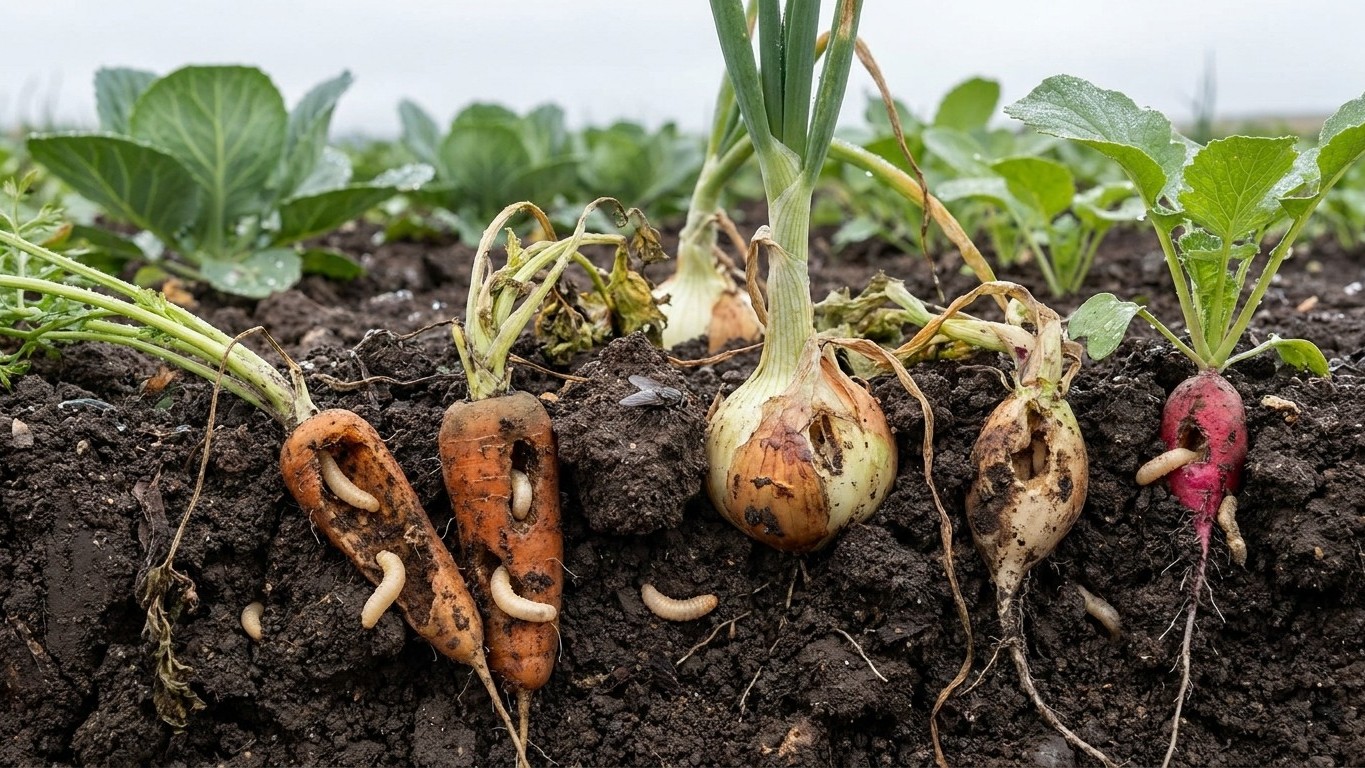

The best unusual roots for Alberta are the ones that tolerate frost and don’t need a long summer: parsnips, salsify, scorzonera, horseradish and Jerusalem artichokes, with celeriac as a worthwhile project if you start transplants indoors. Skip the tropical roots. The Calgary station’s mean frost dates, May 21 and September 16, leave a little under four months between them.
The short answer for Alberta
Choose by type, not by cultivar name. Hardy, cool-soil roots win here, perennial roots win by a wide margin, and anything that wants sustained heat loses. The frost dates from Environment and Climate Change Canada (1981-2010 normals, Calgary International A station) are a mean last spring frost of May 21 and a mean first fall frost of September 16. Those are midpoints, not safe dates. In one year out of two, frost arrives later than May 21 in spring, and in one year out of two it arrives before September 16 in fall.
The coldest month matters too. Its mean daily minimum is -13.2 °C (8.2 °F), which is the figure that decides what can stay in the ground over winter. It is an average, so the coldest nights run well below it.
| Type | Examples | Fit for Alberta |
|---|---|---|
| Perennial, winter-hardy | Horseradish, Jerusalem artichoke | Best bet. Established plants return after winters like these. |
| Hardy, slow, direct-sown | Parsnip, salsify, scorzonera | Strong. They take cold soil and finish in the cool fall. |
| Hardy, faster | Rutabaga, winter radishes, Hamburg parsley | Reliable, and more forgiving of a late start. |
| Long-season, needs a head start | Celeriac | Possible with indoor-started transplants. |
| Heat-dependent | Sweet potato, yacon, oca, ginger | Poor odds outdoors. |
Within each type, favor cultivars described as early or short-rooted. This page has no cultivar trial results for Alberta, so it won’t name a “best” parsnip or salsify. The type-level decision is the part the climate data supports. For sowing windows, see When to Plant Unusual Roots in Alberta, and for the wider picture, Growing Unusual Root Crops in Alberta.
What will not work here
Arithmetic does most of the damage. May 21 to September 16 is roughly 118 days, and that is the average gap, not a guarantee. Any root that needs warm soil for most of that stretch, plus extra weeks to bulk up, runs out of season. Sweet potatoes, yacon and oca are the usual casualties. They want warm nights and a long, frost-free run, and a single early September frost can flatten the tops before the roots have sized up.
Setting tender transplants out on May 21 is a coin flip. If the mean last frost is May 21, then in half of years a frost comes later. A gardener who treats that date as “safe” will lose seedlings in roughly every other spring, so hardy roots are the better match for this calendar. Parsnips, rutabagas and radishes can be sown into cool soil without much risk from a late frost.
Slow starters and the fall deadline
Celeriac fails when it is direct-sown. It grows slowly from tiny seed and needs a long run, so in Alberta it belongs in a tray indoors, then outside once the frost risk has dropped. Late sowings fail for the opposite reason. A fast radish sown in July is fine, but a slow root sown in late June may be only half-size when the average first fall frost of September 16 arrives, and in half of years it comes even sooner.
Winter also defeats some hopeful plans. The coldest-month mean minimum of -13.2 °C (8.2 °F) is for Calgary’s station, and it says nothing about how many freeze-thaw swings a bed will see. Southern Alberta’s chinook winds can thaw and refreeze the soil. Parsnips left in the ground for spring harvest can do well under deep mulch or steady snow cover, but a bare, repeatedly thawed bed can rot or heave them. Treat overwintering as a bonus, not the plan.
One thing this page cannot say: the facts here carry no rainfall or summer heat figure for Alberta. So it makes no claim about watering schedules. The failures described above come from season length and winter cold alone, which are the two numbers the data supports.
What changes across Alberta
Alberta is not one garden. The frost dates above come from a single station, Calgary International A, and northern or upland districts run weeks behind it. A reader in the north or at altitude should push every date later in spring, pull the fall deadline earlier, and lean harder on perennials and the fast hardy roots.
The hardiness zone tells the same story. For Calgary, Natural Resources Canada’s 1991-2020 data gives Canadian zone 4a. That is the Canadian system, not a USDA zone, and the two do not convert. NRCan notes that Canadian zone 4a overlaps nine different USDA zones, from 3a to 7a, because the Canadian system is built on seven climate variables, not one. This page does not have the zone spread across the whole province. There is no single answer for Alberta, and anyone claiming one is flattening a very large map.
In practice, a few shifts help. In colder districts, give parsnips and salsify a deeper mulch and don’t count on them overwintering without it. Treat celeriac as optional rather than central. Lean on Jerusalem artichokes and horseradish, which come back even in harsh spots. In milder pockets, the range of types widens a little, but the heat-dependent group stays a long shot.
Look up your own zone on Canada’s Plant Hardiness Site instead of guessing from this page. Search your municipality, note the zone, and remember it is a long-term winter-and-climate summary, not a planting date.
Where to check this for your own county
Start with Alberta Agriculture and Irrigation, the provincial agriculture department and the closest thing Alberta has to a state extension service. Look there for two things: a local planting calendar for your part of the province, and any vegetable varieties that have been trialled in your area.
A calendar built for your district beats one built for a province. It reflects local frost patterns, and local trial results beat any generic list of “best” cultivars. This page is the provincial view, built around one station’s normals, and a regional recommendation should overrule it wherever the two disagree.
Two other cautions. This page’s frost figures cover 1981-2010, while the hardiness zone uses 1991-2020 data. The two sources are not on the same timeline, so don’t blend them into one number. And this page has no county-level calendar for Alberta, so it doesn’t offer one.
When you find a regional resource, check whether it separates crops by sowing method. Direct-sown roots and indoor-started transplants run on different clocks, and a calendar that lumps them together will mislead you.
Checking this against your own garden
Your own observations outrank every date on this page. Three are worth watching, and none needs equipment.
- Soil warmth by feel. Push your hand a few inches into the bed in the morning. If it feels distinctly cold, slow germinators like parsnip and salsify will sit and wait. A bed that warms early tells you your site runs ahead of the district.
- The first flush of male flowers on squash or cucumbers. If you grow either, their timing is a clue to how warm your summer is running. Late flowers mean a cooler microclimate, and a good reason to favor the hardy, faster roots.
- The first true leaves. Seedlings first show rounded seed leaves, then leaves shaped like the adult plant. If true leaves arrive late, your spot is cool or shaded, and a long-season root like celeriac is the first to drop from the list.
Write the dates down for a couple of seasons. A low corner, a south-facing wall and an open bed can differ by more than a week, and those differences are yours alone. They won’t appear in any provincial table.
Common questions
Which unusual root is easiest for a first-time Alberta grower?
Horseradish and Jerusalem artichoke, since both are perennial and cold-hardy. Both can spread aggressively, so give them a contained spot. Among annuals, parsnips are a sound choice if you sow into cool soil and keep it evenly moist.
Can I grow sweet potatoes in Alberta?
The odds are poor outdoors. With a mean frost-free gap of roughly 118 days between May 21 and September 16, and half of years falling outside those means, a crop that needs steady heat is a gamble. Treat it as an experiment, not a staple.
Is May 21 a safe planting date?
No. It is the mean last spring frost at the Calgary station, so in one year out of two frost comes later. It marks the middle of a window, and hardy roots can go in earlier while tender ones should wait.
Does Canadian zone 4a mean the same as USDA zone 4?
No. The Canadian system uses seven climate variables and the USDA system uses one. NRCan states that Canadian zone 4a overlaps nine USDA zones, from 3a to 7a, so there is no simple conversion between them.