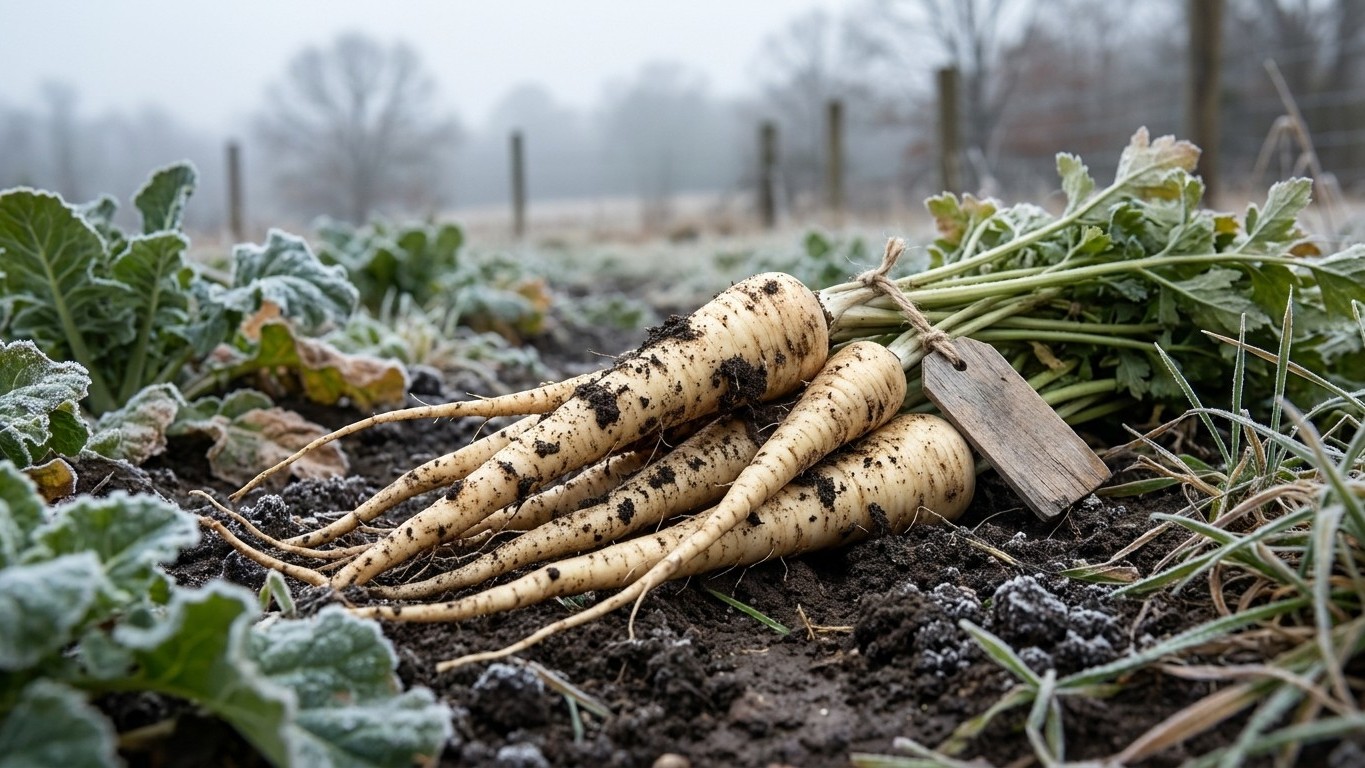

Grow parsnips in low-desert Arizona and you’ll harvest a fine, pale root. Sweet, though, is a different story. Phoenix and the surrounding valley almost never deliver the sustained frosty stretch that turns stored starch into sugar, so the crop tends to stay starchy rather than candy-sweet. Head up to Flagstaff and the high country, and the answer flips entirely.
The short answer
Here’s the question that actually decides this, and it isn’t about hardiness zones: does this ground get several weeks of hard, lingering frost? In the Phoenix area, the mean minimum temperature of the coldest month sits at 45.3°F, according to NOAA NCEI Climate Normals covering 1991-2020. That’s a mild winter night, not a frost. A plant sitting in soil that rarely drops anywhere close to freezing has nothing to trigger the starch-to-sugar conversion that makes a parsnip worth digging up in the first place.
Compare that 45.3°F figure to what the crop actually needs. Utah State University Extension describes the sweetening process plainly: parsnips taste best after several weeks of cool, frosty weather, because that cold spell converts stored starch into sugar. Several weeks of frost is the requirement. A mean minimum in the mid-40s doesn’t come close to producing that exposure, even across an entire winter.
This is where a lot of gardeners get tripped up. A hardiness zone tells you whether a plant survives here, not whether the crop develops flavor. Low-desert Arizona sits in a zone comfortable enough for all sorts of tender vegetables, and that same mildness is exactly the problem for parsnips. Comfortable is not frosty. A zone rating and a frost exposure are two different measurements, and swapping one for the other is the single easiest way to get this answer wrong. NOAA’s daily records back this up in blunt terms: Phoenix reached 32°F in only 6 of the last 30 springs, and the National Weather Service’s own frost-free season calculation for the station lists 365 days. There isn’t a reliable freeze at all in most years, let alone a multi-week cold snap.
None of that means the plant fails. Roots grown in the low desert size up fine and cook up fine. They just tend to read as mild and slightly earthy rather than the nutty sweetness parsnip fans chase. If sweetness is the goal, the honest move is to look toward Arizona’s high country. Flagstaff and similar elevations sit in a genuinely different climate, one where hard freezes are a normal part of winter, and a frost-based growing calendar makes sense there in a way it simply doesn’t in the Phoenix basin. That’s a separate climate story, not a variation on this one.
Does the season fit?
Utah State University Extension pegs parsnips at 100 to 120 days from seeding to maturity, with sowing done directly in place 2 to 3 weeks before the last frost, since the roots don’t transplant well. In most of the country that math starts with a calendar date. In the low desert, it starts with a shrug, because there usually isn’t a reliable last frost date to count backward from. Here’s how the arithmetic actually plays out on the ground:
- Drop the frost-based start date. With freezing temperatures showing up in only 6 of 30 recent springs and a frost-free season essentially running the full year, there’s no dependable “2 to 3 weeks before last frost” marker to sow against here.
- Sow against the heat window instead. The real constraint in the low desert is summer heat shutting down root development for months, so seeding gets timed for cooling fall weather rather than a spring frost line.
- Budget 14 to 21 days just for germination. Parsnip seed is slow and often patchy to sprout. Digging up the row before three weeks have passed and re-sowing is a common, avoidable mistake.
- Count 100 to 120 more days from seeding to a mature root. That stretch, sown in fall, runs the crop through the mild winter months when the mean minimum sits around 45.3°F rather than through a freeze.
- Compare that timeline to what the soil is doing. The ground stays workable and unfrozen through that whole window here, so the season fits comfortably in terms of time. There’s no killing freeze cutting the growing period short, and no risk of the ground locking up before the roots finish sizing.
- Recognize what that comfort costs. The same mildness that makes the season fit easily is what strands the crop short of the frost exposure it needs to sweeten. Season length and flavor development are answered by two different numbers, and in low-desert Arizona they pull in opposite directions.
Put together, the growing season itself is generous. It’s the flavor payoff that comes up short, and no amount of extra time fixes that, because sweetening isn’t about days in the ground. It’s about degrees below freezing sustained over weeks, and that particular ingredient is largely missing from a Phoenix-area winter.
What goes wrong here
- Forked, split roots in heavy or stony ground. Parsnips push a single taproot straight down, and anything that deflects it, clay, caliche, buried rock, sends it forking into two or three legs. Utah State University Extension calls for deep, loose, sandy soil, and where the native ground is heavy, recommends double digging to break it up well below where the root will travel. The desert’s often-cited sandy reputation is a starting point, not a guarantee; plenty of low-desert yards sit on compacted, rocky, or caliche-laced ground that needs the same double-digging treatment before seeding.
- Forked roots from overwatering. This is a separate cause from heavy soil, not the same problem in disguise. Inconsistent or excessive watering encourages the root to branch as it chases moisture unevenly through the profile. The fix is steady, moderate watering rather than heavy soakings followed by dry stretches, regardless of how loose the soil already is.
- A season that runs out before the root finishes. This isn’t the low desert’s typical failure, given how long and mild the winter window runs, but it can still happen with a late sowing pushed too close to the return of serious spring heat. Backing the sowing date up, and accounting for the full 14 to 21 day germination lag plus the 100 to 120 day maturity window, keeps the crop from getting caught by warming weather before it’s finished sizing.
- A winter too mild to sweeten. This is the defining failure for this territory. Even a perfectly grown, unforked, full-sized root will taste flat and starchy rather than sweet if it never experiences several weeks of real frost, and a 45.3°F mean minimum for the coldest month simply doesn’t deliver that. There’s no soil fix or watering fix for this one; it’s a climate limit, and the honest remedy is treating the low-desert crop as a mild-flavored root rather than expecting the sweetness that a hard-frost climate produces.
Common questions
Can I refrigerate harvested parsnips to sweeten them after the fact?
The sweetening process described by Utah State University Extension happens in the ground, driven by sustained cold exposure over several weeks before harvest. The source doesn’t address cold storage as a substitute for that field exposure, so it isn’t something to rely on if the goal is matching a frost-grown root’s flavor.
Does mulching or another technique manufacture the frost exposure parsnips need?
No source here describes a workaround for missing frost. The sweetening mechanism is tied to sustained cold in the soil around the root, and low-desert winters simply don’t produce enough of it, mulch or no mulch.
Is Flagstaff’s growing calendar the same as the low desert’s, just shifted?
No. The two are different climates rather than the same climate at different speeds. Flagstaff and the high country see the hard, recurring freezes the low desert lacks, which means a frost-based sowing calendar, of the sort standard in most of the country, applies there in a way it doesn’t around Phoenix.
What soil should low-desert growers actually start with?
Utah State University Extension calls for deep, loose, sandy ground, with double digging recommended wherever the native soil is heavy. Given how much low-desert ground runs rocky or caliche-laced rather than uniformly sandy, treating that recommendation as a checklist item to verify in your own yard, rather than an assumption about desert soil in general, heads off forked roots before they start.